 Complete Gardening
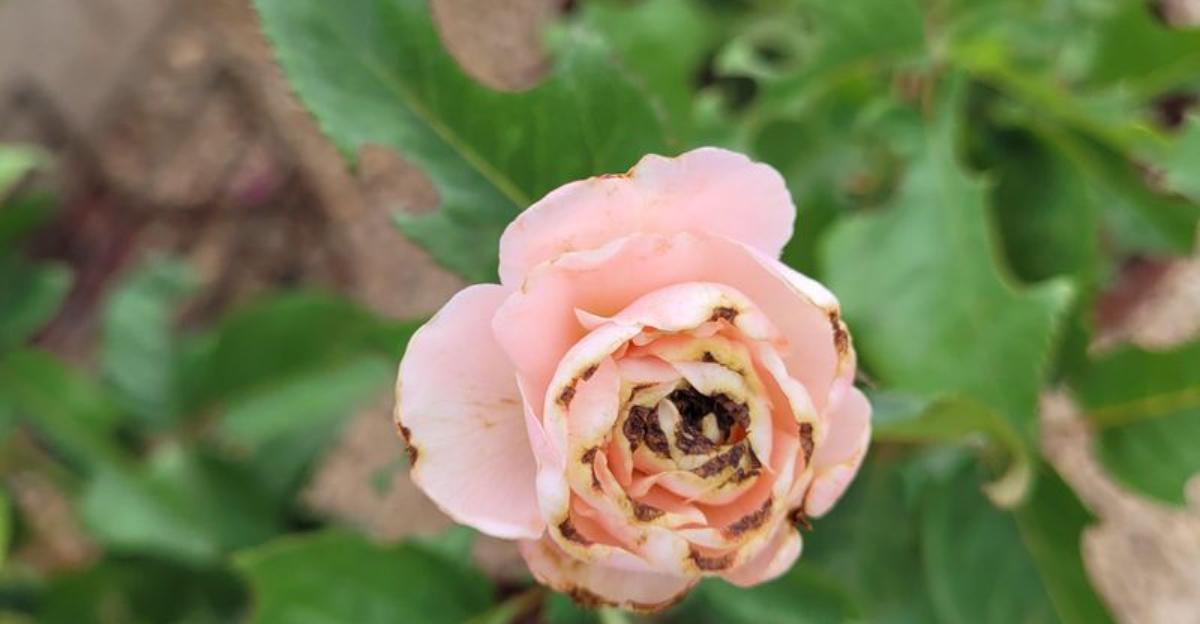
Rose gardens can quickly turn from beautiful to troubled when pests move in. These unwanted visitors can destroy your prized blooms, weaken plants, and even kill your roses if left unchecked.
Knowing what to look for is your first line of defense against these destructive creatures. Here are the top rose pests to watch for and how to deal with them before they ruin your garden.
1. Aphids: The Tiny Sap Suckers
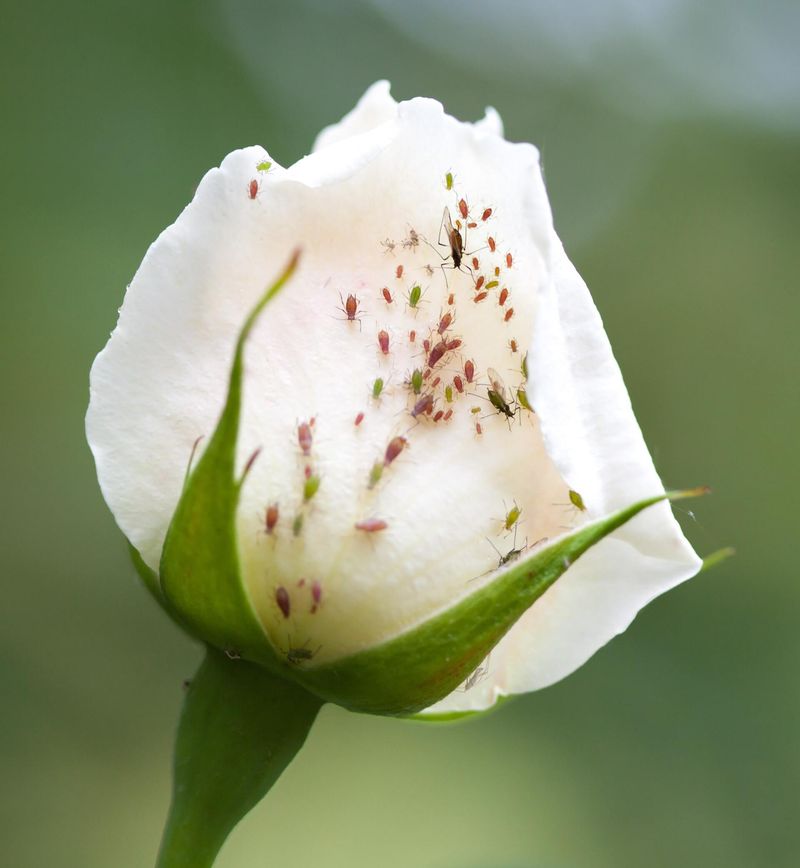
These minuscule green, black, or pink insects cluster on new growth and buds, literally sucking the life from your roses. You’ll notice sticky leaves, distorted growth, and curled foliage when they’ve set up camp.
Aphids multiply incredibly fast—a single female can produce 80 offspring in just one week! Blast them off with a strong stream of water in the morning, allowing plants time to dry before evening.
For natural control, introduce ladybugs to your garden or spray with neem oil. A homemade solution of water with a few drops of dish soap works well too, damaging their soft bodies while sparing your roses.
2. Japanese Beetles: Metallic Leaf Shredders
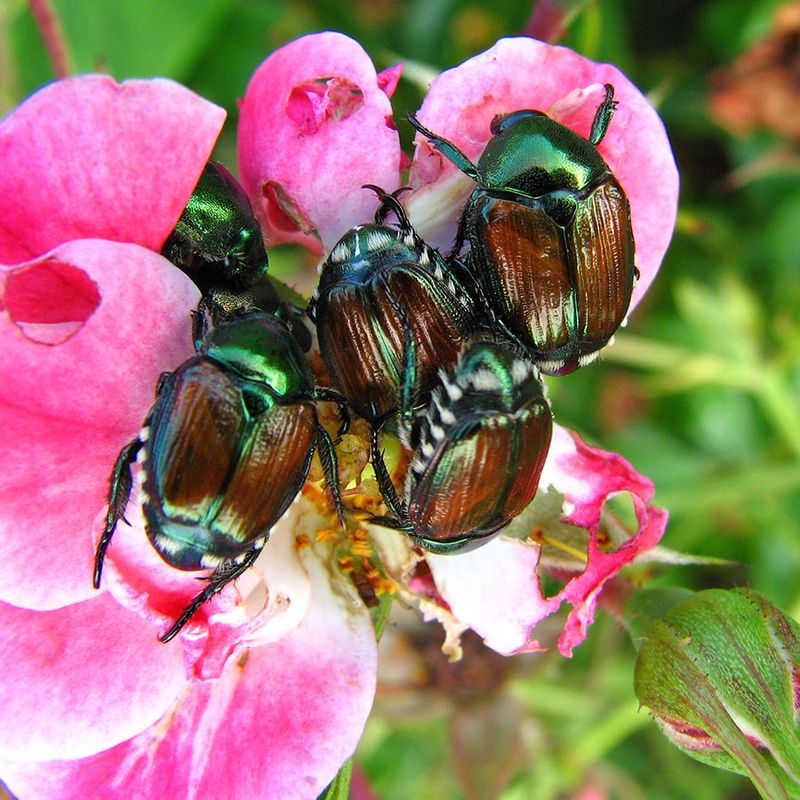
Shimmering copper-green bodies make these pests almost pretty—until you see what they do to roses. Japanese beetles turn leaves into lace, skeletonizing them while also destroying flower petals.
Morning raids work best for control. Head out early when these beetles are sluggish and knock them into a bucket of soapy water. Avoid using beetle traps near your roses—they attract more problems than they solve!
For long-term control, treat your soil with milky spore to kill the grubs before they become adults. Covering prized plants with fine netting during peak beetle season (usually June through August) offers good protection.
3. Rose Slugs: Deceptive Leaf Munchers
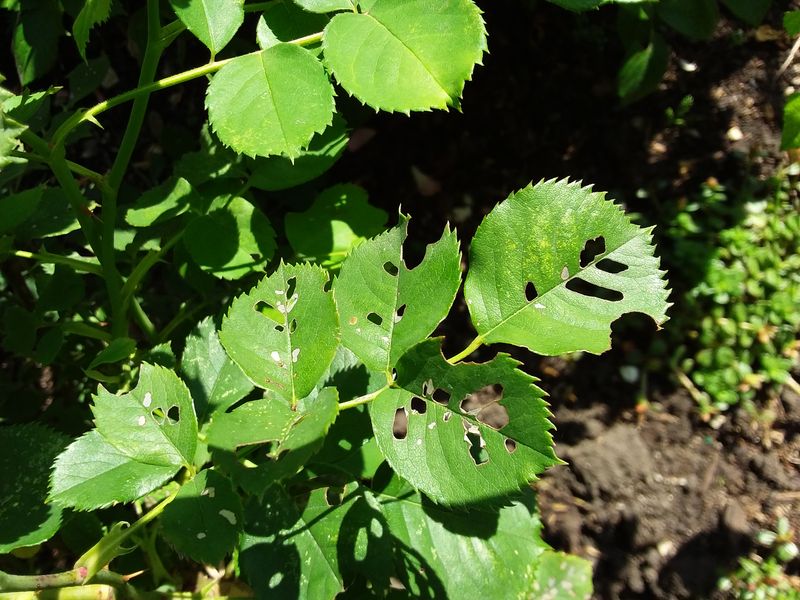
Don’t be fooled by the name—these aren’t actual slugs but sawfly larvae that resemble small, slimy caterpillars. The damage starts as transparent “windows” in leaves where they’ve eaten away the undersides while leaving the upper surface intact.
Left unchecked, rose slugs eventually consume entire leaves. Their green bodies blend perfectly with foliage, making them hard to spot until damage becomes obvious.
Blast plants with water to dislodge these pests, focusing on leaf undersides where they hide. Prune heavily damaged leaves and destroy them rather than composting. Horticultural oil or insecticidal soap provides effective control when sprayed directly on these sneaky munchers.
4. Thrips: Flower Bud Destroyers
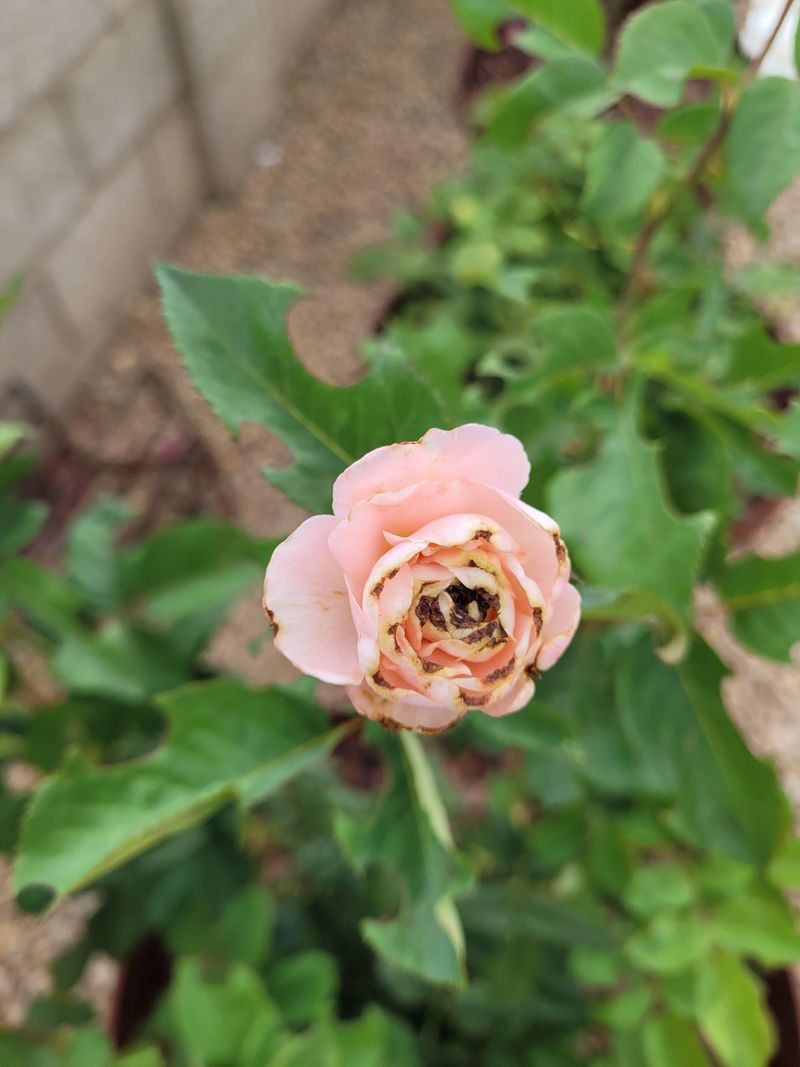
Barely visible to the naked eye, thrips spell disaster for rose blooms. These tiny insects rasp flower tissues, leaving brown edges and deformed buds that often fail to open properly.
White or yellow roses show damage most clearly, with petals developing brown streaks and edges. Thrips thrive in hot, dry conditions and can complete their lifecycle in just two weeks.
Blue sticky traps help monitor populations while also trapping adults. Regular spraying with neem oil or insecticidal soap helps control outbreaks. Avoid over-fertilizing with nitrogen, which promotes the tender growth thrips love to attack.
5. Spider Mites: The Invisible Web Weavers
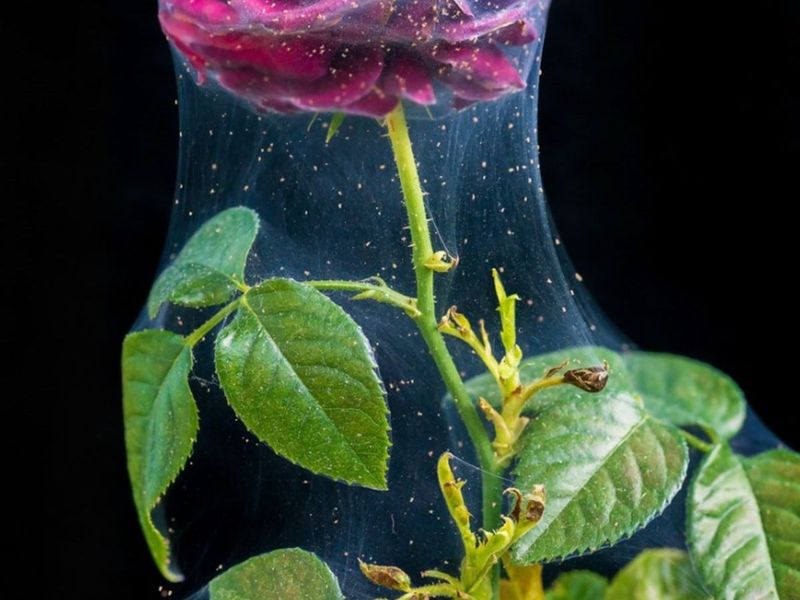
So tiny they look like moving dust, spider mites can devastate roses before you realize they’re there. The first sign is usually yellow stippling on leaves, followed by fine webbing that appears when populations explode.
These pests thrive in hot, dry conditions, reproducing every 5-7 days. A female can lay hundreds of eggs in her short lifetime!
Regularly hose down your roses, especially leaf undersides, to disrupt their colonies. Predatory mites offer excellent biological control. For severe infestations, neem oil or insecticidal soap works well, but avoid chemical miticides which often kill beneficial insects while spider mites quickly develop resistance.
6. Scale Insects: The Armored Sap Thieves
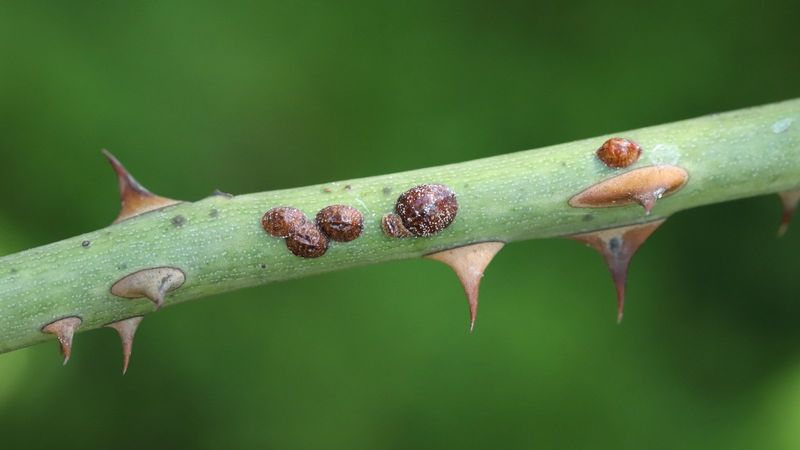
Resembling small bumps on stems rather than insects, scale are masters of disguise. Their hard protective shells make them look like part of the plant while they quietly drain sap from your roses.
The sticky honeydew they excrete attracts sooty mold, further weakening plants. Female scales can produce hundreds of offspring, which appear as tiny crawlers before settling down and developing their protective covering.
Catch infestations early by pruning affected stems. For established colonies, gently scrape scales off with your fingernail or a soft toothbrush, then dab with rubbing alcohol. Horticultural oil works by suffocating them and can reach even under their protective shields.
7. Cane Borers: The Stem Drillers
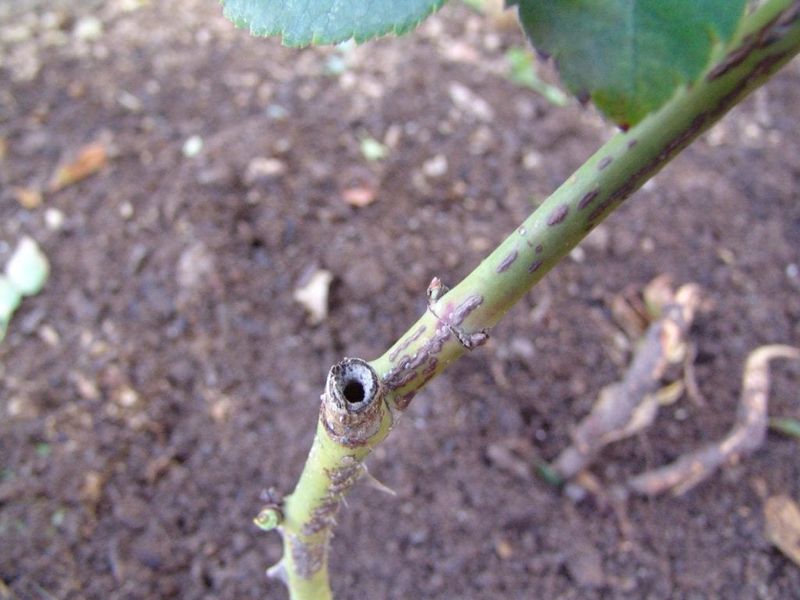
Unlike most rose pests that attack leaves or flowers, cane borers target the stems themselves. You’ll notice mysterious wilting or dieback on seemingly healthy canes, often starting from pruning cuts.
Examining affected stems reveals small holes where adult beetles have laid eggs. The hatched larvae tunnel inside the cane, eating the central pith and disrupting water flow to everything above the entry point.
Prevention works better than cure with these hidden pests. Always make clean, angled cuts when pruning and immediately seal fresh cuts with white glue or pruning sealer. This simple step prevents female borers from detecting the fresh wound scent that attracts them.
8. Slugs and Snails: Nighttime Leaf Chompers
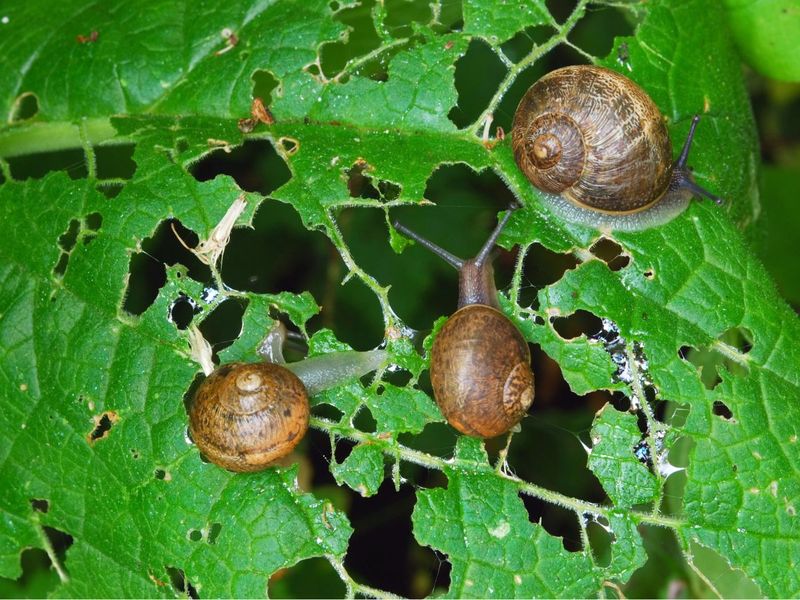
Garden roses make a midnight feast for these slimy mollusks. Under cover of darkness, they emerge to chew irregular holes in leaves and flowers, leaving behind telltale silvery slime trails that dry into shiny paths by morning.
Young, tender growth suffers most from their rasping mouthparts. Rainy periods see slug and snail populations explode, turning minor nuisances into major headaches for rose growers.
Create barriers around prized plants using crushed eggshells, diatomaceous earth, or copper tape. Shallow dishes of beer sunk into the soil make effective traps—they’re attracted to the yeast scent and drown in the liquid. Evening hunting trips with a flashlight let you hand-pick these pests before they damage your roses.
9. Leafcutting Bees: The Circular Snippers
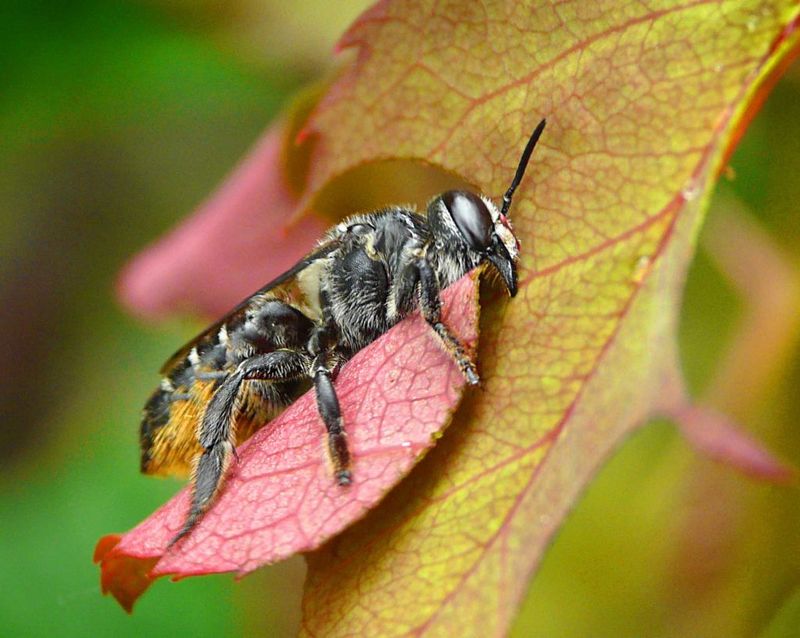
Finding perfect half-moon cutouts along leaf edges often puzzles rose growers. The culprits are actually beneficial leafcutting bees who harvest these leaf pieces to line their nests.
Unlike most pests, these pollinators don’t eat the leaf tissue—they’re just borrowing building materials! The cosmetic damage rarely affects plant health, though it can be frustrating on showcase roses.
Since these bees benefit your garden overall, consider tolerance rather than treatment. For show-quality plants, lightweight row cover fabric provides protection during nesting season. You might also provide alternative nesting sites by drilling holes in untreated wood blocks and placing them away from your prized roses.
10. Caterpillars: The Hungry Leaf Devourers
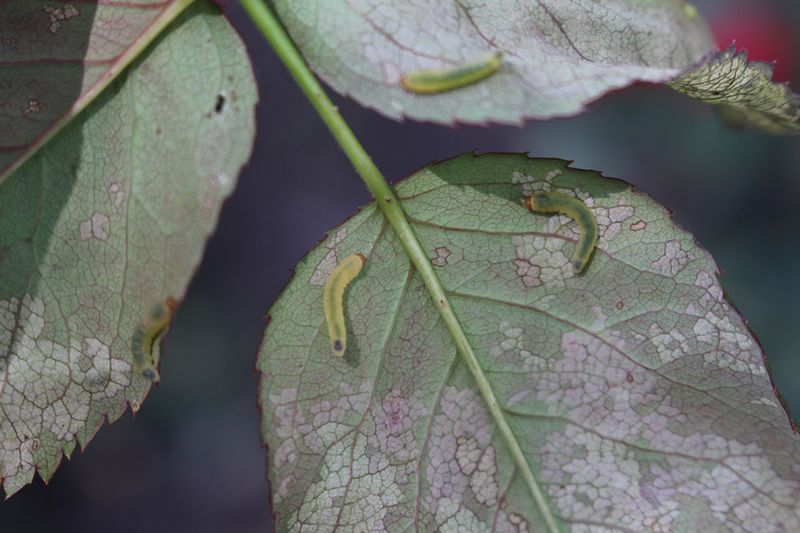
From tiny inchworms to plump tomato hornworms, various caterpillar species find rose foliage irresistible. Unlike other pests that sip sap or create small holes, hungry caterpillars can strip entire branches overnight.
Frass (caterpillar droppings) on leaves or the ground provides a clue to their presence when the culprits themselves are hiding. Many species are masters of camouflage, perfectly matching the green of rose foliage.
Hand-picking works well for larger species. For smaller or numerous caterpillars, spray with Bacillus thuringiensis (Bt), a natural bacteria that only affects caterpillars while sparing beneficial insects. Apply in evening hours when caterpillars are actively feeding and beneficial insects are less active.