Complete Gardening
Winter can be brutal on your garden, but with a few unconventional tricks, you can protect your plants and keep your soil healthy until spring returns. Mulching is one of the most effective ways to insulate roots, retain moisture, and prevent frost damage – but not all mulch has to come from a garden center.
These 10 unusual mulch hacks use materials you already have at home, helping you save money while giving your plants the best possible protection through the cold months.
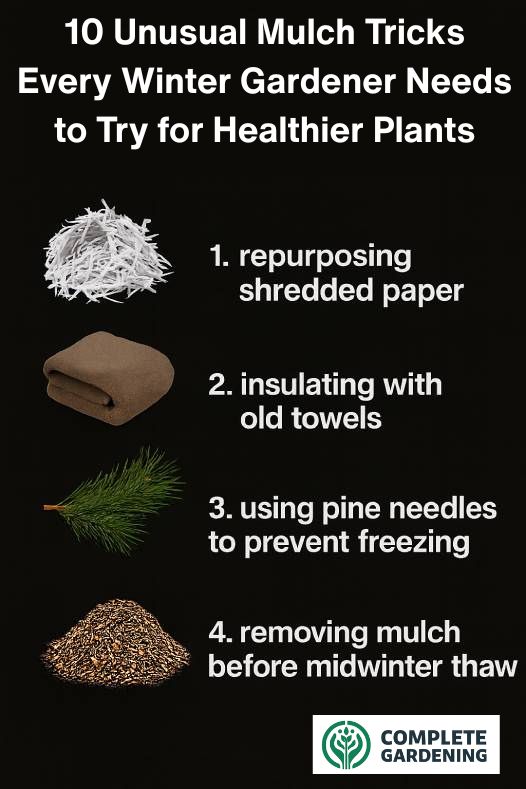
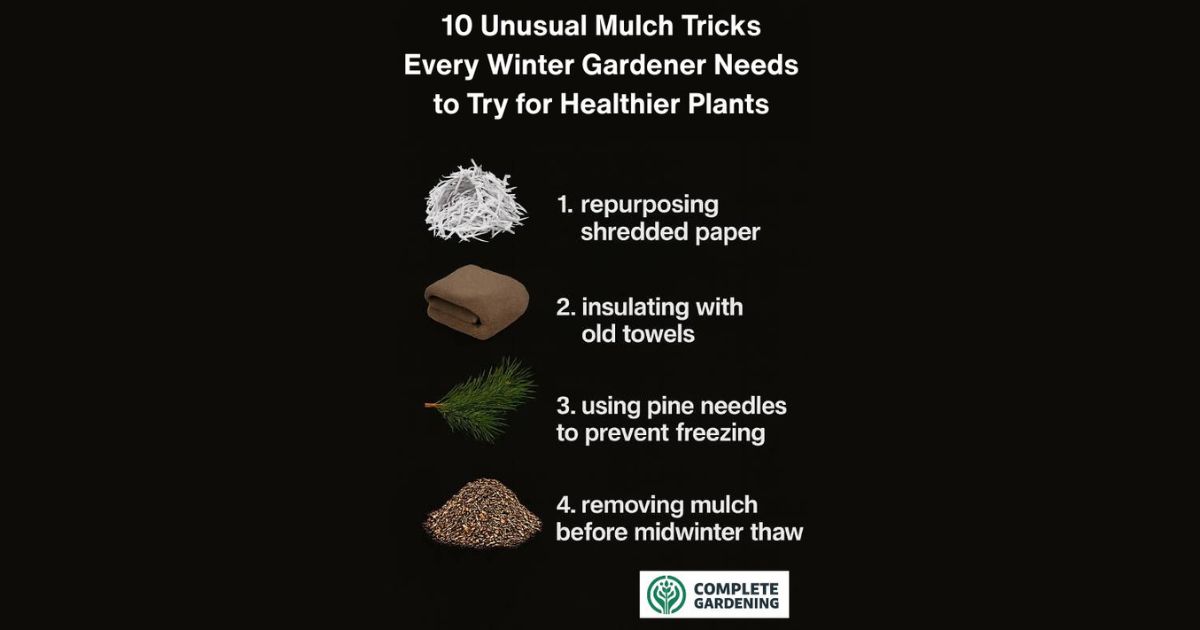
1. Shredded Mail as an Insulating Blanket
Before tossing out that pile of junk mail, give it a second life. Shred paper mail (using ink-free or soy-based paper) and spread it around your plants as a layer of insulation.
Apply 2–3 inches thick, avoiding direct contact with plant stems to prevent rot. The shredded paper traps heat, keeps roots cozy, and decomposes over time — enriching your soil with organic matter.
2. Repurpose Old Towels as Frost Covers
Old towels make surprisingly effective plant protectors. Lay them gently over delicate plants or soil beds during freezing nights to block frost. Remove them during the day so sunlight and airflow can reach the plants.
This eco-friendly approach repurposes household waste while providing an added layer of warmth during the coldest nights.
3. Pine Needles – Nature’s Own Winter Armor
If you have pine trees nearby, you already have one of the best natural mulches. Pine needles create a breathable barrier that retains moisture and regulates soil temperature. Spread them 3–4 inches thick around perennials, shrubs, or evergreens.
Their slightly acidic nature also helps prevent fungal growth — perfect for damp winter soil.
4. Coffee Grounds to Keep Soil Warm and Fed
Used coffee grounds aren’t just great compost material — they make a warming mulch for acid-loving plants like blueberries and azaleas. Spread a thin layer (about ½ inch) to prevent compaction.
Coffee grounds trap heat, slowly release nitrogen, and improve soil texture. Just remember: less is more.
5. Crushed Seashells for Sun Reflection and Calcium Boost
Crushed seashells act as a reflective mulch, bouncing sunlight back into the soil to help retain warmth during daylight hours. Spread a 2-inch layer over beds or around plants.
Bonus: as seashells decompose, they release calcium carbonate, enriching the soil and strengthening plant cell walls. Ideal for coastal gardeners or anyone with access to shells.
6. Straw Bales as Natural Windbreaks
Strong winter winds can dry out and damage plants. Stack straw bales around garden beds or vulnerable plants to create a natural wind barrier.
When spring arrives, you can pull apart the bales and use the straw itself as mulch — making this a two-for-one hack that saves time and money.
7. Bubble Wrap for Tender Plants
That leftover packaging material can save your most delicate plants. Wrap bubble wrap around plant stems, pots, or small trees to insulate them against frost. Secure it with garden twine but leave small openings for airflow.
Remove it on mild days to prevent overheating and moisture buildup.
8. Hair Clippings for a Nitrogen Boost
Don’t throw away those pet or human hair clippings – use them! Hair naturally contains nitrogen, a crucial nutrient for plant growth. Sprinkle a light layer around the base of plants.
As the hair decomposes, it releases nitrogen into the soil. Just avoid thick mats of hair, which can block air and water.
9. Cardboard for Weed Suppression and Warmth
Cardboard is one of the simplest and most effective ways to block weeds while insulating your soil. Lay flat sheets across garden beds, overlapping the edges.
Wet the cardboard to help it mold to the soil and stay in place, then top it with organic mulch like leaves or straw. It prevents weeds, conserves moisture, and breaks down naturally over time.
10. Smart Mulch Removal During Midwinter Thaws
Here’s a counterintuitive tip — sometimes you need to remove mulch. When a winter warm spell hits, temporarily pull back mulch to prevent the soil from overheating and triggering premature plant growth.
Once temperatures drop again, reapply your mulch to keep roots insulated and safe from frost.
Final Thoughts: Creative Mulching for a Stronger Garden
Winter gardening doesn’t have to be complicated or costly. With a little creativity and resourcefulness, you can turn everyday materials – from junk mail to seashells – into powerful mulch alternatives.
These strange but effective hacks not only protect your plants but also enrich your soil and reduce waste. So before you toss it out, ask yourself: could this be my garden’s next secret weapon against winter?