 Complete Gardening
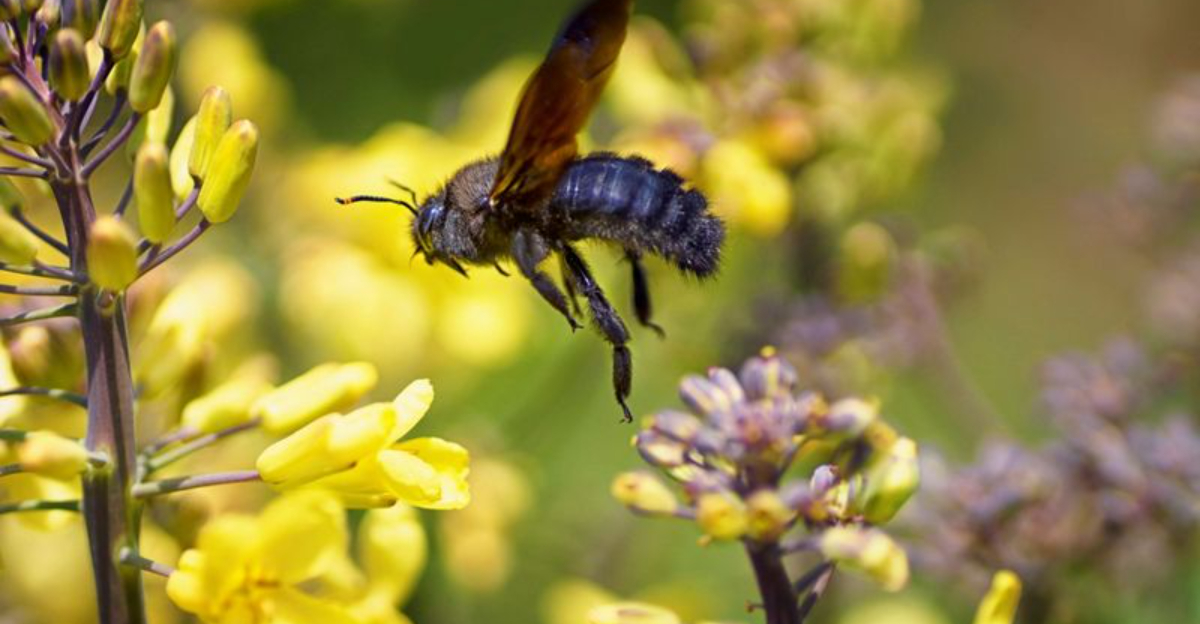
Carpenter bees, often mistaken for bumblebees, are known for their wood-boring habits which can cause significant damage to wooden structures.
Understanding the mistakes that attract these industrious insects and the effective solutions to deter them is crucial for homeowners looking to protect their properties.
This guide highlights thirteen common mistakes people make that inadvertently invite more carpenter bees and seven practical solutions to prevent their invasion.
1. Leaving Untreated Wood Surfaces
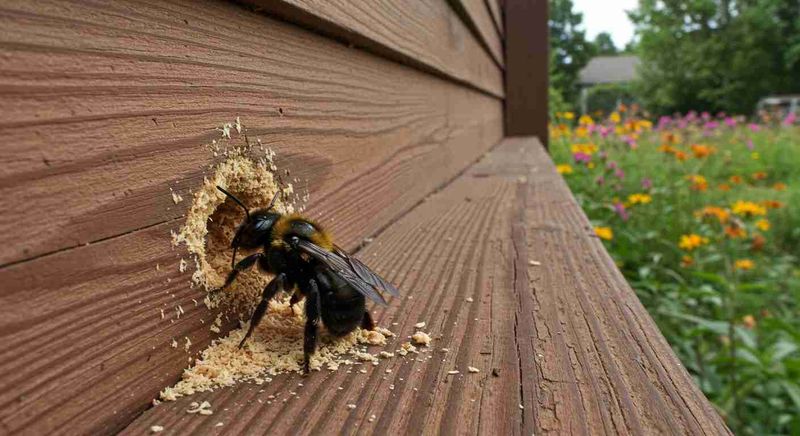
Exposed wooden surfaces are like an open invitation to carpenter bees. These industrious insects seek out soft, untreated wood, as it’s easier for them to bore into. Imagine a quaint garden fence left untreated, slowly succumbing to the elements – that’s exactly the type of environment carpenter bees love.
Applying a coat of paint or wood sealant not only enhances the appearance but acts as a protective barrier. Some homeowners overlook this simple prevention step, leading to unwanted bee guests. Without treatment, the wood remains vulnerable, making it an attractive target for nesting bees.
2. Ignoring Existing Boreholes
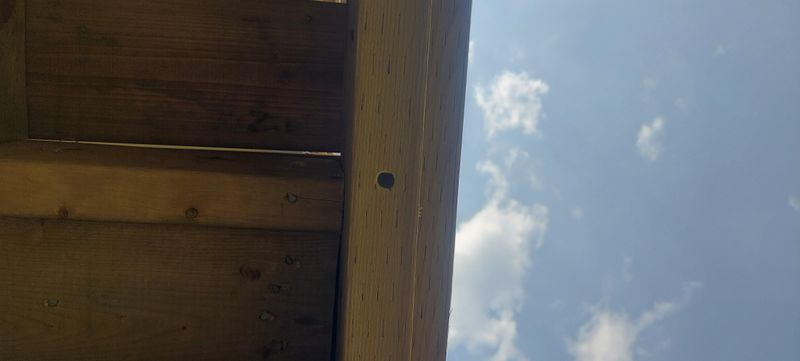
Boreholes left unattended can become an oasis for carpenter bees. These tiny openings, often hidden under eaves or in fences, are ideal for bees looking to expand their homes. When previous infestations are ignored, they can easily attract more bees, turning a minor issue into a major headache.
Sealing these holes promptly is essential. A simple wood filler can go a long way in deterring these insects. Ignoring boreholes not only invites carpenter bees but can lead to greater structural damage over time, a costly mistake for any homeowner.
3. Using Softwoods for Structures
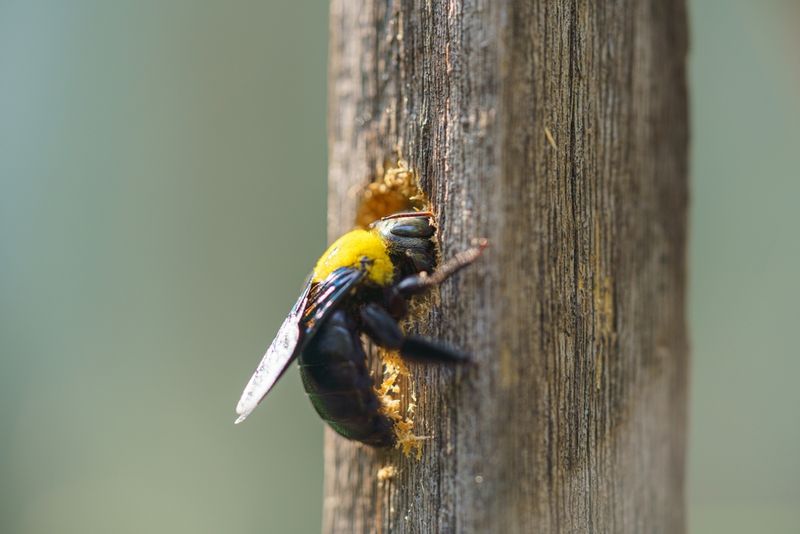
Softwoods like pine and cedar are favorites for carpenter bees. Their softer texture makes them ideal for boring. Picture a rustic cedar shed; its charm is undeniable, but it’s a beacon for wood-boring insects.
Opting for hardwood alternatives can be a better choice, as they’re much harder for bees to penetrate. Many people are unaware of this preference, leading them to unintentionally invite carpenter bees through their choice of materials. It’s a simple decision that can make a significant difference in preventing bee infestations.
4. Neglecting Regular Inspections
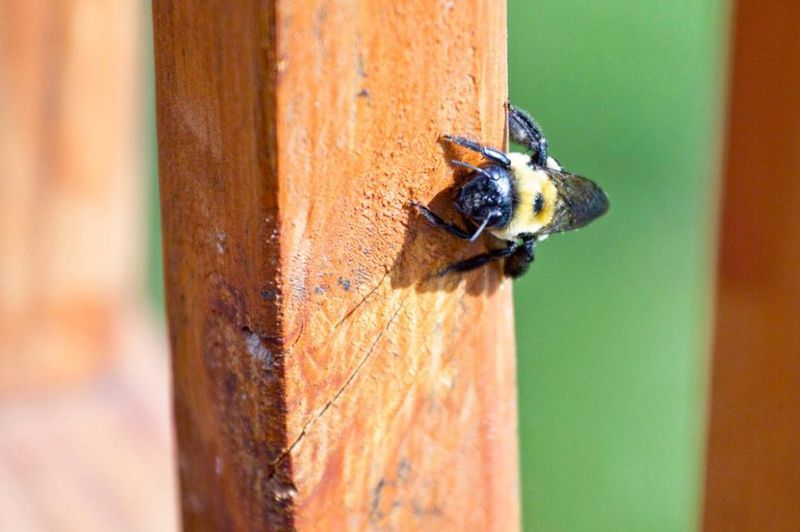
Regular inspections can prevent carpenter bee invasions. Homeowners often neglect this simple task, allowing infestations to grow unchecked. Consider a meticulous homeowner, flashlight in hand, examining every nook and cranny of their wooden deck.
That proactive approach is key to catching early signs of carpenter bee activity. Routine checks can reveal boreholes or telltale sawdust, enabling timely intervention. Without regular inspections, the damage can escalate quickly, turning a manageable situation into an overwhelming problem. It’s an oversight many regret once the bees have settled in.
5. Failing to Remove Old Nests
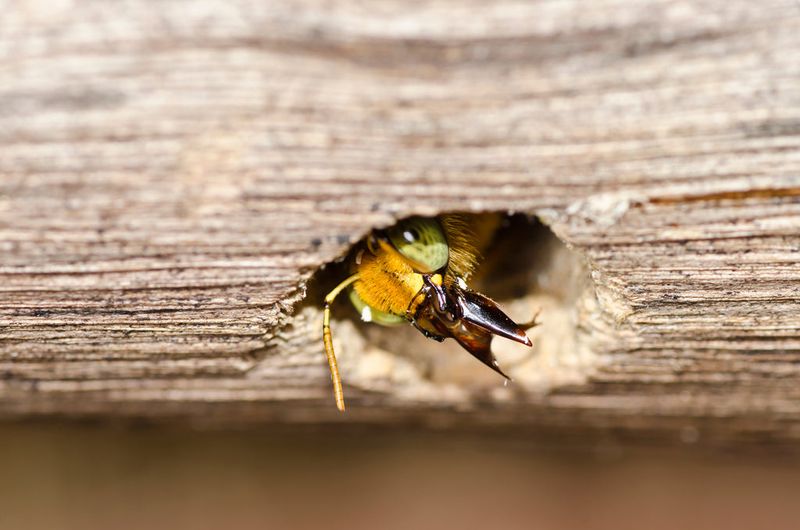
Old nests left in place can attract new bees. Carpenter bees often return to familiar nesting sites, especially when old tunnels remain accessible. Envision a barn loft with untouched, abandoned bee nests – a perfect lure for carpenter bees seeking a ready-made home.
Removing these nests and filling the tunnels with a suitable filler can prevent reoccupation. Neglecting to clear old nests is a common mistake that leads to repeated infestations. It’s a simple yet often overlooked step that can significantly reduce the likelihood of carpenter bee problems.
6. Overlooking Eaves and Overhangs
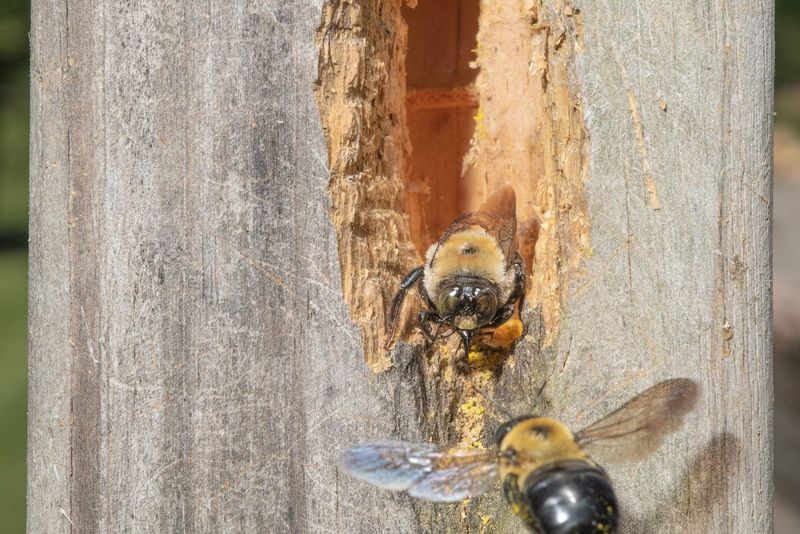
Eaves and overhangs are prime real estate for carpenter bees. These protected areas provide shelter from the elements, making them ideal nesting spots. Picture a charming bungalow with deep overhangs; each eave could potentially harbor a buzzing community.
Regularly inspecting these areas and applying repellents can keep the bees at bay. Homeowners who overlook these spaces may find themselves with an unexpected bee problem. It’s easy to forget about these hidden areas, but they’re often the first place carpenter bees will target for their homes.
7. Using Inadequate Sealants
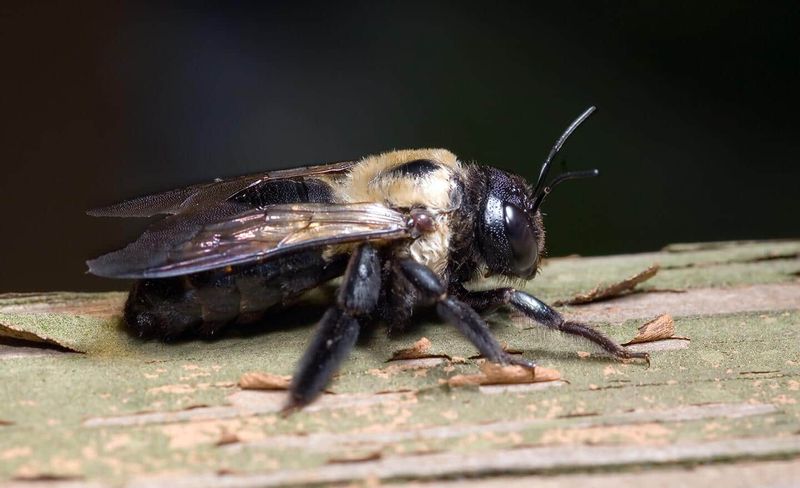
Choosing the wrong sealant can be a costly mistake. Not all sealants are created equal, and some may not provide adequate protection against carpenter bees. Envision applying a thin, ineffective sealant to your garden shed, only to find boreholes appearing weeks later.
Using oil-based or polyurethane sealants provides a more robust defense. Many people underestimate the importance of quality sealants, leading to ineffective protection. A strong sealant acts as a deterrent, discouraging bees from boring into treated wood. It’s a small investment that pays off in long-term protection.
8. Ignoring Weathering Signs
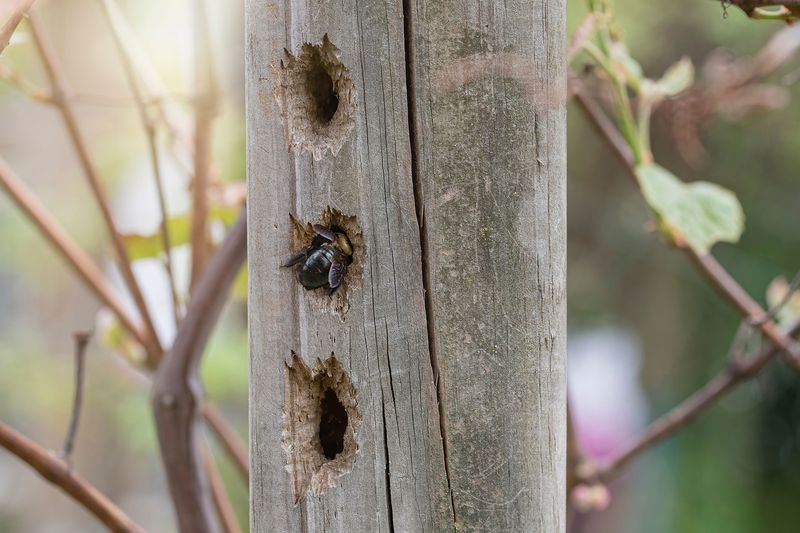
Weathered wood is an open invitation for carpenter bees. Cracks, warping, and discoloration are signs that the wood is vulnerable. Imagine a fence, gray with age, its weathered surface a testament to years of exposure. Such wood is irresistible to carpenter bees.
Regular maintenance can keep the wood in good condition, closing off potential entry points. Homeowners who ignore weathering signs may find their property becomes a favored target. Addressing these signs promptly can prevent bees from seeing your wood as an ideal nesting site.
9. Failing to Use Natural Repellents
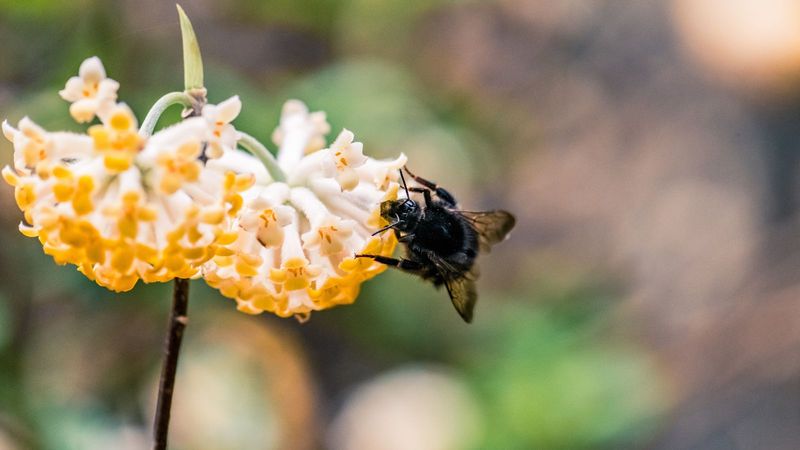
Nature provides its own solutions to carpenter bee problems. Aromatic plants like peppermint and eucalyptus can deter these insects. Picture a vibrant garden, lush with repellent plants, creating a natural barrier against bees.
Incorporating these plants around wooden structures is a simple and effective measure. However, many homeowners overlook this natural approach. The subtle aroma of these plants is unappealing to bees, making them an excellent addition to preventative strategies. Embracing nature’s repellents can beautifully protect your property from carpenter bee invasions.
10. Storing Wooden Debris Nearby
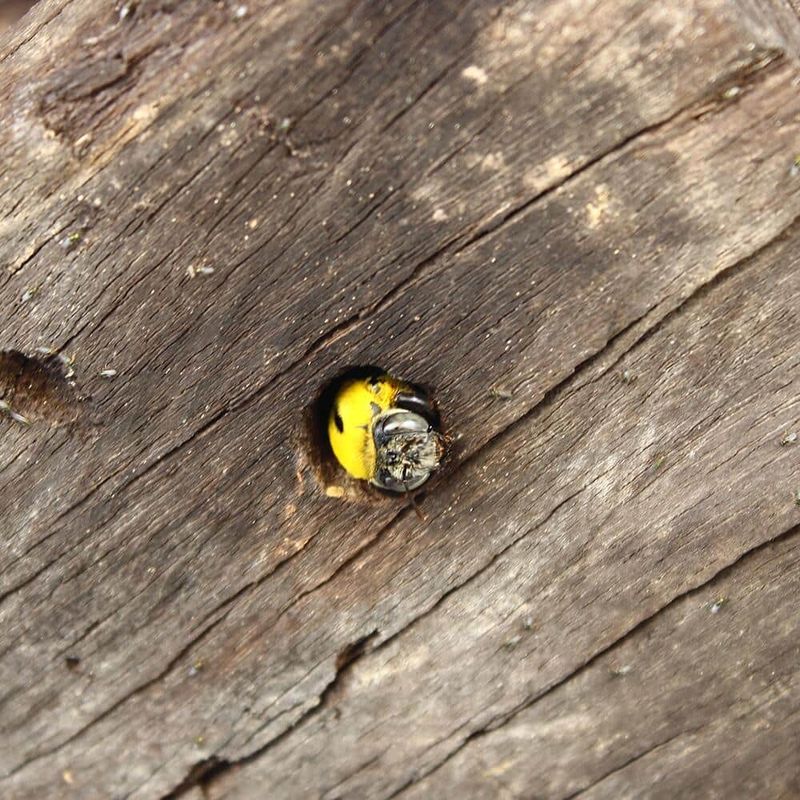
Wooden debris left near structures can attract carpenter bees. Piles of old wood provide ideal nesting material, drawing bees in. Imagine a cluttered backyard, dotted with forgotten wood piles – a paradise for wood-boring bees.
Clearing away such debris reduces the risk of infestation. Homeowners often overlook this simple cleanup task, inadvertently inviting bees to explore their property. Keeping areas tidy and free of wood piles is an effective way to minimize attraction. A clean yard not only looks better but helps keep carpenter bees at bay.
11. Neglecting Paint Maintenance
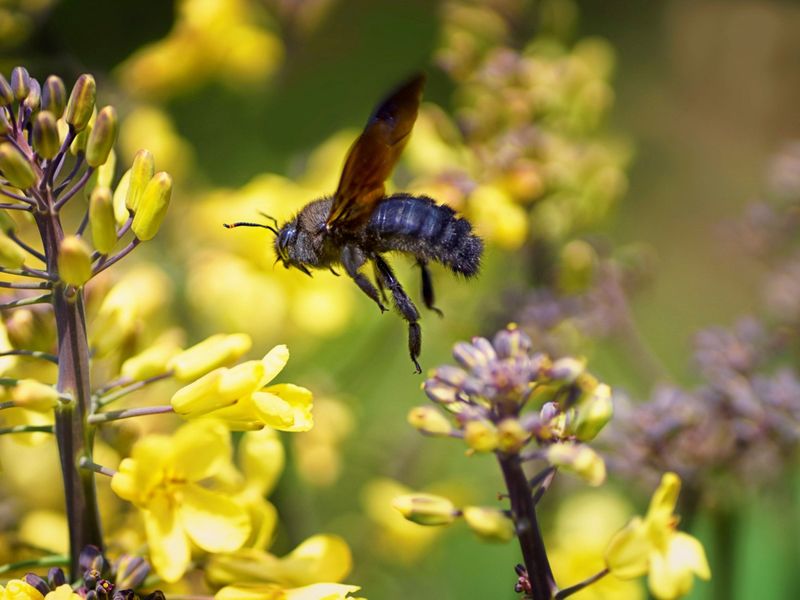
Peeling or cracked paint can entice carpenter bees. When paint deteriorates, it exposes the wood beneath, making it susceptible to infestation. Picture an old, weather-beaten porch with paint flaking away, revealing the raw timber underneath.
Regularly refreshing paint both protects the wood and enhances aesthetic appeal. Many homeowners neglect this upkeep, allowing bees to take advantage of exposed areas. Proper paint maintenance creates a barrier that’s challenging for bees to penetrate, reducing the likelihood of them choosing your property as their new home.
12. Providing Water Sources
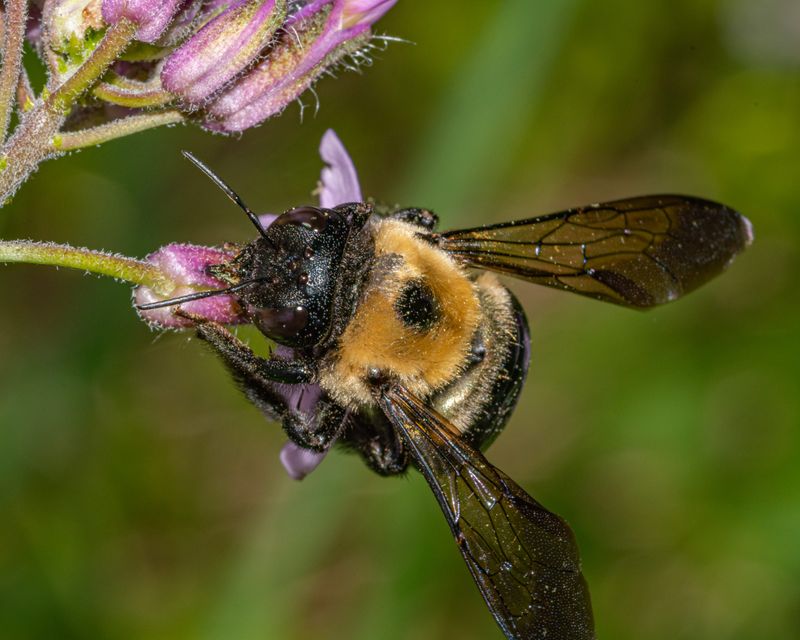
Standing water can attract carpenter bees indirectly. While they don’t need water themselves, moist wood becomes more appealing to them. Consider a garden with water features or poorly drained areas – these can lead to wood moisture problems.
Ensuring proper drainage and eliminating standing water helps keep wood dry and less inviting. Homeowners often overlook this indirect factor, focusing solely on the wood itself. A well-drained property not only benefits plant health but deters carpenter bees by keeping wood in optimal condition.
13. Ignoring Noise and Activity
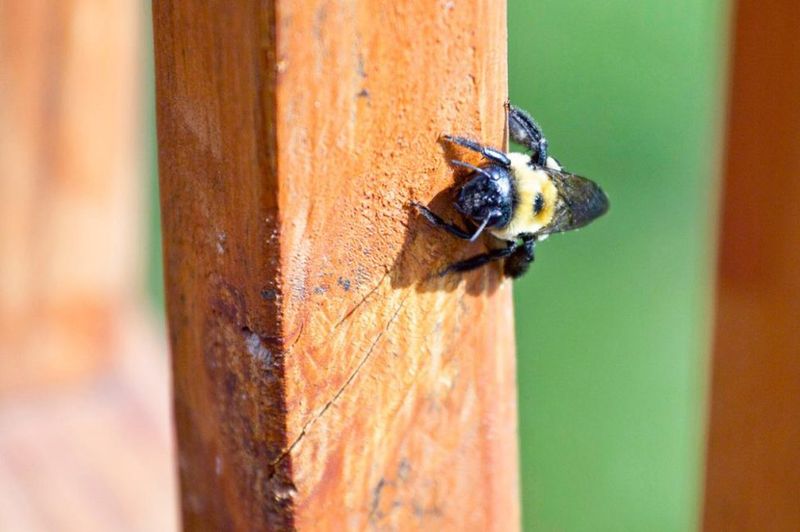
The sound of buzzing around wood can be an early warning sign of carpenter bees. Many ignore these audible clues, dismissing them as harmless. Imagine the persistent hum near your wooden deck, a subtle sign of an active bee presence.
Paying attention to these sounds can prompt quicker action, preventing further damage. Ignoring the noise allows bees to establish themselves and expand their nests. It’s a simple observation that can prevent significant structural damage, underscoring the importance of vigilance in protecting wooden structures.
1. Painting and Sealing Wood
Properly painting and sealing wood can deter carpenter bees effectively. A fresh coat of paint acts as a barrier, making the wood less appealing for nesting. Picture an elegantly painted gazebo, its surfaces smooth and uninviting to insects.
Choosing thick, oil-based paints enhances protection, creating a finish that’s harder for bees to penetrate. Maintaining this protective layer is a proactive step many overlook. Regular maintenance not only preserves appearance but provides ongoing defense against potential infestations, a smart move for any homeowner.
2. Installing Metal Flashing
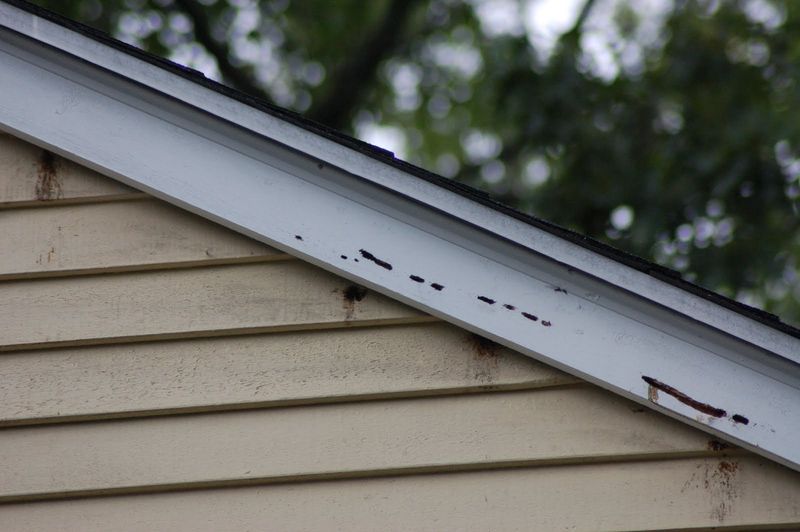
Metal flashing is an effective deterrent for carpenter bees. Installing it on vulnerable areas, such as corners and joints, makes boring impossible. Imagine a robust wooden patio reinforced with sleek metal flashing, securing every potential entry point.
This addition fortifies structures against bee intrusion. It’s a practical solution often missed in prevention plans. By combining aesthetics with functionality, metal flashing offers a discreet yet powerful defense. Investing in such measures ensures long-term protection, keeping your property free from unwanted bee attention.
3. Using Citrus Oil Spray

Citrus oil spray is a natural deterrent for carpenter bees. Its strong aroma is unpleasant to them, offering a simple solution for prevention. Visualize a fragrant mist enveloping your porch, forming an invisible shield against bees.
This eco-friendly approach is gaining popularity among homeowners. Applying it regularly creates an inhospitable environment for bees. It’s a gentle yet effective strategy that combines natural repellent properties with ease of use. Embracing such alternatives reflects a commitment to maintaining both environmental and structural integrity.
4. Setting Up Bee Traps
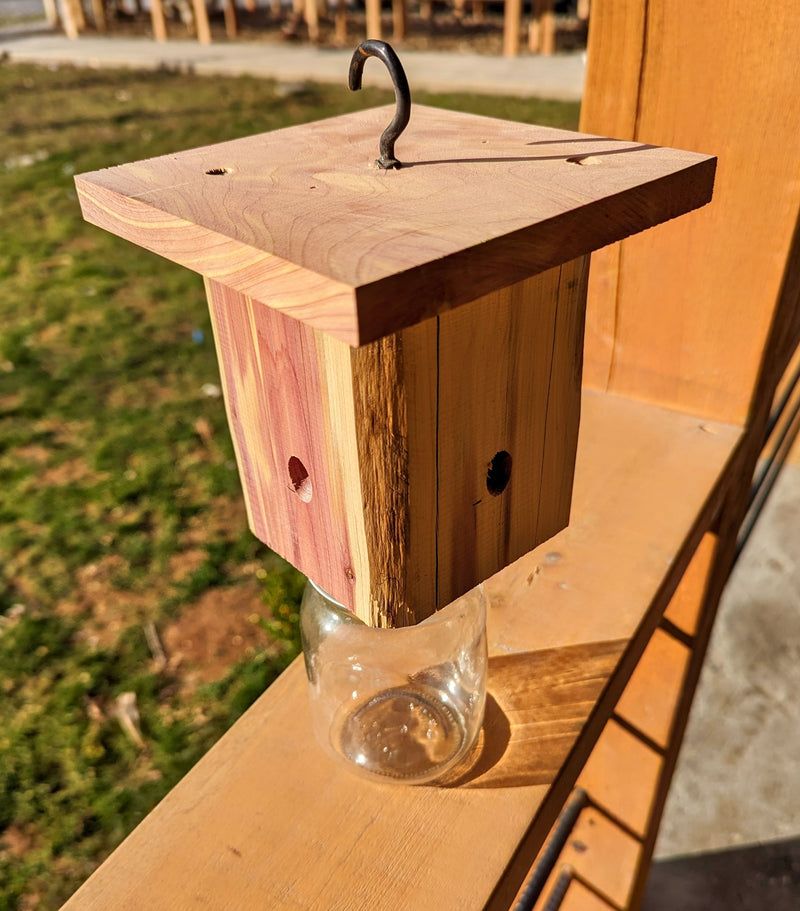
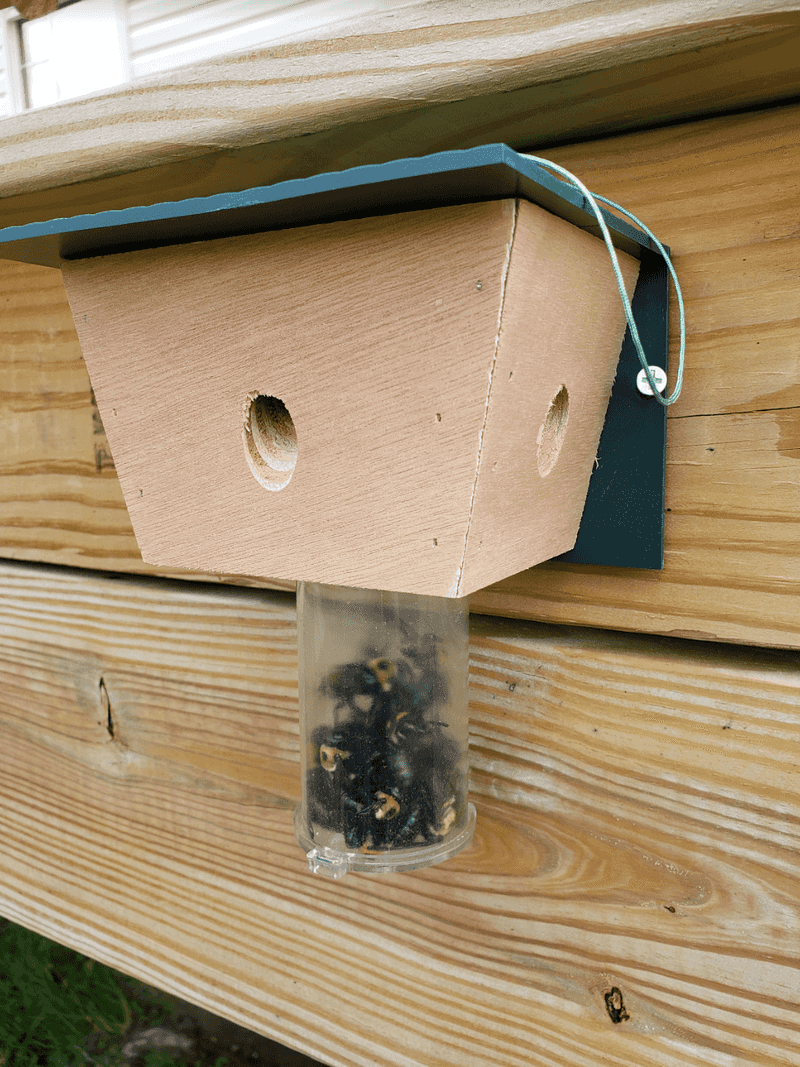
Bee traps provide a proactive way to manage carpenter bee populations. Designed to lure and contain bees, they prevent further nesting. Picture a neat garden with discreet traps, quietly doing their job without disrupting the ambiance.
These traps are a strategic addition to a comprehensive prevention plan. Many homeowners find them effective for reducing bee numbers. By capturing bees before they can settle, traps offer a straightforward solution to an otherwise complex problem. It’s a blend of innovation and tradition that helps keep properties bee-free.
5. Providing a Bee House
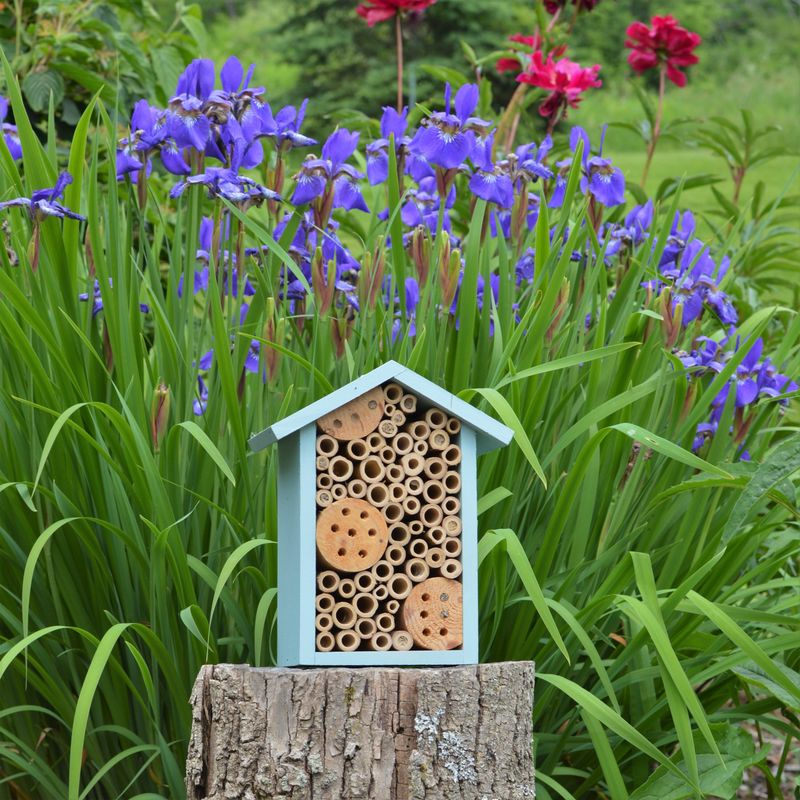
Offering a bee house can divert carpenter bees from your property. These alternatives provide a suitable nesting place away from wooden structures. Imagine a charming bee house nestled among flowers, drawing bees away from vulnerable areas.
This approach not only protects your wood but supports local ecosystems. It’s an eco-conscious choice that balances bee conservation with property protection. By redirecting bees to a designated area, homeowners can enjoy the benefits of pollination without the associated damage. It’s a win-win solution for nature and structure alike.
6. Encouraging Natural Predators

Welcoming natural predators can help control carpenter bee populations. Birds, for instance, can reduce bee numbers significantly. Picture a lively garden, buzzing with bird activity, naturally maintaining balance.
Providing birdhouses and feeders encourages these predators to visit. It’s a harmonious way to manage bees, utilizing the ecosystem’s own checks and balances. Many overlook this method, yet it offers a sustainable path to pest control.
Encouraging natural predators aligns with eco-friendly living, supporting biodiversity while protecting wooden structures from bee damage.