Complete Gardening
As the bright greens of summer fade into autumn’s golden tones, many homeowners assume lawn care can take a back seat. But fall is actually one of the most critical times of year for your yard’s health. What you do now determines how lush, strong, and vibrant your lawn will be next spring.
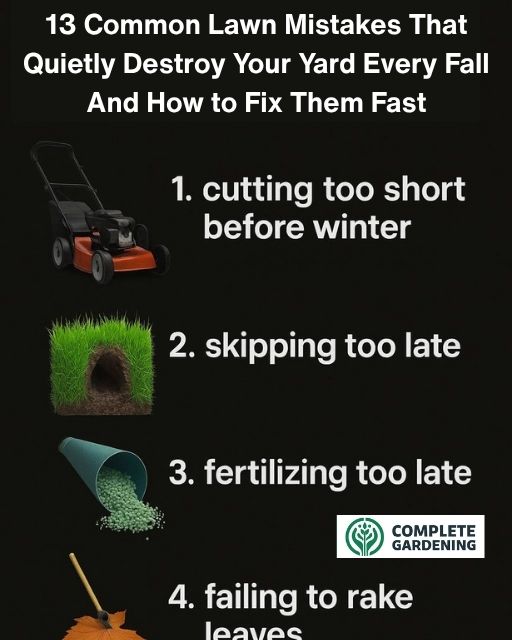
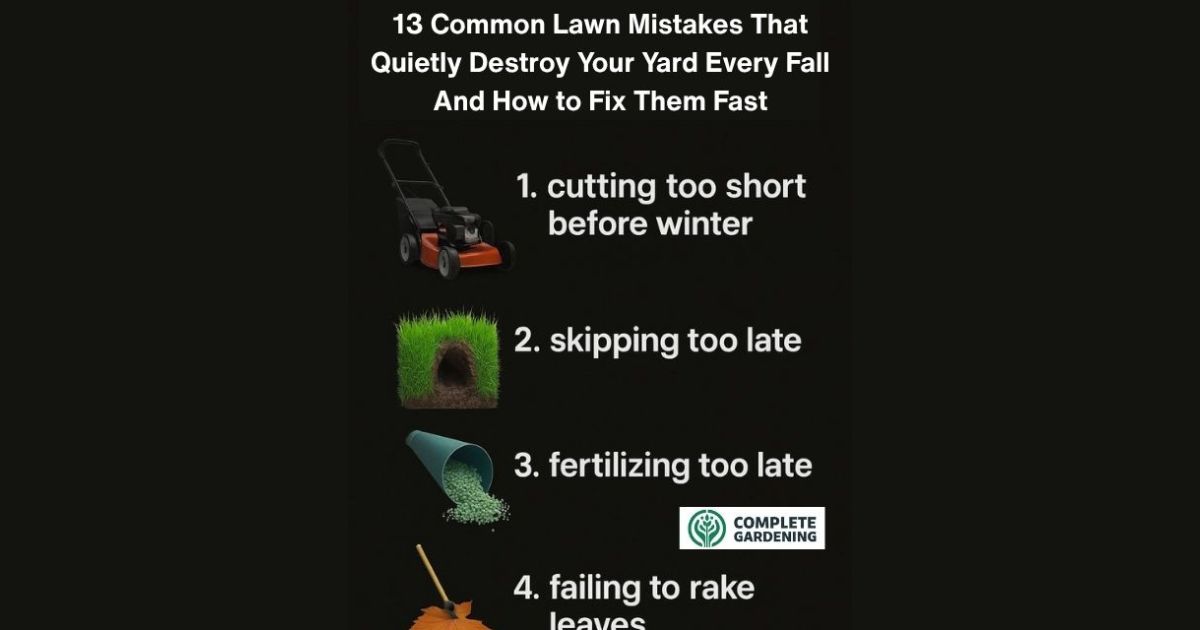
Unfortunately, small mistakes during this season can lead to weak roots, patchy grass, and pest problems. Here are 13 common lawn care mistakes that could be silently damaging your yard this fall — and the right way to avoid them.
1. Cutting the Grass Too Short Before Winter
Scalping your lawn might seem tidy, but cutting grass shorter than 2 inches leaves it vulnerable to frost, dehydration, and cold damage. Taller grass — around 2.5 to 3 inches — provides insulation for the roots and holds moisture better.
Short grass also exposes the soil to sunlight, encouraging weeds to take over. Keep your mower blades high to protect your lawn as it heads into winter dormancy.
2. Skipping Aeration Altogether
Compacted soil prevents air, water, and nutrients from reaching the roots. Aeration — poking small holes in the ground — allows your grass to “breathe” again and strengthens root growth.
If you’ve had heavy foot traffic all summer, your lawn definitely needs aeration in the fall. Perform it when the soil is slightly moist for best results.
3. Fertilizing Too Late in the Season
Applying fertilizer too late wastes nutrients and may encourage tender new growth that won’t survive the frost. The ideal time is early fall, when the grass is still actively growing.
Use a slow-release fertilizer high in potassium and phosphorus to build strong roots and prepare the lawn for winter.
4. Raking Too Aggressively
Raking helps remove suffocating leaf layers — but overdoing it can tear healthy grass and roots. Opt for a leaf blower or a flexible rake, and handle gently.
A thin layer of shredded leaves can actually help your lawn by acting as natural mulch, feeding the soil as it decomposes.
5. Ignoring Soil pH Levels
Your lawn’s health starts in the soil. Grass struggles if the soil’s pH is too acidic or too alkaline. Most grasses thrive in a pH between 6.0 and 7.0.
Test your soil in fall and adjust as needed using lime (to raise pH) or sulfur (to lower it). Balanced soil means better nutrient absorption and greener growth next spring.
6. Overwatering as Temperatures Drop
Cooler weather slows evaporation, meaning your lawn doesn’t need as much water. Overwatering at this stage can cause root rot and fungal growth.
Water only once a week or less, depending on rainfall, and aim for about 1 inch of water per week in total.
7. Neglecting the Fall Cleanup
Leaving behind fallen branches, sticks, or thick layers of leaves can smother grass and invite pests. This debris also contributes to thatch buildup, a dense layer that blocks nutrients.
A quick cleanup now keeps your lawn breathing freely through the colder months and prevents springtime headaches.
8. Forgetting to Adjust Mower Height
Your lawn’s needs change with the seasons. As temperatures drop, gradually lower your mower height to about 2 to 2.5 inches.
Avoid chopping off too much at once — never remove more than one-third of the grass blade in a single mow. Sudden, drastic cuts stress the lawn and weaken the roots.
9. Ignoring Fall Pest Prevention
Fall is prime time for pests like grubs, chinch bugs, and cutworms to settle in. Ignoring them now means they’ll feast on your grass roots all winter long.
Apply a natural or preventive treatment in early fall and inspect your yard regularly for damage. Healthy, well-fed grass can resist pests better than a neglected lawn.
10. Planting Grass Seed Too Late
Planting too close to the first frost prevents seeds from developing strong roots. Grass needs 6–8 weeks of growth before freezing weather hits.
The best window for seeding is early fall, when the soil is still warm but the air is cooler — ideal for germination and root establishment.
11. Skipping Mulching Around Trees and Beds
Mulch acts as insulation for the soil, conserving moisture and protecting roots from temperature swings. Yet many homeowners skip it in fall.
Apply 1–2 inches of organic mulch such as shredded leaves or wood chips around trees, shrubs, and flower beds. As it decomposes, it enriches the soil for spring growth.
12. Using the Wrong Type of Fertilizer
Not all fertilizers are equal. Fall calls for a formula low in nitrogen but high in potassium, which supports root strength and disease resistance.
Avoid using spring blends rich in nitrogen — they encourage top growth that won’t withstand frost. Look for blends like 10-0-20 for best results.
13. Ignoring Weeds in Fall
Weeds are still active in fall, even if you don’t see them spreading. Left untreated, they’ll steal nutrients from your grass and resurface stronger in spring.
Apply a pre-emergent herbicide to stop new weed seeds from sprouting, and spot-treat existing weeds. Staying on top of weed control now means fewer headaches later.
Final Thoughts: Set the Stage for a Strong Spring Lawn
Fall lawn care isn’t just about maintenance — it’s about preparation. By avoiding these 13 mistakes and giving your grass the right care now, you’re investing in a greener, thicker, and healthier lawn when spring returns.
A little attention this season goes a long way — your future self (and your lawn) will thank you.