Complete Gardening
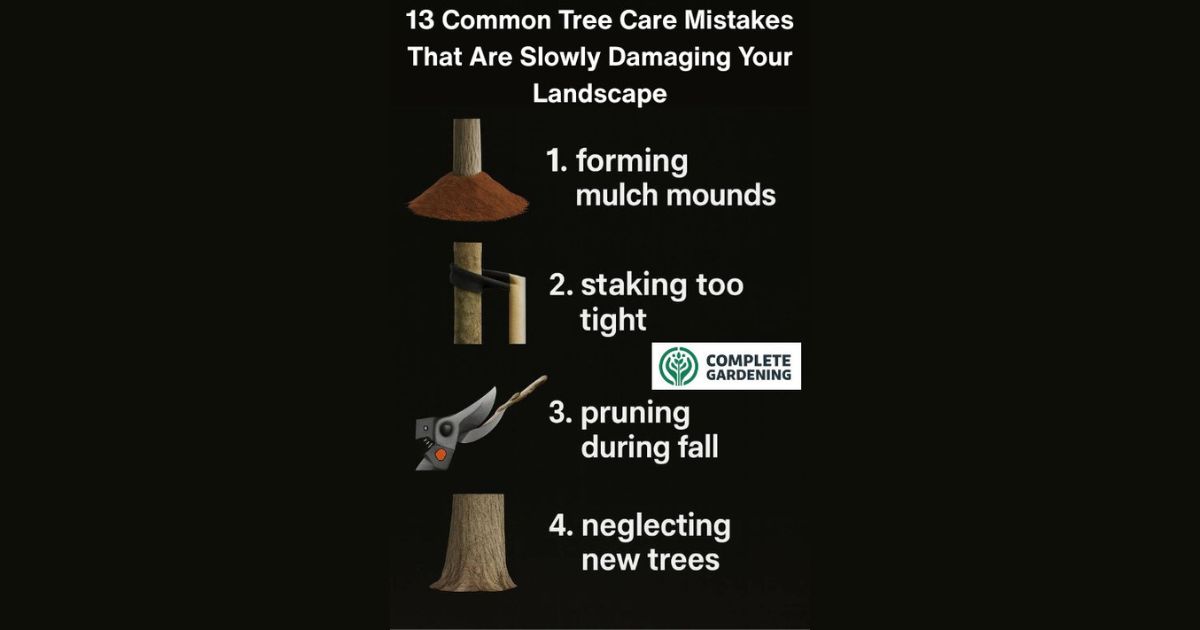
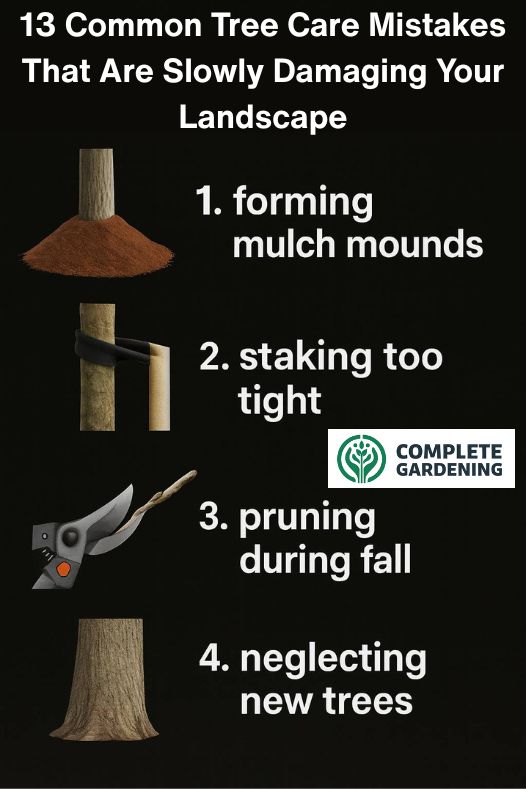
Proper tree care is essential for keeping your landscape beautiful and healthy. Trees provide shade, boost air quality, and increase property value—but even well-intentioned homeowners can make mistakes that harm them. Understanding these common errors can help you protect your trees and keep your garden thriving year after year. Here are 13 tree care mistakes that might be damaging your landscape and how to fix them before it’s too late.
1. Piling Mulch Too High
The “mulch volcano” is one of the most common and damaging tree care mistakes. Piling mulch against the trunk traps moisture, leading to bark decay and root rot. Instead, spread a 2–4 inch layer of mulch around the base, keeping it a few inches away from the trunk. This helps retain moisture without suffocating the roots.
2. Staking Too Tightly
While staking helps young trees grow straight, tying them too tightly restricts natural movement and weakens the trunk. Use soft, flexible ties that allow slight movement, and remove the stakes after one or two years to prevent girdling.
3. Pruning at the Wrong Time
Pruning in fall can stimulate tender new growth that’s easily damaged by frost. It’s best to prune in late winter or early spring before new growth begins. This timing helps trees heal quickly and reduces the risk of disease.
4. Ignoring Girdling Roots
Roots that wrap around the trunk can choke your tree over time. Symptoms include stunted growth and poor vigor. If you spot girdling roots, call an arborist to remove them properly. Early action can save your tree from long-term decline.
5. Overwatering
Too much water is as harmful as too little. Constantly soggy soil can cause root rot and deprive roots of oxygen. Water deeply once a week, letting the soil dry out between sessions. Adjust for rainfall and soil type.
6. Planting Too Deep
Burying a tree too deep suffocates the roots and prevents oxygen flow. The root flare—where the trunk meets the roots—should always be visible above the soil line. Planting at the right depth ensures a strong, stable foundation.
7. Skipping Regular Inspections
Trees can’t tell you when they’re stressed, so it’s important to inspect them at least twice a year. Look for dead branches, discoloration, or cracks. Early detection of problems like pests or disease can save your tree from decline.
8. Using Dull Pruning Tools
Blunt pruning tools create jagged wounds that heal slowly and invite disease. Always sharpen your tools and disinfect them between cuts to prevent spreading infections. Clean cuts help trees recover faster.
9. Leaving Dead Wood Untouched
Dead branches can harbor pests and fungi while posing safety risks during storms. Remove dead wood promptly, cutting back to healthy tissue at the branch collar to encourage natural healing.
10. Fertilizing Incorrectly
Both over-fertilizing and under-fertilizing can harm your trees. Too much fertilizer causes weak, fast growth; too little leads to nutrient deficiencies. Test your soil before applying any fertilizer and follow professional recommendations carefully.
11. Ignoring Pest Problems
Pests like borers and aphids can cause serious damage if left unchecked. Inspect leaves and bark regularly for signs such as holes, sap, or chewed foliage. Use natural pest control methods like neem oil or beneficial insects instead of harsh chemicals.
12. Planting in the Wrong Light
Each tree species has specific sunlight needs. A sun-loving tree planted in shade—or a shade-loving one in full sun—will struggle to grow properly. Always check your tree’s light requirements before choosing a planting location.
13. Planting Trees Too Close Together
Overcrowded trees compete for nutrients, water, and sunlight, leading to weak growth and disease. Always leave 10 to 30 feet between trees depending on their mature size. Proper spacing ensures healthy canopies and strong root systems.
Conclusion: Give Your Trees the Care They Deserve
Avoiding these common mistakes can make a world of difference in your landscape’s health and longevity. Proper watering, planting depth, pruning, and inspection go a long way in keeping your trees strong and resilient. With just a little extra attention, you’ll enjoy beautiful, thriving trees that enhance your garden for decades.