Mulching is one of the simplest yet most powerful ways to improve your garden. It helps lock in soil moisture, regulate temperature, suppress weeds, and make your garden look clean and polished. But when done incorrectly, it can actually harm your plants instead of helping them.
Many gardeners unknowingly make small mulching errors that slowly damage their soil, roots, and plants. Here are 15 common mulching mistakes that might be ruining your garden – and how to fix them so your plants can truly thrive.
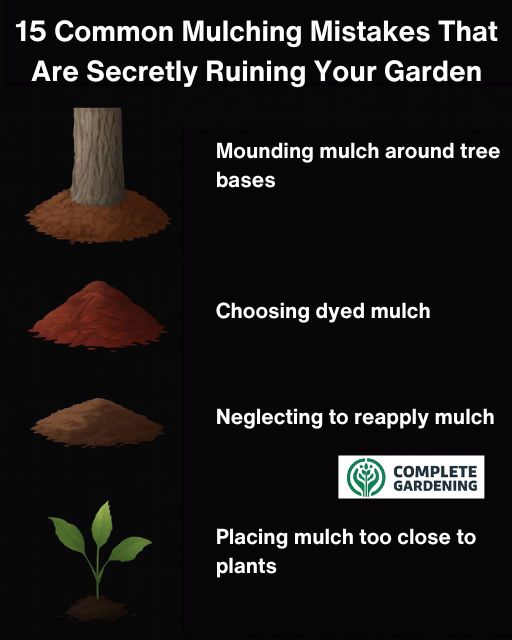
1. Piling Mulch Against Tree Trunks
Also known as “volcano mulching,” piling mulch high against tree trunks is one of the worst things you can do. It traps moisture around the bark, encouraging fungal growth, rot, and pests.
Instead, spread mulch in a donut shape around the tree, keeping it 2–3 inches away from the trunk. The mulch layer should be 2–4 inches thick to retain moisture without suffocating the roots.
2. Using Dyed or Painted Wood Mulch
Colored mulch might look attractive, but it can be harmful. Dyed mulches are often made from recycled wood that may contain chemicals or pressure-treated lumber. These toxins can leach into your soil and harm your plants.
Stick with natural, organic mulches like shredded bark, pine straw, or compost for a safer and healthier garden.
3. Never Replacing Old Mulch
Leaving mulch in place year after year causes compaction and prevents air and water from reaching the soil. Over time, old mulch forms a dense layer that suffocates plant roots.
Refresh your mulch once a year by removing the old, compacted material and adding a new 2–3 inch layer.
4. Spreading Mulch Over Weeds
Simply covering weeds with mulch won’t stop them. Tough weeds will grow through the mulch and compete with your plants for nutrients.
Always remove existing weeds before applying mulch. You can also add a layer of newspaper or cardboard underneath to block future growth naturally.
5. Applying Mulch Too Thick
A thick mulch layer can block water and oxygen from reaching plant roots. Too much mulch also creates a damp environment where mold and rot thrive.
Stick to the golden rule: 2–4 inches is plenty. Thin it to 1–2 inches around delicate plants or in areas with poor drainage.
6. Using the Wrong Type of Mulch
Not all mulches serve the same purpose. Organic mulches (like bark, leaves, or straw) decompose and enrich the soil. Inorganic mulches (like gravel or plastic) last longer but can trap heat and reduce aeration.
Choose mulch that suits your garden’s needs: organic for vegetable and flower beds, inorganic for paths or decorative spaces.
7. Forgetting That Mulch Breaks Down Over Time
Organic mulch naturally decomposes, which improves soil health – but it also means it needs regular replenishment.
Check your mulch layer every few months and top it up as needed to maintain consistent coverage and effectiveness.
8. Ignoring Soil Type
Your soil type determines how much mulch you should use. Clay soils already hold water well, so too much mulch can cause sogginess. Sandy soils, on the other hand, dry out fast and benefit from a thicker layer.
Conduct a quick soil test and adjust mulch depth to match your soil’s needs for the best results.
9. Mulching Too Close to Plant Stems
Just like trees, perennials and shrubs need breathing room. Mulch piled directly against plant stems can cause rot and attract insects.
Keep mulch 2–3 inches away from plant stems to allow airflow and reduce the risk of disease.
10. Forgetting to Water After Mulching
Mulch can act as a barrier, preventing water from penetrating dry soil. Always water thoroughly after applying mulch to help it settle and ensure the soil beneath is hydrated.
Make watering a final step after every mulching session to give your plants a strong start.
11. Misusing Inorganic Mulch
Gravel, stones, and landscape fabric can work well in the right setting, but if installed incorrectly, they can suffocate roots or trap too much heat.
If using inorganic mulch, make sure there’s proper drainage underneath and avoid compacting it too tightly.
12. Not Adjusting Mulch Seasonally
Mulch depth should change with the seasons. In winter, a thicker layer helps insulate roots, while in summer, a thinner layer prevents overheating.
Check your mulch each season and adjust the thickness to keep your plants comfortable year-round.
13. Ignoring Mulch’s Effect on Soil pH
Certain organic mulches, like pine needles, can slowly acidify the soil. While this is great for acid-loving plants (such as azaleas and blueberries), it can harm others.
Monitor your soil’s pH yearly and choose mulch that matches your plant’s preferences.
14. Forgetting About Pests
Some types of mulch, especially wood chips, can attract unwanted pests like termites or rodents.
If pests are a concern, choose cedar or cypress mulch, which naturally repels insects. Always avoid piling mulch directly against your home’s foundation.
15. Overlooking Aesthetic Balance
Mulch isn’t just functional – it’s part of your garden’s design. Choosing the wrong color or texture can clash with your plants and landscaping style.
Select mulch that complements your garden’s overall look. Rich brown or natural bark tones usually blend well with most garden settings.
Conclusion – Mulch Smart, Not Hard
Mulch can be a gardener’s best friend – or worst enemy – depending on how you use it. By avoiding these 15 common mistakes, you’ll keep your plants healthy, your soil balanced, and your garden looking beautiful all year long.
Take the time to mulch properly, refresh it regularly, and choose the right type for your soil and plants. The result? A thriving, vibrant garden that rewards you with color, growth, and life season after season.