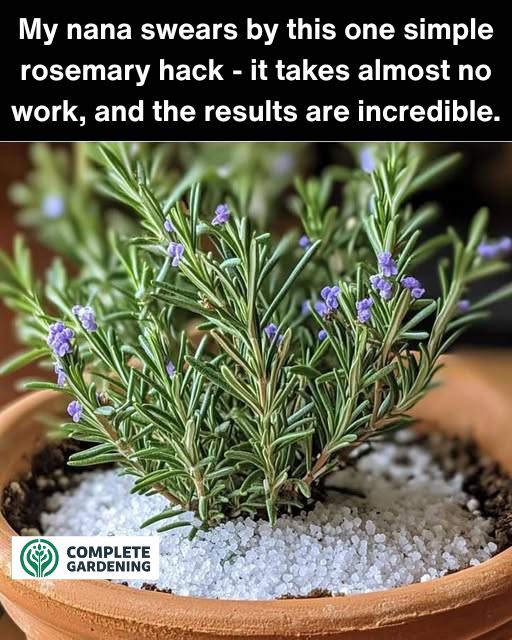
Growing rosemary in a pot sounds simple — until you try it. Many gardeners end up with woody, sparse plants that never seem to thrive. But according to my nana, who’s been growing herbs for decades, there’s an easy fix that completely transforms rosemary into a lush, fragrant plant you’ll be proud to show off (and cook with).
Her trick? A pinch of Epsom salt and a few simple care habits that make all the difference. Here’s her exact method — and how you can get the same stunning results.
1. Nana’s Secret: Epsom Salt Magic
Epsom salt (magnesium sulfate) might sound like an odd choice, but it’s the key to her thriving rosemary plants. Magnesium fuels photosynthesis and helps rosemary absorb essential nutrients more effectively.
To use it, dissolve 1 tablespoon of Epsom salt in 1 gallon of water, and use this to water your rosemary once a month. You’ll notice the leaves becoming greener, thicker, and more fragrant within weeks.
2. Know What Rosemary Really Needs
Rosemary comes from the Mediterranean, so it loves warmth, sunlight, and well-drained soil. Think dry hillsides and sea breezes — not soggy pots. It thrives best in soil with a pH between 6.0 and 7.0, and it can handle drought far better than overwatering.
In short: let it dry slightly between waterings. Wet roots are rosemary’s worst enemy.
3. Pick the Perfect Pot
A good pot makes or breaks rosemary’s success. Choose one that’s at least 12 inches wide, with plenty of drainage holes. A terracotta pot is ideal — it allows air to circulate and excess water to evaporate, keeping roots healthy.
Avoid plastic pots that trap moisture; rosemary prefers dry feet and fresh air.
4. Create the Right Soil Mix
Rosemary hates compact, soggy soil. Make your own perfect blend by mixing:
- 1 part potting mix
- 1 part coarse sand
- 1 part perlite
This combination keeps the soil light and airy while draining quickly. You can also mix in a slow-release fertilizer at planting time for a nutrient boost, but avoid overfeeding — too much fertilizer causes leafy growth with less flavor.
5. Drainage Is Everything
Good drainage isn’t optional — it’s essential. Start with a layer of gravel or small stones at the bottom of the pot to prevent soil compaction. Then make sure your pot drains freely after every watering.
Standing water leads to root rot fast, so never let water collect in the saucer beneath your pot.
6. Watering the Right Way
Rosemary likes a soak-and-dry rhythm. Water deeply, let the soil drain, then wait until the top inch feels dry before watering again.
During hot weather, you may need to water every few days, but in winter, cut back drastically — the plant’s growth slows, and too much moisture can do real damage.
7. Sunlight: The Secret to Flavor and Growth
Rosemary is a sun lover. It needs 6–8 hours of direct sunlight each day. Outdoors, place it on a bright patio or balcony. Indoors, a south-facing window is perfect — or use a grow light if sunlight is limited.
Insufficient light makes rosemary leggy and weak, and reduces the aromatic oils that give it that signature scent and flavor.
8. Prune for Full, Bushy Growth
Want your rosemary to grow thick and lush instead of tall and sparse? The secret is regular pruning. Trim back the tips every few weeks during the growing season.
Cut just above a leaf node to encourage branching. This stimulates lateral growth, improving airflow and keeping your plant compact and vibrant.
9. Keep Pests in Check Naturally
Rosemary is generally pest-resistant, but it can occasionally attract aphids, spider mites, or whiteflies. If that happens, spray the leaves with neem oil or insecticidal soap, covering both sides of the leaves.
To prevent problems, ensure good airflow around the plant and avoid overwatering — damp conditions attract pests fast.
10. Seasonal Rosemary Care
- Spring: Feed with a balanced fertilizer and prune lightly.
- Summer: Water regularly and ensure plenty of sun.
- Fall: Slow down watering and bring the plant indoors if frost threatens.
- Winter: Place in a bright spot, reduce watering, and protect from cold drafts.
Before returning your rosemary outdoors in spring, gradually reintroduce it to sunlight to prevent shock.
11. Harvesting and Using Rosemary
To harvest, cut the top few inches of soft growth using sharp scissors. Avoid stripping the woody base, as that slows regrowth.
Fresh rosemary elevates everything from roasted chicken to homemade bread. For later use, hang stems upside down in a cool, airy space until dry. Store in an airtight jar to preserve that amazing aroma all year long.
Conclusion – Nana Was Right All Along
With the right pot, soil, sunlight, and just a touch of Epsom salt, growing rosemary in a container is easier than you think. This simple trick keeps your plant full, fragrant, and flavorful all year round.
So, the next time you water your rosemary, remember Nana’s advice — a pinch of Epsom salt might be all it needs to thrive.