Starting seeds in winter might sound strange, but it’s one of the smartest gardening strategies you can use. While most people are waiting for spring, seasoned gardeners are already nurturing strong seedlings indoors — ready to burst into life the moment the frost fades.
The secret is doing it right. Many gardeners think they can treat winter seed starting like any other planting season — but cold conditions demand a different approach. Here’s how to start seeds the right way this winter and ensure your plants grow stronger, faster, and healthier than ever.
1. Timing Is Everything
Start too early, and your seedlings will outgrow their pots before spring arrives. Start too late, and you’ll lose the head start winter sowing offers.
The golden rule: start seeds 6–10 weeks before your last expected frost date.
Tomatoes and peppers love an early start, while faster growers like cucumbers or squash can wait until closer to spring. Always check your seed packets — each plant has its own rhythm.
2. Pick the Right Seeds for Cold Weather
Not every plant is built for winter sowing. Choose cold-hardy annuals, perennials, and vegetables like kale, spinach, broccoli, and cabbage. These varieties thrive in chilly conditions and can handle the unpredictable swings of late winter.
Some seeds actually need cold to germinate — a process called stratification. Plants like lavender, lupine, and milkweed are perfect candidates. Winter naturally provides that cold period for them.
3. Use Grow Lights — Windows Aren’t Enough
One of the biggest mistakes gardeners make is relying on window light. Winter sunlight is too weak and too short to support strong seedlings.
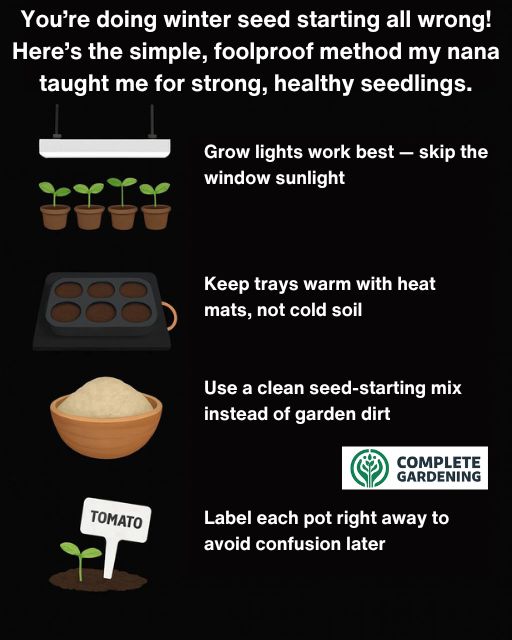
Use grow lights, positioned about 2–4 inches above the plants, and keep them on for 14–16 hours daily. A simple timer makes it effortless. Your seedlings will grow compact, green, and sturdy instead of tall and leggy.
4. Keep the Soil Warm with Heat Mats
Cold soil slows germination. The fix? Seedling heat mats.
Set your trays on a mat heated to 70–75°F (21–24°C) for faster sprouting and stronger roots. Use a soil thermometer to monitor the temperature — consistency is key.
5. Always Use Sterile Seed-Starting Mix
Never use garden dirt for seed starting. It’s heavy, compact, and often filled with fungi or pests.
Instead, use a sterile, lightweight seed-starting mix made from peat moss, vermiculite, and perlite. This ensures excellent drainage, moisture balance, and a disease-free environment for delicate seedlings.
6. Choose Containers with Proper Drainage
Seedlings hate soggy roots. Use trays, cell packs, or even recycled containers — as long as they have drainage holes.
A depth of 2–3 inches is ideal. If your pots are deeper, avoid filling them completely; excess soil traps too much water.
7. Label Everything Right Away
It’s surprisingly easy to forget which seeds are which once they sprout. Use waterproof plant markers or wooden sticks to label each tray with the plant name and sowing date.
Good labeling helps you track germination times and compare growth later in the season.
8. Keep Moisture Consistent (But Not Too Wet)
Overwatering is one of the top reasons seedlings fail. Keep the soil evenly moist, not soggy.
Use a spray bottle to mist the surface instead of pouring water directly. Cover trays with a clear plastic dome or wrap to trap humidity — but remove it once the first sprouts appear to prevent mold.
9. Don’t Forget Air Circulation
Seedlings grown in still, humid air are prone to damping-off — a fungal disease that kills them fast.
Run a small fan on low nearby to gently move air around the trays. This strengthens the seedlings, helps them develop sturdier stems, and keeps diseases at bay.
10. Transplant at the Right Time
Wait until seedlings have two sets of true leaves before transplanting. Then begin the hardening-off process — gradually introducing them to outdoor conditions.
Start with a few hours in the shade, then slowly increase their time outdoors over 7–10 days. Once the frost risk passes, plant them in the garden at the same depth they grew indoors.
11. Common Mistakes That Ruin Winter Seedlings
Overwatering: Causes root rot and fungal diseases.
- Not enough light: Leads to weak, leggy seedlings.
- Starting too early: Forces you to repot plants before the garden is ready.
- Skipping airflow: Encourages mold and weak growth.
Avoid these, and your seedlings will thrive long before spring even begins.
Conclusion – Start Smart, Grow Strong
Winter seed starting isn’t complicated — it’s just different. With the right timing, warmth, light, and airflow, you can grow vigorous, garden-ready plants that thrive the moment they hit the soil.
By following these simple steps, you’ll save money, enjoy earlier harvests, and step into spring with a flourishing head start — while everyone else is just opening their seed packets.