Hydrangeas are among the most beloved garden flowers, famous for their lush clusters of pink, blue, or white blooms that bring elegance and color to any landscape. But here’s a gardening truth few realize — even the healthiest hydrangeas can struggle to bloom beautifully if fertilized incorrectly.
Many gardeners think “more fertilizer = more flowers,” but that’s one of the biggest mistakes you can make. The secret lies in understanding what nutrients hydrangeas truly need and when to give them. Here’s the right way to fertilize hydrangeas for stunning, full blooms every season.
1. Know What Hydrangeas Really Need
Like all plants, hydrangeas thrive on a balance of three primary nutrients: Nitrogen (N) for lush leaves, Phosphorus (P) for strong roots and vibrant blooms, and Potassium (K) for overall plant health.
But balance is key. Too much nitrogen will make your hydrangea grow plenty of green leaves — but at the cost of those gorgeous flowers. A fertilizer with a balanced N-P-K ratio, like 10-10-10, is ideal for healthy growth and consistent flowering.
Hydrangeas also benefit from micronutrients like magnesium, calcium, and iron, which support color vibrancy and overall plant vigor.
2. The Biggest Fertilization Mistakes Gardeners Make
Even experienced gardeners slip up when it comes to feeding hydrangeas. Avoid these common pitfalls if you want to see your plants thrive.
- Overloading with Nitrogen: Too much nitrogen encourages leaf growth, not blooms. Stick to a balanced fertilizer and follow label directions carefully.
- Using the Wrong Fertilizer: Lawn fertilizers or general-purpose plant food often contain excessive nitrogen. Instead, choose one labeled for flowering plants or hydrangeas specifically.
- Fertilizing at the Wrong Time: Fertilize once in early spring when new growth begins, and again in mid-summer if needed. Avoid late-season feeding — it encourages tender new growth that can die back in winter.
- Ignoring Soil pH: Hydrangeas are sensitive to pH. Acidic soil (pH below 6) makes blue flowers, while alkaline soil (pH above 7) turns them pink. Regular soil testing ensures proper nutrition and color control.
- Not Knowing Your Hydrangea Type: Bigleaf hydrangeas (Hydrangea macrophylla) respond strongly to pH changes, while panicle (H. paniculata) and smooth (H. arborescens) hydrangeas are less affected. Tailor your fertilizer plan accordingly.
3. The Right Way to Fertilize Your Hydrangeas
Start each spring by feeding your hydrangeas with a slow-release, balanced fertilizer (10-10-10). Sprinkle it evenly around the base of the plant, about 6–8 inches from the stem, and water deeply afterward to help nutrients reach the roots.
If your hydrangeas still show signs of nutrient deficiency — such as pale leaves or weak blooms — add a second light feeding in mid-summer. Avoid fertilizing after August, as this can encourage new growth that may not survive the cold.
4. A Simple Feeding Schedule for Strong, Healthy Plants
- Early Spring: Apply a slow-release granular fertilizer once.
- Mid-Summer: Supplement with a liquid fertilizer every 4–6 weeks if needed.
- Late Summer/Fall: Stop fertilizing and let the plants prepare for dormancy.
Always water your hydrangeas before applying fertilizer — never feed dry soil, as it can burn the roots.
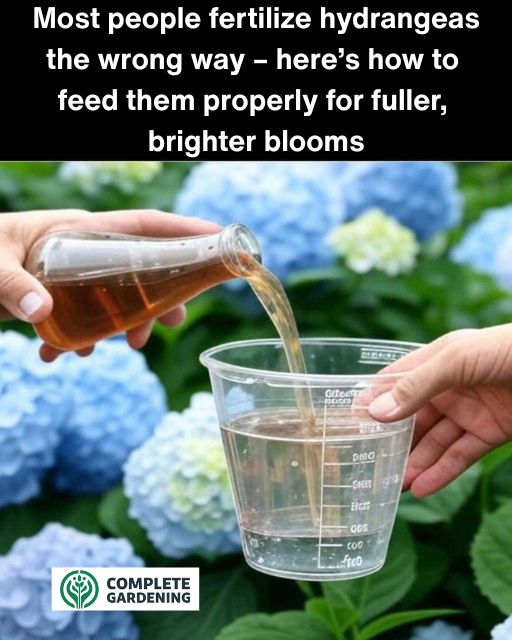
5. DIY Fertilizer Recipe for Hydrangeas
If you prefer a natural, homemade option, try this DIY hydrangea fertilizer mix:
- 1 tablespoon Epsom salt (magnesium source)
- 1 tablespoon baking soda (mild pH balancer)
- 1 tablespoon ammonia (nitrogen boost)
Mix these in 1 gallon of water and use as a soil drench or foliar spray every 4–6 weeks. This gentle formula provides essential nutrients while improving bloom quality.
6. Adjust Feeding Based on Bloom Color
Hydrangea color isn’t just about genetics — it’s influenced by soil chemistry.
- For blue flowers, make soil more acidic by adding aluminum sulfate or coffee grounds.
- For pink flowers, make soil more alkaline by adding garden lime.
Always test your soil first to avoid overcorrecting and stressing your plants.
7. Watch for Signs of Over- or Under-Fertilizing
Keep an eye on your plants — they’ll tell you what they need.
- Too much fertilizer: Yellowed leaves with brown edges, rapid leaf growth but few blooms.
- Too little fertilizer: Pale leaves, stunted growth, and small or faded flowers.
Adjust accordingly and test your soil every 2–3 years to keep nutrients balanced.
8. Why Proper Fertilizing Makes All the Difference
Fertilizing hydrangeas the right way doesn’t just boost flower production — it enhances color intensity, strengthens stems, and improves disease resistance. The result is a fuller, healthier plant that produces abundant blooms season after season.
Conclusion – A Better Way to Feed Your Hydrangeas
Beautiful hydrangeas start with smart feeding habits. By avoiding common fertilizing mistakes and sticking to a balanced, well-timed routine, you’ll unlock the full potential of these stunning garden favorites.
Whether you use a store-bought blend or your own DIY formula, remember — less is often more. The right balance, proper timing, and attention to soil pH can transform your hydrangeas from average to absolutely spectacular.