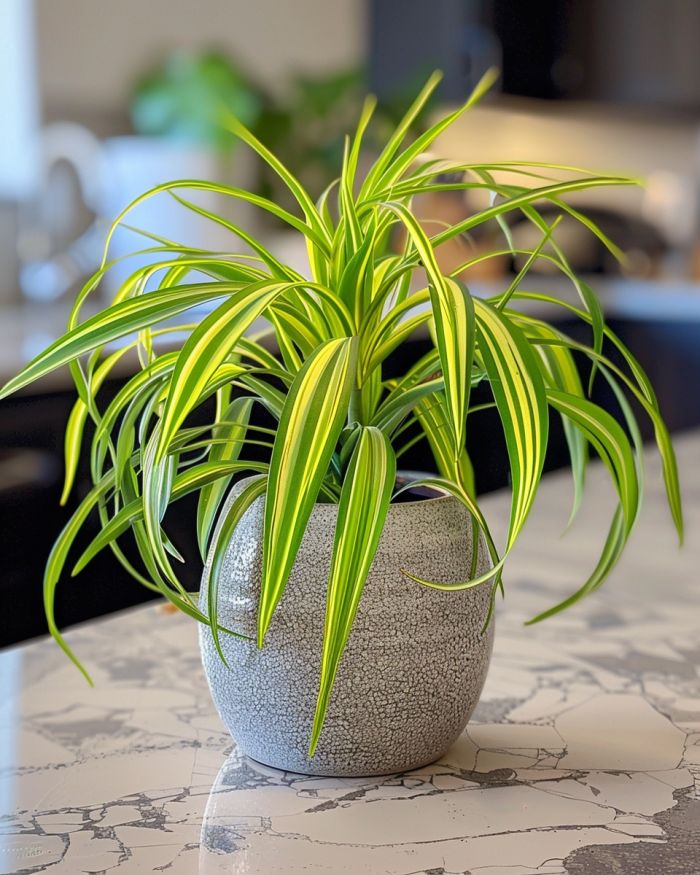
Spider plants are household favorites for a reason – they’re easy to care for, beautifully arching, and great at purifying indoor air. But even the hardiest spider plants need the right care to reach their full potential. If your plant looks a bit sparse or dull, a few simple adjustments can turn it into a lush, vibrant showpiece.
Here are seven proven tips to help your spider plant grow bushier, healthier, and more vibrant.
1. Give It Plenty of Bright, Indirect Light
Spider plants love bright, indirect sunlight. Too little light slows their growth and reduces the number of baby shoots they produce. Place your plant near a bright window where it gets filtered light – an east- or north-facing window works perfectly. Avoid direct sunlight, which can scorch the leaves.
2. Water the Right Way – Not Too Much, Not Too Little
Spider plants prefer evenly moist soil but hate sitting in water. Let the top inch of soil dry before watering again. Overwatering can cause root rot, while underwatering can lead to brown leaf tips. Always use a well-draining pot and empty any standing water from the saucer.
3. Feed Sparingly with a Balanced Fertilizer
During the growing season (spring through early fall), feed your spider plant every 2–4 weeks with a balanced, water-soluble fertilizer. This provides the nutrients it needs for strong growth. Be careful not to overdo it — too much fertilizer can burn the leaves and stunt growth.
4. Prune Regularly for a Fuller Look
Trimming helps your spider plant redirect energy into new growth. Use clean scissors to cut off any yellow or brown leaves and trim damaged tips. Removing old growth stimulates the plant to produce new shoots, giving it a denser, bushier appearance.
5. Re-pot When Roots Get Crowded
Spider plants grow fast and can become root-bound, meaning the roots fill up the pot and have nowhere else to go. If you see roots growing through the drainage holes, it’s time to re-pot. Move your plant into a slightly larger pot with fresh soil to give it space to expand.
6. Propagate the Spiderettes
Those little baby plants, or “spiderettes,” hanging from the main plant can be used to grow new spider plants. Snip them off and place them in water or moist soil until they root. Propagating not only gives you more plants but also helps your main plant stay compact and bushy.
7. Maintain Ideal Humidity and Temperature
Spider plants thrive in moderate humidity and temperatures between 65–75°F (18–24°C). If your home is dry, especially in winter, try misting the leaves occasionally or using a humidity tray. Keep your plant away from cold drafts and heating vents, as sudden temperature changes can stress it.
Final Tip: A Little Care Goes a Long Way
Spider plants are naturally resilient, but with consistent watering, proper light, and occasional pruning, they’ll reward you with lush green leaves and plenty of offshoots. Follow these seven tips, and your spider plant will stay full, healthy, and stunning all year round.