Growing your own vegetables isn’t just about saving money — it’s about taking control of your food, living healthier, and enjoying the satisfaction of harvesting fresh produce right from your home. When you grow your own food, you decide what goes into the soil and what stays out, eliminating harmful chemicals and pesticides. Plus, the cost savings and environmental benefits make home gardening a truly sustainable choice.
Let’s explore how you can grow 15 delicious, nutrient-packed vegetables right at home — even all year round.
Understanding the Basics of Indoor Gardening
Successful home gardening starts with knowing what your plants need: light, water, and good soil. Most vegetables require at least six hours of sunlight each day. If you’re gardening indoors, supplement with LED grow lights to mimic natural light. Keep soil consistently moist but not soggy, and use a nutrient-rich potting mix to promote strong root growth. With the right setup, even small spaces can produce abundant harvests.
Essential Tools and Materials You’ll Need
You don’t need a full greenhouse to start — just the basics:
- Containers or pots with drainage holes
- High-quality potting mix
- Seeds or seedlings of your favorite vegetables
- A watering can or spray bottle
- A trowel, gloves, and organic fertilizer
If your space lacks sunlight, grow lights and a small fan will help ensure your plants get proper light and air circulation for healthy growth.
Choosing the Right Containers for Each Plant
Different vegetables need different pot sizes. Leafy greens like lettuce and spinach thrive in shallow containers, while tomatoes, peppers, and carrots need deeper pots for their root systems. Always ensure good drainage — excess water can lead to root rot. Self-watering containers are a great option for consistent moisture control.
Top 15 Vegetables to Grow at Home All Year Round
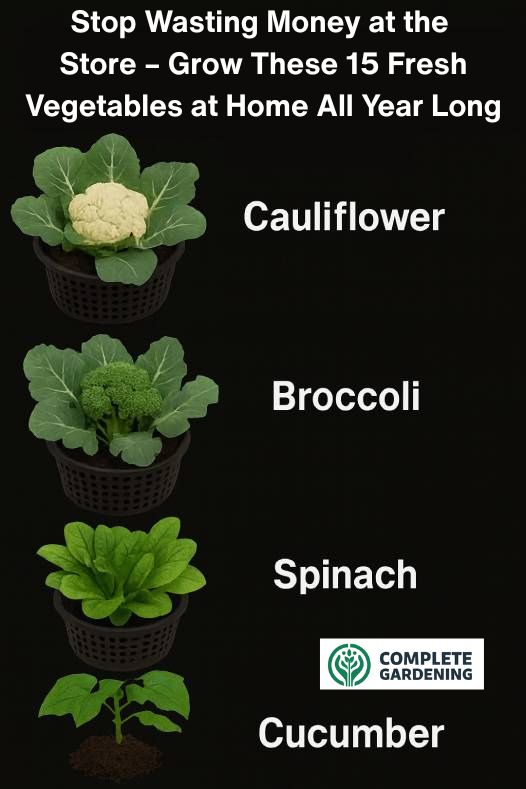
1. Cauliflower
Thrives in cool temperatures and well-drained soil. Use a pot at least 12 inches deep and keep the soil moist but not soggy. Partial shade during hot days prevents stress and bolting.
2. Broccoli
Requires a 12-inch-deep pot, full sun, and consistent watering. Fertilize every few weeks and harvest the main head early to encourage side shoots for a prolonged harvest.
3. Spinach
Perfect for small containers and fast to grow. Plant in 6-inch-deep pots, keep soil moist, and harvest young leaves regularly to promote new growth.
4. Cucumbers
Use a pot that’s at least a foot deep and provide a trellis for climbing. Keep them in full sun and harvest frequently for crisp, refreshing cucumbers.
5. Tomatoes
Tomatoes love warmth and sunshine. Choose a deep container (at least 18 inches), provide a stake or cage, and feed with a tomato-specific fertilizer every 2–3 weeks.
6. Peppers
Both sweet and spicy peppers do well indoors. Use a 12-inch-deep pot and give them lots of light. Keep soil evenly moist and harvest once they reach the desired color.
7. Lettuce
Quick-growing and easy to care for. Plant in shallow containers, water consistently, and harvest outer leaves regularly for continuous fresh greens.
8. Carrots
Opt for shorter varieties and loose, sandy soil in 12-inch-deep containers. Thin seedlings to give roots space and harvest when bright and firm.
9. Radishes
One of the fastest crops to grow — ready in just 3–4 weeks! Perfect for small containers, full sun, and well-drained soil.
10. Herbs (Basil, Mint, Parsley, Cilantro)
Herbs grow beautifully in small pots or even jars on a sunny windowsill. Regular harvesting encourages more leafy growth.
11. Kale
Cold-hardy and low-maintenance, kale can thrive indoors with moderate light and regular watering. Pick leaves from the bottom up for ongoing harvests.
12. Green Onions
Easily grown from scraps or seeds. Keep the roots in water or soil, and you’ll have a constant supply of fresh greens.
13. Garlic
Plant individual cloves in a deep pot with loose soil. Keep in bright light and water moderately until bulbs form.
14. Zucchini
Choose dwarf or bush varieties for containers. Provide full sun, good airflow, and regular watering to enjoy a steady supply of squash.
15. Microgreens
Perfect for beginners. Grow in shallow trays and harvest within 2–3 weeks. They’re packed with nutrients and add a burst of flavor to salads and sandwiches.
Tips for Year-Round Vegetable Success
- Succession plant: After harvesting one crop, plant another immediately.
- Rotate crops: Avoid growing the same plant in the same soil repeatedly.
- Use vertical gardening: Great for small spaces — trellises and shelves help maximize yield.
- Keep a garden journal: Track growth, watering, and fertilization to improve with each cycle.
Troubleshooting Common Indoor Gardening Issues
If you notice yellow leaves or slow growth, it could mean overwatering or nutrient imbalance. Inspect for pests regularly, ensure good airflow, and maintain consistent temperature and humidity levels.
Final Thoughts: From Garden to Table
Growing your own vegetables at home is one of the most rewarding and sustainable habits you can adopt. Whether you’re cultivating herbs on a windowsill or growing full crops in containers, you’ll enjoy fresher produce, lower grocery bills, and the satisfaction of knowing exactly what’s in your food.
So stop buying store-bought veggies — with these 15 easy-to-grow plants, your home can be a year-round source of healthy, delicious goodness.