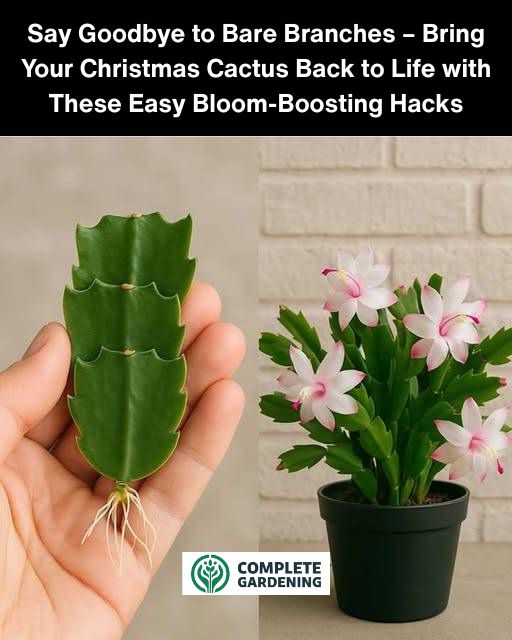
The Christmas Cactus is a beloved holiday favorite, cherished for its cascading blooms and striking green segments that bring a touch of life to winter days. But if yours has stopped flowering and looks more like a bundle of bare stems than a festive showpiece, don’t worry — you can bring it back to life with a few easy adjustments.
Unlike typical desert cacti, the Christmas Cactus (Schlumbergera) comes from the tropical rainforests of Brazil, where it thrives in cool, humid environments with filtered sunlight. Mimicking these conditions is the secret to getting those vibrant blooms to return year after year.
Here are the best hacks to help your Christmas Cactus bloom beautifully again.
1. Know Your Plant: It’s Not a Desert Cactus
The Christmas Cactus is an epiphyte, meaning it grows on trees in the wild — not in the sand. It absorbs nutrients and moisture from the air and rain, which means it prefers humidity, moisture, and indirect light rather than hot, dry conditions.
Its flattened stems are where new flowers form, so keeping them healthy is key. A healthy stem equals a healthy bloom cycle.
2. Provide the Right Light – Not Too Much, Not Too Little
Light is one of the most critical factors in getting your Christmas Cactus to bloom. It loves bright, indirect sunlight — think of the soft light under a tree canopy. Direct sunlight can scorch the leaves, while too little light can stunt flowering.
In the fall, to trigger blooms, give the plant 12–14 hours of darkness each day for about six weeks. You can achieve this by placing it in a dark room at night or covering it with a cloth. This mimics the natural light cycle it experiences in the wild.
3. Master the Art of Watering
Overwatering and underwatering are two of the most common mistakes. Keep the soil slightly moist but never soggy. Check the top inch of soil — if it’s dry, it’s time to water.
During the fall and winter bloom cycle, cut back on watering slightly. Letting the soil dry a bit between waterings encourages the plant to focus on producing buds instead of new foliage.
Always use room-temperature water, and make sure your pot drains well. Standing water leads to root rot, which is the number one killer of Christmas Cacti.
4. Use the Perfect Soil Mix
Regular potting soil is too dense for this tropical cactus. Instead, use a well-draining mix made from two parts potting soil, one part perlite, and one part sand.
This ensures proper airflow around the roots while still holding enough moisture for the plant’s tropical nature. Adding a little peat moss or orchid bark helps mimic the cactus’s natural growing environment.
5. Temperature Matters More Than You Think
To encourage flowering, drop the nighttime temperature to 50–55°F (10–13°C) for six weeks in the fall. Cooler nights signal to the plant that it’s time to produce buds.
Avoid placing your cactus near heat vents or cold drafts — the sudden temperature changes can shock the plant and cause buds to drop.
Once buds start forming, slowly move the plant to a warmer area and maintain steady temperatures for consistent blooms.
6. Feed for Success – But Not Too Often
During spring and summer, feed your cactus every four weeks with a balanced fertilizer (20-20-20) diluted to half strength. This provides the nutrients it needs for healthy growth and future blooming.
When fall approaches, stop fertilizing to encourage dormancy. Once buds form, you can resume light feeding to help support the flowering phase.
7. Prune for More Blooms
After your Christmas Cactus finishes flowering, give it a light trim in late winter or early spring. Use sharp, clean scissors to remove any dead or leggy segments.
Pruning encourages branching — and more branches mean more flower sites next season. Avoid cutting more than one-third of the plant at a time to prevent stress.
8. Keep Pests and Diseases Away
Common pests like mealybugs and spider mites love the soft tissues of a Christmas Cactus. Inspect regularly and, if needed, treat with neem oil or insecticidal soap.
To prevent fungal diseases like root rot, always ensure proper drainage and avoid letting water sit in the saucer under your pot.
9. Repot Every Few Years
Christmas Cacti prefer being slightly root-bound, but they still benefit from repotting every 2–3 years. Spring is the best time to refresh the soil and give the roots room to grow.
Use a pot only one size larger than the current one and always choose one with drainage holes. Fresh soil boosts nutrient availability and helps prevent compaction.
10. Embrace the Dormancy Period
This plant needs a rest before it can bloom again. Reduce watering, keep it in a cool location, and provide long nights and short days in the fall.
This rest period tells your cactus it’s time to prepare for a stunning display of flowers once the holiday season arrives.
11. Bonus Hack: The Epsom Salt Trick
Many gardeners swear by an Epsom salt solution to enhance blooms. Mix one teaspoon of Epsom salt in a gallon of water and use it once a month during the growing season. The magnesium helps strengthen the plant and improve flower production.
Another proven trick is moving the plant to a cooler room in early autumn to simulate its natural blooming trigger. Combine this with proper lighting and watering, and your Christmas Cactus will reward you with brilliant, festive flowers.
Final Thoughts: Bring Back the Holiday Magic
Reviving your Christmas Cactus isn’t about luck — it’s about balance. With the right mix of light, temperature, watering, and rest, your plant will return to its blooming glory.
Follow these simple steps, and you’ll soon be saying goodbye to bare branches and hello to a cascade of vibrant flowers that brighten your home all season long.