Growing herbs indoors during winter is one of the most rewarding ways to keep your meals fresh and fragrant when your outdoor garden is on pause. But if your herbs keep wilting or turning pale, you’re probably missing a few key steps. Indoor herb gardening requires a different approach than outdoor growing — and once you understand those differences, you’ll enjoy thriving, aromatic plants all season long.
Here’s exactly how to grow healthy, flavorful herbs indoors the right way this winter.
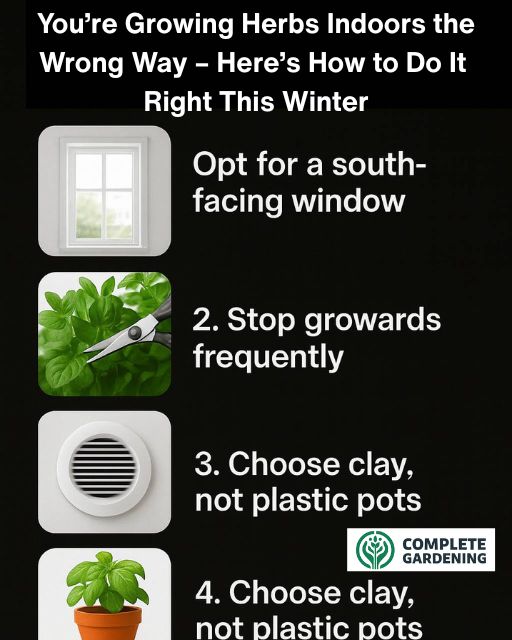
1. Pick the Perfect Spot – South-Facing Windows Work Best
Sunlight is your herbs’ best friend, and south-facing windows provide the most consistent light throughout the day. If you don’t have one, east- or west-facing windows can work too — just supplement with artificial grow lights to make up for lost daylight hours.
Aim for 6–8 hours of bright light daily. If space is tight, use plant shelves or hanging planters to give each herb its fair share of sunlight.
2. Master Lighting – Don’t Skimp on Sun or Grow Lights
Without enough light, herbs grow weak, spindly, and flavorless. During short winter days, use LED grow lights to mimic sunlight. Keep them about 6–12 inches above your plants and run them for 12–16 hours a day.
Good lighting equals good flavor — it’s that simple.
3. Keep Temperatures Cozy and Consistent
Herbs like it warm, ideally between 65°F and 75°F (18°C–24°C). Avoid placing pots near cold drafts, exterior doors, or windows that get icy at night. If your home runs cool, move your plants to a warmer area or use a small space heater nearby (but not directly on them).
Consistent warmth helps prevent stress and keeps growth steady through winter.
4. Choose the Right Containers – Clay Beats Plastic
When it comes to containers, clay pots are best. Their porous surface allows airflow and helps prevent soggy roots. Always make sure the pot has drainage holes, as herbs hate sitting in stagnant water.
A medium-sized pot that allows root expansion is ideal — too small restricts growth, too large leads to overwatering.
5. Use Quality Potting Mix, Not Garden Soil
Your herbs deserve better than backyard dirt. Use a light, well-draining potting mix made for indoor plants. A blend of peat moss, perlite, and vermiculite provides great aeration and prevents compaction.
Avoid garden soil altogether — it’s too heavy and can carry pests or pathogens indoors. For extra drainage, mix in a handful of coarse sand or small pebbles.
6. Water Smart – Damp, Not Drenched
Overwatering is the number one indoor gardening mistake. Let the top inch of soil dry out before watering again. In winter, herbs drink less, so resist the urge to water too often.
When you do water, soak the soil thoroughly until excess drains out, then empty any water from the saucer. Remember — slightly dry soil is far better than soggy roots.
7. Prune Regularly for Bushier, Healthier Plants
Frequent trimming encourages herbs to grow fuller and prevents them from becoming leggy. Always cut just above a leaf node, where new growth emerges.
Don’t remove more than a third of the plant at once, and pinch off any flower buds to keep the leaves flavorful.
8. Feed Sparingly – Light Fertilizing Is Enough
Indoor herbs have limited access to nutrients, so light feeding helps. Use a diluted, water-soluble fertilizer (half-strength) every 4–6 weeks during active growth.
Skip fertilizing in mid-winter when growth slows down. Overfeeding can lead to salt buildup, damaging delicate roots.
9. Watch Out for Indoor Pests
Even indoors, tiny invaders like aphids, spider mites, and whiteflies can appear. Check leaves regularly, especially undersides. If you spot any, wipe them off with a damp cloth or treat them with neem oil or insecticidal soap.
Ensure good airflow by spacing pots apart — stagnant air encourages pests.
10. Don’t Fall for Every Viral Hack
Online “gardening hacks” sound fun, but many cause more harm than good. Avoid dumping coffee grounds directly into your pots — they can make soil too acidic.
Crushed eggshells, on the other hand, can add calcium if used sparingly. Always research before trying a new method and remember: herbs thrive on consistency, not gimmicks.
11. Know When (and How) to Harvest
You can start harvesting once your herbs have at least 6 inches of healthy growth. Cut stems just above a leaf node — this encourages the plant to regrow.
Harvest early in the morning when essential oils are at their peak for maximum aroma and flavor. Regular harvesting keeps your herbs productive and prevents them from getting woody or bitter.
Final Thoughts: A Winter Garden That Keeps on Giving
Growing herbs indoors isn’t complicated — it’s about balance. Give them sunlight, warmth, the right soil, and a bit of attention, and they’ll reward you with fragrant, flavorful leaves all winter long.
With these easy steps, you’ll never have to rely on wilted grocery store herbs again — your own mini indoor garden will keep your kitchen fresh, vibrant, and full of life until spring returns.