
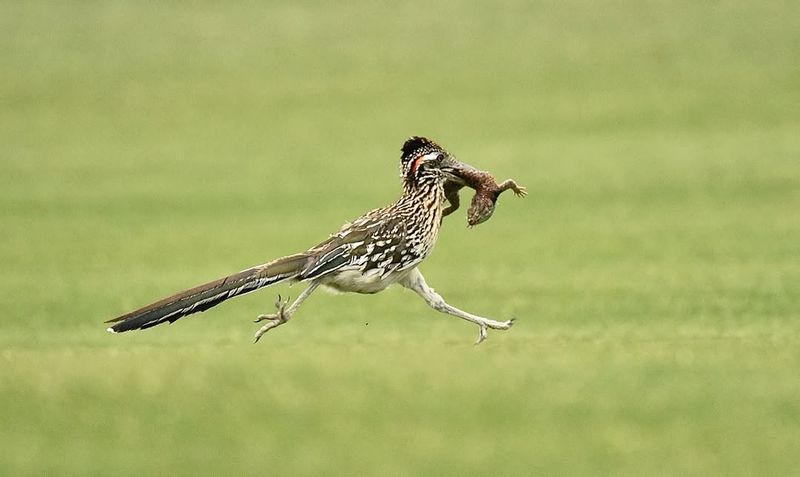
If you live in Texas, you might have spotted a speedy little bird zipping across your yard with a long tail and a spiky head crest. That bird is the roadrunner, and it treats your garden like its own personal buffet. Roadrunners are always on the hunt, gobbling up all sorts of creatures that most people would rather not see near their plants. Here are eight things this feathered hunter chases down in your garden every single day.
1. Grasshoppers That Munch Your Plants

Nothing gets a roadrunner more excited than a fat grasshopper bouncing through the grass. These birds love the chase, sprinting after their leggy target and snapping it up in a flash.
Grasshoppers cause real trouble for gardeners because they chew through leaves, stems, and even flower buds. A single swarm can strip a vegetable patch in days, leaving behind ragged holes and bare stalks. That makes the roadrunner a welcome helper for anyone trying to grow tomatoes, beans, or leafy greens.
What makes the hunt so fun to watch is the roadrunner’s speed. It can run up to fifteen miles per hour, which means a hopping grasshopper barely stands a chance. The bird tilts its head, locks onto the movement, then dashes forward with those long legs pumping like little engines.
Once caught, the grasshopper gets a few good whacks against a rock or the hard ground. This softens it up and makes it easier to swallow whole. Roadrunners rarely waste a meal, so they gulp down the entire insect.
If you notice a roadrunner patrolling your garden during the warm months, you can thank it for keeping the grasshopper population in check. Fewer grasshoppers means healthier plants and less need for chemical sprays. Simply put, this bird works as a natural pest control team, all while entertaining you with its zippy, cartoon-like sprints across the yard.
2. Sneaky Garden Lizards

Lizards better watch their tails when a roadrunner comes strolling by. These birds are famous for snatching small reptiles that sunbathe on rocks and fences around your garden.
In Texas, you will often see anoles, skinks, and spiny lizards darting between plants. While these little reptiles usually eat bugs themselves, they become a tasty snack for a hungry roadrunner. The bird uses stealth and speed, creeping close before launching a lightning-fast strike.
Catching a lizard takes skill because these creatures are quick and slippery. Sometimes a lizard drops its tail to escape, but the roadrunner often grabs the body anyway. After the catch, the bird bangs the lizard against a hard surface, just like it does with big insects.
Here is a neat fact: roadrunners get much of their water from the animals they eat, and juicy lizards help them stay hydrated in the dry Texas heat. This clever trick lets them survive in places where water is hard to find.
For your garden, a lizard-hunting roadrunner keeps the reptile population balanced. You will still have plenty of lizards around to eat mosquitoes and flies, but the roadrunner makes sure none of them get too comfortable. Watching one of these hunts feels like seeing a tiny nature documentary right in your own backyard, complete with suspense, speed, and a dramatic finish that leaves you impressed.
3. Venomous Scorpions

Believe it or not, roadrunners will take on scorpions without blinking. These bold birds march right up to a stinging arachnid and turn it into lunch.
Scorpions hide under rocks, logs, and flower pots in many Texas gardens, and their sting can hurt people and pets. A roadrunner, though, seems almost fearless when facing one. It uses quick jabs of its beak to attack, dodging the scorpion’s dangerous tail with surprising agility.
The bird often grabs the scorpion and slams it against the ground to knock it out. Sometimes it even bites off the stinger first, showing just how smart these hunters are. Once the threat is gone, the roadrunner swallows its prickly prize.
This makes roadrunners a huge help for families worried about scorpions near their homes. Fewer scorpions in the garden means safer play areas for kids and less chance of a painful surprise when you reach into a shady corner.
What is really cool is that roadrunners appear to have some resistance to venom, which helps them handle these risky meals. They pass this hunting knowledge on by teaching their chicks how to deal with dangerous bugs.
So if you spot a roadrunner poking around the rocks in your yard, it might be doing you a giant favor. That fearless little bird is patrolling the ground, keeping the scary stingers under control one crunchy bite at a time.
4. Dangerous Rattlesnakes

Here is a jaw-dropper: roadrunners sometimes hunt snakes, including young rattlesnakes. This tiny bird truly earns its reputation as a fearless desert warrior.
Working alone or even in pairs, roadrunners use clever teamwork to distract a snake. One bird might flash its wings to grab the snake’s attention while the other darts in to strike the head. It is a bit like watching a game of tag with very high stakes.
Their long, strong beaks act like little spears, delivering fast pecks that stun the snake. Once the snake is weakened, the roadrunner pounds it against a rock and swallows it, sometimes leaving part of the tail hanging out of its mouth while digestion begins.
For Texas homeowners, this behavior is downright helpful. Rattlesnakes can be deadly to pets and people, so having a natural predator that keeps their numbers down brings real peace of mind.
Of course, roadrunners usually go after smaller or younger snakes rather than giant ones. They know their limits and pick battles they can win, which shows off their clever instincts.
Native American legends often celebrated the roadrunner as a symbol of bravery and protection, and it is easy to see why. Watching one square off against a slithering rattler is unforgettable. If your garden has a roadrunner on patrol, you have got a brave bodyguard on duty, keeping the sneaky, dangerous snakes far away from your doorstep.
5. Creepy Spiders And Tarantulas

Got spiders creeping around your flower beds? A roadrunner sees them as a protein-packed treat, tarantulas included.
Texas is home to some big, hairy tarantulas that can make people jump. To a roadrunner, though, these eight-legged giants are just another meal waiting to happen. The bird approaches carefully, then strikes quickly before the spider can defend itself.
Smaller garden spiders are even easier pickings. Roadrunners scan low bushes and ground webs, plucking spiders out with pinpoint accuracy. Their sharp eyesight helps them spot even the tiniest movement in the shadows.
After the catch, the usual roadrunner routine follows: a few firm smacks against a rock, then a quick gulp. Tarantulas have irritating hairs and mild venom, but the tough roadrunner handles them like a pro.
This spider-hunting habit benefits your garden in a big way. While spiders help control insects, too many can feel overwhelming, especially the large, startling kinds. A roadrunner keeps things balanced so you get the good bug-eating help without the creepy overload.
Fun detail worth sharing: roadrunners are part of the cuckoo family, and like their relatives, they have strong appetites for creatures many other birds avoid. That adventurous eating style is exactly what makes them such valuable garden guests.
Next time you see one poking under a shrub, it might be hunting a hidden spider. Consider it free, feathered pest control that saves you from an unexpected eight-legged surprise.
6. Beetles Hiding In The Soil

Beetles think they can hide in the dirt, but a roadrunner is not fooled for a second. These birds love digging and scratching to uncover crunchy beetle snacks.
Many beetle species, like June bugs and cucumber beetles, damage garden plants by chewing roots, leaves, and fruit. Their larvae, called grubs, hide underground and munch on plant roots where you cannot see them. Roadrunners help by hunting both the adults and the hidden grubs.
Using their beaks like little garden tools, roadrunners flip over leaves and poke into loose soil. When a beetle scurries out, the bird pounces instantly. The satisfying crunch of a beetle is one of a roadrunner’s favorite sounds, probably.
Because beetles are so common, they make up a steady part of the roadrunner’s daily diet. That means the bird visits gardens again and again, always searching for its next crunchy meal.
For you, this constant beetle patrol translates to healthier plants and fewer chewed leaves. Less beetle damage keeps your flowers blooming and your vegetables growing strong throughout the season.
An interesting tidbit: roadrunners have tough stomachs that can handle hard beetle shells with ease. What would be impossible for many animals is just an everyday snack for these hardy hunters.
So while you might never notice all the beetles vanishing, your garden certainly benefits. A roadrunner quietly does the dirty work, turning pesky beetles into fuel for its next high-speed sprint across your yard.
7. Mice And Small Rodents

Roadrunners are not just bug eaters, they are also skilled mouse catchers. A small rodent scurrying through your garden makes a hearty meal for this hungry bird.
Mice and young rats can be a real headache around homes, chewing on plants, digging tunnels, and sneaking into sheds. Roadrunners help control these pests by hunting them with the same speed they use on insects and lizards.
Spotting a mouse near a woodpile or garden bed, the roadrunner freezes, then launches into a quick chase. Its powerful beak delivers a strong strike, and soon the rodent becomes dinner. For bigger prey, the bird slams it against a hard surface before swallowing.
This rodent-hunting habit is a huge win for gardeners. Fewer mice means less damage to seeds, bulbs, and stored supplies, plus a lower chance of rodents inviting other unwanted visitors like snakes.
Roadrunners are opportunistic, meaning they eat whatever they can catch. That flexible diet helps them thrive in tough Texas conditions where food can be scarce during dry spells.
Something surprising: a roadrunner can gulp down a mouse whole, headfirst, in one impressive swallow. It might look silly with a tail sticking out of its beak, but the bird knows exactly what it is doing.
Having a roadrunner around means you have got a natural rodent controller working for free. That speedy hunter keeps the mouse population from getting out of hand and protects your garden all year long.
8. Caterpillars On Your Leaves

Ever find your plant leaves full of holes? Caterpillars are usually the culprits, and roadrunners are happy to gobble them up.
These soft, wiggly larvae turn into moths and butterflies, but before that they chew through gardens with a huge appetite. Hornworms, cabbage worms, and other caterpillars can destroy tomato plants and leafy greens in no time. A roadrunner treats them like squishy little candy bars.
Because caterpillars move slowly, they are one of the easier meals for a roadrunner to catch. The bird simply strolls along your plants, plucking them off leaves and stems one by one. No fancy sprinting required for this snack.
Caterpillars are soft and full of moisture, so they give the roadrunner both food and hydration in a single bite. During the hot Texas summer, that extra water is a valuable bonus.
For your garden, this means fewer chewed leaves and stronger, healthier plants. Instead of reaching for bug spray, you can let the roadrunner handle the caterpillar problem naturally.
Here is a charming thought: roadrunners often bring caterpillars back to feed their hungry chicks. So while the bird helps your garden, it is also raising the next generation of pest patrollers.
Watching a roadrunner carefully inspect your plants for caterpillars is oddly relaxing. That focused little hunter cleans up the leaf-munchers so your flowers and veggies can grow big, beautiful, and hole-free all season long.