
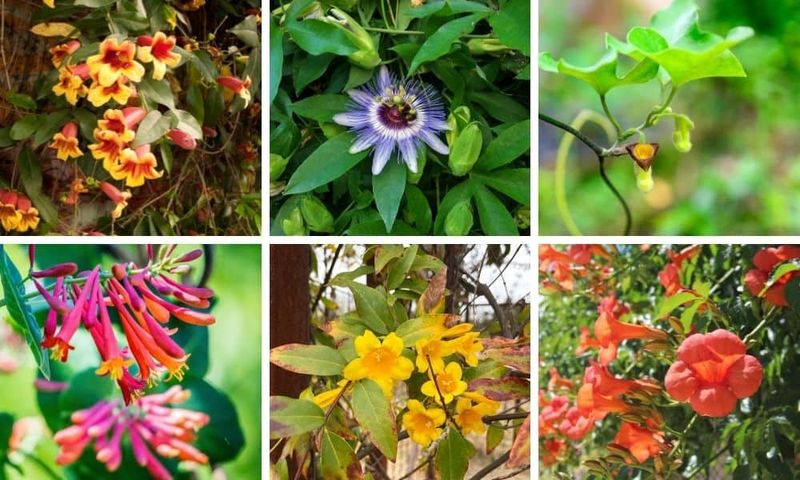
Wisteria looks gorgeous when it blooms, but that beauty comes with a warning. This fast-growing vine can spread out of control, choke nearby plants, and even damage fences and walls. The good news is that Texas has plenty of native vines that give you the same jaw-dropping color and cascading flowers without the aggressive takeover. Here are seven amazing native choices that keep your garden wild in all the right ways.
1. Crossvine: The Trumpet-Shaped Showstopper

Splashy orange and gold blooms make crossvine one of the flashiest natives you can plant. Its trumpet-shaped flowers open in early spring, sometimes even during warm winter days, and they attract hummingbirds like a magnet.
Gardeners across Texas love this climber because it stays evergreen in warmer regions. That means you get a green screen of leaves all year, plus that burst of color when spring rolls around. The leaves often turn a reddish-purple in cold weather, giving you a second show for free.
Crossvine grabs onto surfaces using tiny tendrils with little sticky pads, so it happily climbs trellises, fences, and brick walls without needing much help from you. It grows fast but behaves far better than wisteria, staying where you plant it instead of swallowing the whole yard.
You will want to give it full sun for the best flowers, though it tolerates part shade too. Once established, this tough vine handles Texas heat and drought like a champ, asking for very little water.
Prune it right after blooming to keep the shape you want and encourage bushier growth. A quick trim also stops the vine from getting leggy at the bottom.
Fun fact: crossvine’s scientific name, Bignonia capreolata, honors an old French librarian named Bignon. Plant it near a patio and enjoy the parade of hummingbirds all season long.
2. Coral Honeysuckle: A Hummingbird Magnet

Clusters of tubular red and coral flowers drip from this vine like tiny fireworks, and hummingbirds cannot resist them. Coral honeysuckle blooms from spring straight through fall, giving you months of steady color instead of one quick burst.
Unlike the invasive Japanese honeysuckle that many people confuse it with, this native version stays polite. It twines gently around a trellis or fence without strangling everything nearby or jumping into the neighbor’s yard.
The blue-green leaves look neat and tidy year-round in mild areas, and bright red berries appear after the flowers fade. Songbirds swoop in to snack on those berries, so you get bonus wildlife visits.
This vine thrives in full sun to part shade and handles most Texas soils without complaint. Once its roots settle in, it shrugs off drought and rarely needs babying.
Give it something to climb, since it does not have sticky pads and prefers to wrap around supports like wire, string, or thin posts. A mailbox, arbor, or split-rail fence works beautifully.
Trim away any tangled growth in late winter to keep it looking fresh and to spark new blooms. It rarely suffers from pests or diseases, which makes it a low-stress choice for beginners.
Plant coral honeysuckle near a window and you will have front-row seats to a daily hummingbird show all summer long.
3. Carolina Jessamine: Sunshine For Your Fence

Bright yellow trumpet flowers cover this vine so thickly in late winter that it looks like sunshine spilled across your fence. Carolina jessamine is often one of the first plants to bloom, waking up the garden while everything else still sleeps.
The sweet fragrance drifts through the air on warm days, and the glossy evergreen leaves keep things green even in the chilly months. That combo of scent and color makes it a favorite for covering ugly fences fast.
Texas gardeners appreciate how tough this vine is. It handles heat, humidity, and dry spells, and it grows in full sun or dappled shade with equal ease.
Carolina jessamine climbs by twining, so give it a trellis, arbor, or wire to wrap around. It grows at a moderate speed, filling in nicely without becoming a runaway monster.
One important heads-up: every part of this plant is poisonous if eaten, so keep it away from curious pets and small kids who might nibble. Enjoy it with your eyes, not your mouth.
Prune it after the spring flowers fade to keep it dense and neat. A light shaping stops it from getting too heavy and sagging off its support.
Did you know it is the state flower of South Carolina? Even so, it grows happily all over Texas and rewards you with early color every single year.
4. Texas Clematis: Delicate Bells With Big Charm

Tiny red bells dangle from this vine like little lanterns, and they have a charm that stops people in their tracks. Texas clematis, sometimes called scarlet clematis, is a homegrown treasure found naturally along Hill Country creeks and rocky slopes.
The nodding, urn-shaped blooms appear from spring into summer in shades of red, pink, and coral. After the flowers fade, fluffy silver seed heads take over, adding a soft, feathery texture to your garden.
Because it is native, this clematis handles Texas limestone soils and blazing summers better than many fancy hybrid clematis from garden centers. It climbs with twisting leaf stems, so a thin trellis or some netting gives it the perfect grip.
Plant it where the roots stay cool and shaded but the vine can reach up into the sun. A layer of mulch or a low shrub at the base does the trick nicely.
This vine dies back to the ground in winter and springs up fresh each year, which means you never have to worry about it taking over. Just cut the old stems down in late winter and wait for new growth.
Butterflies and bees love the blooms, so your garden gets busier and livelier. For a delicate, cottage-garden feel with true Texas roots, this little climber delivers plenty of personality in a small, well-mannered package.
5. Passionflower: Nature’s Wild Purple Puzzle

Few flowers look as wild and otherworldly as the passionflower, with its fringed purple crown and starburst center. This native vine, also called maypop, seems almost too fancy to be growing right here in Texas fields and roadsides.
Beyond the eye-popping blooms, passionflower is a superstar for wildlife. It is the host plant for gulf fritillary butterflies, meaning caterpillars munch the leaves and grow into fluttering orange beauties in your yard.
The vine climbs using curly tendrils that grab onto fences, trellises, and other plants. It grows quickly during the warm months, then dies back in winter and returns from the roots when spring warms up.
In late summer, egg-shaped green fruits called maypops appear. When ripe, they are edible and have a sweet-tart flavor that pioneers and Native Americans enjoyed long ago.
Give passionflower full sun to part shade and average soil, and it pretty much takes care of itself. It handles heat and drought well once its roots dig in.
Keep in mind it can spread by underground runners, so plant it where a little wandering is welcome, or trim back new shoots to keep it in bounds. It is far easier to manage than wisteria, though.
With its strange beauty and butterfly-boosting powers, passionflower turns an ordinary fence into a living science lesson you will never get tired of watching.
6. Coral Vine: The Pink Cloud Climber

Imagine a curtain of pink hearts spilling over your arbor, and you have got coral vine. Also known as queen’s wreath, this climber bursts into clouds of tiny rosy-pink flowers from summer through fall when many other plants are worn out from the heat.
Bees and butterflies flock to it, and the blooms keep coming even during the hottest, driest stretches of a Texas summer. That reliability makes it a beloved old-fashioned favorite in gardens across the state.
Coral vine climbs fast using tendrils, quickly covering fences, arbors, and pergolas with lush heart-shaped leaves. In colder parts of Texas it dies back in winter and returns from tuberous roots, which keeps it from getting too pushy.
Full sun brings out the heaviest bloom, and the plant shrugs off poor soil and drought without complaint. Basically, the tougher the conditions, the more this vine seems to show off.
Because it can be vigorous in warm zones, plant it where you want serious coverage and trim it back each year to keep it tidy. A hard cutback in late winter refreshes the whole plant.
Here is a neat tidbit: the underground tubers were once eaten as a survival food in some regions. For non-stop summer color that laughs at heat waves, coral vine gives you drama by the armful without the wisteria-style chaos.
7. Trumpet Creeper: Bold Blooms For Big Spaces

Big, bold, and impossible to miss, trumpet creeper throws out clusters of fiery orange-red trumpet flowers all summer long. Hummingbirds treat this vine like an all-you-can-eat buffet, zipping in and out from dawn to dusk.
This native powerhouse grows fast and strong, making it perfect for covering large fences, sheds, or bare walls quickly. The lush green leaves create a thick, leafy backdrop that shows off those glowing flowers beautifully.
Trumpet creeper climbs using aerial rootlets that stick to almost any surface, so it does not need much support once it gets going. That same strength means you should keep it off wooden house siding, where it can dig in a little too well.
It thrives in full sun and tolerates poor soil, heat, and drought without blinking. Honestly, this is one of the toughest vines you can plant in Texas.
Because it is vigorous, plant it where it has room to roam and prune it hard each winter to control its size. Cutting it back keeps it manageable and actually encourages more blooms the next season.
The nickname “hummingbird vine” says it all, though it also feeds bees and butterflies. If you have a spot that needs a big, dramatic splash of color and you love watching wildlife, trumpet creeper delivers a spectacular, sun-soaked show every single summer.