
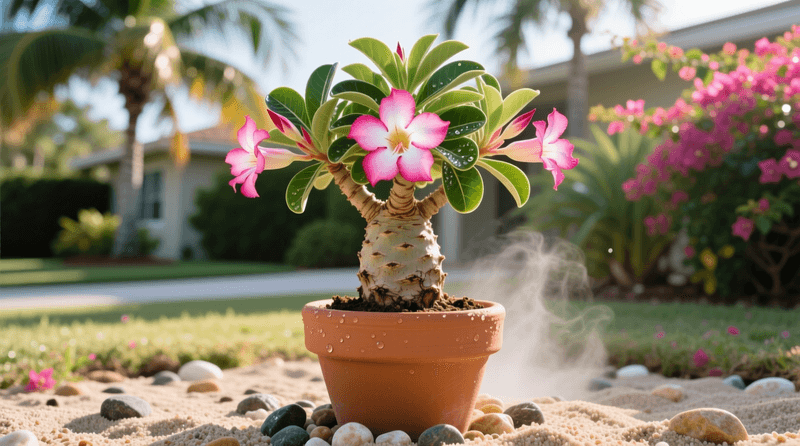
Your Desert Rose is one of the showiest plants you can grow in a Florida container garden, and July is when it faces its biggest test. The rainy season brings daily downpours that can leave pots sitting in water for hours at a time, and that prolonged wetness is what actually puts your plant at risk. Getting one practical habit in place now can help your Desert Rose stay healthier and keep producing those vivid blooms through the wet months ahead.
Change the promise: rain is tolerable, saturation is the concern
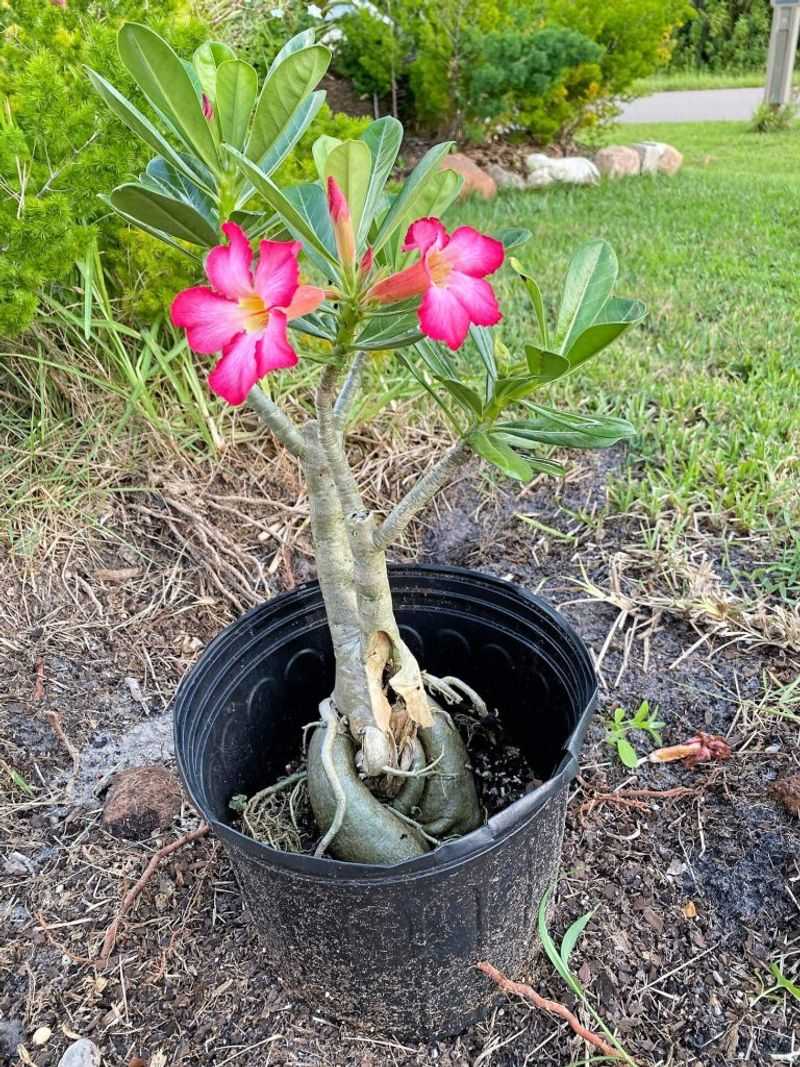
Florida gardeners sometimes hear that the rainy season is the enemy of Desert Rose, but that framing oversimplifies what is actually happening. UF/IFAS Extension Charlotte County guidance on Desert Rose makes the distinction clear: Adenium obesum can tolerate substantial rain in hot weather when the soil drains well. A summer shower passing through in thirty minutes is not the same threat as a pot that sits in standing water for hours after every storm.
The real concern is prolonged wetness around the root zone. When a container or planting site stays saturated day after day, roots are stressed and overall plant health can decline. That kind of chronic wetness may also interfere with flowering, though the connection is best understood as a possibility tied to root and plant stress rather than a guaranteed direct cause.
July sits squarely inside Florida’s wet season, which generally runs from May through October, as noted in UF/IFAS seasonal landscape guidance. That means weeks of repeated heavy rain, not just an occasional afternoon storm. Managing drainage and root-zone moisture during this stretch matters more than trying to keep every raindrop away from the plant.
Understanding this distinction changes how you approach July care. You are not trying to shield your Desert Rose from all rain. You are watching for the conditions where water lingers too long and acting specifically when those conditions appear. That targeted response is far more useful than treating every storm as a crisis requiring immediate intervention.
Give a container Desert Rose bright shelter during extended downpours
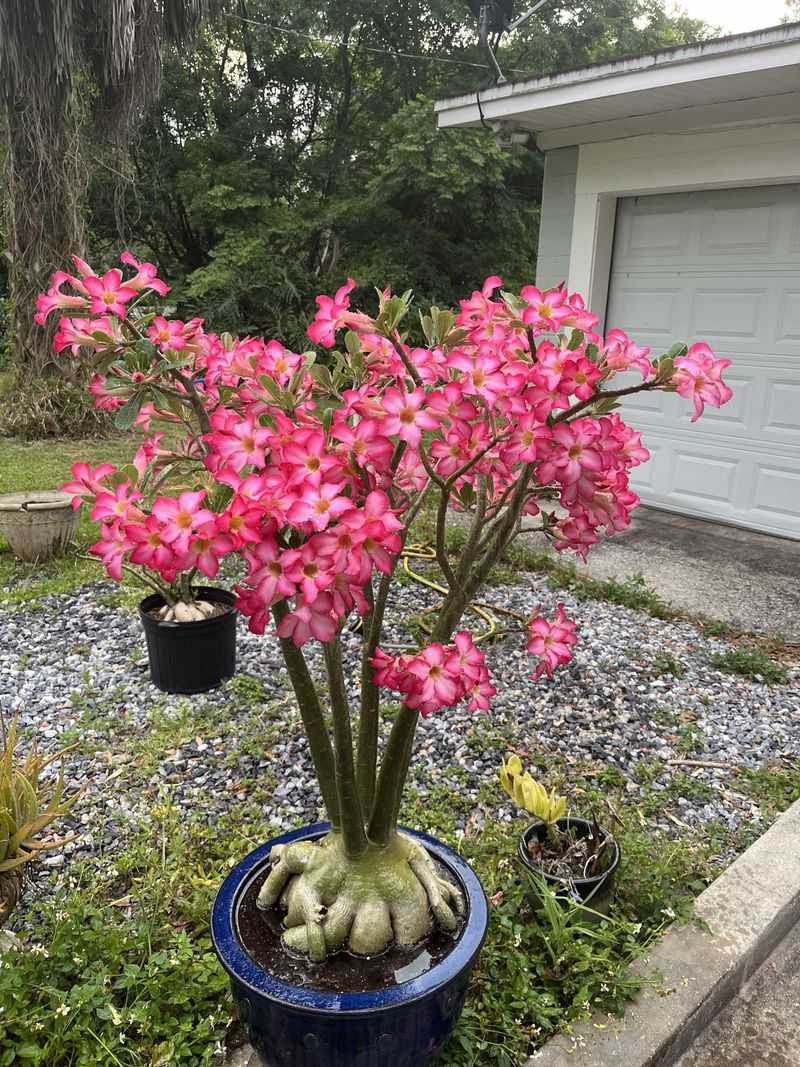
When the forecast shows repeated heavy rain stretching across several days, moving a container Desert Rose under a covered patio or a comparable bright shelter is the most practical step you can take. The goal is to limit how long the root zone stays saturated, not to keep the plant permanently indoors or tucked under a roof.
The catch is that shelter must stay bright. UF/IFAS guidance on Adenium obesum specifies that the plant needs six or more hours of bright light daily to maintain summer flowering. A deeply shaded porch may solve the rain problem while creating a light problem, which can slow or stop blooming just as effectively as waterlogged soil. Look for a covered spot where direct or very bright indirect light still reaches the plant for most of the day.
A south- or west-facing covered patio, a screened lanai with clear panels, or the sheltered edge of an open carport can all work well if light levels are adequate. The simplest test is to stand in the spot at midday and judge whether the light feels strong and direct. If the space feels dim or heavily filtered, the plant will likely struggle there over time.
Sheltering during extended wet periods can help limit root-zone saturation and support the conditions Desert Rose needs to keep growing well. What it cannot do is promise uninterrupted flowering. Cultivar, plant age, temperature swings, pests, and root health all play roles that no single management step can override. Think of bright shelter as removing one significant stressor rather than solving every variable at once.
Once the extended rain passes and the forecast clears, move the pot back to its regular full-sun location. The plant does best when it spends as much of the summer as possible in maximum light.
Make the container drain freely before the next storm
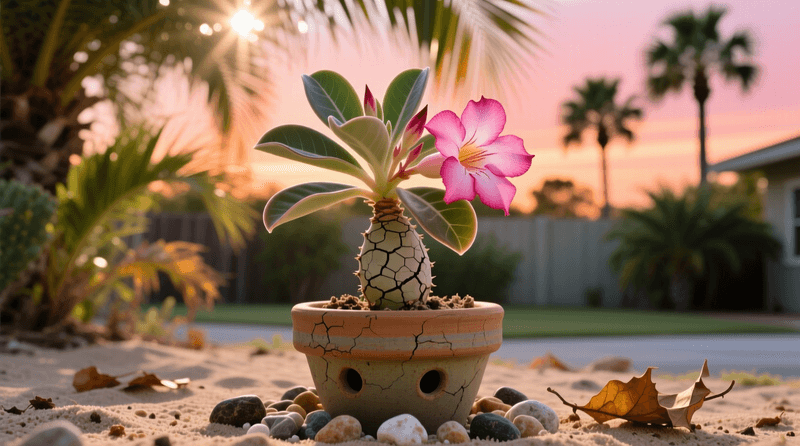
Before the next round of storms arrives, take five minutes to check the physical setup of your container. Drainage holes can become clogged with compacted potting mix, mineral deposits, or root growth over a season, and a blocked hole means water has nowhere to go even if the mix itself is well-draining.
Flip or tilt the pot carefully and look at each hole. If you see solid material packed against the opening, clear it gently with a skewer or a thin stick. While you are at it, check whether the pot is sitting flat on a surface that could trap water underneath it. A container resting directly on a wet concrete slab or deck can develop poor drainage even when the holes are open, because the holes sit flush against the surface.
Elevating the pot slightly on pot feet, bricks, or a plant stand allows water to exit freely after every storm.
Saucers and cachepots are another common culprit. They are useful for protecting surfaces and retaining a little moisture during dry spells, but after a heavy Florida downpour they can fill up and leave the pot effectively sitting in a pool of water. Empty them promptly after storms rather than letting the plant stand in accumulated runoff for hours.
All of these steps flow from the same principle that UF/IFAS Adenium care guidance identifies: Desert Rose needs well-drained soil and should not remain waterlogged. Good drainage hardware makes every other rainy-season practice more effective. Even the best potting mix cannot compensate for holes that are blocked or a pot that cannot shed water after a storm. A quick drainage check before the wet stretch intensifies is a small effort with a meaningful payoff.
Let the growing medium—not the calendar—set watering time
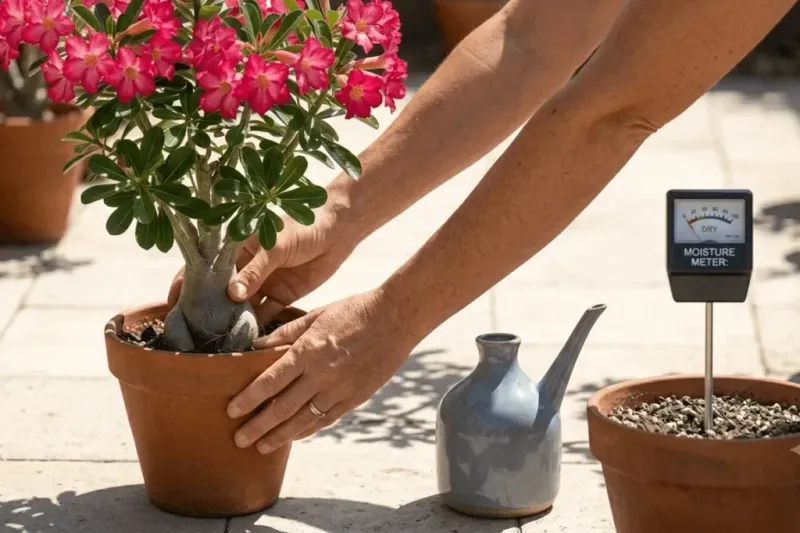
A fixed watering schedule that works fine in April stops making sense in July. When afternoon storms drop an inch or more of rain several days in a row, sticking to a preset routine can mean adding water to a pot that is already fully saturated. The practical fix is straightforward: check the growing medium before you water and skip the session if the mix is still wet.
Press your finger about an inch into the surface of the potting mix. If it feels damp or cool, the plant does not need water yet. Wait until the medium has begun to dry before irrigating again. The specific number of days between waterings will shift week to week depending on how much rain has fallen, how warm and sunny the days have been, and how quickly your particular pot and mix drain.
Abandoning irrigation entirely through the rainy season is not the right response either. UF/IFAS guidance on Adenium describes the plant as drought tolerant but notes it still needs regular irrigation when necessary, with adequate drainage to prevent waterlogging. Rainfall in Florida is uneven, and a week of dry, sunny weather can follow several days of storms. A plant that receives no supplemental water during a dry stretch will experience stress of a different kind.
Weather-aware watering treats the growing medium as your guide rather than the date on the calendar. That approach respects both the plant’s drought tolerance and its sensitivity to prolonged saturation, which is exactly the balance needed to navigate a Florida rainy season without overcomplicating the routine.
Manage in-ground saturation at the planting site
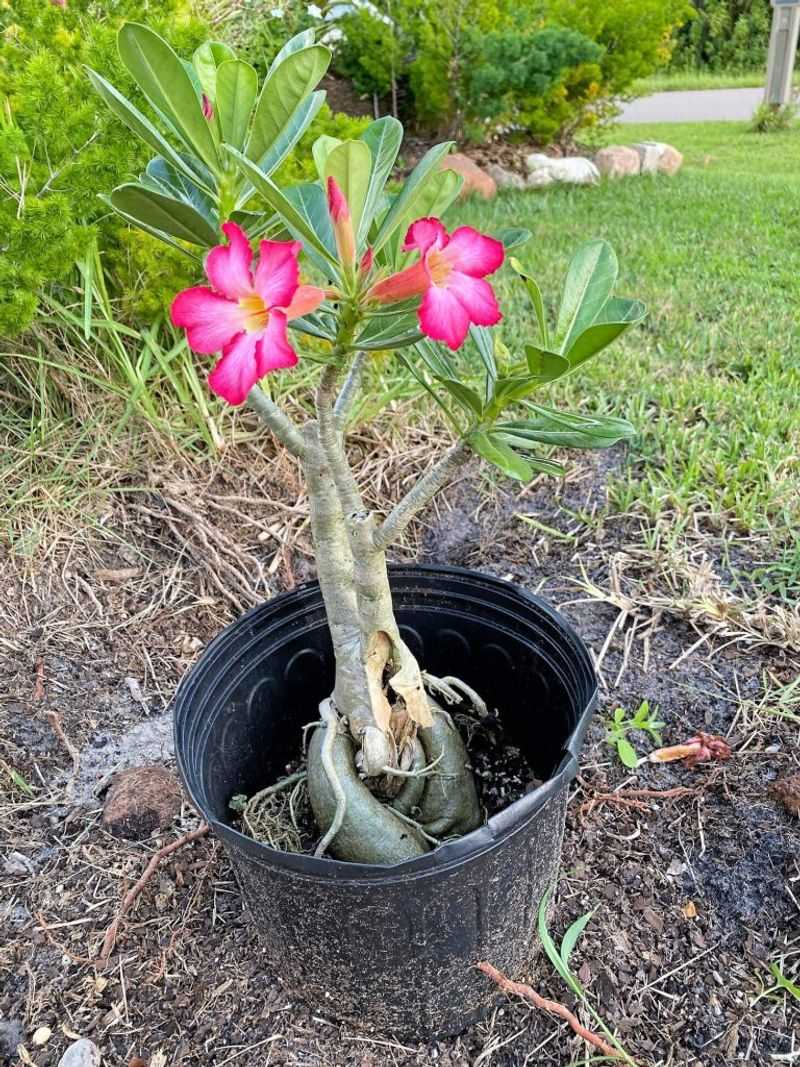
Container Desert Roses have a clear advantage in rainy season: you can pick them up and move them. An in-ground specimen does not offer that option, so the approach has to shift toward managing the site itself rather than relocating the plant.
Start by observing what actually happens after a heavy storm. If water moves through the soil and the surface dries out within a reasonable period, the site is probably handling rain adequately. The concern arises when soil remains visibly saturated for an extended time after a storm has passed. That is when it makes sense to take action.
UF/IFAS guidance on dealing with heavy rains recommends helping the soil dry when a site stays wet, which can include temporarily pulling back mulch that is holding moisture against the root zone. Mulch is valuable for conserving water during dry periods, but a thick layer sitting against the base of a plant in already-saturated soil can slow drying and extend the period of root stress. Removing it temporarily around the base of the plant, then replacing it once the soil has dried, is a reasonable response to persistent saturation.
The same UF/IFAS guidance also warns against walking on muddy soil around plantings. Foot traffic on saturated ground compacts the soil and can damage roots that are already under stress. Keep foot traffic away from the root zone until the ground has firmed up.
These are general heavy-rain landscape measures to consider when a site is clearly struggling, not steps to take after every ordinary Florida afternoon shower. UF/IFAS Charlotte County notes that Desert Rose handles hot-weather rain well when drainage is adequate, so reserve these interventions for situations where the site genuinely is not draining well.
Do not use fertilizer or hard pruning as a July rescue
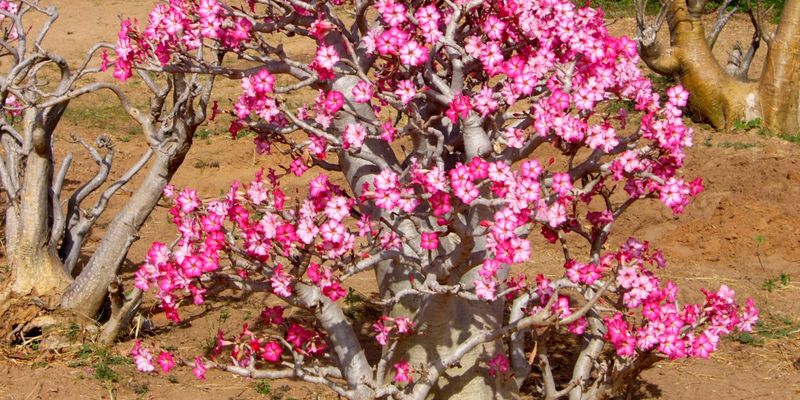
When a Desert Rose slows down or stops blooming in July, the temptation is to reach for a bag of fertilizer or a pair of pruning shears. Both responses feel productive, but neither one addresses the root cause when the problem is light or drainage, and both can cause harm if applied incorrectly during the rainy season.
Fertilizer has a legitimate role in summer Desert Rose care. UF/IFAS Adenium guidance supports using a balanced, slow-release pelletized fertilizer for outdoor plants during summer, applied according to the product label. That is a measured, scheduled practice, not a post-storm rescue treatment. Adding extra fertilizer after every downpour is not supported by Desert Rose-specific research, and the idea that rain automatically washes away all nutrients oversimplifies how nutrient cycling works in a container.
Timing also matters. UF/IFAS Florida-Friendly Landscaping guidance for edible landscapes advises caution about applying fertilizer when heavy rain is expected. That is general Florida-Extension guidance rather than a rule specific to Desert Rose, but it reflects a sensible principle: fertilizer applied just before a major downpour can be displaced before the plant benefits from it. If you are on a regular fertilizer schedule, work around the forecast rather than applying right before a storm.
Hard pruning in July is an even less reliable fix. UF/IFAS Charlotte County notes that Desert Rose generally needs little pruning and that any pruning aimed at encouraging bushiness belongs early in the growing season, not mid-summer. Cutting back heavily in July removes foliage the plant needs for photosynthesis during its active growth period and does not reliably force new flowering. Light and drainage remain the more direct levers for supporting healthy summer blooms.
Check for pests and handle Desert Rose sap carefully
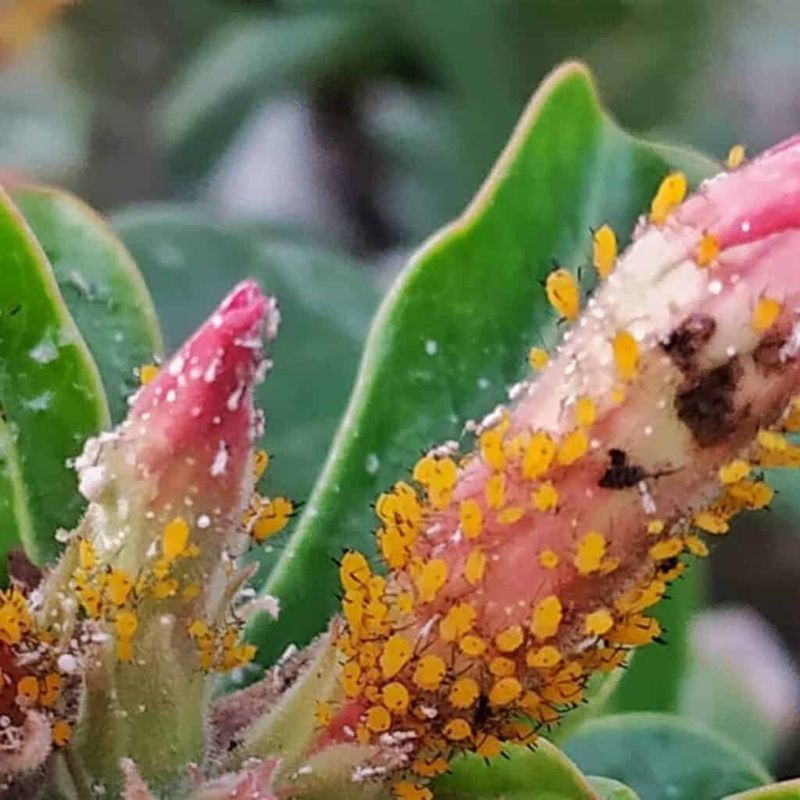
Once your light, drainage, and watering routine is in better shape, a regular pest check is the next useful habit to build. Rainy-season humidity and the stress that comes with repeated wet-dry cycles can make plants more vulnerable to insect pressure, and catching a problem early is far easier than managing a heavy infestation.
UF/IFAS guidance for Adenium identifies spider mites, aphids, and mealybugs as the pests most commonly associated with Desert Rose. Look for fine webbing on the undersides of leaves, clusters of small soft-bodied insects on new growth, and cottony white masses tucked into stem joints. Any of these signs warrant a closer look. Rather than reaching for a pesticide based on a guess, the recommended path is to bring a sample or clear photos to your local UF/IFAS Extension office.
An agent can confirm the pest and suggest a treatment approach suited to your specific situation.
Handling Desert Rose at any point, whether you are inspecting for pests, removing damaged tissue, or simply repotting, requires care around the plant’s sap. NC State Extension notes that Desert Rose sap can irritate skin on contact. Wear gloves whenever you are cutting stems or working with damaged tissue, and wash any exposed skin promptly with soap and water. Keep sap away from your eyes.
The toxicity concern extends beyond the gardener. The ASPCA lists Desert Rose as toxic to dogs, cats, and horses, and University of Arizona Cooperative Extension guidance on Adeniums reinforces that ingestion poses a genuine hazard. Keep the plant in a location where pets that chew on plants cannot reach it, and make sure children understand it is not to be touched without adult supervision.
Use one practical rainy-season routine
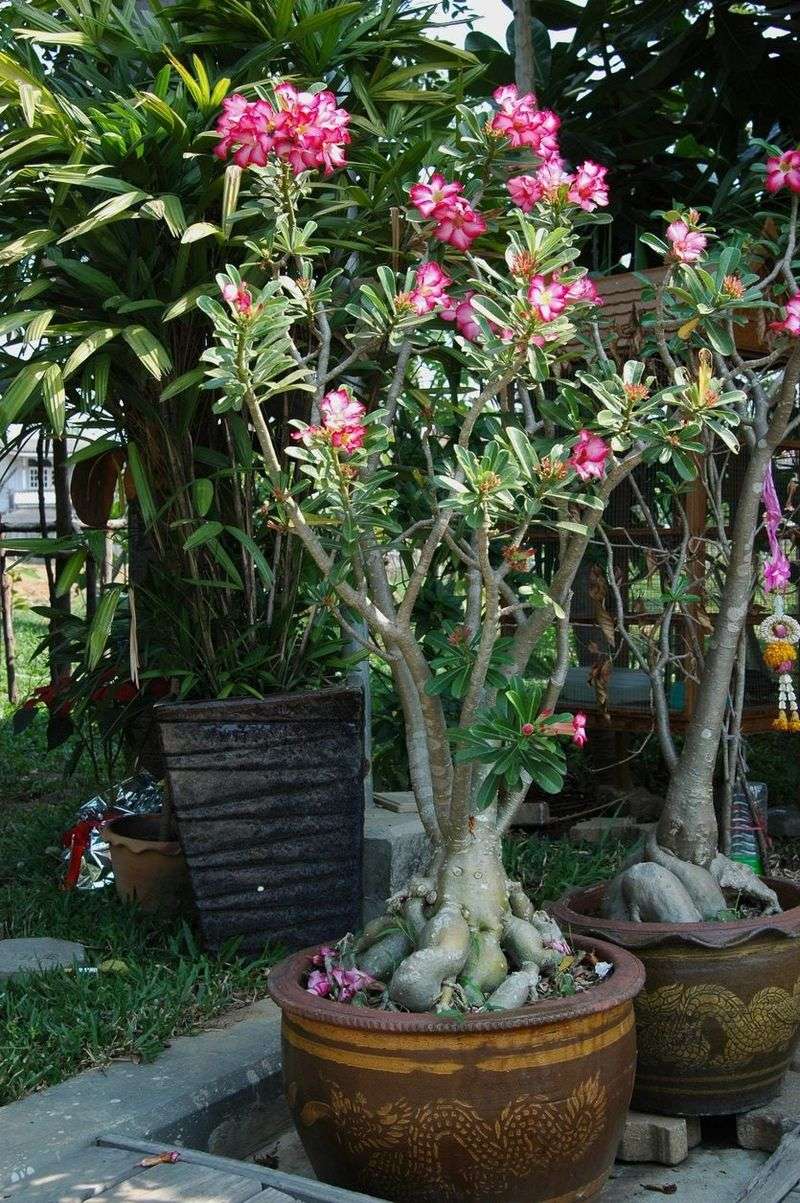
Pulling the advice together into a repeatable habit makes rainy-season care much less stressful. When extended heavy rain is in the forecast, move your container Desert Rose to a bright sheltered spot where it will still receive at least six hours of strong light. Before the storm arrives, confirm that the drainage holes are clear and that the pot is elevated enough to shed water freely.
After each storm passes, empty any saucer or cachepot so the container is not sitting in accumulated runoff. Hold off on watering until the growing medium has begun to dry, then water normally. As UF/IFAS Adenium guidance makes clear, the plant tolerates drought but still needs regular irrigation when the medium dries out, so check rather than assume.
When the forecast clears, move the plant back into full sun. UF/IFAS Charlotte County confirms that Desert Rose handles hot-weather rain well when drainage is good, so a single passing shower is never a reason to panic. This routine will not guarantee continuous blooms through every week of Florida’s rainy season, because cultivar, plant age, light history, pests, and root health all play a part. What it does is remove the most common rainy-season stressor so your plant has the best realistic chance to keep flowering on its own terms.