
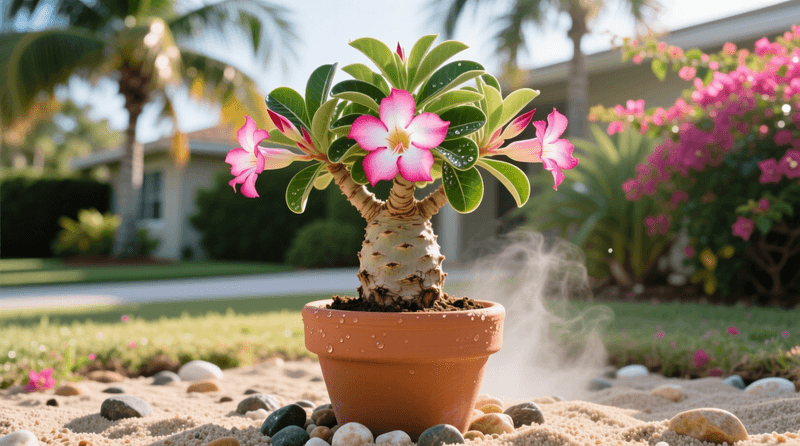
Desert rose is one of those plants that looks impossible to grow from a cutting until you actually pull it off, and then you wonder why you ever bought one from a nursery. Florida gardeners face a specific set of conditions that general propagation guides rarely address: sudden summer downpours, high humidity, and heat that never really lets up. Getting a cutting to root here is absolutely doable, but it takes a few targeted adjustments to moisture control, light, and drainage that make all the difference.
Florida conditions make moisture control especially important
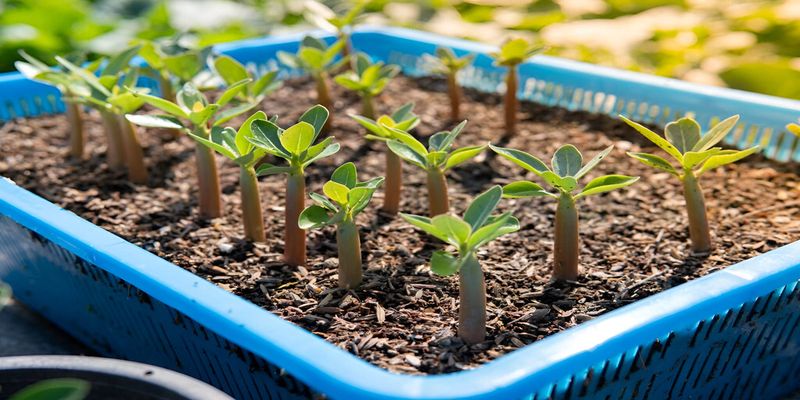
Desert rose thrives in warmth and dislikes cold, but warmth alone does not guarantee a cutting will root successfully. The challenge in Florida is that the same heat and humidity that encourage growth can also increase the risk of prolonged saturation in the rooting medium, which creates favorable conditions for fungal and bacterial problems. UF/IFAS guidance on Florida heavy rains notes that sudden summer downpours combined with warm temperatures can accelerate the spread of bacterial and fungal issues in garden settings.
That does not mean Florida conditions categorically cause cuttings to rot or that every gardener in the state will struggle. What it does mean is that leaving a propagation pot fully exposed to repeated saturation during rainy season is a higher-risk approach here than in a drier climate. UF/IFAS plant care guidance for Adenium obesum describes it as a heat-loving, drought-tolerant species that requires well-drained soil, which points directly to why aerated, non-waterlogged conditions matter during rooting.
The practical principle is straightforward: keep the cutting warm and in active growth while maintaining a rooting medium that holds some moisture without becoming soggy or airless. Protecting the pot from repeated rain, providing good airflow around the stem, and choosing a medium that drains quickly are all environmental adjustments that work with Florida’s climate rather than against it. The University of Arizona’s adenium propagation guide recommends very well-drained media, warmth, and moderate light as the foundation for successful rooting. These are not secret Florida tricks; they are sensible adaptations to conditions that make drainage more consequential than it might be elsewhere.
Choose callusing and moisture practices by cutting type and method
One of the most confusing parts of desert rose propagation is that reputable extension sources seem to contradict each other on whether to let a cutting dry before planting. The honest answer is that both recommendations can be correct, because the right approach depends on what kind of cutting you are working with and which propagation method you are using.
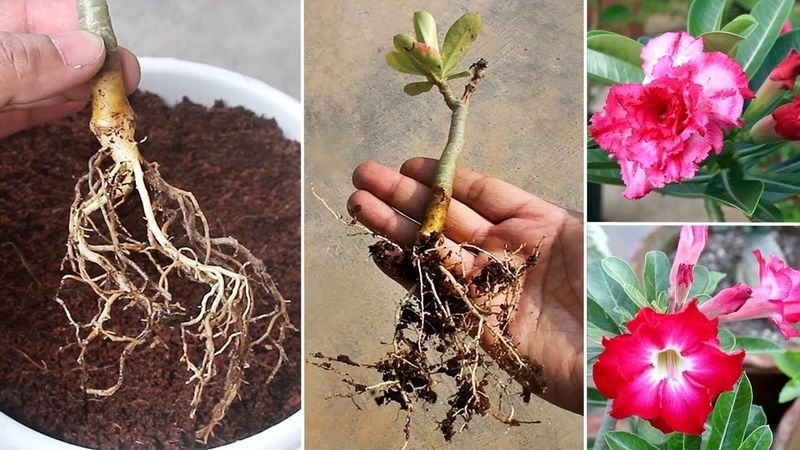
For soft, leafy young branches, the University of Arizona’s adenium-specific guide recommends dipping the fresh cut end in rooting hormone and inserting it into the medium right away, without allowing it to dry and callus first. These cuttings need a warm, moderately moist environment with reasonable light while roots form. Letting them sit out to dry may actually work against you with this cutting type and method.
Mature stems that are leafless or only sparsely leafed are a different situation. The same Arizona guide notes that these cuttings need less moisture and humidity during rooting. General succulent guidance from Iowa State University Extension recommends allowing Adenium stem cuttings to dry and callus for several days before planting in a cactus mix or perlite, which lines up with how many experienced growers handle older, woodier material.
The takeaway is not that one source is right and the other is wrong. Cutting maturity and your chosen method together determine whether drying makes sense. A blanket rule like “always callus for five days” or “never let it dry” oversimplifies a process that genuinely varies by stem type. Matching your approach to the cutting in your hand, rather than following a single universal script, puts you ahead of most general guides right from the start.
Prepare healthy material with clean tools and safe handling
Healthy parent material is the starting point that no amount of technique can replace. Look for a stem that is firm, shows no signs of disease or pest damage, and comes from a plant that has been actively growing. A cutting taken from a stressed, diseased, or dormant parent carries those problems into propagation before you even start.
Tool sanitation matters more than many gardeners realize. Virginia Cooperative Extension’s propagation guidance recommends using a sharp blade and disinfecting it with rubbing alcohol or a 1:9 bleach-to-water solution before cutting to reduce the risk of spreading disease from plant to plant. Wipe the blade clean between cuts, and let it dry or rinse it before moving to a new stem.
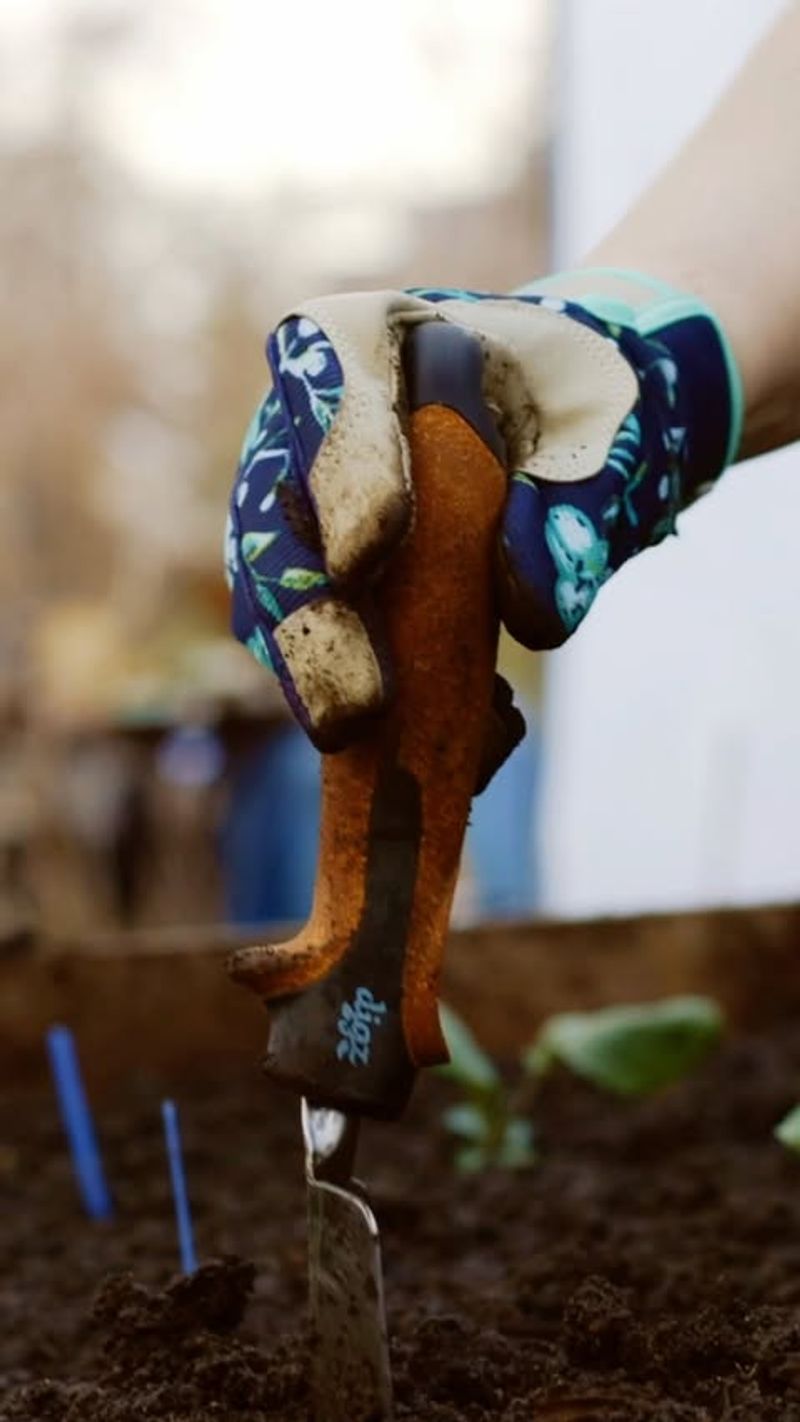
Desert rose belongs to the Apocynaceae family, and its milky sap is toxic. The ASPCA lists Adenium obesum as toxic to dogs, cats, and horses, with cardiac glycosides identified as the toxic compounds. Wear gloves any time you handle cut stems, wash your hands thoroughly afterward, and keep cuttings and sap away from children, pets, and your eyes and mouth. This is not a plant to work with casually at the kitchen table.
Rooting hormone is optional, not a guarantee. The Arizona adenium guide recommends it for the soft-cutting method, and Penn State Extension’s houseplant propagation guidance notes that hormone may help speed root development in some cases. If you choose to use it, follow the product label exactly, use only the recommended amount, and pour a small portion into a separate container before dipping. Putting a cut stem directly into the original product container can introduce pathogens and contaminate your entire supply.
Use a controllable container and porous rooting medium
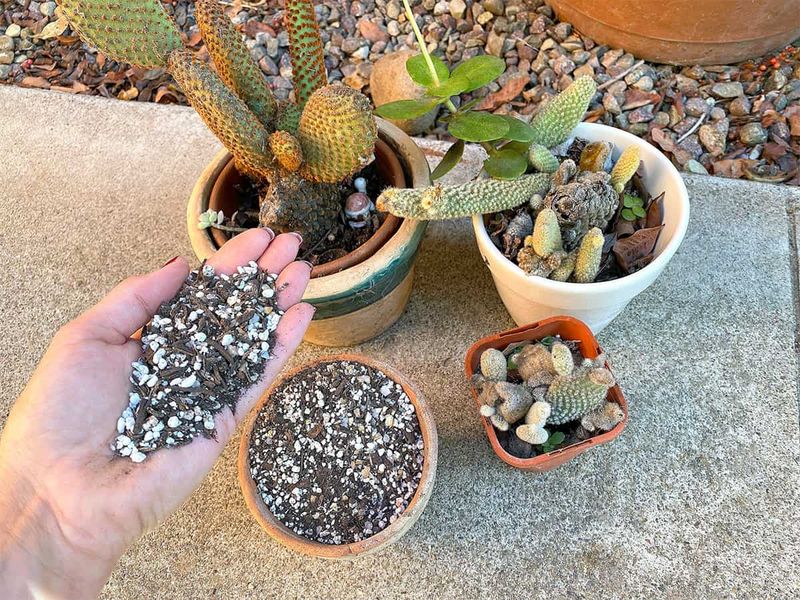
Container choice and rooting medium are two of the most controllable variables in the whole process, and getting them right pays off quickly. A pot with drainage holes is non-negotiable. Water that cannot exit the bottom will pool around the stem base and create exactly the saturated, airless conditions that increase rot risk in Florida’s warm climate.
For the medium itself, aim for something that sheds excess water while keeping a small amount of moisture accessible to the developing roots. Perlite, coarse mineral material, or a commercial cactus-style mix are all defensible starting points. UF/IFAS container media guidance advises avoiding fine-textured or heavy media that hold too much water and reduce aeration around roots, which is exactly the opposite of what an unrooted cutting needs.
Florida’s native sandy soil might seem like a natural fit since it drains quickly, but it is not automatically ideal for cuttings. Sandy ground can provide inconsistent moisture, expose a small cutting to intense surface heat, and make it difficult to observe or adjust conditions the way you can with a pot. Iowa State Extension also notes that most succulents do not root well in standing water, so skip any method that keeps the stem base submerged.
Container propagation during the rooting phase offers more control than planting directly in landscape soil, particularly during rainy periods when outdoor ground moisture is harder to manage. That said, a container is not a magic solution. A pot with poor drainage or a dense, water-retentive mix creates the same problems as bad soil. The Arizona adenium guide reinforces that well-drained media is one of the consistent foundations of successful rooting, and “well-drained” means moist and aerated, not bone dry.
Give an unrooted cutting bright light without harsh exposure
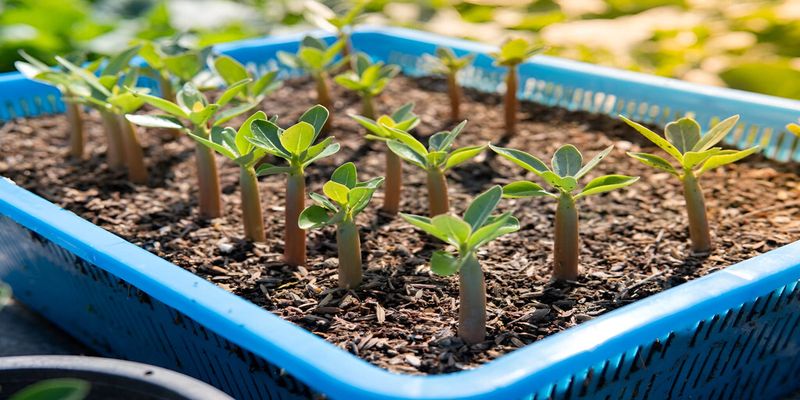
Light requirements for an unrooted cutting and an established desert rose are not the same, and conflating the two is a reliable way to stress a cutting before it ever gets a chance to root. Once Adenium is established, UF/IFAS recommends at least six hours of high light daily for the plant to maintain flowering. A fresh cutting, however, has no root system yet, which means it cannot draw water fast enough to replace what intense sun and heat pull from its leaves and stem.
Placing a leafy cutting in unfiltered Florida summer sun is a quick path to wilting and failure. University of Illinois Extension guidance on cuttings recommends bright light rather than direct sun during the rooting phase, which matches what the Arizona adenium guide describes as moderate illumination. Bright indirect light, a spot under a shade cloth, or a covered porch that gets good ambient light are all reasonable options.
Wind is another factor worth considering. Florida afternoons can bring strong gusts that accelerate moisture loss from an unrooted stem. A sheltered but well-lit spot reduces that stress while still giving the cutting the light energy it needs to stay active. The Arizona adenium guide emphasizes warmth and moderate light as the pairing that supports root formation, not maximum sun exposure.
Once roots are established, you can move the plant into more direct light gradually while watching for any signs of stress, but that step comes later, not on day one.
Protect the pot from prolonged rain while preserving airflow
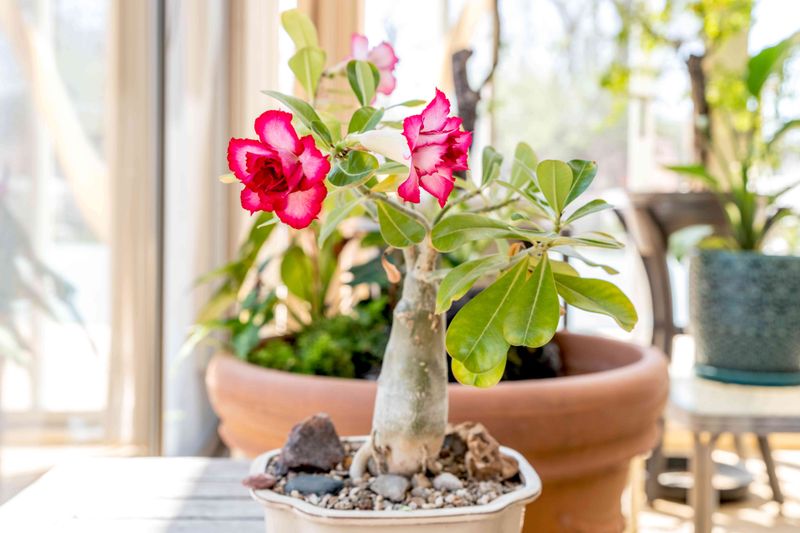
Florida’s rainy season is one of the most practically significant variables for anyone propagating desert rose outdoors. A single heavy afternoon storm can saturate a propagation pot several times over, and repeated saturation in warm conditions is one of the situations where fungal and bacterial problems are most likely to develop. Moving the pot under a covered, bright location during prolonged rain is one of the simplest and most effective adjustments a Florida gardener can make.
“Covered” does not mean sealed or enclosed. UF/IFAS heavy rain guidance highlights the risk that warm, wet conditions create for plant health, and the same principle applies here. A covered porch, a carport with good ambient light, or a simple rain shelter that blocks overhead water while allowing air to move freely around the pot all serve the purpose without trapping heat or creating stagnant conditions.
Some leafy cuttings may benefit from a humidity tent or a loosely placed clear cover that slows moisture loss from the leaves while roots have not yet formed. The Arizona adenium guide allows for a terrarium-like rooting chamber for soft leafy cuttings, but it is not a sealed, airless box. UF/IFAS plant pathology guidance warns that hot, wet, and poorly ventilated conditions are favorable for fungal disease, which means any humidity-retaining cover needs ventilation gaps and should not stay in place if the medium becomes waterlogged.
The target environment is moist and aerated, not soggy and still. Check the medium between waterings and let it approach dryness at the surface before adding more water, adjusting for whether you are working with a leafy soft cutting that needs more moisture or a mature stem that needs less. There is no single watering schedule that works for every cutting in every Florida microclimate, so observation matters more than a fixed routine.
Check for rooting without repeatedly disturbing the cutting
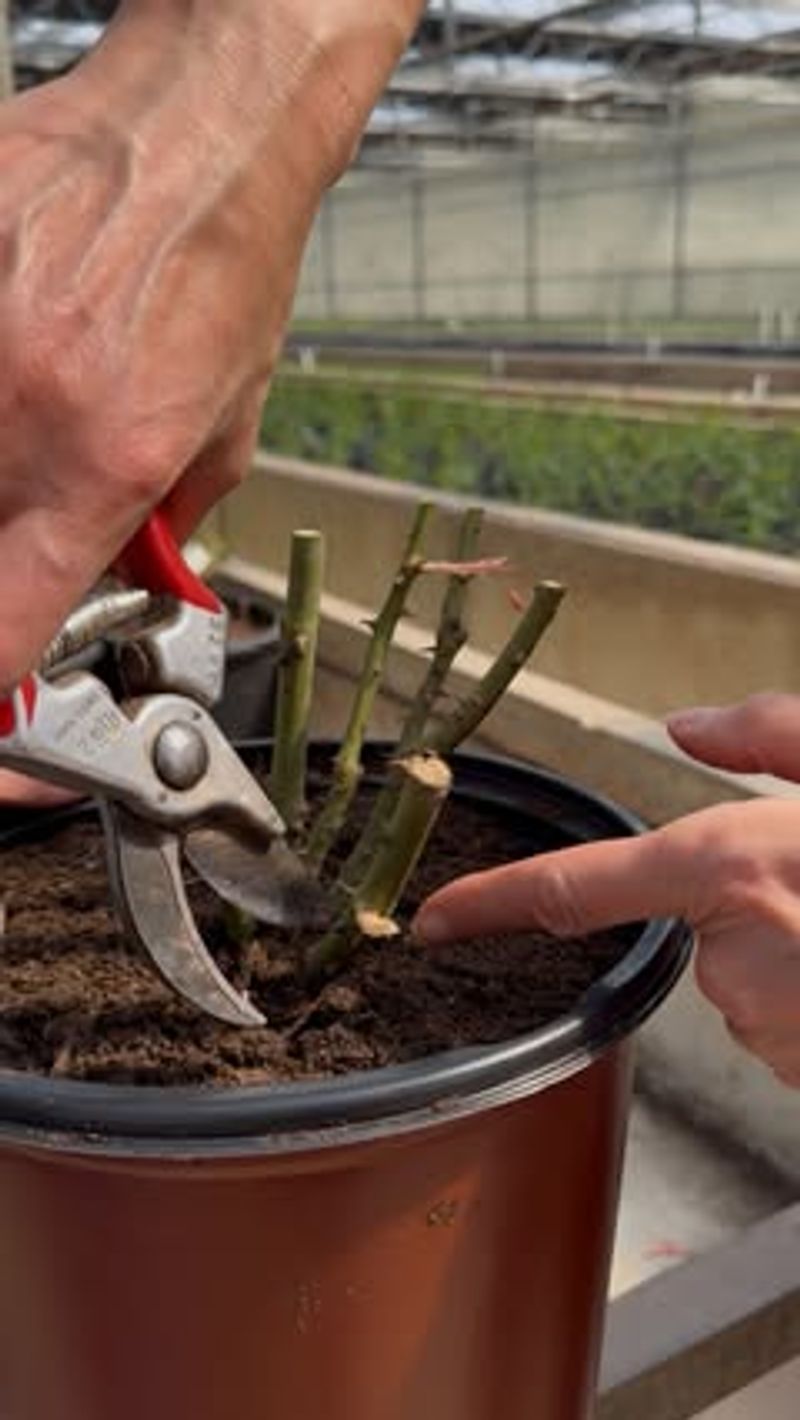
Patience is genuinely one of the harder parts of propagating desert rose, because the temptation to check on progress by pulling the cutting out can set back or destroy root development that is already underway. A more reliable approach is to watch for new leaf growth at the top of the stem, which often signals that roots are forming and the cutting is drawing nutrients. University of Illinois Extension guidance on cuttings recommends observing new growth and using a gentle resistance test rather than repeatedly disturbing the cutting.
The resistance test is straightforward. Give the stem a very gentle tug. If it moves freely, roots have not yet anchored. If you feel resistance, that is a good sign that roots are developing.
This test should be done infrequently and carefully, because young roots are fragile and repeated handling can break them before they have a chance to strengthen.
No reliable source establishes a specific number of days or weeks for Adenium cuttings to root under Florida conditions. Timing varies by cultivar, cutting maturity, parent plant health, the time of year you took the cutting, and how well you have managed temperature, light, and moisture. Expecting roots in two weeks may be realistic for some cuttings and completely wrong for others, so avoid treating any timeline as a promise.
Once roots are established and the plant shows healthy new growth, you can begin moving it into more direct light while watching for signs of stress such as wilting, leaf scorch, or sudden leaf drop. UF/IFAS Adenium care guidance describes the established plant’s high light needs, but reaching that stage is a gradual process. Let the plant’s response guide the pace rather than following a fixed schedule.
A rooted cutting preserves the cultivar but not every plant feature
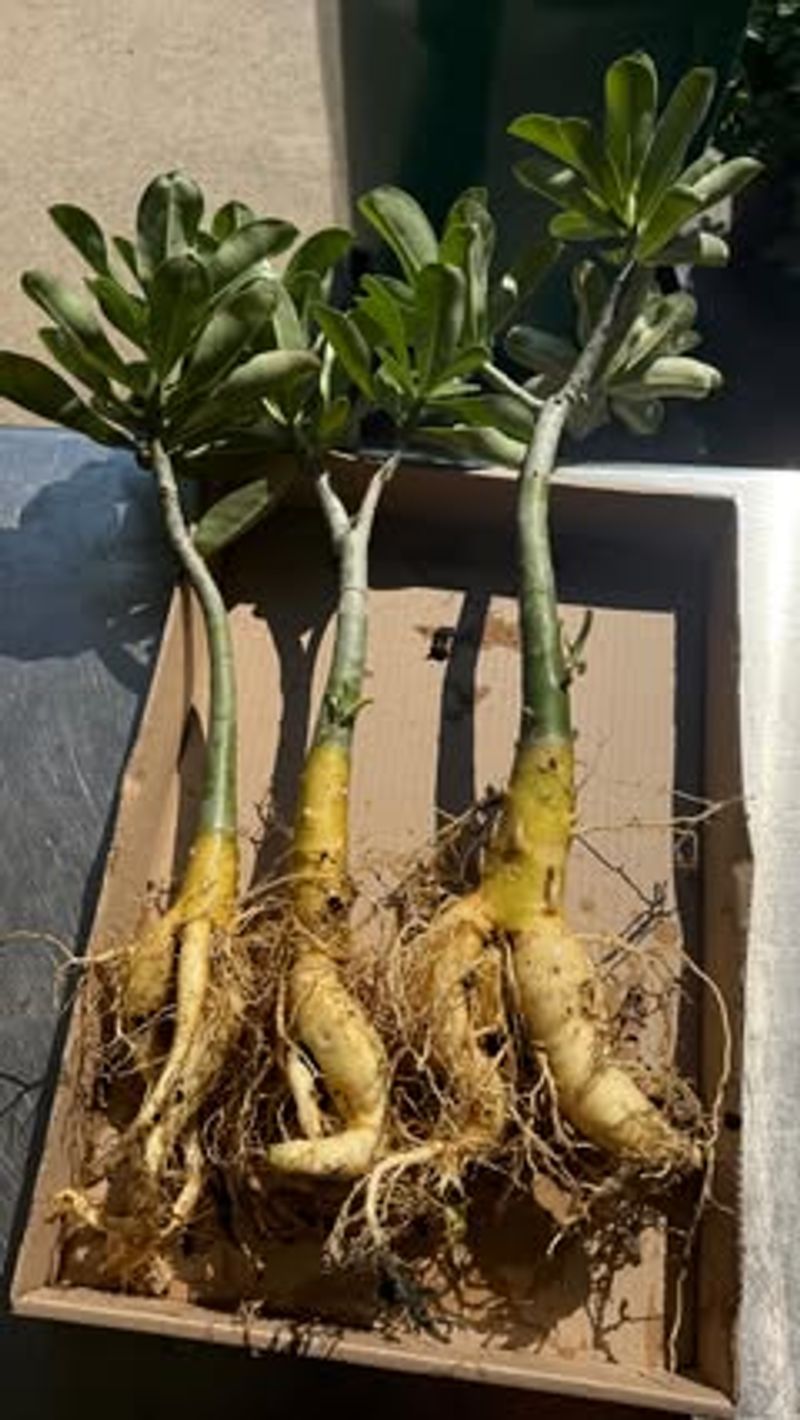
Propagating from a cutting produces a genetic clone of the parent plant, which is the most reliable way to preserve the flower color, form, and other characteristics of a named cultivar. Seedlings, by contrast, are genetically variable and will not reliably reproduce the parent’s flowers. The University of Arizona adenium guide confirms that cutting propagation is the standard method for maintaining named cultivars, while grafting is used when growers want to combine desirable flower traits with a specific rootstock.
Successful rooting does not guarantee that your cutting will develop the dramatic swollen caudex that makes some desert roses so visually striking. The Arizona guide notes that a cutting taken from a parent with a developed caudex may eventually develop one over several years, but the process is slow and the result is not guaranteed to match a seed-grown or grafted specimen. If a large, sculptural caudex is your primary goal, a cutting may not be the fastest or most predictable path to get there.
For Florida gardeners, the broader takeaway is that propagation is feasible and worth attempting, but it is not a foolproof system with a guaranteed outcome. Match your callusing and moisture approach to the cutting type, keep drainage and rain exposure under control, provide appropriate light for an unrooted stem, and treat each attempt as a learning round rather than a sure thing.
Location within Florida also matters for long-term outdoor growing. UF/IFAS identifies Zones 10B through 12 as appropriate for year-round outdoor cultivation and warns clearly that Adenium should not freeze. Gardeners in north or central Florida may need to bring plants indoors or provide winter protection when temperatures drop. A rooted cutting is a real achievement; knowing where it can safely live year-round is what turns that achievement into a lasting addition to your garden.