
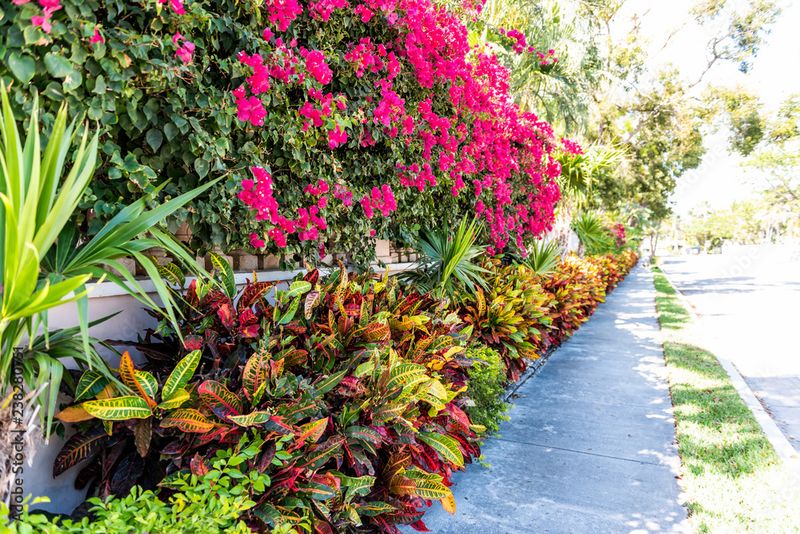
Bougainvillea is one of Florida’s most dramatic plants, capable of exploding into brilliant color that stops traffic and turns heads. But if yours has gone quiet this summer, you are probably wondering what went wrong and whether July is too late to fix it. The honest answer is that what you do now can meaningfully improve your plant’s growing conditions and support better flowering later, even if a nonstop summer show is not guaranteed for every plant in every part of the state.
July Care Sets Conditions, Not a Nonstop-Bloom Guarantee
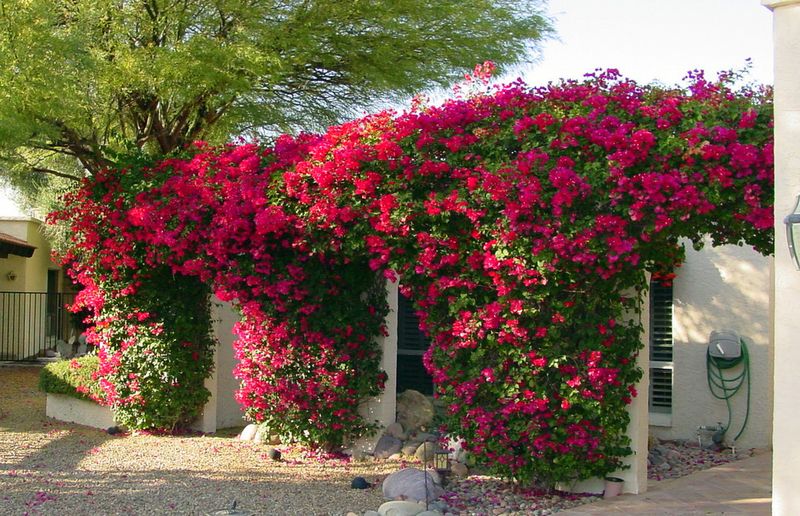
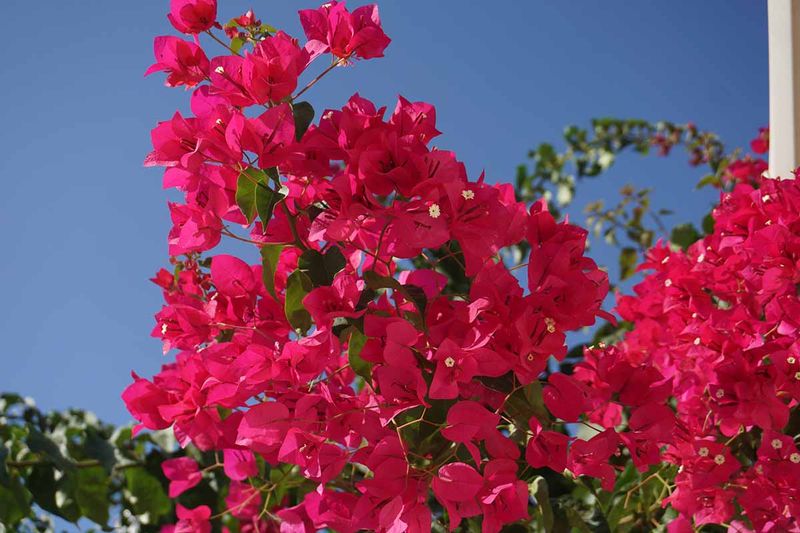
Bougainvillea’s show-stopping color comes not from the flowers themselves but from papery bracts, which are modified leaves that surround small, inconspicuous true flowers. UF/IFAS Gardening Solutions notes that bougainvillea blooms periodically through much of the year, with especially heavy flowering typically occurring in winter or the dry season rather than continuously through summer. Understanding this cycle is the first step toward realistic expectations for any July care program.
South Florida guidance describes many plants hitting their peak color from late fall through spring, with some cultivars capable of more frequent flowering when conditions align well. Miami-Dade Extension’s flowering shrubs resource reinforces that bougainvillea performance across Florida varies considerably by region, cultivar, and seasonal timing. Promising nonstop summer bracts for every plant in every yard simply does not hold up against what the evidence shows.
What July maintenance can do is correct the conditions that most reliably hold a plant back: insufficient sun, chronically wet soil, over-irrigation, excess nitrogen, and poorly timed pruning. UF/IFAS’s low-maintenance landscape plant guide identifies full sun, good drainage, and restrained fertilizer as the core requirements. Fixing those conditions now gives your plant a better foundation for flowering later in the year, even if the result depends on cultivar, photoperiod, temperature, and prior care as much as on anything you do this month.
Full Sun Is Essential for Reliable Flowering
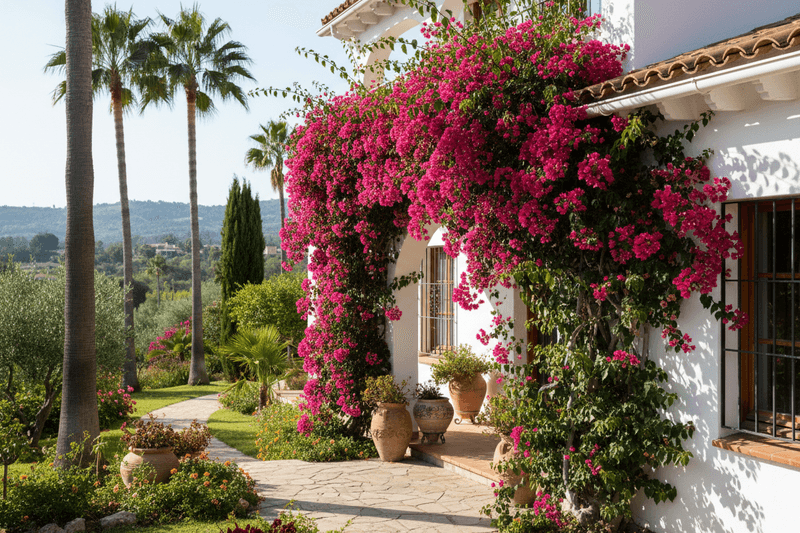
Many Florida gardeners assume a spot that feels sunny is giving their bougainvillea what it needs. The more useful test is to watch the actual planting location throughout the day and count the hours of direct, unfiltered sun the plant receives. UF/IFAS Gardening Solutions is direct on this point: bougainvillea needs full sun for good flowering, and shade can result in vigorous, lush foliage with few or no bracts at all.
Trees grow. Structures cast shadows that shift through the seasons. A location that was genuinely sunny when the plant went in may now be partially shaded for several hours a day as a nearby oak or palm has filled out. UF/IFAS Fact Sheet FPS-70 confirms that bougainvillea performs best in full sun and that reduced light is one of the clearest explanations for a plant that looks healthy but refuses to produce color.
Walk around the plant mid-morning and again in early afternoon to see exactly where shade is falling.
If the plant is in a container and receiving less than about six hours of direct sun, moving it to a sunnier spot is one of the most straightforward corrections available in July. For an in-ground plant blocked by a structure or an overhanging branch, selective trimming of the obstruction may help. UF/IFAS Nassau County Extension addressed a bougainvillea planted in shade with no blooms and confirmed that relocating or exposing the plant to more sun is the most appropriate first correction. Keep in mind that improving light access raises the likelihood of reliable flowering but does not guarantee a specific outcome on its own, since cultivar, drainage, and fertilizer history also play roles.
Fast Drainage Matters More Than a Dry-Planting Trick
Florida’s sandy soil is often described as a challenge, but for bougainvillea it can actually be an asset when it drains freely and stays aerated. UF/IFAS’s low-maintenance landscape plant guide lists well-drained soil as a firm requirement and identifies bougainvillea as well-suited to Florida’s fast-draining conditions. The problem arises not from sandy soil itself but from low-lying spots, compacted areas, runoff channels, and irrigation overspray zones that can keep roots wet long after a rain event ends.
Before changing your watering schedule or adding soil amendments, spend a few minutes watching what happens at the planting site during and after a typical summer afternoon storm. UF/IFAS Miami-Dade Extension’s vines page emphasizes that bougainvillea should not be planted in areas prone to flooding or chronic wetness, and that drainage is a non-negotiable site requirement. If water pools at the base of the plant or the surrounding soil stays soggy for more than a day, that chronic saturation is a more likely explanation for poor performance than anything else.
UF/IFAS Sarasota County’s low-maintenance vines guidance echoes the importance of good site selection and drainage for long-term performance. One critical distinction to keep in mind: fast-draining sandy soil that helps an established plant stay appropriately dry can also mean a newly planted specimen dries out too quickly and needs regular irrigation to survive. Bougainvillea is not flood tolerant simply because it grows well in Florida, and moving a plant to a better-drained site or raising the planting grade may deliver more benefit than any fertilizer or pruning adjustment. UF/IFAS Florida-Friendly Landscaping guidelines recommend evaluating drainage before planting and correcting problems at the site level rather than trying to compensate with management.
Adjust Irrigation Without Forcing Severe Drought
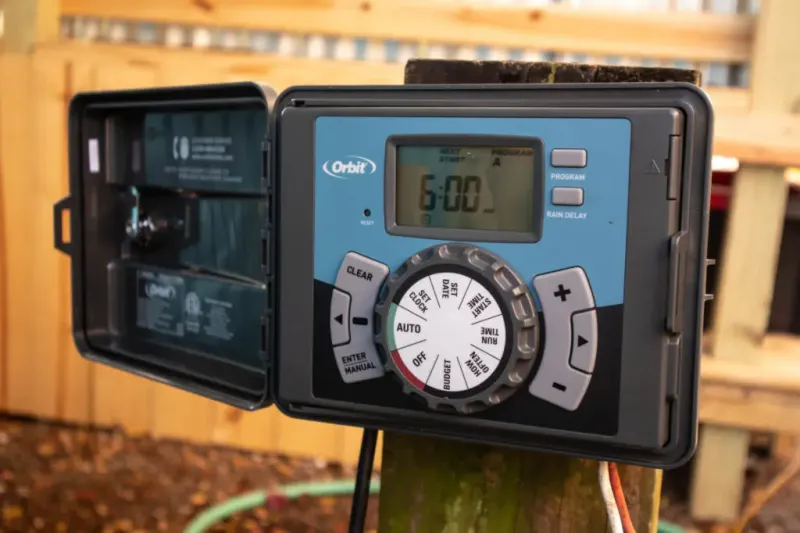
Checking what your irrigation system is actually delivering is a more useful July task than deciding to water more or less based on how the plant looks. Sprinkler overspray that soaks the base of an established bougainvillea every day can quietly suppress performance even when the bracts and foliage look fine at first glance. UF/IFAS Gardening Solutions specifically warns that overactive sprinklers can suppress performance and contribute to leaf drop, making irrigation audit the logical first step.
Florida’s rainy season complicates the picture considerably. Natural rainfall during June through September can deliver several inches per week in some areas, meaning supplemental irrigation may be redundant or even harmful for an established planting. UF/IFAS Charlotte County Extension notes that established bougainvillea generally performs better when the soil is allowed to become somewhat dry between waterings, which in a rainy Florida summer may mean turning off or dialing back the irrigation system rather than adding water on a fixed schedule.
The situation changes for plants that are newly installed, growing in containers, visibly wilted, or showing signs of drought injury. UF/IFAS Florida-Friendly Landscaping guidelines are clear that even drought-tolerant plants need regular irrigation during the establishment period, and that supplemental watering remains appropriate during severe drought regardless of the plant’s tolerance rating. The UF/IFAS Florida-Friendly Landscaping Pattern Book reinforces that establishment needs differ from long-term maintenance needs. The goal is to prevent chronic saturation for established plants, not to deliberately dehydrate any plant or allow dangerous wilting.
UF/IFAS’s low-maintenance landscape guide supports this distinction, noting that drought tolerance develops over time as roots establish, making plant status the deciding factor in any irrigation adjustment.
Hold Back Excess Nitrogen Instead of Chasing Blooms With Fertilizer
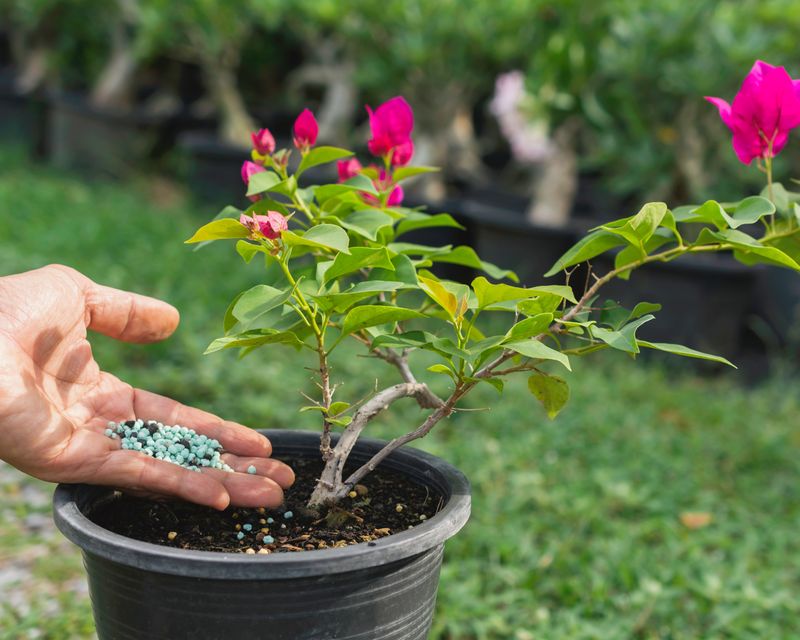
A bougainvillea covered in deep green, vigorous foliage but producing almost no color is often a nitrogen problem rather than a mystery. Excess nitrogen pushes plants into vegetative growth mode, directing energy into leaves and stems rather than the bracts that make bougainvillea worth growing. UF/IFAS Gardening Solutions states plainly that excessive fertilizer, especially nitrogen, can promote leafy growth at the expense of flowering.
Before reaching for any fertilizer product in July, review what the plant has already received this year and assess whether growth looks balanced or unusually lush. UF/IFAS Miami-Dade holiday color guidance recommends completing major fertilizer work before late summer and then limiting nitrogen afterward, particularly for gardeners in South Florida who want to support fall and winter flowering. Applying a high-nitrogen product now in hopes of triggering color is likely to produce the opposite result.
There is no Florida-specific evidence supporting the routine use of high-phosphorus bloom-booster formulas as a reliable bougainvillea treatment. UF/IFAS’s low-maintenance landscape plant guide frames fertilizer decisions around soil-test results, actual plant need, and label directions rather than assumed formulas. If a soil test or visible deficiency symptoms suggest a specific nutrient is lacking, address that targeted need. Otherwise, July is more safely spent holding back than adding on.
Use July Pruning for Safety and Control, Not as a Bloom Switch
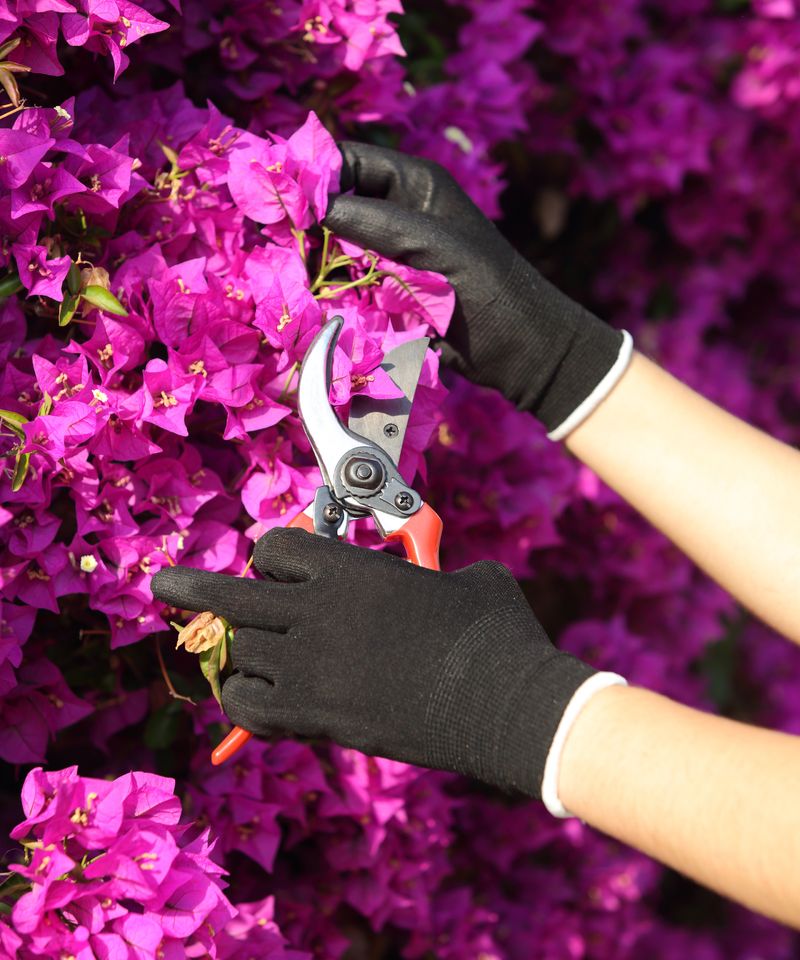
Bougainvillea thorns are not a minor inconvenience. Standard varieties carry sharp spines that can be roughly one to two inches long, and UF/IFAS Fact Sheet FPS-70 specifically notes that pruning can cause injuries. Heavy gloves, long sleeves, eye protection, and careful tool handling are not optional precautions. Thorniness does vary by cultivar, with some selections being nearly thornless, but it is safer to assume thorns are present until you have confirmed otherwise with your specific plant.
The timing question matters as much as the technique. UF/IFAS Gardening Solutions places major pruning after flowering in late winter or early spring, or at the beginning of the rainy season. UF/IFAS Miami-Dade holiday color guidance warns that late-summer or early-fall pruning can reduce the following winter’s flowering, which is often the strongest bloom period in South Florida. A hard cutback in July intended to force summer color is more likely to cost you fall and winter bracts than to deliver a summer payoff.
The sensible July pruning plan is limited and purposeful: remove branches that are dead, diseased, structurally dangerous, or so badly misplaced that they create a hazard or block access. UF/IFAS Charlotte County Extension supports light corrective cuts while cautioning against aggressive pruning outside the recommended window. UF/IFAS Gardening Solutions vines guidance similarly frames pruning as a tool for control and safety rather than a reliable method of forcing new flowering cycles. Shape the plant if needed, remove the problem growth, and leave the rest alone until the recommended late-winter or early-spring window returns.
Read Leaf Drop and Pests Before You Escalate
Leaf drop on a bougainvillea is one of the most frequently misread symptoms in Florida gardens, and the instinct to water more after seeing bare branches often makes the underlying problem worse. UF/IFAS Fact Sheet FPS-70 notes that leaf loss can naturally follow a flowering cycle as the plant resets before pushing new growth and bracts. The same leaf drop can also reflect overwatering, inadequate sun, or cold exposure, which means the right response depends entirely on what is actually happening at the site.
Before changing anything, run through the growing conditions first. Is the plant in full sun? Has irrigation been running during heavy rainfall? Has the soil been staying wet for days at a time?
UF/IFAS Charlotte County Extension emphasizes that reviewing light, water, and drainage history is the appropriate first step rather than immediately treating for pests or increasing watering frequency. Correcting the underlying condition usually resolves the symptom without additional intervention.
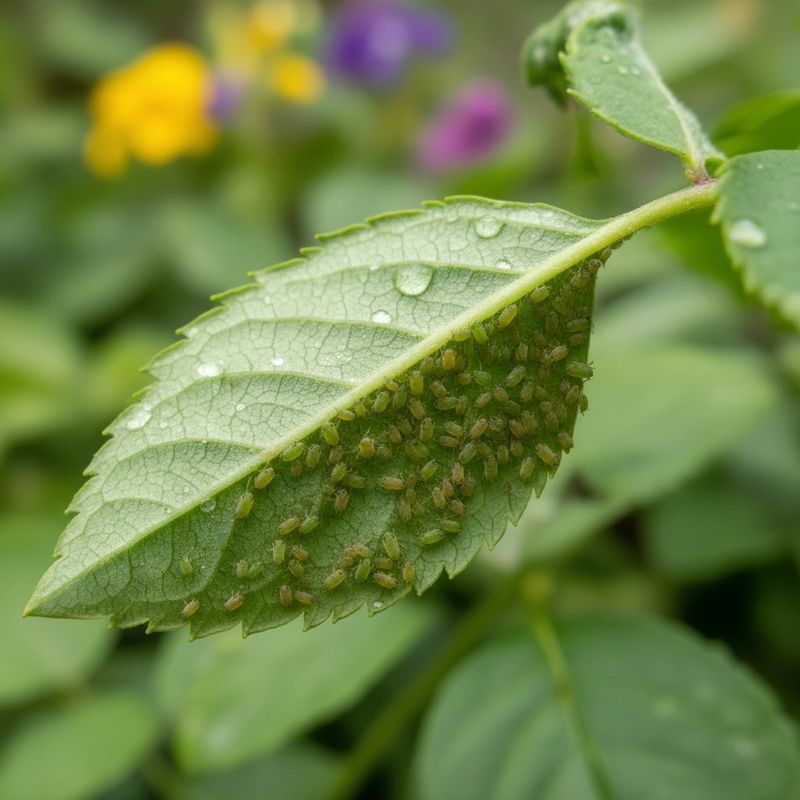
Pests do occasionally show up on bougainvillea, and a thorough inspection is worthwhile when leaves look chewed, stippled, or distorted. UF/IFAS’s low-maintenance landscape plant guide and Miami-Dade Extension’s flowering shrubs resource both characterize bougainvillea as having relatively few major pest or disease problems overall. Caterpillars, aphids, scale, and leaf-chewing worms are the most common targets to look for on the undersides of leaves and along new growth. Treat only after confirming a real infestation, and do not assume pests are the reason the plant is not flowering, since light, drainage, fertilizer, and pruning history are consistently more central explanations.
Florida’s Bloom Calendar Depends on Region and Cultivar
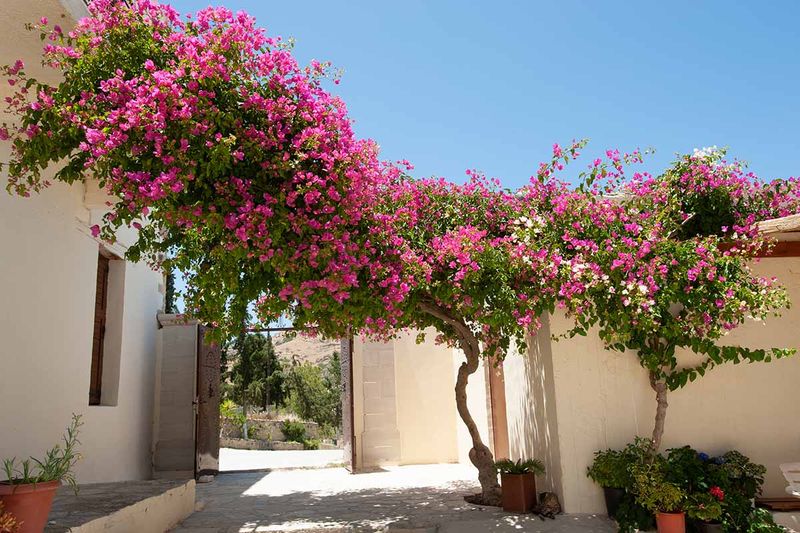
Expecting the same flowering response from a bougainvillea in Miami as from one in Gainesville or Pensacola is a setup for disappointment. UF/IFAS’s low-maintenance landscape plant guide and Miami-Dade Extension’s flowering shrubs resource both describe a strong late-fall-to-spring flowering pattern for South Florida, where the dry season and shorter winter days align with the plant’s natural flowering cues. North and Central Florida gardeners face more cold exposure, different cultivar performance, and a shorter window for the plant to behave as a reliable perennial.
Photoperiod plays a genuine role in bougainvillea flowering. Research published through PubMed on photoperiod duration and bougainvillea flower bud differentiation and AGRIS research on plant growth regulators and bougainvillea flowering identifies certain cultivars as short-day plants, meaning shorter day lengths can help trigger flowering. Moderate water stress has also been observed to partially substitute for short-day conditions in some studies. That research finding does not translate into a recommendation for homeowners to deliberately dehydrate their plants, since the risks of severe drought to newly established or container-grown specimens are real and the response varies by cultivar.
Cultivar selection matters more than most gardeners realize. UF/IFAS Fact Sheet FPS-70 lists differences among cultivars in vigor, color, hardiness, thorniness, and flowering behavior. UF/IFAS Gardening Solutions reinforces that no single maintenance schedule produces the same outcome across all varieties and locations. The most useful way to judge July’s efforts is not by whether summer bracts appear on cue but by whether the plant’s light, drainage, water, and nutrition are now better positioned to support the flowering that naturally fits your region and cultivar as the season shifts toward fall and winter.
The July Reset Is Simple: More Sun, Less Saturation, Fewer Wrong Turns
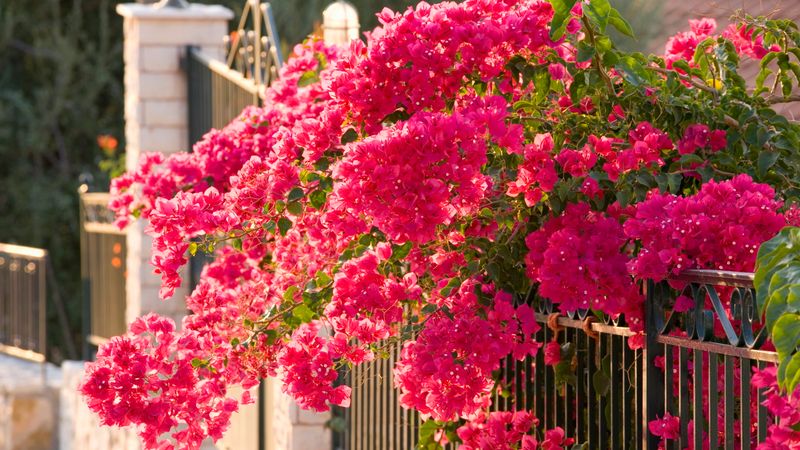
Boiling down everything above into a practical July checklist keeps the work manageable. Verify that the plant receives genuine full sun for most of the day, and address any shade from trees or structures that has crept in since the plant was installed. UF/IFAS Gardening Solutions and UF/IFAS’s low-maintenance landscape guide both treat full sun and good drainage as the two conditions that matter most for long-term performance.
Check drainage at the planting site and inspect the irrigation system for overspray that keeps roots wet during Florida’s rainy season. Hold back nitrogen-heavy fertilizer and resist the impulse to apply a bloom-booster product without a soil test or clear nutrient deficiency. UF/IFAS Miami-Dade holiday color guidance supports wrapping up major fertilizer work before late summer and limiting nitrogen from that point forward. Limit pruning to genuinely necessary corrective cuts, and save any major reshaping for late winter or early spring after flowering.
These steps improve the conditions that reliable flowering depends on, but they cannot override the plant’s seasonal timing, its cultivar-specific behavior, or Florida’s regional variation. A bougainvillea that gets the July reset right is better positioned for the color that most often comes in fall and winter, and that is a worthwhile trade for a few hours of honest summer maintenance.