
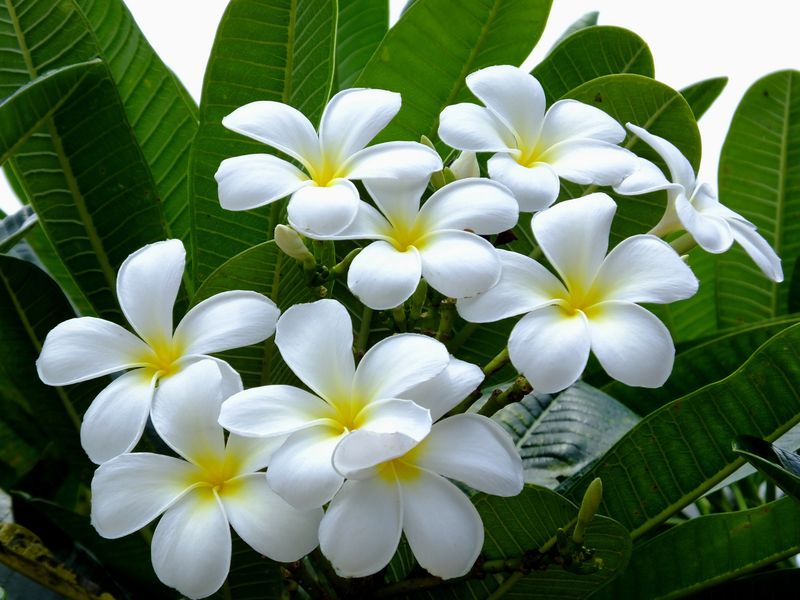
Plumeria is one of those plants that stops people in their tracks when it blooms, filling the yard with tropical fragrance and clusters of waxy flowers in shades of white, yellow, pink, and red. Florida gardeners have a real advantage here because the warm climate gives plumeria a long potential flowering season, but getting blooms to carry well into fall takes more than just planting one and hoping for the best. The good news is that the factors most likely to extend flowering are things you can actually manage: where the plant sits, how the soil drains, and how you care for it through the heat of summer.
Florida’s bloom window is possible, not guaranteed
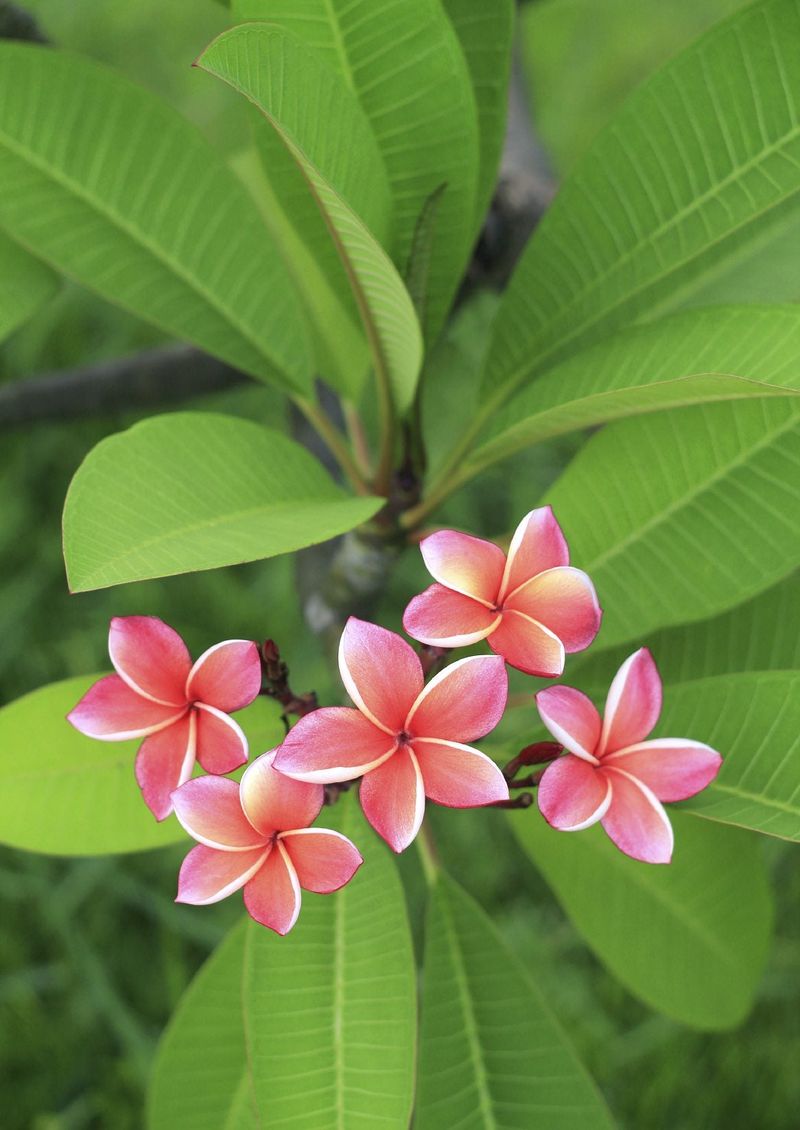
UF/IFAS guidance on plumeria reports that flowers generally appear from May through November in Florida, which sounds like a long, rewarding season. What that range actually describes is the outer boundary of when blooms can occur, not a promise that your plant will flower continuously every week from spring through late fall. Flower flushes depend on cultivar, plant age, weather patterns, and how well basic care needs are met.
Central Florida gardeners face a narrower window. UF/IFAS Orange County Extension’s flowering tree guide places the principal plumeria season from early summer into early fall, which is meaningfully shorter than the May-to-November range cited for more tropical parts of the state. That difference matters when you are deciding how much to invest in a planting site or how realistically to set your fall expectations.
South Florida, in USDA Zones 10B and 11, offers the strongest conditions for prolonged flowering because warmth persists well into fall and frost is rarely a concern. Central Florida gardeners can succeed with plumeria at protected sites, but frost remains a genuine risk that can cut the season short. North Florida is generally better suited to container culture, where plants can be moved indoors or under cover when temperatures drop.
Understanding these regional differences is the right starting point for every care decision that follows. A gardener in Miami and a gardener in Gainesville are not working with the same plant calendar, and treating the May-to-November window as a universal guarantee sets up disappointment. The goal is to give your plumeria the conditions it needs to reach as much of that window as your region allows.
Full sun and warmth power the flowering cycle
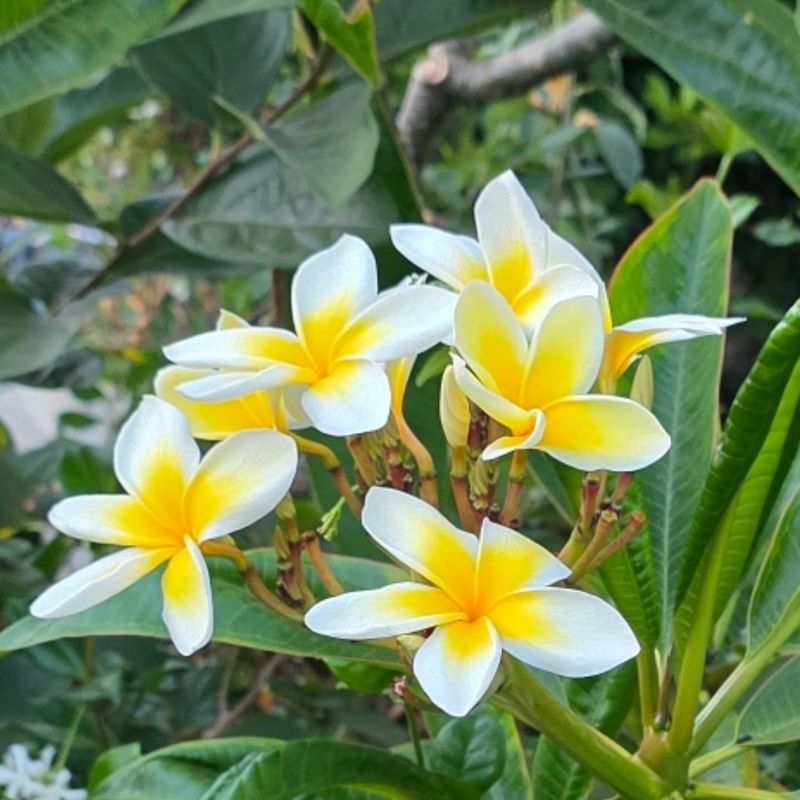
Where you put your plumeria matters more than almost any product you could apply to it. UF/IFAS recommends full sun as the preferred exposure for plumeria, and that recommendation connects directly to how well the plant flowers. Strong, direct light during the long Florida growing season fuels the active growth that eventually produces blooms, and a plant that receives consistent sun through summer has a much better chance of carrying that energy into fall.
Walk around your yard at different times of day and watch how shadows move across your planting area. Buildings, fences, mature trees, and even large shrubs can block significant light for part of the day, and those obstructions can shift with the seasons as the sun angle changes. A spot that looks bright in early morning may sit in shade by midday, which is exactly when solar intensity peaks.
UF/IFAS plumeria guidance does not assign a specific hourly threshold, so avoid relying on rules of thumb that put an exact number on it. The practical test is straightforward: if the spot receives direct, unobstructed sun through most of the active day, it is likely adequate. If nearby trees have grown taller since you planted, or a new structure now casts afternoon shade, the plant’s flowering response may already be telling you something.
Foliage growth in a dim location is not the same signal as flowering potential. A plumeria in low light may push leaves without ever producing a strong floral display, because the energy budget needed to form flower clusters is higher than what shade allows. Warmth works alongside light in this process. Florida’s summer heat is one of the reasons plumeria performs well here, and keeping the plant in a warm, sun-drenched spot through the active season is the foundation everything else builds on.
Drainage keeps Florida rain from undermining the roots
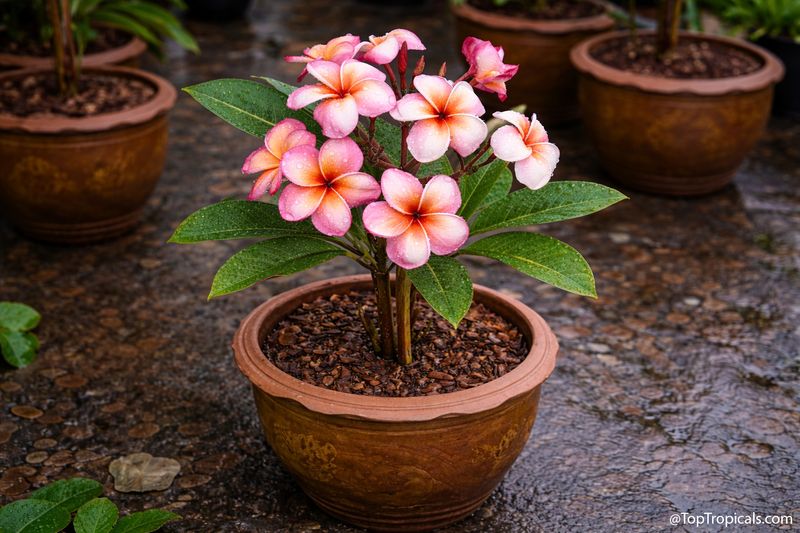
Florida’s rainfall is one of the most intense in the continental United States, and summer afternoon storms can drop several inches of water in a short window. For plumeria, the question after every heavy rain is not how much water the plant received but how quickly that water moves away from the root zone. Chronically wet roots are a serious problem for this plant, and the solution starts with where and how you plant it.
UF/IFAS tree profile documentation for plumeria confirms that the plant tolerates sandy soils and, once established, handles drought reasonably well. That drought tolerance works in your favor on sandy upland sites, where water moves through quickly. The risk is not sandy soil itself but low spots, compacted areas, clay pockets, or container setups without adequate drainage holes, where water can collect and stay.
UF/IFAS guidance on Florida’s sandy soils notes that while sand drains fast, it also loses soluble nutrients quickly when irrigation or rainfall is excessive. That means overwatering does not just threaten roots directly; it also moves nutrients below the zone where roots can reach them, creating a secondary problem even when the plant looks physically fine above ground.
After a heavy storm, check your planting area. If water is still pooling an hour or two later, that site needs amendment, raised planting, or relocation before you invest more care into the plant. For containers, make sure drainage holes are clear and that the pot is not sitting in a saucer that collects standing water. Healthy roots are the engine behind sustained active growth, and sustained active growth is what gives plumeria its best chance of flowering into fall.
Solving a drainage problem early removes one of the most common reasons a plumeria stops performing well despite good intentions elsewhere.
How should you water through Florida’s summer storms?
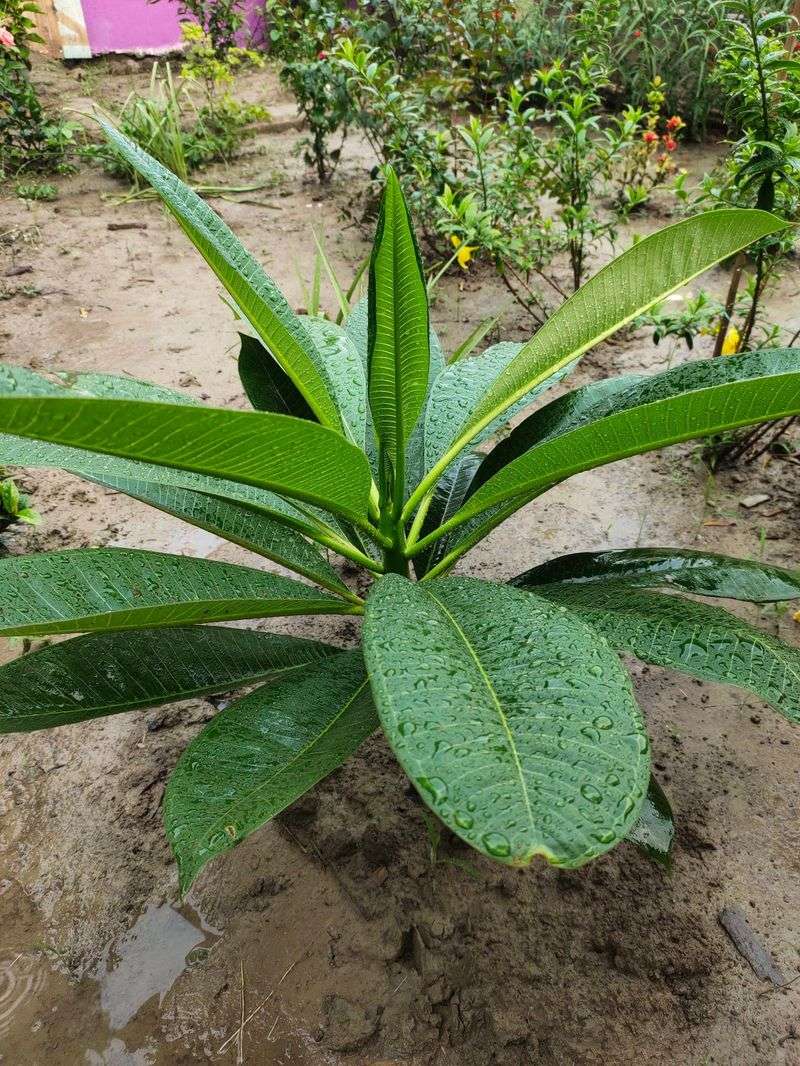
Watering plumeria in Florida is less about following a calendar and more about reading what the plant and the soil are telling you. A newly planted plumeria needs closer attention because its root system has not yet spread far enough to pull moisture from a wide area. During the first growing season, check the soil every few days and water when the top few inches feel dry, but back off whenever a significant rain event has already saturated the ground.
Established plumeria generally needs far less supplemental irrigation. Florida’s summer rainy season, which typically runs from June through September, often provides enough moisture on its own for a plant with a developed root system in a well-drained site. The mistake many gardeners make is continuing a regular watering schedule through the rainy season without accounting for what the sky is already delivering. Repeated saturation in sandy soil does not help the plant; it pushes water and dissolved nutrients below the root zone, as UF/IFAS water quality guidance on irrigation management explains in the context of Florida’s fast-draining landscapes.
Container plumeria dries out faster than in-ground plants and may need more frequent checks during stretches of dry, hot weather, but the same logic applies: water in response to actual soil conditions, not a fixed schedule. Lift the pot or press a finger into the mix. If moisture is still present a few inches down, wait.
UF/IFAS plumeria care notes and Florida soil management guidance both point toward adjusting irrigation to rainfall and site conditions rather than applying a universal schedule. Mulch can help moderate soil temperature and retain some moisture between rains without creating the prolonged wetness that causes root problems. A two-to-three-inch layer kept a few inches away from the base of the trunk is a practical starting point for most in-ground plantings.
Feed active growth, not the fantasy of a bloom booster
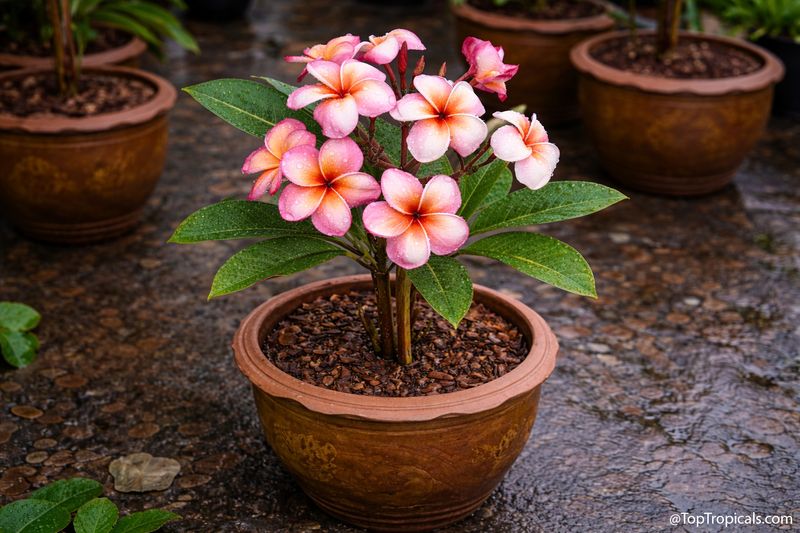
Fertilizer is a tool for supporting active growth, not a trigger that reliably produces more flowers on demand. The timing and amount matter more than the specific product, and the clearest principle from Florida extension guidance is to fertilize only while the plant is visibly and actively growing. Applying fertilizer to a plumeria that is stressed, dormant, or sitting in waterlogged soil after a storm does not help the plant and can contribute to nutrient runoff into Florida’s water bodies.
UF/IFAS Florida-Friendly landscaping fertilizer guidance recommends applying fertilizer at the minimum amount needed, following the product label, and adjusting rates based on plant health and site conditions. That framework applies well to plumeria: use the labeled rate, feed during the active growing season, and stop as growth slows heading into fall and winter. Applying fertilizer just before a major rain event is a common mistake that moves nutrients away from roots rather than into them.
The question of whether to use a high-phosphorus bloom booster is genuinely unsettled. University of Wisconsin Extension’s plumeria guide recommends a high-phosphorus fertilizer to encourage flowering. However, UMass Extension guidance on phosphorus in flower gardens and North Dakota State University’s review of bloom-booster claims both point out that extra phosphorus does not automatically produce more flowers when soil phosphorus is already adequate, and that excess phosphorus can interfere with a plant’s ability to take up other nutrients.
Florida’s sandy soils are not universally low in phosphorus. Without a soil test, you have no reliable way to know whether adding more phosphorus will help or whether it will simply accumulate without benefit. The safer general approach is a normal, balanced fertilizer program at labeled rates during active growth. If you want a more precise answer for your specific site, a soil test through your local UF/IFAS extension office is the most evidence-based starting point available to Florida home gardeners.
Protect the leaves and roots that carry the late-season display
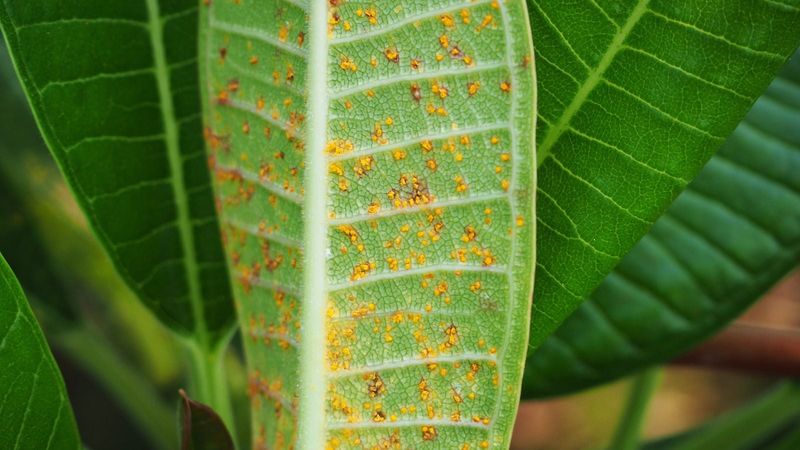
Plumeria rust is a fungal disease that shows up reliably in Florida gardens, typically appearing as powdery orange or yellow-orange pustules on the undersides of leaves. Above the leaf surface, gardeners often notice yellow spots first, followed by early leaf drop if the infection is heavy. Rust does not usually threaten a healthy, mature plumeria’s long-term survival, but a significant infection can reduce the plant’s photosynthetic capacity right when it needs energy for late-season flowering.
The most practical response is sanitation. UF/IFAS plumeria guidance recommends collecting and removing fallen leaves in fall to reduce the amount of fungal material available to restart the cycle in the following season. UF/IFAS plant pathology resources on plumeria rust and the UF/IFAS plant disease management guide both emphasize that cultural practices and sanitation should come before reaching for a fungicide. Rust on an otherwise healthy plant is a management issue, not a reason to remove or replace it.
When chemical controls are appropriate, use only products labeled for the specific plant and site, and follow label directions precisely. UF/IFAS guidance on fungicide use in the landscape reinforces that label compliance is not optional and that the label is the legal document governing application.
For soft-bodied pests, insecticidal soaps and horticultural oils can be helpful, but Florida’s summer heat creates a specific constraint. UF/IFAS guidance on horticultural oils advises against applying them when outdoor temperatures exceed 90 degrees Fahrenheit, because oil applications in high heat can cause plant injury. Test any new product on a small section of the plant first and wait a day or two to check for a reaction before treating the entire plant. Homemade oil or soap mixtures are not automatically safer than commercial formulations; concentration and coverage matter, and an untested mix can cause damage the same way a misused commercial product can.
Let fall lead into protection and normal dormancy
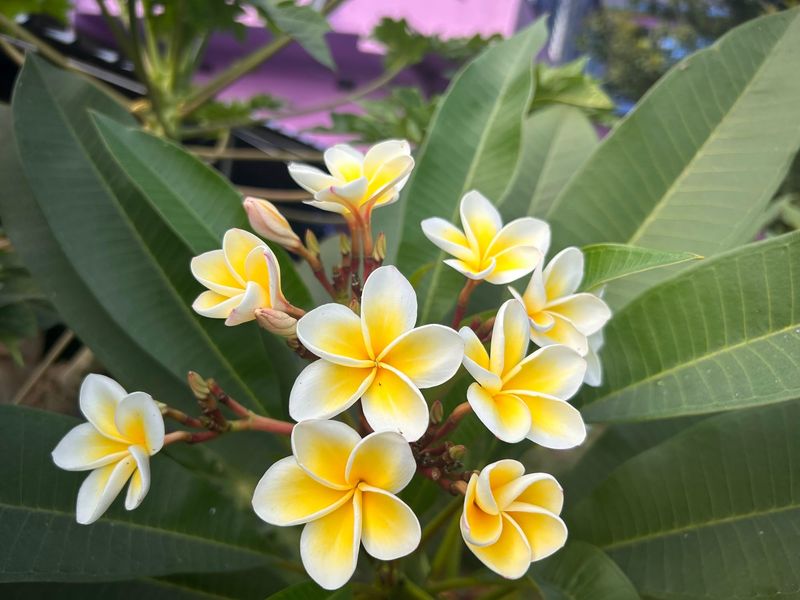
As temperatures begin to drop in October and November, the extended-flowering strategy gradually gives way to a different priority: protecting what you have built through the growing season. Plumeria roots are brittle, a characteristic noted in UF/IFAS South Florida landscape guidance, which recommends sheltered coastal planting locations away from direct beachfront exposure. A sheltered site reduces wind stress and helps the plant hold onto its structure, but no planting location makes a plumeria immune to storm damage. Good site selection is about improving the odds, not eliminating risk.
UF/IFAS hurricane preparation guidance for trees focuses on healthy roots, structural integrity, and avoiding poorly anchored or previously damaged plants. Those principles apply to plumeria as well. A plant with strong drainage, healthy roots, and a protected site is in a better position than one that has been stressed by overwatering or root disease through summer.
Leaf drop and winter dormancy are normal for Florida plumeria, especially in Central and North Florida. UF/IFAS plumeria notes confirm that plants can become dormant and leafless in winter. Fighting that natural cycle with extra irrigation, fertilizer, or untimely pruning creates stress rather than extended growth. University of Wisconsin Extension’s plumeria care guidance adds that if pruning is needed, spring before new growth emerges is the appropriate time, not fall or winter.
When cleaning up fallen leaves or handling stems that have broken during a storm, wear gloves and wash your hands afterward. Plumeria sap contains irritants, and while UF/IFAS does not classify it among the most dangerous landscape plants, direct contact with sap during pruning or stem cleanup is worth managing carefully, especially around children and pets.
Support growth and read the plant
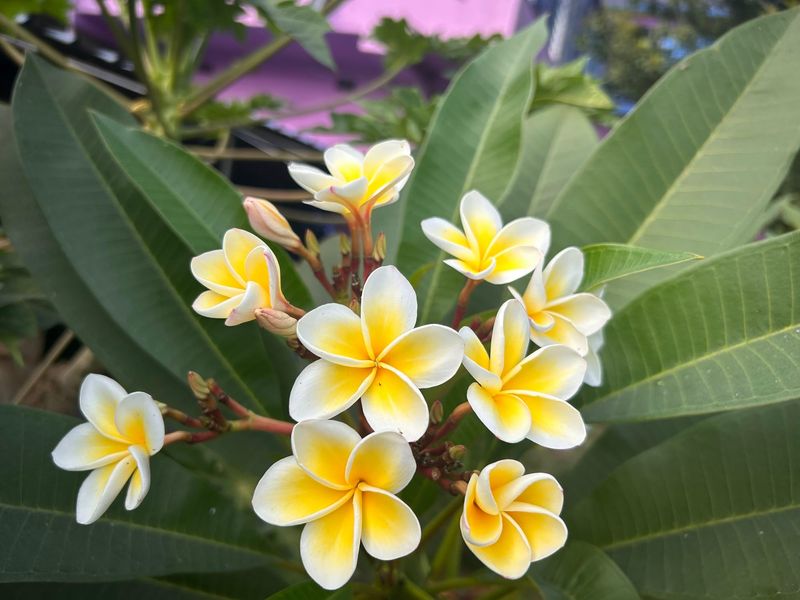
Plumeria rewards attention more than it rewards intervention. The factors most likely to improve your chances of flowering from summer into fall are not complicated: a full-sun location, warm conditions through the active season, fast drainage that keeps roots healthy, weather-aware watering that responds to actual soil conditions, and restrained fertilization timed to active growth. UF/IFAS plumeria guidance ties all of these back to the same principle: support the plant’s natural growth cycle rather than trying to override it.
None of those steps guarantees uninterrupted blooms. Regional conditions, cultivar differences, plant age, unexpected cold events, and normal seasonal stress all shape the outcome in ways no single care practice fully controls. A South Florida gardener with a mature plant in a sunny, well-drained bed has a genuinely different set of odds than a North Florida gardener working with a young container plant through its first fall.
The most useful habit is simply watching your plant across the season and adjusting as conditions change. A plumeria that drops leaves early, struggles to push new growth, or produces sparse flowers is giving you information about light, drainage, or root health. The best fall display usually traces back to decisions made in spring and summer, which means the time to set up a strong finish is well before the season turns.