
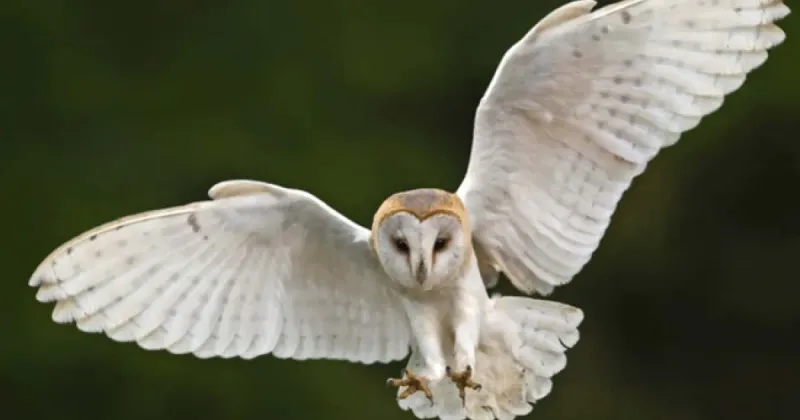
Barn owls are one of California’s most effective natural allies against rodents, and plenty of homeowners want to invite them in. But the story is more complicated than putting up a box and watching your rat problem disappear. Research from California vineyards shows real promise, yet it also comes with important limits that every property owner should understand before counting on feathers instead of traps.
What California research actually shows about barn owls and rodents
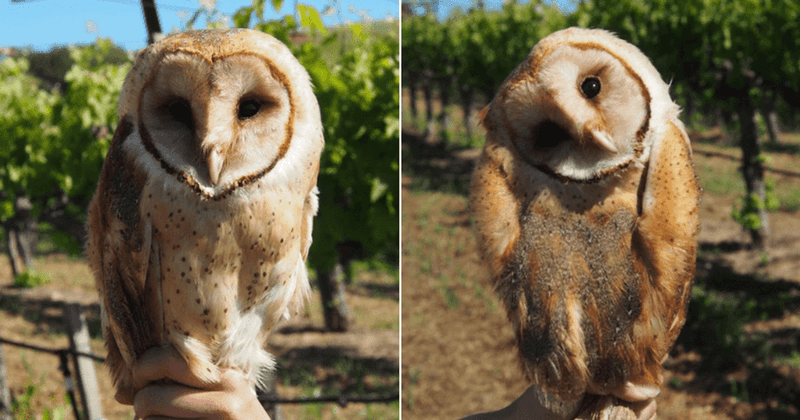
Barn owls have earned a genuine reputation as rodent hunters, but the science behind that reputation is more specific than most people realize. A 2026 Napa Valley vineyard study found that greater barn-owl hunting pressure was associated with a 38% to 52% reduction in aboveground rodent abundance and a 16% to 38% increase in the rodents’ perceived predation risk. Those are meaningful numbers, but the study covered six vineyards and involved predominantly deer mice, not the roof rats or Norway rats that tend to show up around suburban California homes.
The study did not pit barn owls against snap traps or bait stations in a head-to-head comparison. What it measured was the association between owl activity and rodent abundance in an agricultural landscape, which is a useful finding for vineyard managers and a promising signal for integrated pest management, but not a guarantee that owls will solve a homeowner’s specific rodent problem. Occupied nest boxes and active hunting do not automatically translate into fewer rats chewing through your garage wall.
A California Central Valley diet analysis found that more than 99.5% of identified prey items were agricultural pest species, including mice, voles, and gophers. That same research noted that relatively few field studies had established long-term or economically viable rodent-population control from nest boxes alone. Barn owls consume a lot of rodents, but consumption is not the same as reliable pest control in every setting.
The practical takeaway is that barn owls work best as one layer of an integrated approach. UC IPM guidance on rats recommends exclusion, sanitation, and correctly placed traps as the foundation of household rodent management. Barn-owl habitat can add biological pressure on top of that foundation, particularly on properties with open land and a reliable small-rodent prey base, but it is not a replacement for the fundamentals.
Landscape conditions shape where owls hunt and nest
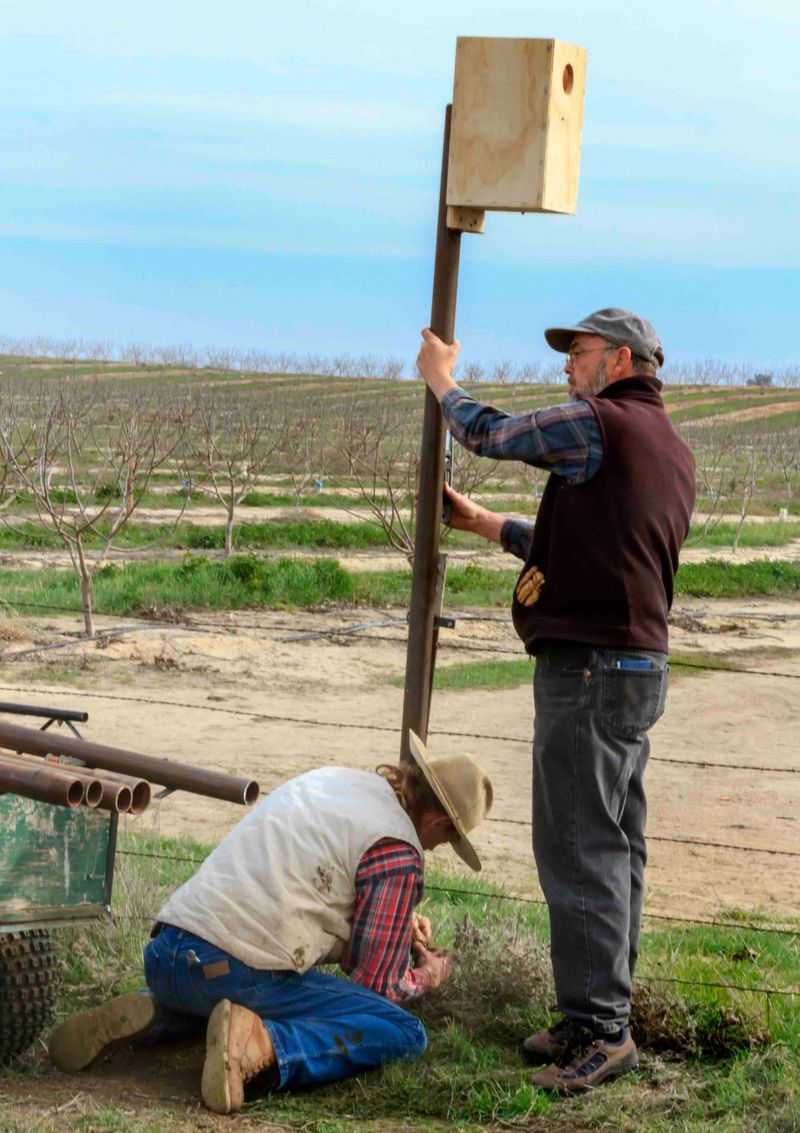
A nest box on a fence post does not come with a guarantee that owls will use it, hunt near it, or reduce your rodent population. Whether barn owls settle in and hunt productively depends heavily on what surrounds that box. Napa Valley nest-box research found that owls preferred wooden boxes surrounded by more grassland, meaning the landscape around the box mattered as much as the box itself.
Open terrain is essential. Barn owls hunt by flying low over fields and listening for prey movement, so dense shrubs, tall fences, and cluttered yards limit their effectiveness. Properties along agricultural edges, near pastures, orchards, or vineyards offer the kind of unobstructed hunting corridors that make a nest box worthwhile. A suburban lot hemmed in by fences and mature landscaping presents a very different situation than a half-acre parcel bordering a hay field.
Vegetation structure also plays a role in how owls interact with rodents. The 2026 Ecological Applications study found that some vegetation cover in vineyards influenced predator-prey dynamics in ways that amplified barn-owl effects. That is an agricultural finding, though, and it should not be read as instructions to let a suburban backyard go unmaintained. California homeowners face fire-safety obligations and neighborhood conditions that are nothing like a managed vineyard.
An occupied box also does not prove that owls are hunting where you need them to hunt. The Central Valley diet study underscored that landscape composition, prey availability, and distance from the box all influence where owls actually forage. A pair nesting in your box may be spending most of their hunting time in a neighbor’s field rather than patrolling your property line.
A nest box can provide habitat, but it cannot guarantee nesting
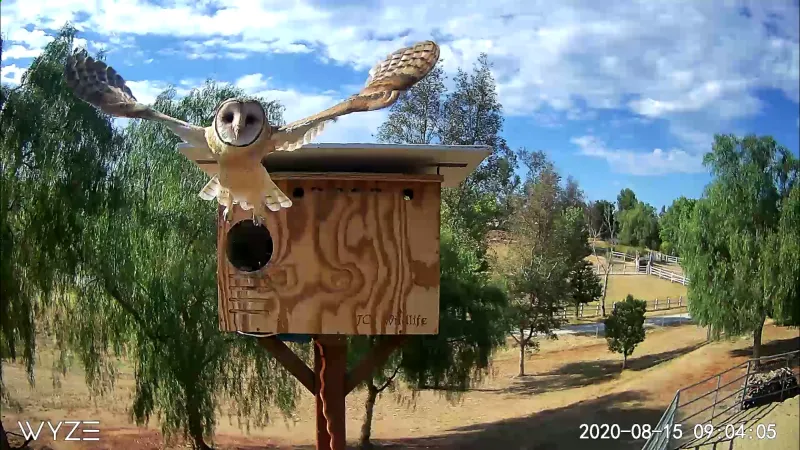
Where old barns and large tree cavities are scarce, a well-built nest box gives barn owls a place to raise young that they might not otherwise have. That is a real conservation contribution, and it is the most honest way to frame what a box does. The UC Davis California Raptor Center provides plans and guidance for building a box suited to barn owls, and their specifications are worth following closely because interior dimensions, entrance-hole size, and ventilation all affect whether owls find a box acceptable.
Installing a box does not mean owls will come. Occupancy depends on whether local barn owls exist in your area, whether the surrounding habitat offers enough prey, and whether the box is placed and maintained in a way that does not deter nesting. Napa Valley occupancy research found that landscape context was a stronger predictor of use than box presence alone, so a box in poor habitat may sit empty for years.
Timing matters as much as placement. A California-specific study on nest-box maintenance timing found that barn owls can breed in winter, with a median egg-laying date of February 20 across the state. That means a box installed or cleaned in December or January could interrupt a pair already preparing to nest. Getting the box up and inspected before breeding activity begins is the practical goal, which is why fall is the right window for installation and maintenance work.
Once eggs or dependent young are present, the box must be left completely alone. Disturbance during early nesting can cause abandonment, and an active nest may carry legal protections under federal and state wildlife law. The best way to protect nesting is to do all your work in advance, then step back.
Choose a safe, suitable location for the box
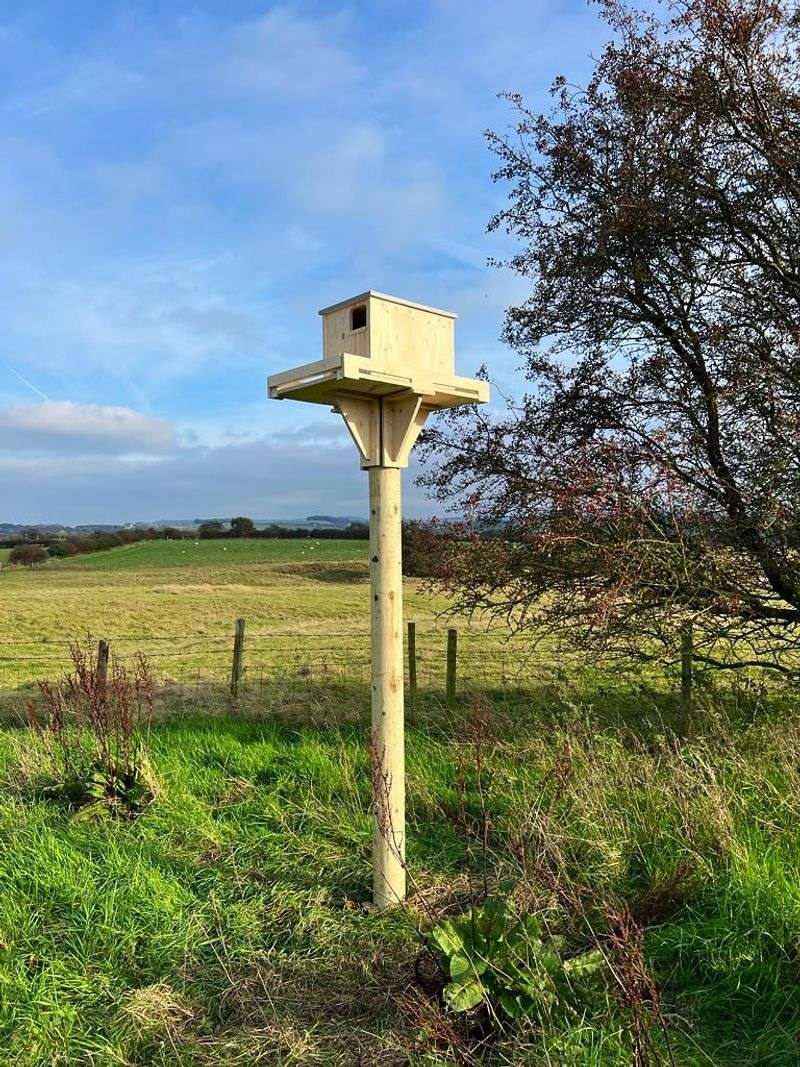
Picking the right spot for a box takes more thought than most guides suggest, especially for California homeowners who also have to weigh fire-safety rules and the practical realities of living near nesting wildlife. Start with the landscape: open terrain with a reliable small-rodent prey base is the foundation. Grassland edges, orchard borders, pasture margins, and vineyard perimeters all qualify. A densely landscaped suburban lot with no open hunting corridor nearby is a much harder sell, and a box placed there is unlikely to attract consistent use.
Cornell NestWatch guidance for barn owls recommends an installation height of approximately 8 to 25 feet, with unobstructed flight access to the entrance hole. If you are placing more than one box on a property, a spacing of about 100 feet between boxes is a reasonable starting point. Barn owls are territorial enough that crowding boxes together rarely increases occupancy and can lead to competition that discourages use.
Avoid mounting a box directly on or against the house. Hungry nestlings are surprisingly loud, and a box positioned under an eave or on a wall puts that noise directly inside your living space during the weeks when owlets are begging for food. Droppings and pellets accumulate below an active box too, which becomes a maintenance issue if the box is over a patio, walkway, or any surface people use regularly.
California homeowners in State Responsibility Areas or Very High Fire Hazard Severity Zones need to check their defensible-space zone requirements before installing a box, a mounting pole, or any vegetation intended to support owl habitat. Zone 0, which covers the first five feet around a structure, has specific rules about combustible materials and plants. A pole or box placed within a regulated zone may conflict with those requirements, so confirm compliance with your local fire authority before installation.
Vineyard occupancy research reinforces that surrounding landscape is the dominant factor in whether a box gets used. Location is not just a convenience decision; it is the primary variable you can control to improve the odds that owls will actually move in.
Maintain the box in fall and protect any active nest
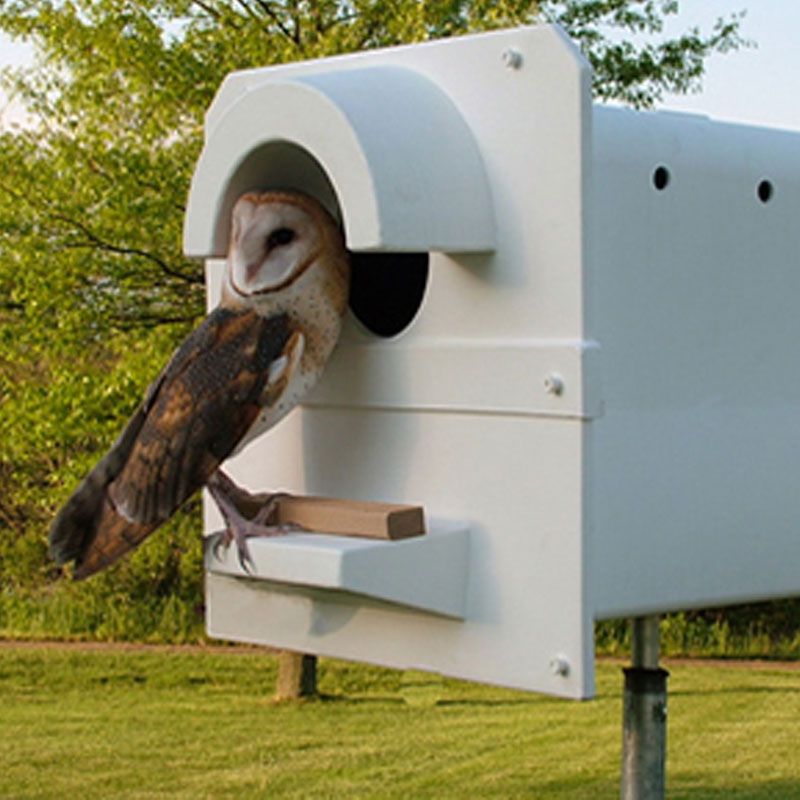
Seasonal timing is the detail that separates a well-managed box from one that accidentally disrupts nesting. California research on nestling banding records identified September through November as the window when disturbance risk is generally lower, because most successful broods have fledged and the next breeding cycle has not begun. The study recorded a median egg-laying date of February 20 across California, which means owls can begin nesting in winter. Cleaning a box in December or January risks interrupting a pair that is already preparing to lay.
A fall maintenance visit should include removing accumulated pellets, old nesting material, and debris. Wear disposable gloves and a properly fitted dust mask or respirator for this work. UC Cooperative Extension guidance on nest boxes specifically recommends annual maintenance with respiratory protection because dried pellets and droppings can harbor pathogens. Bag the waste and dispose of it in the trash rather than composting it.
Check the box structure while you have it open. Look for cracks that let in rain, gaps that allow predators to reach inside, and any damage to the entrance hole. Minor repairs are fine during the fall window. Once you close the box after a fall cleaning, the goal is to leave it alone until the following fall unless you have clear evidence that it is empty.
If you approach the box at any time of year and find eggs or dependent young inside, stop immediately. Cornell NestWatch notes that barn owls are especially sensitive to disturbance during early nesting and may abandon a clutch if the box is opened or handled. The U.S. Fish and Wildlife Service explains that active nests containing eggs or dependent young generally cannot be destroyed under federal law.
If you are unsure whether a nest is active, consult a licensed wildlife rehabilitator or your state wildlife agency before doing anything to the box.
Match the control method to the rodent problem
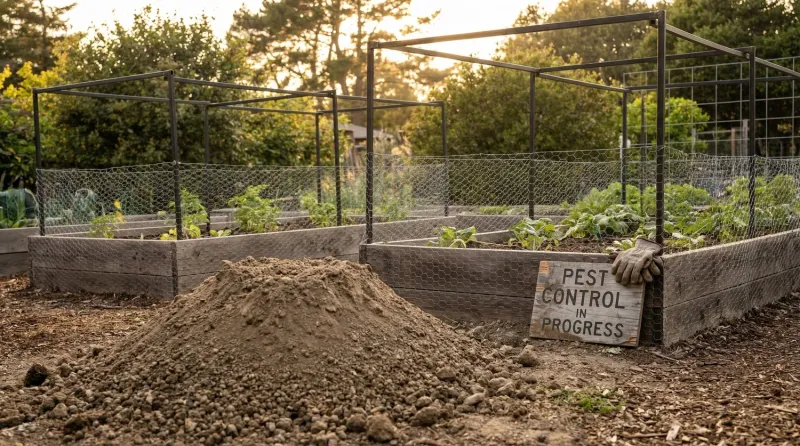
Rodent problems are not interchangeable, and neither are the solutions. The 2026 vineyard study measured effects on aboveground deer mice in an agricultural setting. That research does not establish equivalent results for roof rats running along fence lines in a Sacramento suburb or Norway rats burrowing under a compost bin in a coastal backyard. Deer mice, roof rats, and Norway rats have different behaviors, habitat preferences, and responses to predation pressure, so a result from one context does not transfer automatically to another.
For roof rats and Norway rats around a home, UC IPM recommends a three-part approach: seal every entry point larger than a quarter inch, eliminate food and harborage sources, and set enough correctly placed traps to catch rats before they learn to avoid them. Rats can be trap-shy initially, so placement near runways and along walls matters more than the number of traps alone. An owl box adds no value if rats are entering through gaps in the roofline that have never been sealed.
House mice respond to the same logic. UC IPM identifies exclusion as the most permanent form of mouse control, paired with sanitation to remove food sources and snap traps placed in active travel areas. Mice reproduce quickly enough that a small unaddressed entry point can undo months of trapping effort.
Pocket gophers present a specific challenge. Barn owls do hunt gophers, and diet studies confirm they appear in California owl pellets. On a small residential property, though, owls are unreliable as the primary response to an active gopher damaging a garden bed. UC IPM guidance on pocket gophers recommends immediate trapping when a gopher is causing damage, because owls hunt over large areas and choose locations with the most prey available rather than concentrating on a single yard.
Owl habitat is useful complementary pressure over time, not a fast fix for a gopher that surfaced yesterday.
Reduce rodenticide risks without making absolute pesticide claims
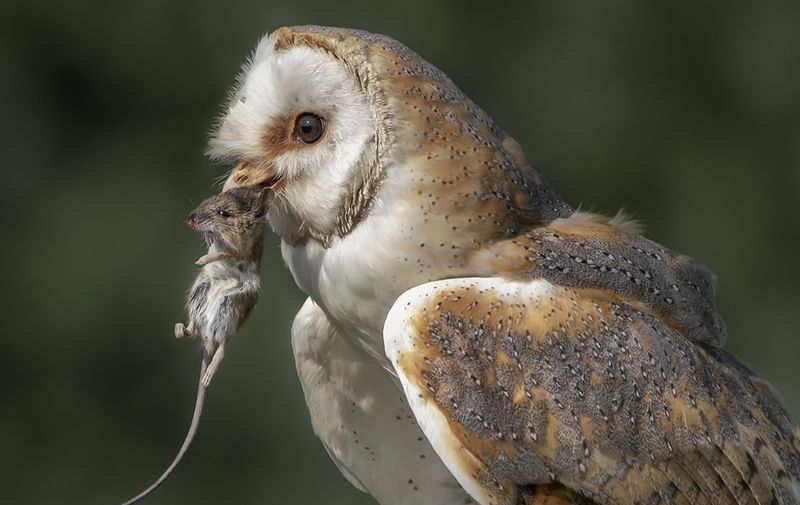
Avoiding consumer rodenticide use around an owl box is a reasonable and ecologically sound decision, but it requires some nuance. UC Davis California Raptor Center research on secondary rodenticide exposure has documented that barn owls can accumulate anticoagulant compounds by eating poisoned prey. A rodent that ate bait but has not yet died is still mobile, still catchable, and still capable of transferring that compound to any predator that eats it. The risk is real and well-documented, which is why reducing or eliminating rodenticide use in areas where owls hunt is a practical protective step.
Stopping poison use does not guarantee that owls will nest or stay. Nesting success depends on habitat suitability, prey availability, box placement, disturbance, and the presence of local owl populations, none of which are resolved by a decision about bait stations. The fall maintenance timing supported by California research is a more direct nesting-preservation action than any single change to pesticide use.
Not every alternative to anticoagulant baits is automatically safe for wildlife. UC IPM notes that California still permits some non-anticoagulant active ingredients and warns that primary poisoning of pets and non-target wildlife can occur with those products as well. Newer evidence suggests possible secondary exposure from bromethalin, a non-anticoagulant ingredient now widely found in consumer products. The label on any rodenticide product is a legal document, and using it in a way that deviates from label directions is illegal regardless of the active ingredient.
EPA guidance on rodent infestations recommends starting with exclusion and sanitation before considering any pesticide product. When a pesticide is necessary, it must be legal under current California rules, applied according to label directions, and secured in a tamper-resistant station that keeps children, pets, and non-target wildlife from accessing the bait. That standard applies whether you have an owl box on the property or not.
Use barn-owl habitat as one part of a realistic plan
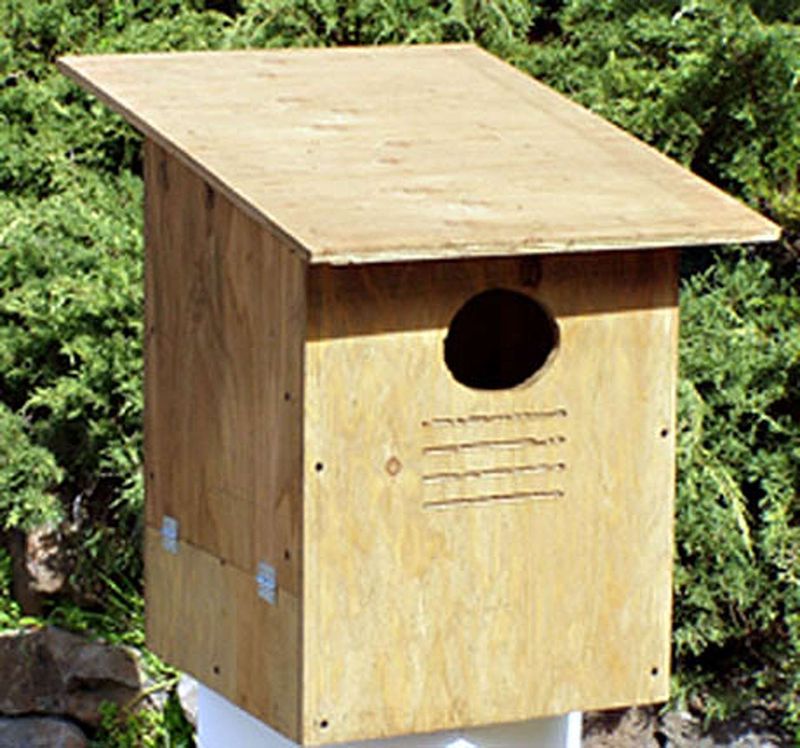
Before installing a nest box, run a quick property assessment. Open hunting terrain, a prey base of small rodents, unobstructed flight access, a safe distance from the house, and compliance with any applicable defensible-space rules are the minimum conditions for a box to have a reasonable chance of being used. The 2026 Ecological Applications study makes clear that landscape context drives barn-owl effects, so a box placed in unsuitable habitat is unlikely to produce the rodent-suppression results that agricultural research has documented.
When conditions are right, a box maintained on the fall schedule, left undisturbed during active nesting, and kept away from rodenticide exposure gives barn owls a genuine foothold on your property. Cornell NestWatch and California researchers both emphasize that the box is a starting point, not a finished solution. Exclusion, sanitation, and trapping remain necessary for active household infestations, and UC IPM guidance is the right standard for those methods.
Homeowners in California fire-hazard zones should confirm that any box, pole, or habitat vegetation meets local defensible-space requirements before installation. A barn owl nesting on a well-managed property with open land, no rodenticide exposure, and reliable food can reduce rodent pressure over time in the right California landscape. That is a meaningful contribution, even if it is not the effortless solution the headline once promised.