
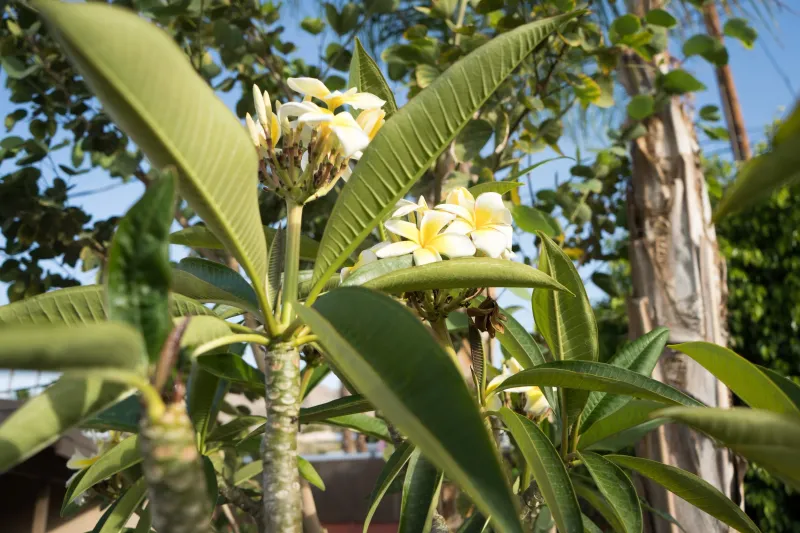
Plumeria can put on a spectacular show of fragrant blooms through a California summer, and late August often leaves gardeners wondering whether they can coax one more flush before cooler weather shuts things down. The honest answer is that no single action reliably forces new buds to form and open before fall, but the right care routine can protect any flowering potential still developing on the plant.
What you do right now, from how you water to whether you reach for the pruning shears, genuinely matters for plant health and for whatever blooms may still be on the way.
Late-summer care cannot guarantee new buds
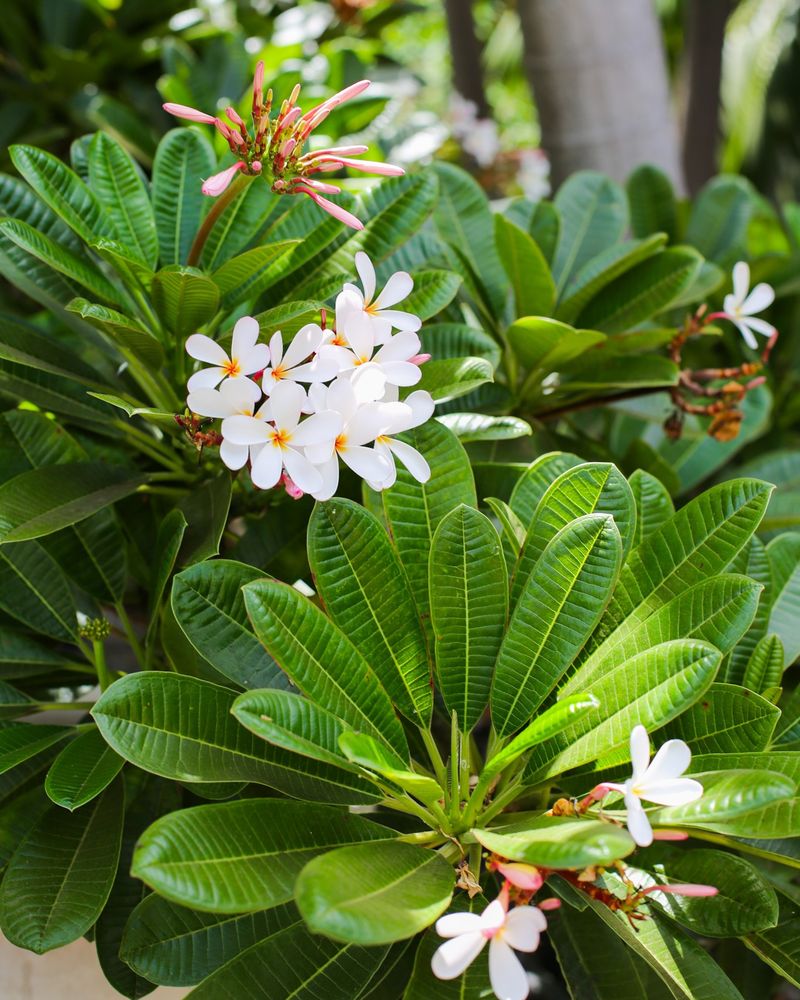
Gardeners often search for that one reliable move that tips a plumeria into another round of blooms. The evidence does not support that kind of shortcut.
What the research does support is keeping a still-actively-growing plant as stress-free as possible so that any clusters already forming have the best chance to develop and open.
California is not one climate. UC Master Gardeners identify both coastal and inland Southern California as regions where plumeria can thrive, but those two environments behave very differently in late summer.
Coastal gardens may stay warm well into October, giving developing clusters more time to open. Inland valleys can swing between intense daytime heat and increasingly cool nights as September arrives, and that narrowing warm window affects whether a late cluster ever fully opens.
For northern California or higher-elevation locations, the remaining warm-weather window may be too short for a reliable second flush, though the available sources do not document those areas specifically.
Cultivar matters just as much as climate. Wisconsin Extension notes that the percentage of branch tips that set flowers and the number of subsequent flushes vary considerably by cultivar.
A plant that produces only one strong flush per season may simply be doing what its genetics call for, and no amount of late-summer intervention changes that.
Timing also works against impatient gardeners. Hawaii Cooperative Extension research observed roughly four to six weeks between inflorescence development and open flowers under its test conditions.
A cluster that begins forming in late August in an inland California garden may simply not have enough warm nights ahead to reach full bloom. Before changing anything about your current routine, check whether the plant is still actively growing with healthy green foliage, and look at the branch tips for any sign of a developing cluster.
That assessment is a more useful starting point than any single care change.
Protect the branch tips where flowers form
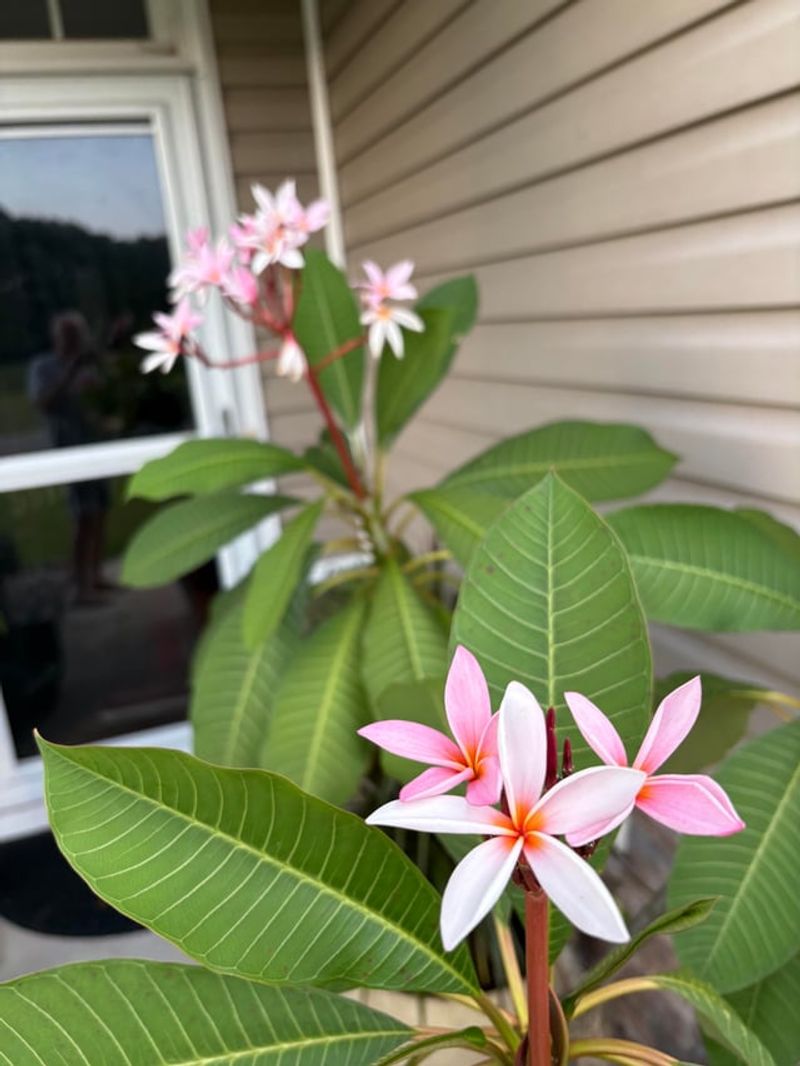
Every plumeria flower cluster originates at a branch tip. That single fact should be the first thing on your mind before you reach for pruning shears in late summer.
Removing a healthy growing tip does not encourage flowering before fall; it removes the very site where a bloom could form.
UC ANR describes plumeria pruning as minimal, and for good reason. When a plant is still leafy and showing active growth in August, cutting back healthy branches sacrifices potential bloom sites without offering any reliable late-season flowering benefit.
Hawaii Cooperative Extension confirms that plumeria can flower on current-season growth and that heavy pruning trades flowering opportunity for branch multiplication that will not pay off until a future season.
You may have read that cutting tips in August creates more flowering branches before fall. That advice is not supported by the evidence for a reliable late-season result, and it carries a real cost: any inflorescence already beginning to form at that tip is gone the moment you cut.
If you have diseased, dead, or crossing wood that genuinely needs removal, that work is fine. What to avoid is routine tip pruning motivated by impatience.
A related claim worth addressing is deliberate leaf removal to force dormancy or trigger blooming. The experimental defoliation research from Hawaii involved a chemical treatment called ethephon and found cultivar-dependent responses; the researcher also warned that defoliating too early could damage poorly developed inflorescences.
That work is not a template for ordinary home care. Pulling leaves off your plant in August is not a recognized technique for encouraging late blooms and risks stressing the plant at exactly the wrong time.
The most protective thing you can do for late-season flowering potential is to leave healthy terminal growth exactly where it is.
Balance thorough watering with fast drainage
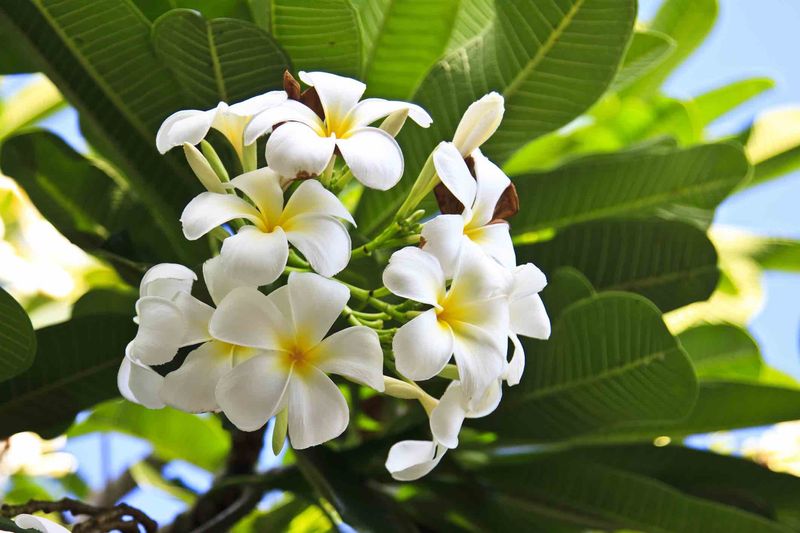
Water management is one important part of keeping a plumeria healthy in late summer, alongside light, drainage, and intact terminal growth. Treating it as the single decisive bloom trigger overstates what the evidence actually shows, but getting it wrong in either direction causes real harm.
Southern California Plumeria Society guidance makes both risks clear. Too little water during active growth can suspend development, abort forming flower stalks, and cause leaves to drop prematurely.
Too much water, or poor drainage that keeps roots sitting in moisture, can lead to root rot that undermines everything else you do for the plant. The goal is deep, thorough watering after the root zone has had a chance to dry somewhat, followed by complete drainage of any excess.
Container plants require closer attention than established landscape plants because small pots heat up and dry out faster, especially in the intense Southern California sun. UC ANR recommends a cactus-type potting mix for containers, which supports the fast drainage that plumeria roots need.
Never leave a container sitting in a saucer full of water, even briefly. The correct watering interval for your plant depends on pot size, potting mix composition, sun exposure, wind, temperature, and how large the plant has grown.
A fixed daily or weekly schedule is not appropriate because those variables differ from one garden to the next and shift as summer weather changes.
Missouri Botanical Garden also emphasizes the importance of good drainage and avoiding constantly wet conditions. For in-ground plants, the same principle applies: well-drained soil prevents root problems even when summer watering is consistent.
Check your soil or potting mix by feel or with a moisture meter before watering, and adjust based on what you find rather than on the calendar. A plant that is actively growing and showing healthy foliage is your best signal that the current watering approach is working.
Keep bright light while watching intense heat
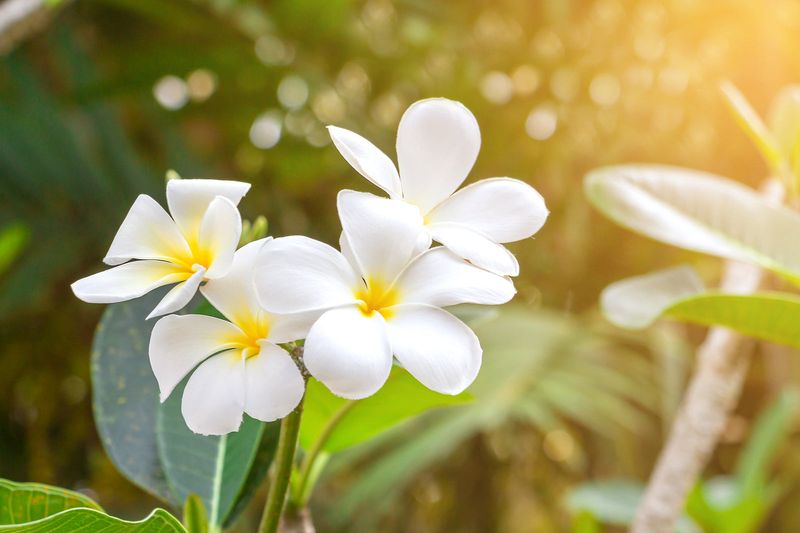
Plumeria is a sun-loving plant, and cutting back on light in the name of caution can reduce flowering as surely as any other mistake. Southern California Plumeria Society specifies six to eight hours of direct sun for good blooming, and that figure should be your target as summer moves toward fall.
UC ANR also identifies full sun as a core requirement. Moving a plant to a shadier spot because you are worried about heat stress often creates a different problem: insufficient light to support active growth and flowering.
Excessive shade can reduce blooming even when every other condition is correct.
That said, some inland California locations experience extreme afternoon heat that goes beyond what the plant benefits from. When daytime temperatures push well past the comfortable range for extended periods, some targeted afternoon shade can reduce heat stress without eliminating the morning sun the plant needs.
The distinction worth making is between deliberate, limited protection during the hottest part of the day at an unusually hot inland site and a general habit of keeping plumeria in reduced light. The first is a specific response to a local condition; the second is likely to cost you flowers.
Adjusting placement or adding afternoon shade is not a bloom-triggering strategy. It is a stress-reduction measure for particular microclimates.
Do not expect that shading the plant, misting it, or increasing water in response to heat will prompt bud formation. The goal is simply to keep the plant from being pushed into stress by conditions that are genuinely extreme, while preserving the strong light it needs to stay actively growing and flowering through the remaining warm weeks.
Treat fertilizer as a conditional choice, not a bloom switch
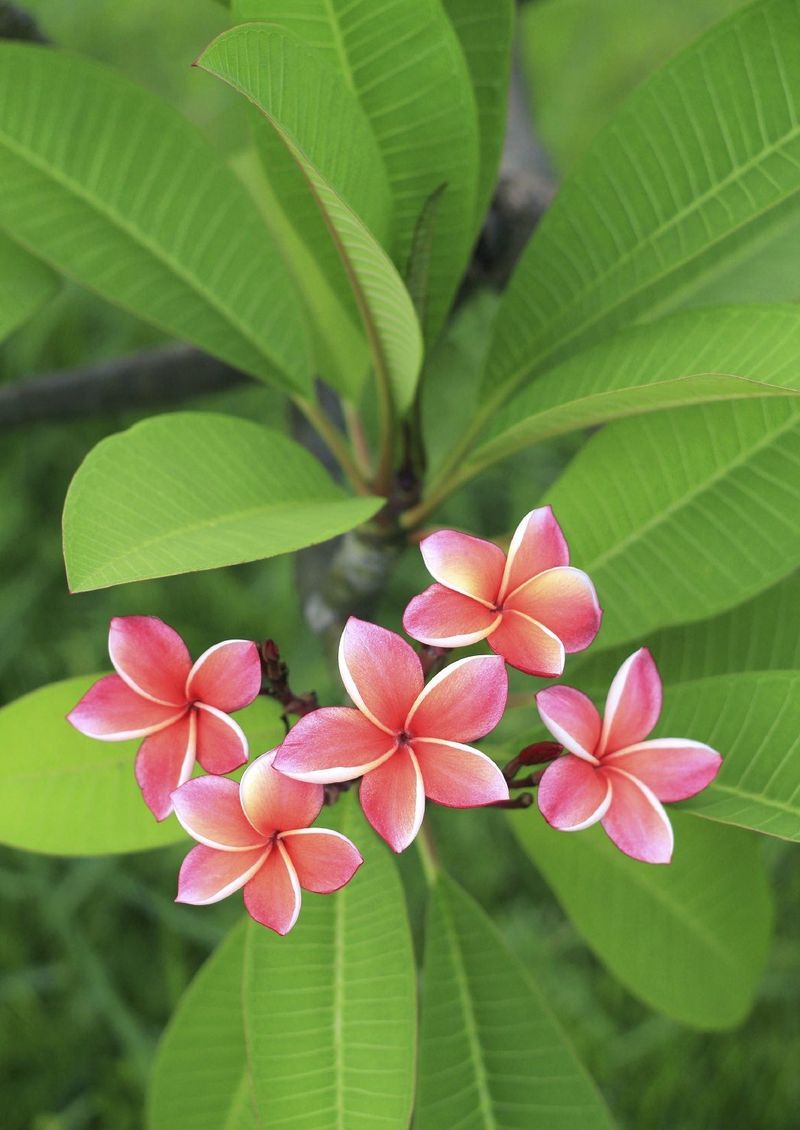
Fertilizer applied at the right time to an actively growing plumeria can support continued healthy growth. Fertilizer applied impulsively because buds seem stalled is a different thing entirely, and the two should not be confused.
Reputable sources disagree on the details, and that disagreement is worth knowing about before you buy anything. UC ANR recommends a high-phosphorus fertilizer applied every one to two weeks from spring through fall while the plant is actively growing.
Southern California Plumeria Society favors a moderate, balanced fertilizer for beginners and warns that high-phosphorus bloom boosters may harm long-term plant health. Missouri Botanical Garden cautions against late-season feeding so that new growth has time to harden before cooler weather arrives.
All three are credible sources, and they do not agree. No single universal feeding formula applies to every California plumeria grower.
The nitrogen side of the equation is less contested. Multiple horticultural sources connect excess nitrogen with vigorous foliage and fewer blooms, so routine nitrogen-heavy feeding is generally not a good choice when flowering is the goal.
Do not increase your fertilizer dose because buds appear stalled; that is likely to produce more leaves, not more flowers.
On phosphorus specifically, the case for bloom boosters is weaker than many product labels imply. UMass Extension and North Dakota State Extension both explain that extra phosphorus rarely increases flowering when soil phosphorus is already adequate.
That evidence comes from flower gardens broadly, not from plumeria specifically, so it qualifies the automatic bloom-booster recommendation without settling every plumeria question. The practical takeaway is straightforward: if your plant is actively growing and your current fertility program has been working, continue it according to the product label.
If you have not been feeding, a moderate, complete fertilizer is more defensible than reaching for the highest-phosphorus product on the shelf.
Check pests and disease before changing the routine
When a plumeria stops progressing, drops clusters, or shows distorted new growth, the instinct is often to change the watering schedule. Before doing that, spend a few minutes actually looking at the plant.
Several problems can mimic stress symptoms, and treating the wrong cause usually makes things worse.
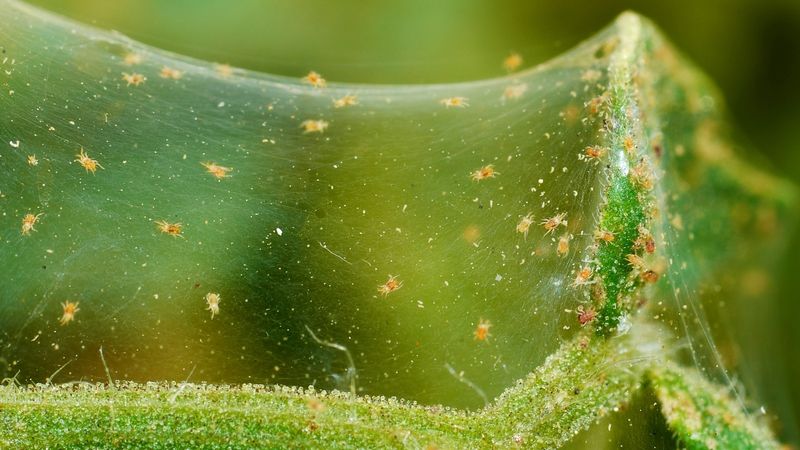
Sixspotted spider mites are a serious late-season concern for California plumeria. UC IPM documents that sixspotted spider mites can deform leaves and developing bloom clusters, cause leaf drop and shoot-tip dieback, and ultimately eliminate bloom production if populations go unchecked.
Check the undersides of leaves and the areas around new growth and forming clusters for fine webbing, tiny moving specks, or stippled, bronzed leaf surfaces. Mite populations can build quickly in hot, dry conditions, which describes a lot of inland Southern California late summers.
Rust is another late-season problem. UC ANR identifies plumeria rust as a foliage disease that responds to sanitation and improved airflow.
Remove fallen infected leaves from the ground around the plant rather than letting them accumulate, avoid unnecessary overhead irrigation that keeps foliage wet, and consider whether the plant has enough air movement around it. UF/IFAS also notes rust as a common plumeria foliage issue managed through sanitation.
Bud and cluster loss has multiple possible causes. Heat spikes, cold nights, root problems, mite feeding, disease, low light, cultivar behavior, and natural abortion can all contribute.
Blaming underwatering automatically and adjusting the hose is not a diagnostic approach.
For mite treatments, do not apply horticultural oils or insecticidal soaps to a heat-stressed plant or immediately before or after intense sun exposure. Always follow the current product label for application timing, rate, and safety precautions.
Wear gloves and protective clothing when applying any treatment, because plumeria sap can irritate skin and eyes on contact.
Shift from active growth to cold-weather protection
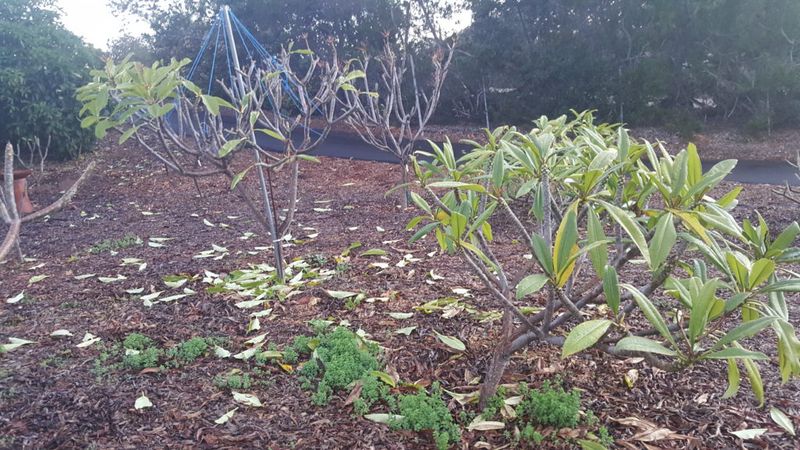
Plumeria does not shift from summer mode to dormancy on a fixed date, and the transition looks different depending on whether your plant is in a container or in the ground. Watching the plant rather than the calendar is the more reliable approach.
While the plant remains actively leafy and growing, continue appropriate summer watering. UC ANR advises reducing water once the plant enters dormancy and begins dropping its leaves, rather than maintaining the same frequency through fall and winter.
Autumn leaf drop by itself is not a disease symptom. UF/IFAS confirms that plumeria is naturally deciduous and loses its foliage as part of its normal seasonal cycle.
Treating normal leaf drop as a problem to solve with more water or fertilizer can create the root saturation issues discussed earlier.
For container plants, the most practical cold-weather benchmark comes from Missouri Botanical Garden, which recommends moving potted plumerias indoors when nighttime temperatures fall below 40 degrees Fahrenheit and returning them outside only after frost danger has passed and nights stay consistently above 50 degrees. Those figures are practical guidance for container growers specifically.
In-ground California plants depend heavily on local microclimate, frost exposure, and how much cold protection the surrounding landscape provides; the right threshold for your in-ground plant may differ from those container benchmarks.
Any pruning or moving of plants warrants a safety reminder. UC ANR plant safety guidance advises wearing gloves and protective clothing when handling plumeria, because the milky sap can irritate skin and eyes and all parts of the plant are considered toxic.
Keep children and pets away from cut surfaces and sap. This is especially relevant when pruning before bringing a plant indoors or when cutting back a landscape plant at the end of the season.
Use steady care to protect possible flowering
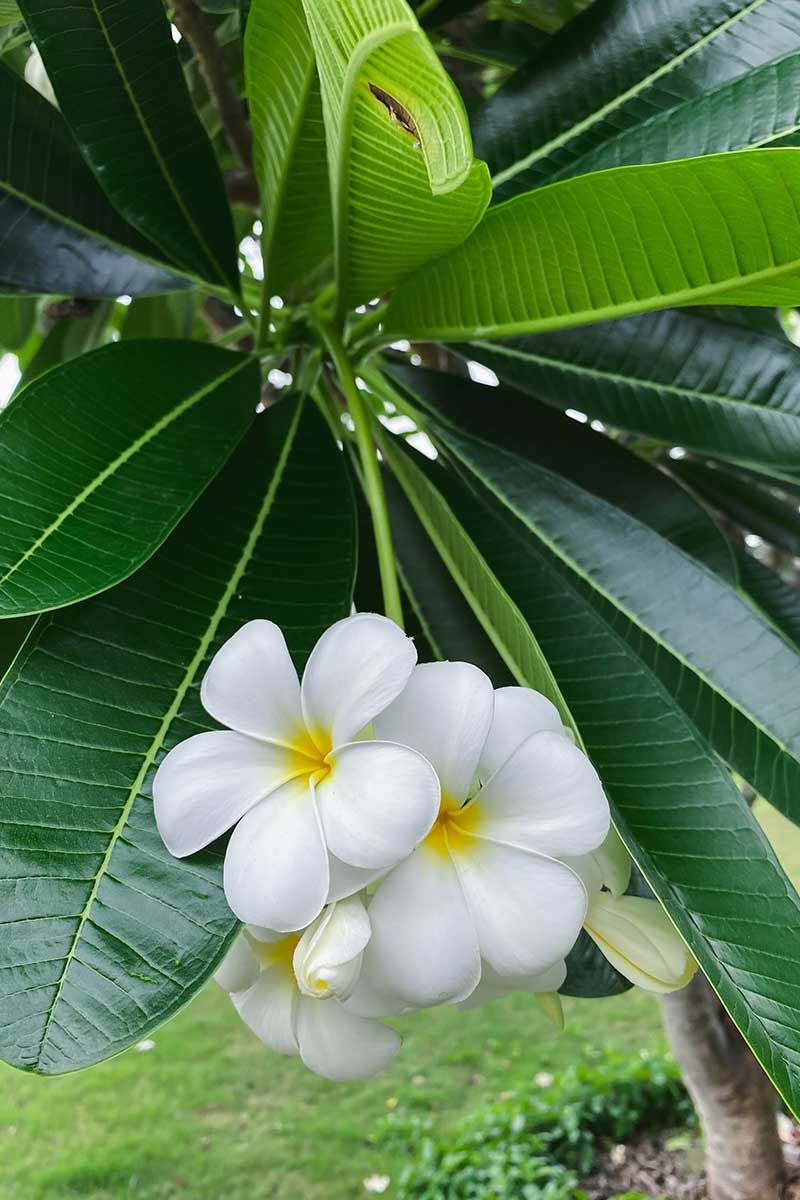
Steady, consistent care is what gives any developing plumeria cluster the best chance to open before cooler weather arrives. The routine is straightforward: keep healthy terminal tips intact, maintain six to eight hours of direct sun, water thoroughly after the root zone has dried somewhat, and confirm that drainage is fast and complete.
Check the plant regularly for mites, rust, and any other pest or disease pressure, and address problems based on what you actually find rather than on assumptions. Southern California Plumeria Society and UC ANR both point toward stress prevention and appropriate growing conditions as the foundation of late-season care.
Avoid impulsive pruning, deliberate defoliation, or unneeded bloom-booster applications when the plant is already following a reasonable program.
This routine can protect whatever flowering potential the plant still carries, but it cannot guarantee bud set or ensure that a late cluster opens before the first cold night. Cultivar, prior growth, and the remaining warm-weather window ultimately determine the outcome.
A plant that finishes summer healthy, well-rooted, and undamaged is already set up well for next year, which is its own kind of success.