
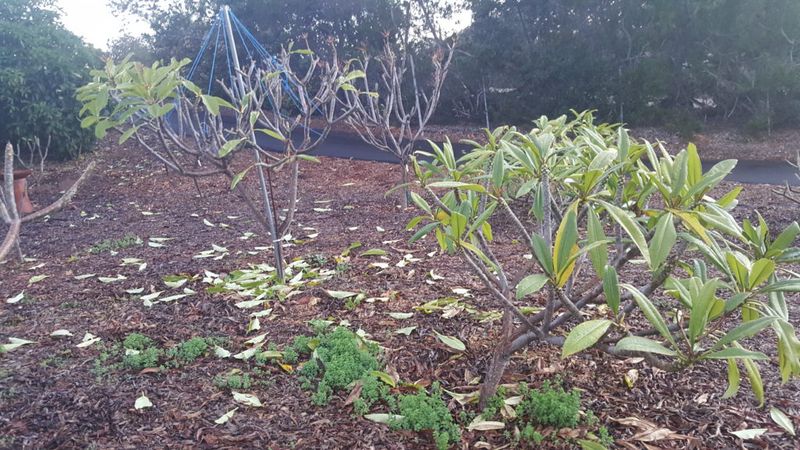
Plumeria is one of the most rewarding plants you can grow in California, filling late summer and early fall with fragrant, tropical blooms. But as nights start to cool, many owners panic and make rushed decisions that can actually hurt the plant more than the weather would.
The real threat is not the first chilly evening – it is an actual frost or freeze that catches you unprepared. Knowing the difference, and acting on your local forecast rather than a calendar date, is what keeps your plumeria healthy through winter and blooming again next year.
The real deadline is a forecast, not the calendar
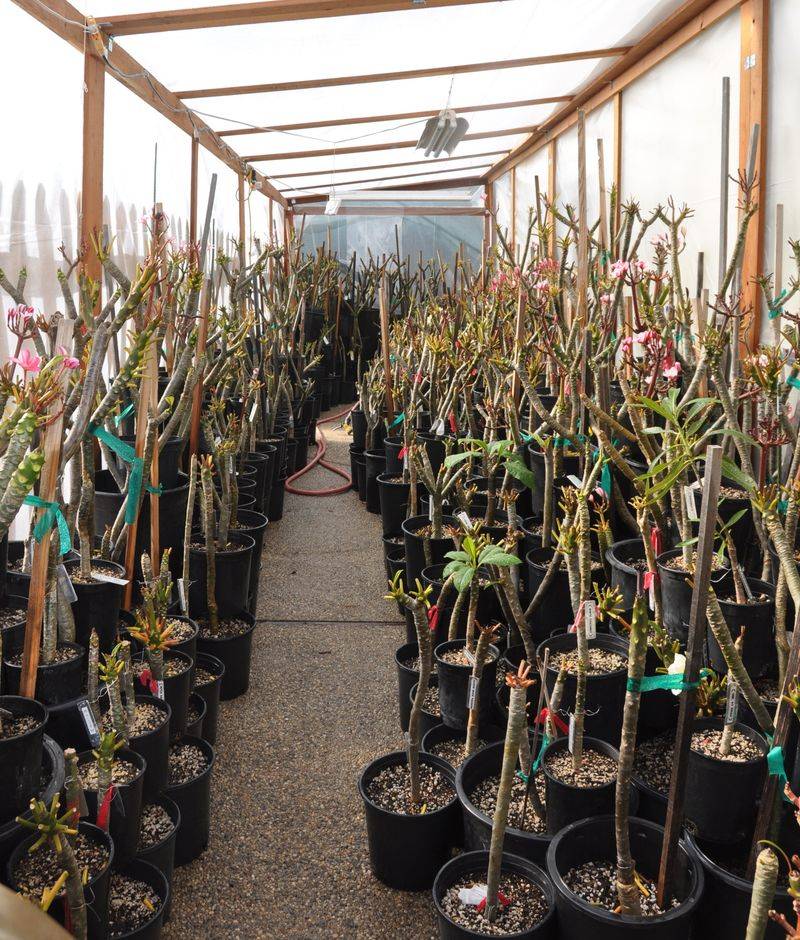
Stop watching the calendar and start watching the forecast. Plumeria commonly flowers from spring well into fall, and in many parts of Southern California the plant remains perfectly comfortable long after the summer crowds have gone home.
University of Florida IFAS guidance notes that plumeria is best suited to USDA Zones 10B through 11, yet protected landscapes in somewhat cooler areas can grow it successfully, meaning a blanket statewide deadline makes no sense.
The real trigger to watch for is forecast cold, not a particular month. Missouri Botanical Garden care guidance uses nights approaching 40 degrees F as a conservative preparation signal for sensitive container plants.
That number is a practical horticultural threshold, not a hard biological cutoff, and it is most relevant to exposed or recently rooted plants that have less resilience than a well-established specimen in a protected spot.
Frost and freezing temperatures are the clear hazards. When ice crystals form in plant tissue, they rupture cells and can damage tender new growth at the branch tips, including the tissue where future flower stalks develop.
Plumeria Society of America winter-storage guidance identifies 32 degrees F as the absolute minimum for most plumeria, with storage above 40 degrees F preferred.
That kind of cold-tissue injury can reduce next season’s flowering potential, which is the real reason to prepare before a freeze arrives. A mild cooling trend alone does not carry the same risk.
UC Master Gardeners of San Luis Obispo County describe plumeria as a plant that thrives with warmth and sun, and the practical lesson is to act when your specific forecast calls for it, not because a date on the wall says so.
A cool night is not the same as frost
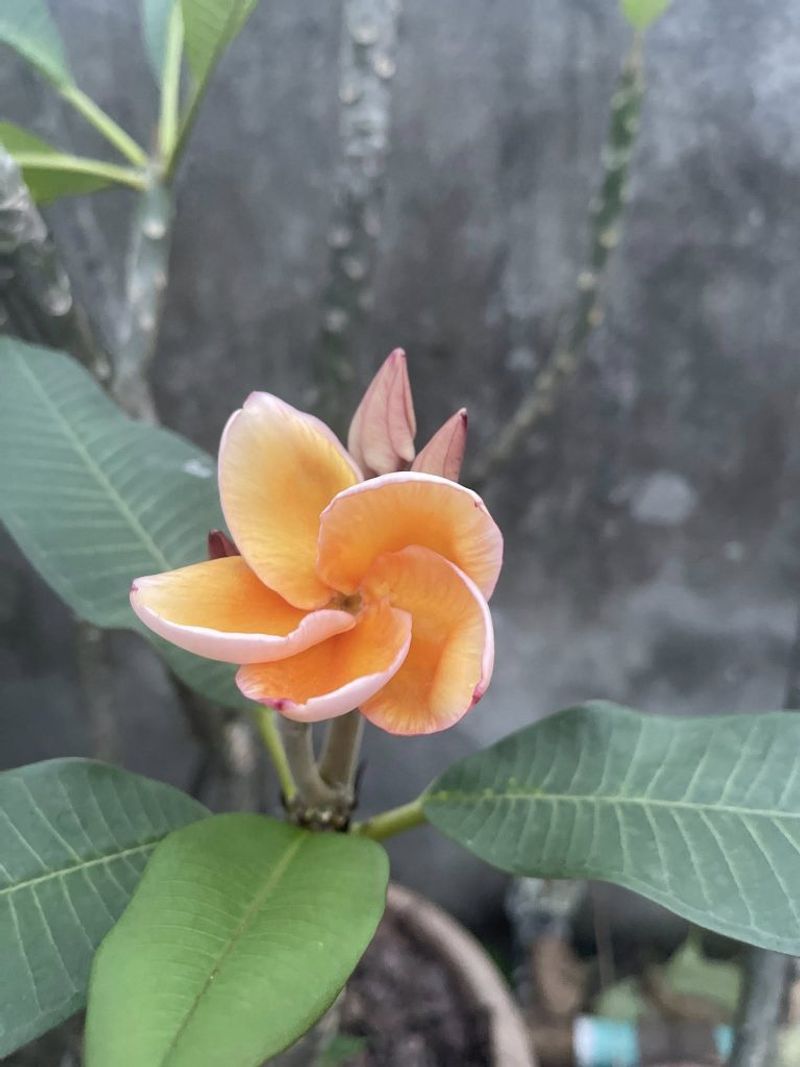
Plenty of California gardeners have read an alarming headline, rushed outside at the first sign of a 55-degree night, and wrapped their plumeria in plastic sheeting – doing more harm than the temperature ever would have. A night in the 50s F can slow growth or shorten the flowering season a little, but it does not equal a frost event and it does not automatically strip open flowers from the plant or kill unopened buds.
Understanding what you are actually protecting matters here. Your current bloom display and the tender new growth at your branch tips are two different things.
Plumeria Society of America storage guidance makes clear that it is freezing temperatures that cause the most serious tissue damage, and that damage to the tips where flower stalks form is what can reduce the following year’s bloom potential. A mildly cool night is unlikely to cause that kind of injury.
Each temperature range calls for a different response. During mild cooling in the 50s, keep monitoring and let the plant continue its natural late-season rhythm.
As nights edge toward the conservative near-40-degree signal described by Missouri Botanical Garden care guidance, begin preparing your protection plan: identify where you will move containers, locate your frost cloth, and check the extended forecast.
When the forecast calls for frost or freezing temperatures, act before sunset that same day. That is the moment that matters most, not the first night the air feels crisp.
Calibrating your response to the actual temperature range keeps you from stressing the plant unnecessarily and saves your energy for the nights when protection genuinely makes a difference.
Assess your plant’s location before choosing protection
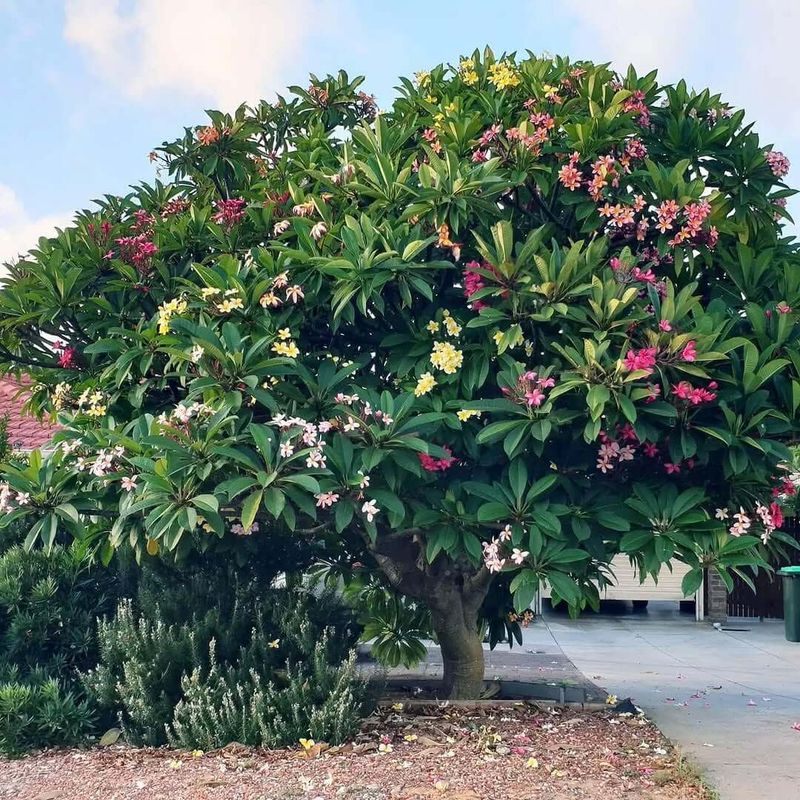
California is not one climate, and what a Pasadena gardener needs to do before a cold snap is not the same as what someone growing plumeria in Redding, Fresno, or a mountain foothill community needs to do. Coastal Southern California locations with mild marine influence may rarely see frost at all, while inland valleys can drop sharply on clear, still nights and higher-elevation communities can experience hard freezes that would surprise anyone who moved from the coast.
Your plant’s immediate surroundings matter as much as the regional forecast. Low spots in a yard collect cold air as it drains downhill on calm nights, creating frost pockets that can be several degrees colder than a raised bed just a few feet away.
South-facing walls and structures absorb heat during the day and release it slowly overnight, giving nearby plants a meaningful buffer. UC Agriculture and Natural Resources frost-protection guidance specifically recommends placing frost-sensitive container plants near a house wall or under a patio cover to take advantage of that stored warmth.
Clear, calm nights are the most dangerous for radiation frost because there is no cloud cover to trap heat near the ground and no wind to mix warmer air down from above. On those nights, a regional weather app that reports the temperature at an airport several miles away may read several degrees warmer than what your plumeria actually experiences at plant height.
A simple outdoor thermometer placed near the plant gives you a far more accurate picture than any regional average.
The USDA Plant Hardiness Zone Map is useful for understanding the general cold range of your area over many years, but it does not predict your yard’s first frost date or protect against unusual cold snaps. Use your site, your exposure, your container status, and your specific forecast together to decide whether your plant needs to be moved, covered, or left alone entirely.
Move potted plumeria when cold weather threatens
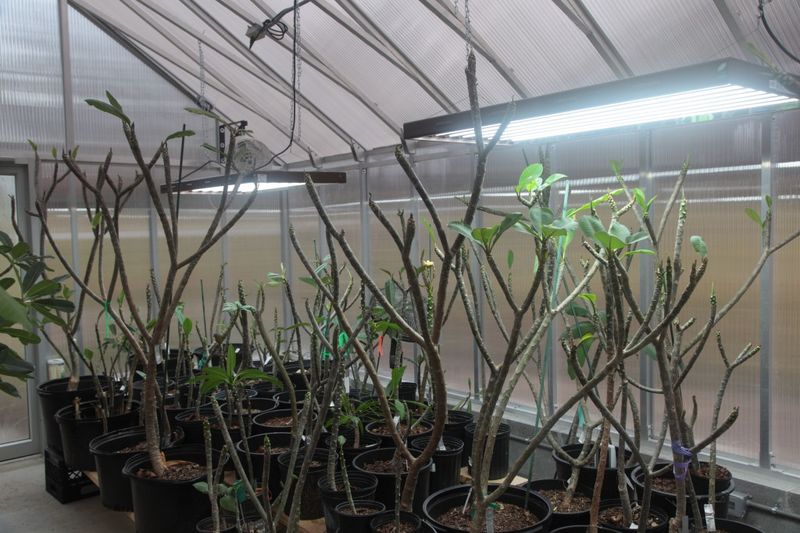
Container plants have one big advantage over in-ground plumeria: you can move them. When cold weather threatens, shifting a potted plumeria to a warmer, sheltered location is almost always the right first move.
A spot near an exterior house wall, beneath a covered patio, or inside an unheated garage can make a meaningful difference on a night that dips toward freezing.
UC Agriculture and Natural Resources frost-protection guidance recommends placing frost-sensitive container plants near a house wall or under a patio cover as a practical first step. For longer cold stretches or when temperatures are forecast to drop well below 40 degrees F, moving the plant fully indoors is the safer choice.
How cold is too cold for storage? Plumeria Society of America guidance recommends storing plants where temperatures stay above freezing and ideally above 40 degrees F.
Missouri Botanical Garden care guidance uses nights below 40 degrees F as a conservative trigger for moving plumeria indoors. Both sources agree that dormant plants need little or no light and little or no water once they have fully entered dormancy, so a dim garage or shed is a perfectly acceptable winter home as long as it stays above freezing.
Not every California gardener needs to go through full indoor storage. University of Florida IFAS plumeria guidance notes that protected landscapes in frost-free or near-frost-free areas can grow plumeria without the same winter intervention required in colder climates.
If your location rarely sees temperatures near 40 degrees F, occasional frost-cloth protection during unusual cold snaps may be all you need.
One practical note for moving day: plumeria sap can irritate eyes and broken skin, so wear gloves when handling cut stems or broken branches, and keep children and pets away from any sap that drips during the move. It is a simple precaution worth building into your routine.
Cover in-ground plants safely before a frost
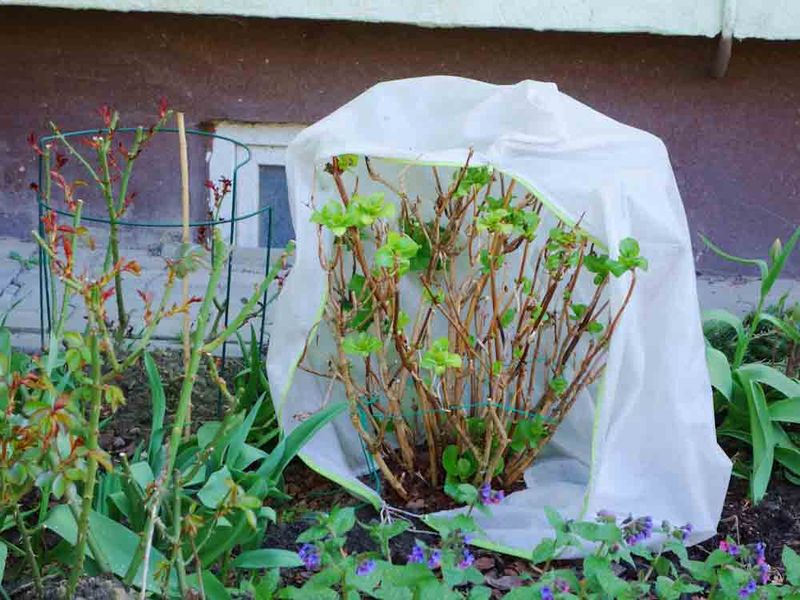
An in-ground plumeria cannot be carried to the garage when a frost warning appears, so the protection plan has to come to the plant. Timing is everything: covers need to go on before sunset, not after the temperature drops, because the goal is to trap the warmth that the soil and plant have absorbed during the day.
Choose your cover material carefully. Breathable frost cloth, old bedsheets, or light blankets all work well because they allow some air exchange while holding heat around the plant.
UC Agriculture and Natural Resources landscape guidance specifically warns against plastic touching foliage: plastic transfers cold quickly and can trap condensation against leaves, making cold injury worse rather than better. If you use plastic at all, keep it elevated above the plant and use breathable fabric as the inner layer.
Support the cover so it does not crush stems or flowers. Stakes, tomato cages, or a simple frame made from bamboo poles work well for this.
Extend the material all the way to the ground to capture soil heat inside the tent you are creating. UC frost-protection guidance recommends removing covers during the day once temperatures rise, so the plant can get light and air circulation rather than cooking under fabric in the afternoon sun.
Moist soil stores more heat than dry soil, and a light watering before a predicted freeze can help protect roots and the lower trunk. However, this is a targeted frost-protection step for a specific cold event, not an invitation to water freely through the fall.
Plumeria Society of America guidance cautions against routine winter watering because a dormant plant uses very little moisture, and wet soil around cool or dormant roots creates conditions where rot can develop. Water with purpose before a freeze, then step back and let the plant rest.
Change watering and feeding as dormancy begins
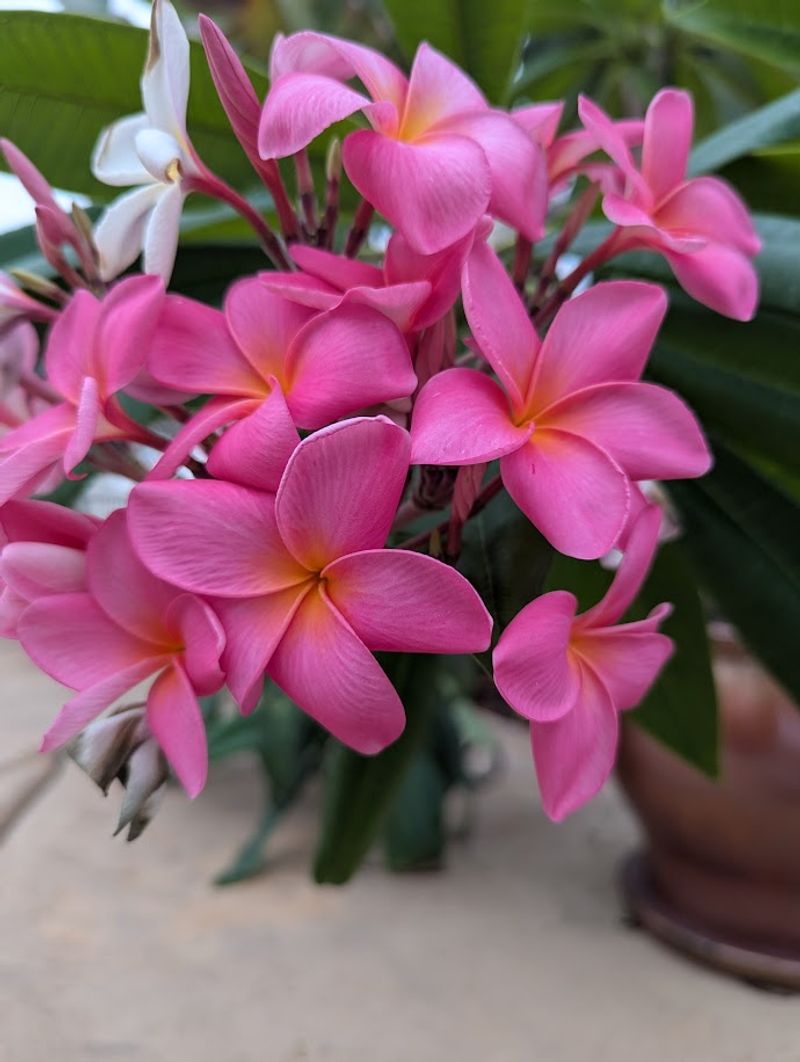
Plumeria is a sun-loving plant that prefers sharply drained soil, and during the active growing season it rewards deep, thorough watering followed by a period of drying out between sessions. UC Master Gardeners of San Luis Obispo County recommend allowing the soil to dry somewhat between deep waterings and stopping irrigation once the plant enters winter dormancy, resuming only when spring growth begins.
Once growth slows and leaves begin to drop, the plant’s water needs drop sharply. Plumeria Society of America storage guidance advises little or no winter water for dormant plants, with only limited supplemental moisture if stems become excessively shriveled or desiccated.
Overwatering a cool or dormant plumeria is one of the most common ways owners accidentally damage the root system, because the plant simply cannot process water at the rate it does during warm weather, and saturated soil invites rot.
Fertilizer follows the same seasonal logic. Missouri Botanical Garden care guidance recommends discontinuing fertilizer in late summer so that any new growth has time to harden and toughen before cold weather arrives.
Soft, actively growing tissue is far more vulnerable to cold injury than hardened wood, so pushing new growth late in the season with fertilizer works against the plant’s preparation for winter.
Yellowing leaves and leaf drop as autumn progresses are not signs that something is wrong. University of Florida IFAS plumeria guidance notes that plumeria can remain alive and carry out some photosynthesis through its green stems even after losing all its leaves.
A bare plumeria in winter is almost always a dormant one, not a dead one, and treating normal dormancy as an emergency by watering heavily or fertilizing can do far more damage than the seasonal leaf drop ever would.
Wait for recovery before pruning frost damage
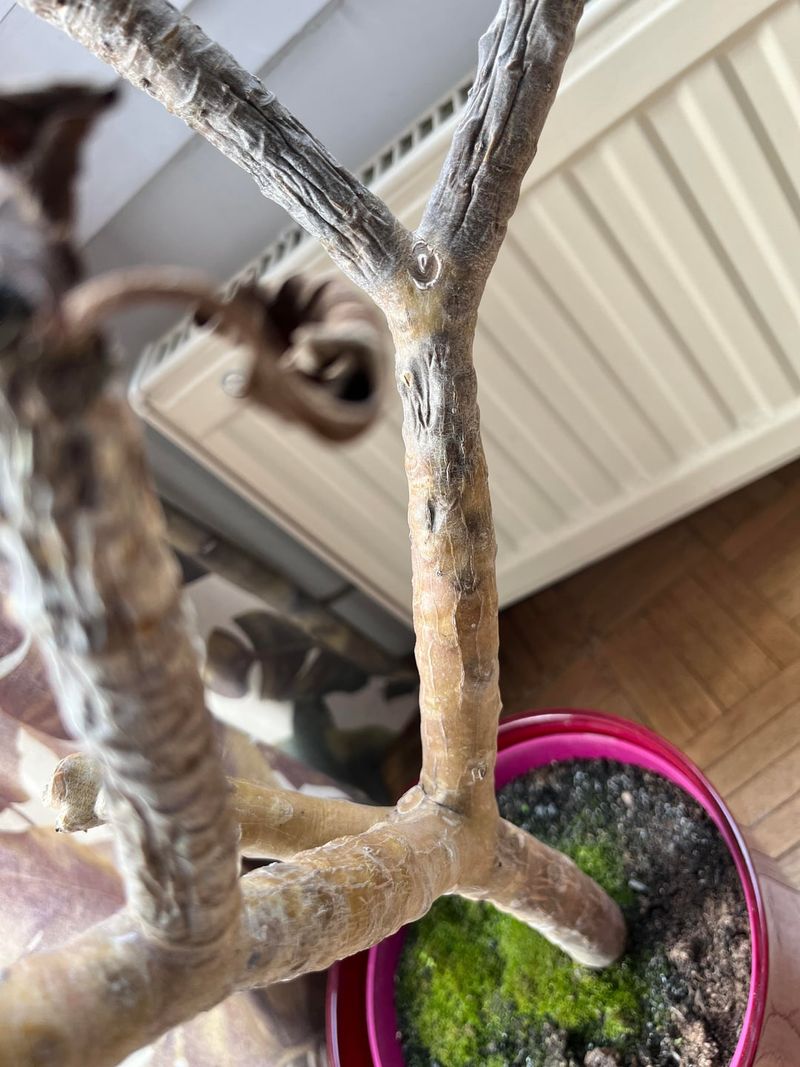
After a frost event, the instinct to grab the pruning shears and cut away everything that looks brown or damaged is understandable but usually counterproductive. Discoloration on plumeria stems after a cold night does not automatically mean the wood underneath is dead, and removing branches too early can take away tissue that would have recovered on its own once warm weather returned.
UC Agriculture and Natural Resources frost-protection guidance recommends waiting for warm weather and new growth before cutting back frost-damaged wood. New growth emerging from a branch tells you that tissue is alive; the absence of new growth in a spot where other branches are leafing out is a more reliable signal that the wood is truly dead and can be removed.
Patience here protects next season’s flowering potential.
Frost damage at tender branch tips can affect the tissue where future flower stalks form. That is worth taking seriously, but it is different from the whole plant dying.
A plumeria that loses some tip growth to a freeze can still bloom the following season, especially if the main trunk and larger branches came through undamaged. Avoid diagnosing total plant death based on surface discoloration alone.
Fall and early winter are also a good time to address a different kind of cleanup: plumeria rust and fallen diseased leaves. UC Master Gardeners of San Luis Obispo County note that removing diseased and fallen leaves and improving airflow around the plant can reduce rust problems in the following growing season.
University of Florida IFAS guidance echoes this, describing rust as a recurring issue that benefits from sanitation practices. Clearing fallen leaves costs nothing and gives the plant a cleaner start in spring.
Use a site-specific checklist before the first freeze
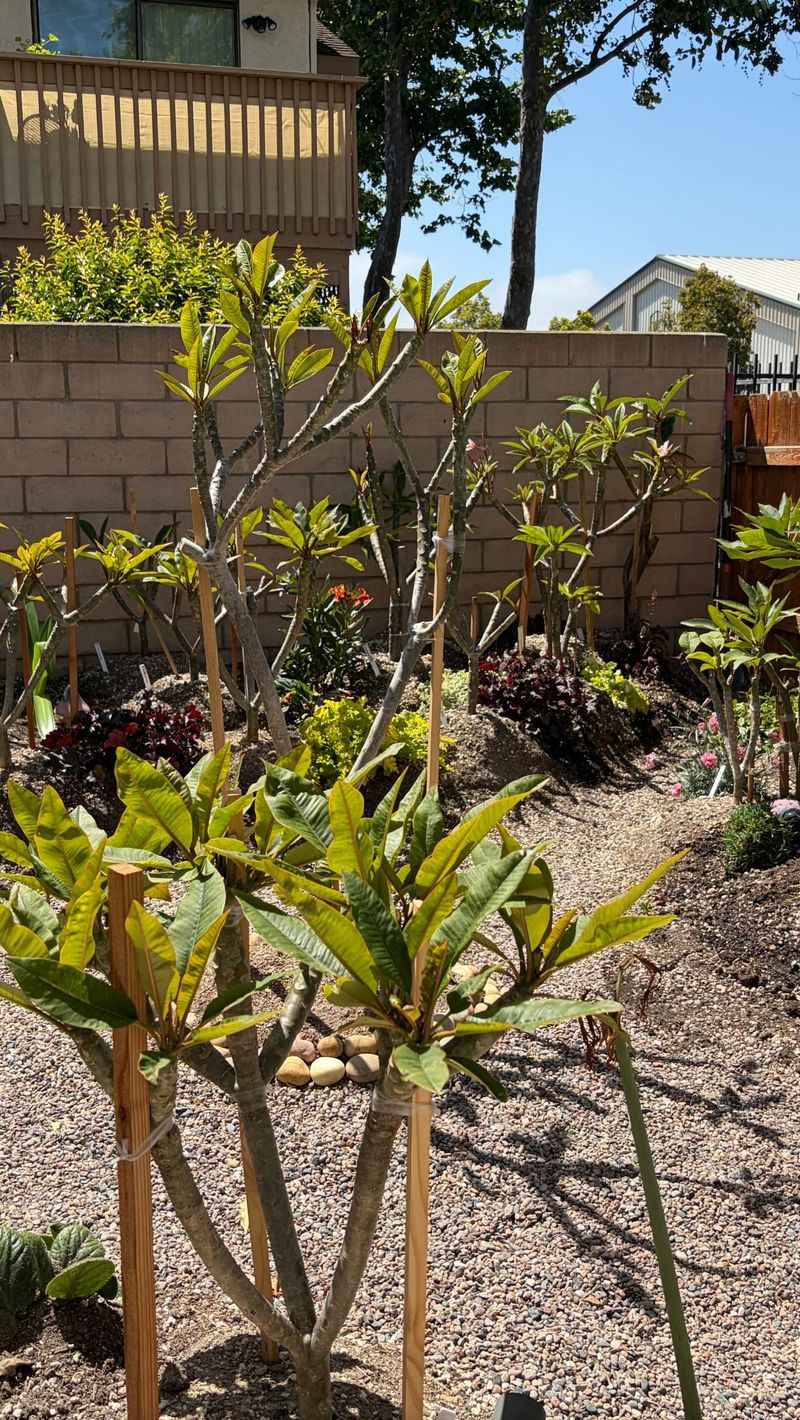
Before a freeze arrives, run through these steps with your specific plant and location in mind. Check the local forecast and, when a cold night is predicted, verify the temperature at plant height with an outdoor thermometer rather than relying on a regional weather app.
UC frost-protection guidance and Plumeria Society of America storage guidance both support a site-specific approach over any universal calendar trigger.
Identify whether your plumeria is in a container or in the ground, then plan accordingly. For potted plants, decide now where you will move it when nights approach 40 degrees F or a frost warning is issued.
For in-ground plants, locate your breathable frost cloth, sheets, or blankets and have stakes ready to support the cover above the foliage. Stop fertilizing as late-summer growth hardens, and reduce watering as the plant slows down, following it toward dormancy rather than pushing it to keep growing.
Protect containers before sunset on frost-warning nights, move them to a sheltered spot, and cover in-ground plants the same evening. Once dormancy begins, Missouri Botanical Garden guidance and UC Master Gardeners agree: hold back the water and let the plant rest.
The gardeners who see the best blooms year after year are the ones who respond to what their plant and their forecast are actually telling them, not the ones who panic at the first cool breeze.