
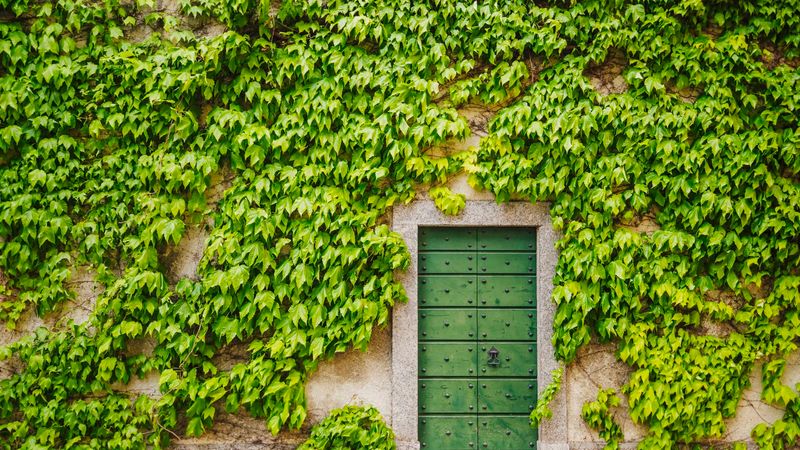
If you have ivy climbing your walls or spreading across the ground right up to your house, fire season is the time to pay close attention. Wall-grown ivy, especially English ivy and Algerian ivy, is one of the clearest groundcover hazards that California fire-safety guidance flags near homes.
The fix is not to move the ivy somewhere else on your property, but to remove it entirely and replace that strip beside your wall with something that cannot burn. This guide walks you through exactly how to do that, and where living plants can still fit into your yard without putting your home at greater risk.
Wall-Grown Ivy Is a Clear Groundcover Hazard Near California Homes
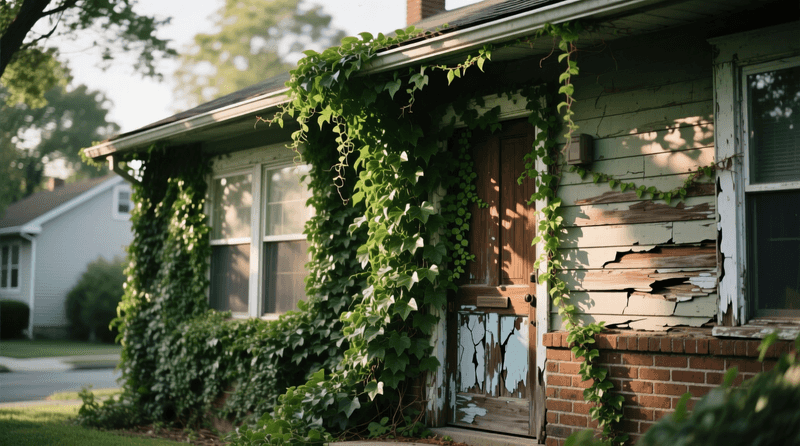
English ivy (Hedera helix) and Algerian ivy (Hedera canariensis) keep showing up in California fire-safety guidance for a specific reason: they grow against structures. That climbing, spreading habit puts them in a different category from a low groundcover sitting several feet from the wall.
UC Marin Master Gardeners fire-smart landscaping guidance specifically calls out invasive vines and climbing plants on building walls as a removal priority, not a trimming priority.
To be direct about the premise of this article: no single plant has been scientifically established as California’s worst groundcover statewide. Fire risk depends on placement, plant size, density, dead material, moisture, slope, wind, building materials, roof design, and how close the plant is to vulnerable parts of the structure.
UC ANR’s fire-network guidance notes there is no universally accepted standardized test for ranking landscape-plant flammability. Juniper, rosemary, pampas grass, broom, eucalyptus, cypress, and some sages can all create serious hazards in particular settings.
What makes wall-grown ivy a clear and specific concern is the combination of its climbing structure, the dense woody fuel it builds up over time, and the fact that California Department of Fish and Wildlife and the California Invasive Plant Council both identify English ivy as an invasive species in this state. This article focuses on ivy growing against or toward a structure, and the practical steps to remove it safely.
Dense Vines Can Create a Fuel Path Toward the Roof
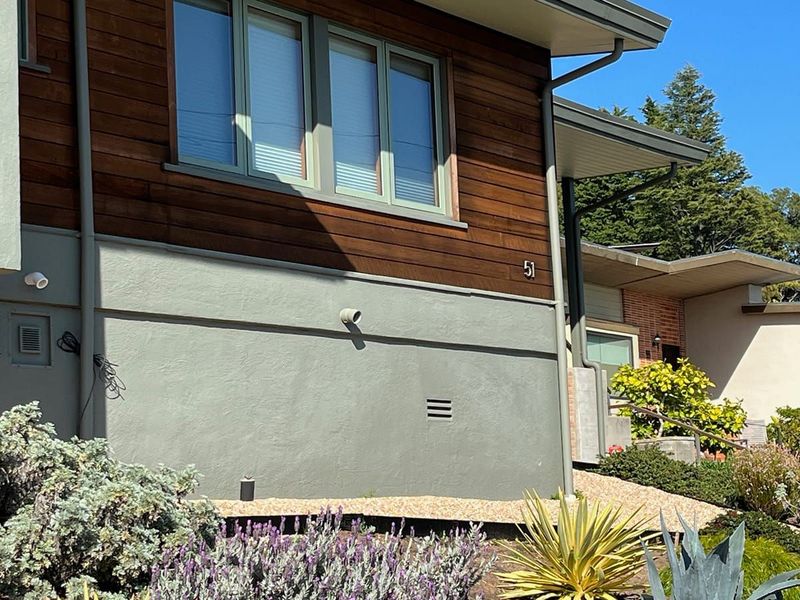
A mat of ivy growing flat on the ground a few feet from your house is a different problem from ivy climbing your wall. The climbing version builds a continuous column of fuel that starts at the soil, travels up the siding, and can reach the eaves or roofline.
Once fire enters that vertical path, it has a direct route toward one of the most vulnerable parts of your home.
Ivy does not stay thin and manageable on its own. Over several seasons it develops woody stems, accumulates dead interior growth, and packs tightly enough that the inner layers dry out and stay dry even when the outer surface looks green.
That dry interior material is what ignites. UC Marin’s fire-smart landscaping guidance points to invasive vines on walls specifically because they can help fire reach tree canopies and building structures, not just smolder at ground level.
Embers are the other piece of the picture. During a wildfire, burning embers travel ahead of the fire front and land near structures.
They collect at the base of walls, in gutters, against vents, and in any spot where debris gathers. A thick mat of ivy at the wall’s base gives those embers combustible material to ignite right where the structure is most exposed.
California Board of Forestry Zone 0 rulemaking materials identify the area immediately around a structure as the highest-priority zone for this reason.
Terrain, wind, drought stress, and building materials all affect how quickly any plant near a structure becomes a problem. UC ANR’s right-plant, right-place guidance is clear that plant species alone does not determine risk.
But ivy’s vertical reach and dense fuel accumulation make it a priority to address before fire season, regardless of those other variables.
Start With the First Five Feet Around the Structure
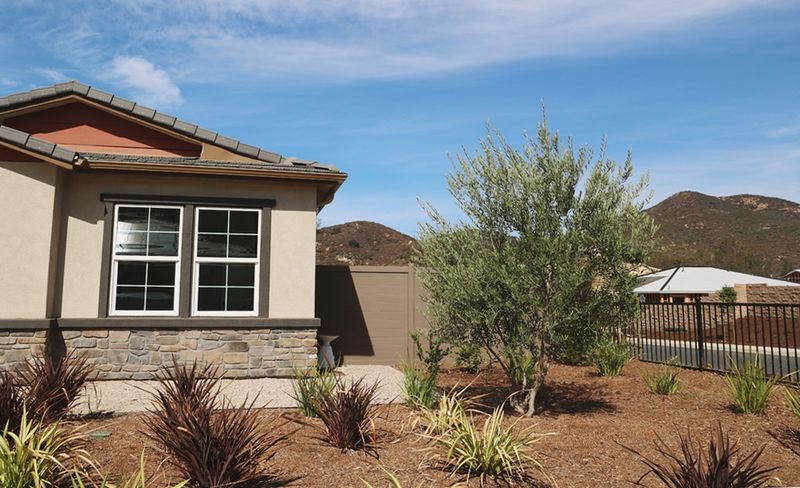
California fire safety starts at the structure and works outward, not the other way around. CAL FIRE’s defensible space guidance tells homeowners to remove dead plants, dry leaves, needles, weeds, and debris from the area around the home and to keep combustible materials away from the house.
The reasoning is straightforward: a fire that cannot find fuel right next to the structure has a harder time igniting the structure itself.
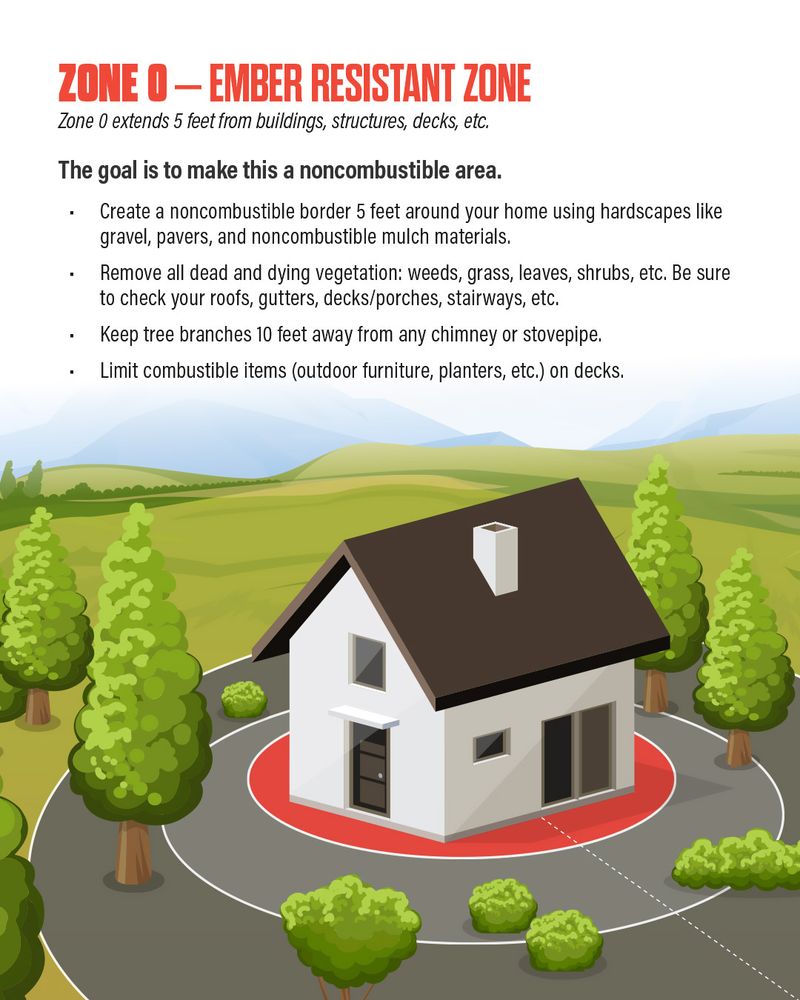
The area most fire agencies focus on first is the roughly five-foot zone immediately surrounding the building, sometimes called Zone 0. The August 2026 Board of Forestry Zone 0 rulemaking package – which was pending final review by the California Office of Administrative Law before becoming effective, so check current state and local rules for what applies to your property now – specifies vegetation-free buffers under eaves, within one foot of a structure where there is no eave, within two feet of windows, doors, posts, and vents, and within five feet of attached decks, stairs, and pergolas.
Those dimensions reflect where embers collect and where ignition is most likely.
Clearing this zone means more than pulling ivy. Remove accumulated leaf litter from gutters, pull weeds that have pushed up against the foundation, rake away pine needles, and check for any debris that has collected against the wall or under a deck.
Preventing vegetation from touching the structure or overhanging the roof applies to every plant type, not just ivy. Once the immediate zone is clear, you have a much clearer picture of what needs to happen farther out in the yard.
Remove Established Ivy at the Roots
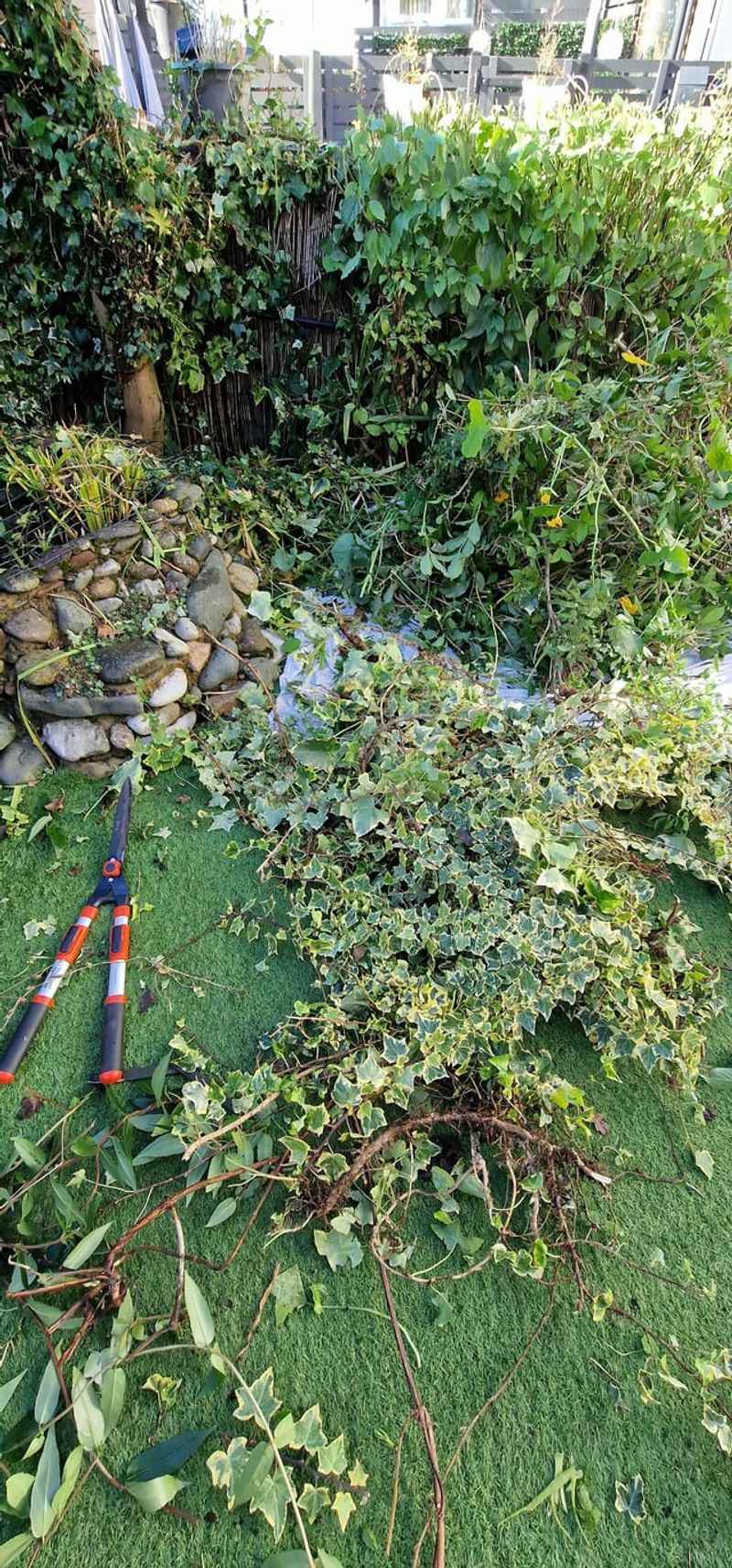
Cutting ivy back to the wall is not enough. The visible green canopy is only part of the plant.
Below ground, ivy develops a dense network of roots and runners that will push new growth back to the surface within a season or two if you leave them in place. For established ivy, the job is excavation, not pruning.
Work through the removal in a clear sequence. First, cut the vines at their bases near the soil line using hand pruners or loppers.
Then carefully pull the cut vines away from the wall, working from the bottom up. Adhesive rootlets that have attached to siding or stucco may pull away some surface material, so work slowly and use a plastic scraper if needed.
Once the vines are down, go after the root mass. UC IPM’s guidance on woody weed invaders recommends digging out roots and stems, removing all runners, and monitoring the area for regrowth over the following months.
Roots can extend further than the visible canopy, so dig several inches beyond the plant’s edge.
Collect every fragment you pull from the soil. Ivy runners can reroot from small pieces left in contact with damp ground, which means a thorough cleanup of the work area matters as much as the initial digging.
Lay a tarp nearby and pile everything onto it as you go rather than leaving cut material on the soil surface.
Wear gloves throughout this process. Some people develop contact dermatitis from handling ivy, particularly from the sap in cut stems.
Long sleeves are a reasonable precaution for anyone working with large amounts of established plant material. After removal, check the area every few weeks and pull any regrowth immediately before it has a chance to re-establish.
UC Marin’s fire-smart guidance treats removal as a process, not a one-time event, which is an accurate description of how established ivy behaves.
Remove the Ivy Instead of Relocating It
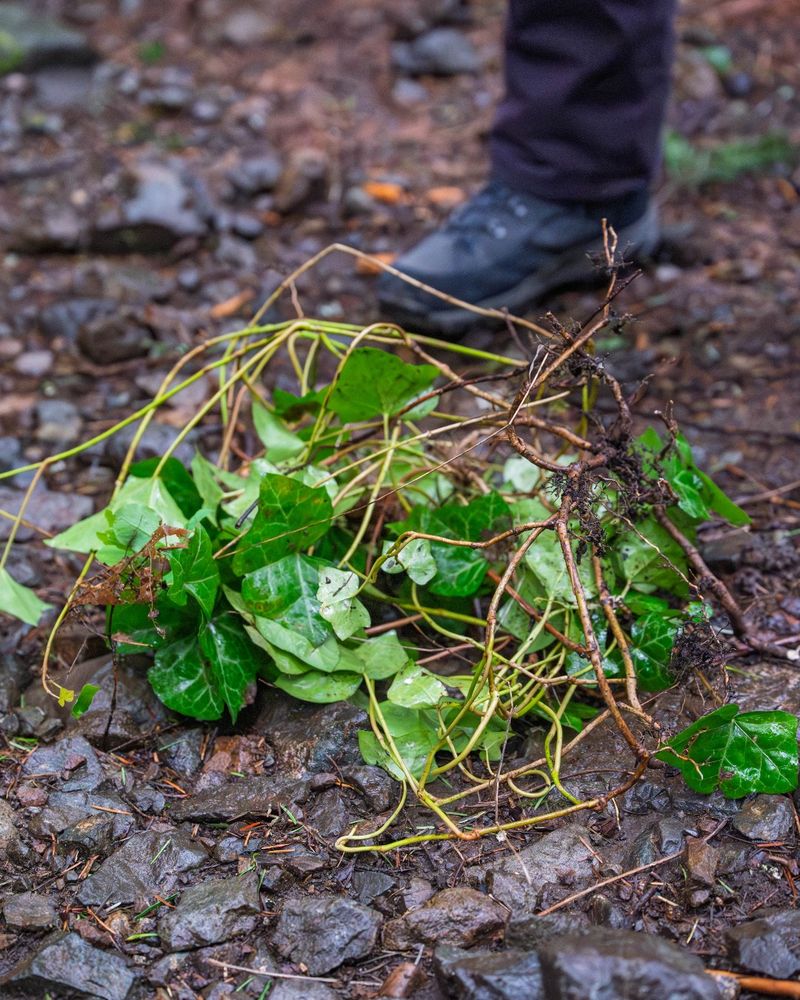
Moving ivy from the wall to the back fence, a slope, or a woodland edge is not a solution. It restarts the problem in a new location and creates an ecological one at the same time.
English ivy spreads through vegetative growth and through bird-dispersed seeds, which means a clump you plant near a natural area can move well beyond your property line. California Department of Fish and Wildlife documents ivy’s ability to displace native plants, climb and damage trees, and provide habitat for unwanted animals such as rats, none of which improves when you relocate the plant rather than removing it.
Discarded cuttings are part of the same problem. Ivy runners and stem fragments can reroot if they land on moist soil, which is exactly what happens when pulled material is tossed onto a compost pile that gets turned, dumped near a creek, or left at the edge of a natural area.
California Invasive Plant Council guidance is specific on this point: do not plant ivy near natural areas, and do not dispose of ivy cuttings in natural areas.
The right disposal route is your local green-waste bin or a municipal yard-waste program. Many California counties accept ivy in green-waste collection, but rules vary, so check with your local waste hauler before bagging.
Some areas require ivy to be bagged separately or have specific guidelines about plant material that can resprout. Keep pulled vines and roots off the soil and off any area where they might reroot while you are still working.
The ivy goes into the bin. The replacement planting, described in later sections, goes into the cleared space.
Those are two separate decisions, and only one of them involves putting a plant in the ground.
Use Noncombustible Hardscape Beside the Wall
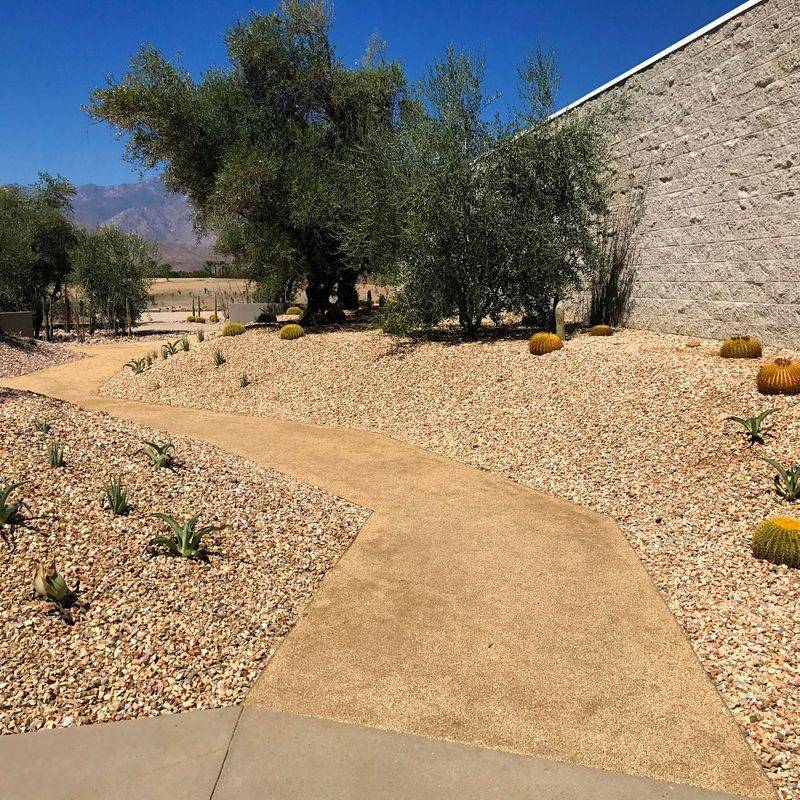
Once the ivy is out, the soil strip immediately beside your wall needs something in it. Bare soil is better than ivy, but it will not stay bare for long in most California yards.
The practical answer for that closest zone is noncombustible hardscape: gravel, decomposed granite, concrete, pavers, or stone. These materials do not burn, do not accumulate dead thatch, and do not provide a fuel path toward the structure.
A gravel border or decomposed granite strip is the most common choice for the foundation zone. It drains well, suppresses weeds without mulch, and stays in place through dry seasons without needing irrigation.
River rock and flagstone work for slightly wider areas or where aesthetics matter more. Concrete or pavers make sense where the strip is wide enough for foot traffic.
The specific material matters less than the fact that it is inorganic and noncombustible.
For the dimensions of the buffers that apply in this zone, the August 2026 California Board of Forestry Zone 0 rulemaking package – which was still pending review by the Office of Administrative Law and filing with the Secretary of State as of its August 2026 adoption, with effectiveness anticipated in September 2026 – specifies vegetation-free areas under eaves, within one foot of a structure where there is no eave, within two feet of windows, doors, posts, and vents, and within five feet of attached decks, stairs, and pergolas. The Board of Forestry’s defensible space program page is the right starting point to track the current effective status of these requirements.
Local jurisdictions may adopt stricter or different standards, so confirm what applies to your specific address before finalizing your plan.
Installing hardscape beside the wall also removes the temptation to plant something new right against the structure. The cleared area looks finished, does not require irrigation, and will not need to be removed again next fire season.
That is a meaningful practical improvement over ivy, a bare patch, or a substitute plant that gradually grows back toward the wall.
Restore the Garden Beyond the Applicable Buffer

Removing ivy from the wall does not mean the rest of your yard has to stay bare. Beyond the required vegetation-free buffers, living groundcover can still have a place, provided it stays low, stays maintained, and stays well clear of structural contact.
The August 2026 Board of Forestry Zone 0 rulemaking package, pending final effective date confirmation through the California Office of Administrative Law, identifies conditions under which limited nonwoody plants may be used in portions of Zone 0. Plants would need to stay under three inches tall and remain free of dead or dying material.
The package lists blue-star creeper, beach strawberry, creeping thyme, and mosses as examples of plants that might meet those conditions. These are not endorsements that any plant is fireproof.
Any plant can burn under dry enough conditions, and the three-inch height limit and maintenance requirement are part of what makes these options different from a dense, climbing vine. UC ANR’s right-plant, right-place framework reinforces that placement, care, and condition matter more than a plant’s label.
For shaded areas farther from the structure, California Department of Fish and Wildlife suggests native alumroot, including Heuchera micrantha and Heuchera maxima, as an alternative to English ivy. Alumroot is evergreen and shade-tolerant, and it works for mass planting in spots where ivy previously dominated.
It does not spread the way ivy does, which means it will not fill a large area on its own quickly, but it also will not climb your wall or invade a neighboring natural area.
Whatever you plant beyond the buffer, keep it genuinely separate from the structure. Check periodically that no stem, runner, or branch has crept back toward the wall, window, or vent.
The goal is a yard with living plants and a clear, maintained separation between those plants and the building.
Maintenance Keeps Replacement Plantings From Becoming Fuel
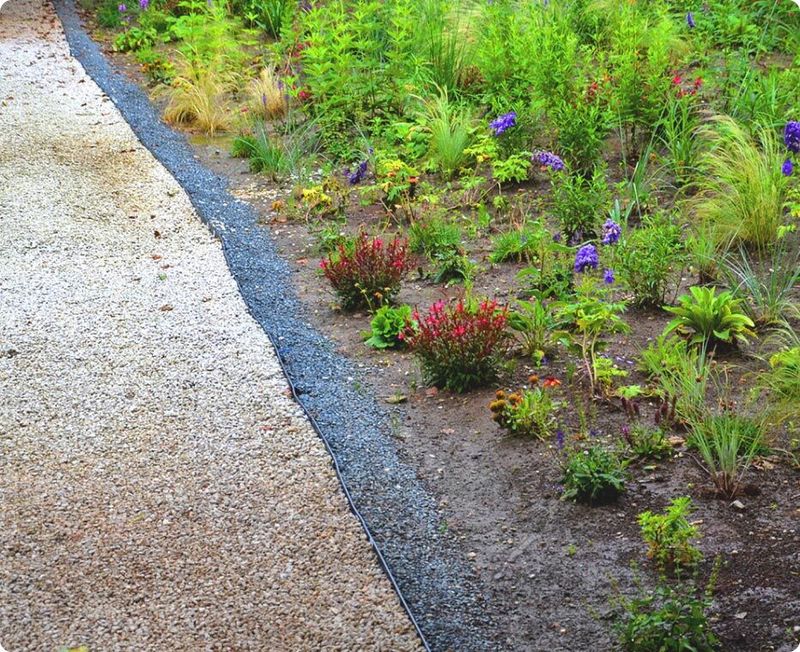
A plant’s label cannot protect your home. Groundcovers described as fire-resistant or low-flammability can still ignite when they are drought-stressed, overgrown, crowded with dead material, or planted too close together.
UC IPM’s guidance on minimizing fire hazards in landscapes is clear on this: plant condition and care practices can outweigh species selection when it comes to actual ignition risk.
Water matters more than most homeowners expect. A plant that receives too little water during a long dry summer becomes brittle and dry at the core even when it looks acceptable from a distance.
Match irrigation to what the specific plant actually needs during the dry season, not just what the general category requires. Drip irrigation aimed at the root zone is more effective than overhead spray for keeping low groundcovers hydrated without wetting foliage that then dries quickly in hot afternoon wind.
Dead growth is the most immediate maintenance concern. UC ANR’s right-plant guidance emphasizes removing dead stems, spent flower stalks, and accumulated leaf litter before and during fire season, not just at the end of winter.
A groundcover that is green on top but full of dry brown material underneath is a fuel hazard regardless of its species.
Spacing and density also need ongoing attention. Plants that start as separated individuals can merge into a continuous mat over two or three seasons.
UC Cooperative Extension guidance for Los Angeles County recommends maintaining spacing between plants and avoiding fuel ladders that could help fire climb from low groundcover into taller shrubs or trees. Thin any groundcover that has grown denser than intended, and remove material rather than leaving it on the soil surface where it can dry out and ignite.
Ivy Removal Helps, but It Does Not Harden the Whole Home
Pulling ivy off the wall and replacing that strip with gravel is a real improvement. It removes one of the clearest combustible connections between the ground and your structure.
But it is one action among many that together reduce wildfire risk, not a finish line.
CAL FIRE’s home-hardening guidance covers the parts of the structure that defensible-space work does not: roof materials and gutters, enclosed vents that block ember entry, siding that resists ignition, multi-pane or tempered windows, and deck and fence materials that do not act as fuel paths toward the house. Peer-reviewed research on structure survival in wildfires consistently shows that building construction and ember resistance matter alongside vegetation management.
A cleared yard around a house with open eave vents and wood siding still carries significant risk.
The action sequence for the ivy problem is straightforward: remove wall-grown ivy, dig out roots and runners, dispose of the material through local green-waste channels, install noncombustible hardscape in the cleared zone beside the structure, and place any permitted low planting only beyond the applicable buffer. Maintain that planting by removing dead growth, matching irrigation to the plant’s needs, and preventing it from growing back toward the wall.
Confirm current requirements with the Board of Forestry’s defensible space program and your local jurisdiction, since rules vary and are still being finalized in some areas.
Check CAL FIRE’s get-ready resources for the broader checklist that goes beyond groundcover. A yard without ivy against the wall is a better yard.
A home that is also hardened against embers, with maintained clearance and sound building materials, is a meaningfully safer one.