
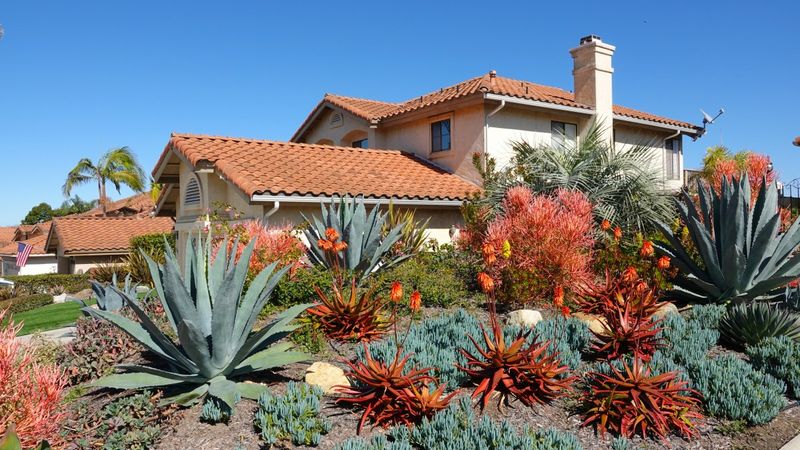
Living on a California hillside means thinking about fire every single summer, and the first five feet around your house matter most. The good news is you do not have to choose between staying safe and having a yard that looks great.
Some plants hold lots of water, stay low, and resist catching fire, which makes them smart picks for that zone right against your walls. Here are seven of the plants Californians keep planting closest to the house because they check both boxes.
1. Coral Aloe (Aloe striata)
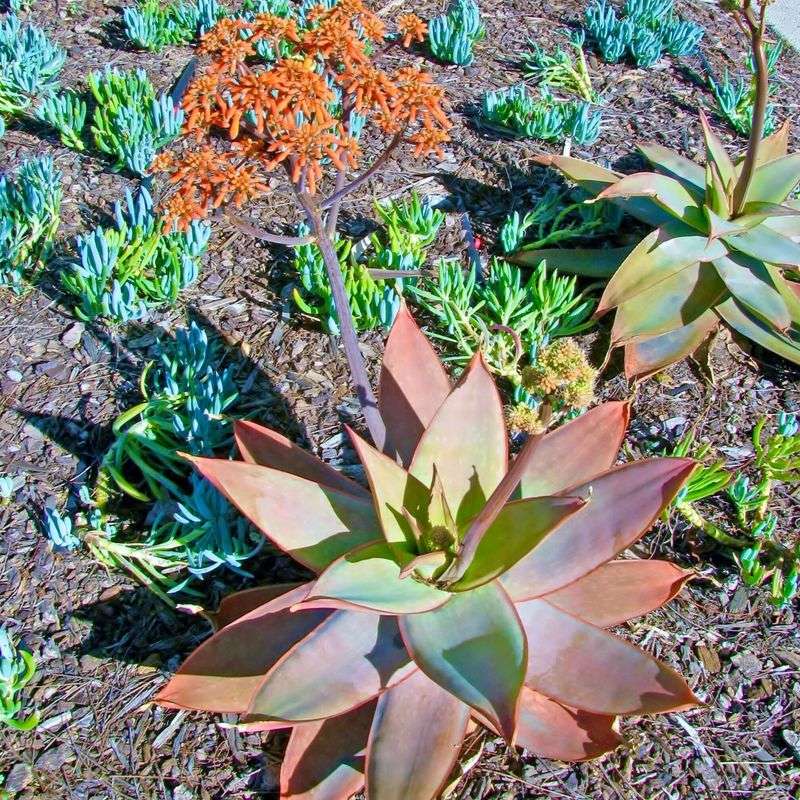
Ask any hillside homeowner what they trust right up against the stucco, and coral aloe comes up fast. Its thick, water-filled leaves hold moisture like little reservoirs, so it does not dry into fuel the way woody shrubs can.
The smooth blue-green blades have no spiny teeth, which makes it friendly to brush against near a walkway. In late winter it throws up coral-orange flower stalks that hummingbirds love.
Because it stays low and tidy, coral aloe fits neatly into that critical zero-to-five-foot zone where you want nothing that flares up. Pair it with gravel or decomposed granite instead of bark mulch, and it can support pollinators while keeping the base of your house lean and clean.
2. California Fuchsia (Epilobium canum)
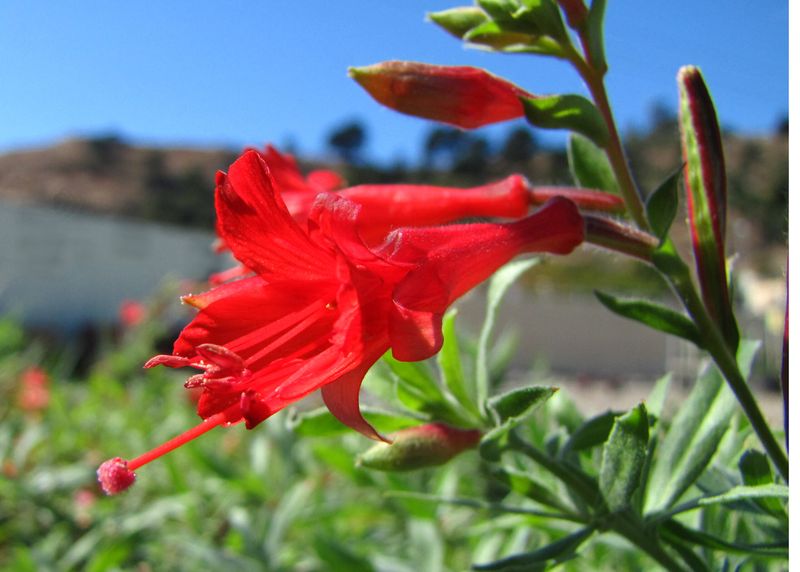
Native and gorgeous, California fuchsia earns its spot by feeding hummingbirds when almost nothing else is blooming. Come late summer and fall, its tubular red-orange flowers light up while the rest of the garden looks tired.
It grows low and spreading, and its soft foliage carries enough moisture to resist ignition when you keep it watered and trimmed. That habit lets it work as a living groundcover in the near-house zone instead of flammable wood chips.
Here is the stewardship win: planting a native like this supports local pollinators your yard evolved with. Cut it back hard in winter to remove dead stems, and it rewards you with a fresh, fire-smart flush every year.
3. Agave (Agave attenuata)
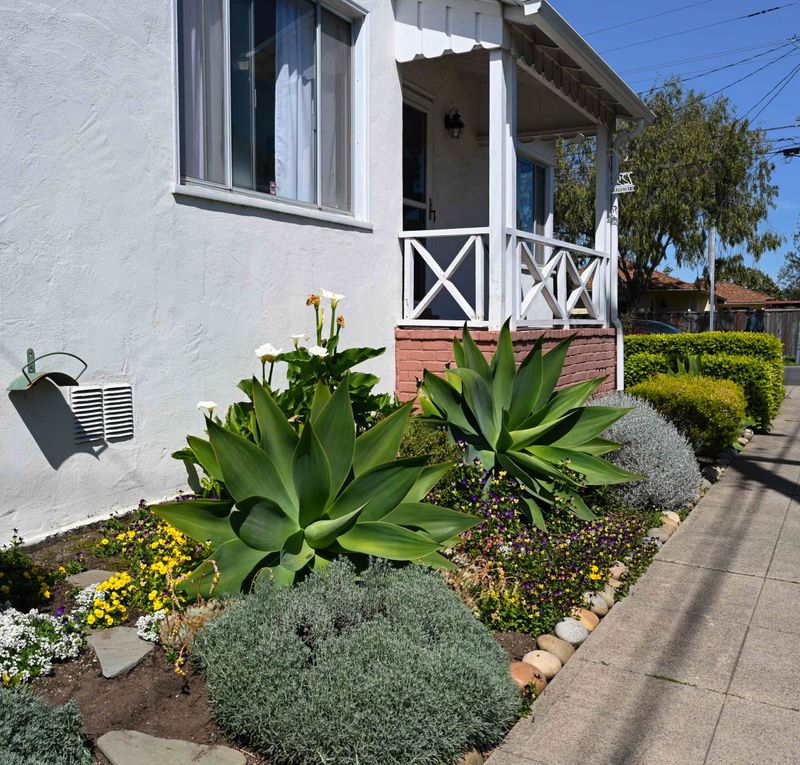
Foxtail agave brings that clean, sculptural look people pay designers for, and it happens to be one of the smarter fire-zone picks around. Its rosette of soft, spineless leaves is packed with moisture, so it resists burning while doubling as living art by the front door.
Unlike its toothy cousins, this agave will not stab you or the mail carrier, which matters right along paths and entries.
It asks for almost nothing once established, thriving on California’s long dry summers with minimal water. Space a few in gravel for a modern, low-fuel entry that still stops people mid-stroll.
4. Society Garlic (Tulbaghia violacea)
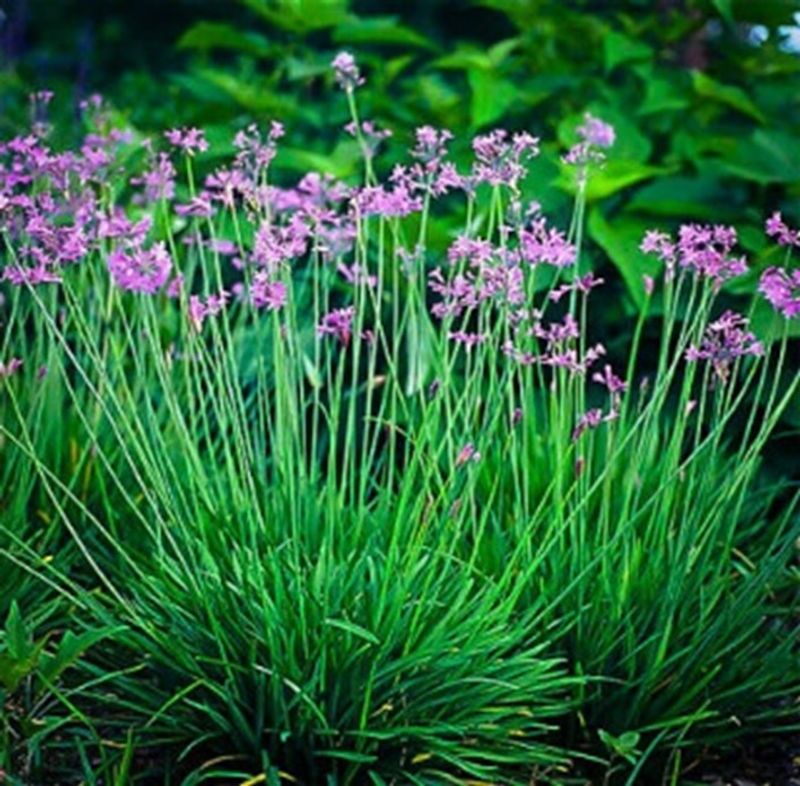
Do not let the name scare you off. Society garlic gives you grassy clumps topped with lavender-purple flowers for most of the warm season, and its high water content keeps it low on the fire-risk list.
Gardeners swear the garlicky scent from its leaves may help deter some browsing critters, though the real draw is how long it blooms in our extended spring-through-fall window.
It stays compact and neat, perfect for edging a walkway or lining the base of a wall without piling up dry debris. Snip spent stalks now and then, and it looks fresh with barely any effort.
5. Red Yucca (Hesperaloe parviflora)
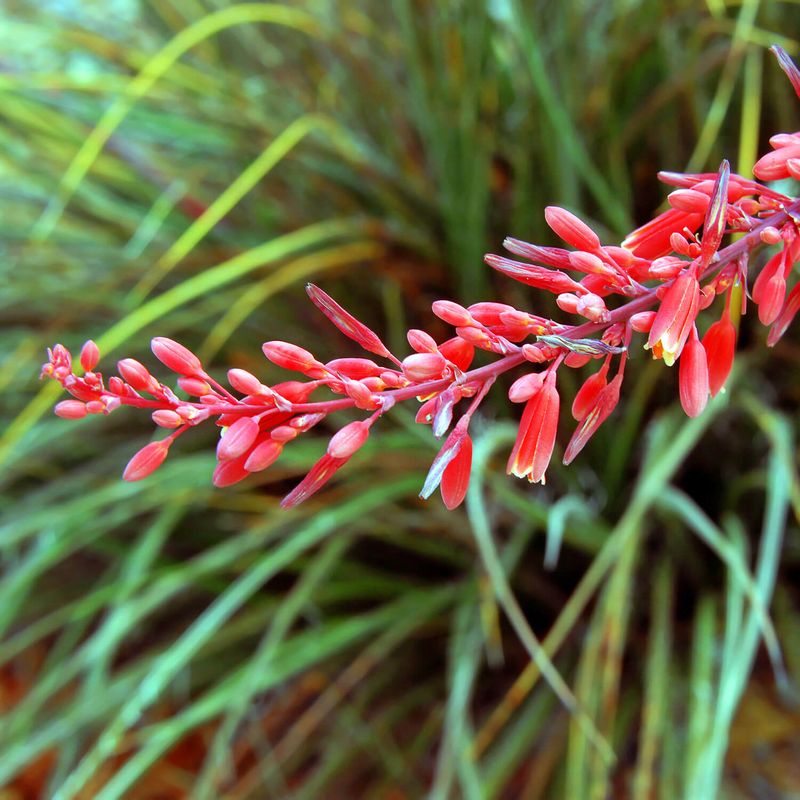
Tough as they come, red yucca laughs at heat, drought, and neglect while sending up graceful coral-pink flower spikes that hummingbirds cannot resist. Despite the name, it is not a true yucca, which is a fun bit of trivia to drop at a barbecue.
Its succulent, arching leaves hold water and stay low to the ground, so it does not build up the woody, resinous fuel that fire loves.
For inland valley yards baking in summer, few plants deliver this much color for this little care. Line a driveway or anchor a bed near the house and you get months of blooms with a fire-wise footprint.
6. Ice Plant (Delosperma)
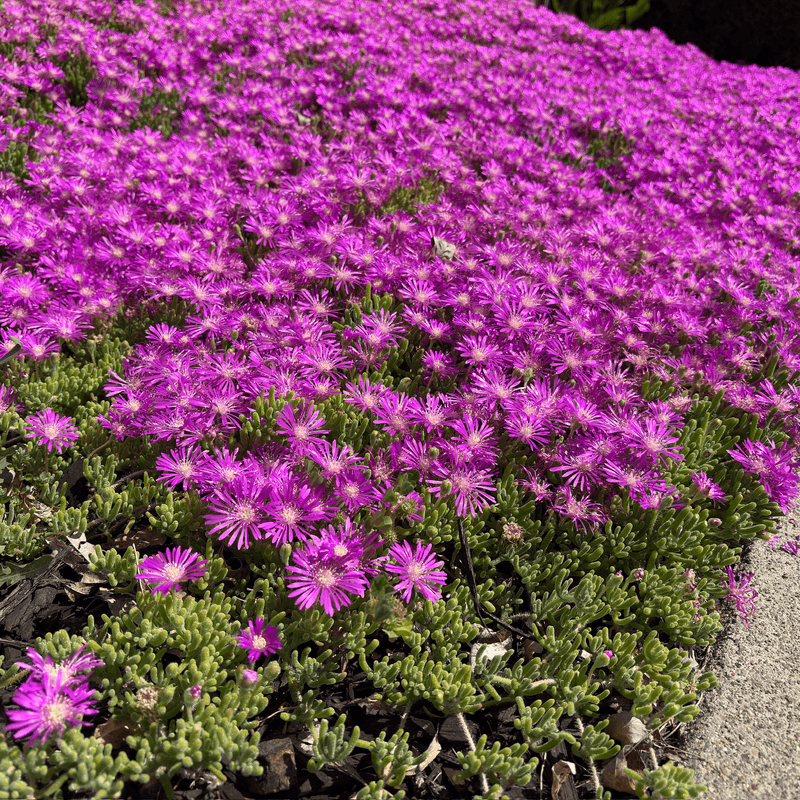
Few groundcovers put on a show like ice plant, which erupts into neon carpets of magenta, yellow, and purple daisy-shaped blooms. Beyond the color, its fleshy leaves are so full of moisture they can slow the spread of surface fire, which is why it shows up on defensible-space plant lists.
It hugs the ground and chokes out weeds, giving you a living, low-fuel blanket instead of flammable mulch on slopes.
A quick heads-up: stick with well-behaved Delosperma types and avoid the invasive iceplant species that overrun coastal dunes. Choose wisely and you get a bulletproof, sun-loving mat that shields the soil right up to the foundation.
7. Lily of the Nile (Agapanthus)
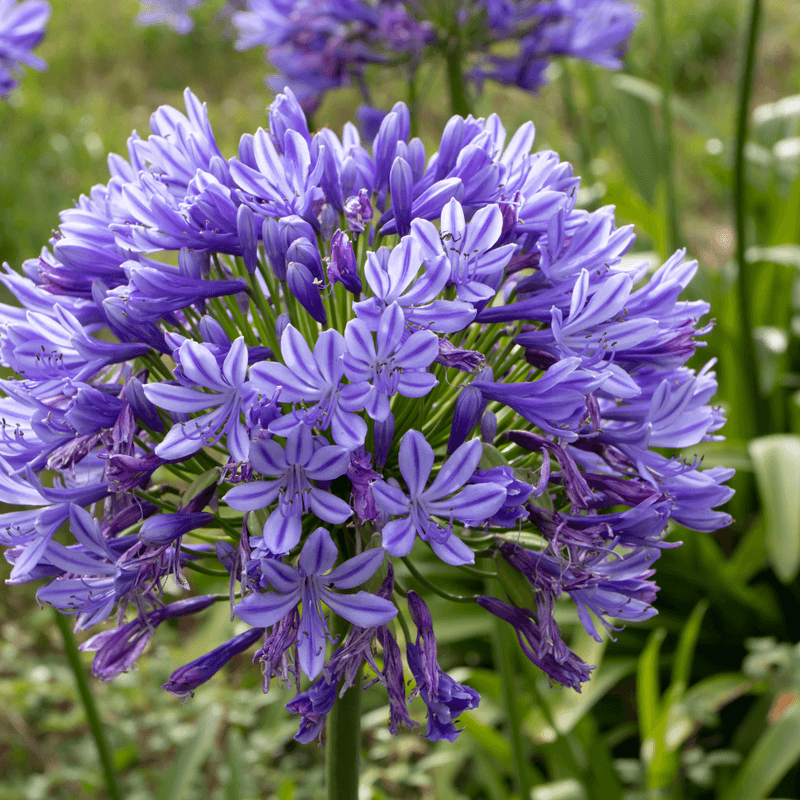
Classic for a reason, agapanthus lines countless California front walks with its strappy green leaves and big globes of blue or white flowers in summer. Those juicy leaves and low, mounding shape make it a reliable choice for the zone hugging your house.
It stays green and full through the dry season with modest water, and it does not shed the dry, twiggy litter that helps fires climb.
Plant it in a tidy row to soften a foundation or frame an entry, then deadhead the spent blooms to keep things sharp. Easy, familiar, and fire-smart is a hard combination to beat.
Put all seven together and you have proof that the safest zone around your home can also be the prettiest, water-wise, and full of life for the pollinators you want to protect.