
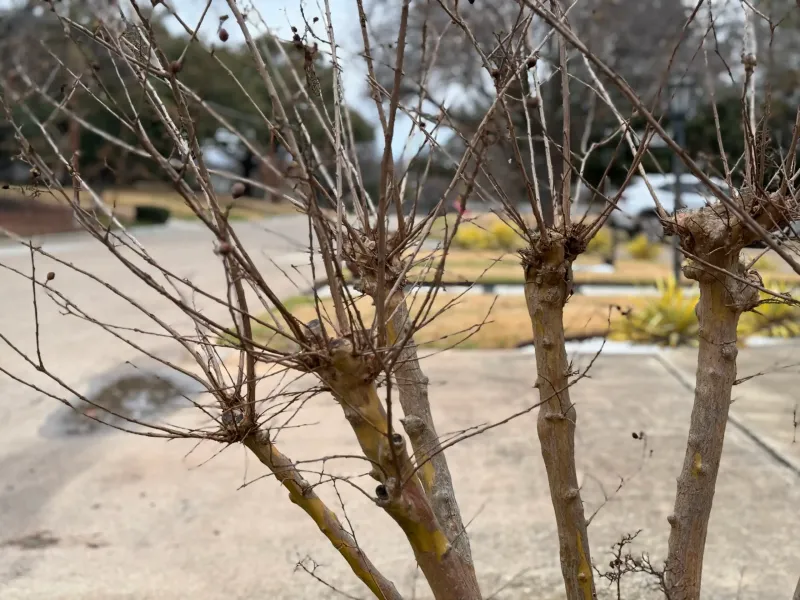
Plenty of North Carolina homeowners have looked at a crape myrtle growing in the wrong spot and thought, “I’ll just move it.” That impulse is understandable, but the reality of digging up an established tree is a lot harder than it sounds. The headline on this article overstates the danger a bit, so before you grab a shovel, here is what the evidence actually shows about why large crape myrtle moves so often go wrong and what you can do about it.
The title overstates what the evidence shows
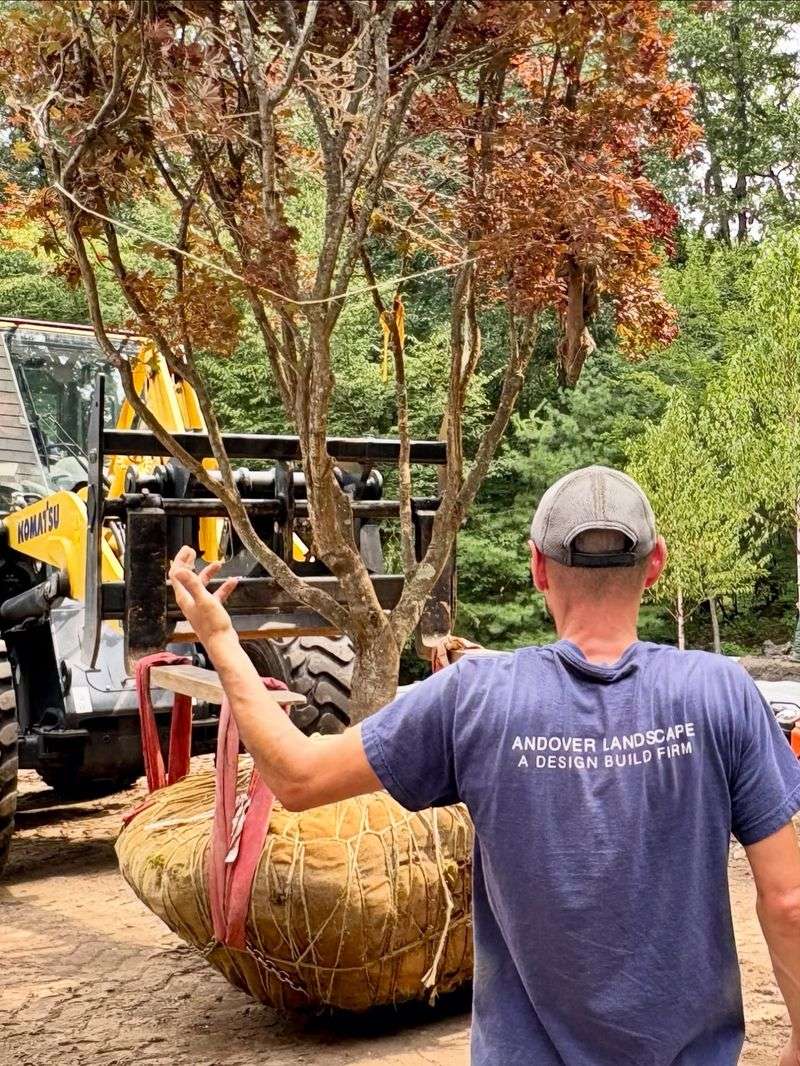
“Almost always ends in a dead tree” is a sharper claim than the evidence supports, and starting here with an honest correction matters. Moving a large established crape myrtle is genuinely high-risk, especially as a weekend project with ordinary tools, but professional relocation with proper equipment, advance planning, and sustained aftercare can succeed.
The risk is real; the near-certainty of death is not.
Crape myrtle, known botanically as Lagerstroemia indica, is one of the most recognizable trees in the Carolina landscape. NC State Extension’s Plant Toolbox lists it across the Coastal Plain, Piedmont, and Mountains, and notes that cultivars range from compact dwarf forms to plants approaching 30 feet tall and wide.
That variation matters enormously when someone asks whether a crape myrtle can be moved.
A 6-foot, multi-stem shrub growing in loose loam near an accessible driveway is a very different project from a 20-foot, 15-year-old tree-form specimen rooted in clay with a fence on three sides. Trunk caliper, height, number of trunks, age, soil type, terrain, and equipment access all shape the risk far more than the plant’s name alone.
UF/IFAS transplanting guidance is clear that large established trees can be moved successfully when conditions are met, but that the required conditions become harder to satisfy as the tree grows.
The rest of this article explains what those conditions are, why homeowners so often fall short of them, and how to decide whether to move the tree, hire a professional, or start fresh.
Root loss—not a mysterious crape-myrtle weakness—drives transplant shock
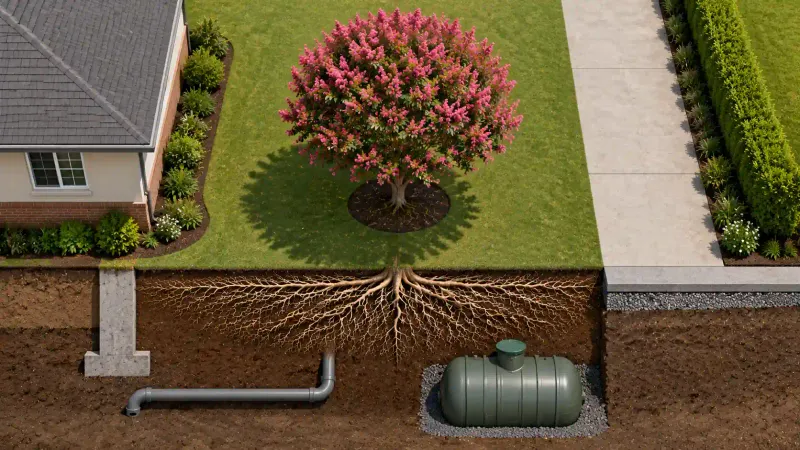
Crape myrtle does not have some unusual biological flaw that makes it impossible to relocate. The problem that kills transplanted trees of almost any species is the same: digging severs most of the roots that actually absorb water, and the canopy above keeps demanding moisture the damaged root system can no longer supply.
TreesAreGood, the public education resource of the International Society of Arboriculture, explains that the majority of a tree’s roots develop in the top 12 inches of soil and spread laterally, often extending well beyond the tree’s canopy edge. Fine absorbing roots, the ones that actually pull water and nutrients from the soil, live at the outer margins of this network.
When you dig a circle around the trunk, you cut through most of those fine roots regardless of how carefully the shovel goes in.
University of Tennessee Extension’s transplanting research identifies water stress from root loss as the primary driver of transplant failure. Root loss also reduces the carbohydrates stored in the root system and impairs the tree’s ability to regenerate new roots after the move.
Those three effects compound each other: the tree cannot absorb enough water, has fewer energy reserves to grow replacement roots, and cannot grow those roots quickly enough to catch up before the canopy suffers.
The result can range from temporary wilting and leaf scorch all the way to complete top dieback or death, depending on how much functional root system survives the move. Penn State Extension notes that even nursery-grown balled-and-burlapped trees may lose roughly 90 percent of their root system at digging, and an established landscape tree that has rooted freely for years presents an even larger gap between the roots that exist and the roots that can realistically be preserved.
There is no special deep taproot locking a crape myrtle in place. The challenge is the sheer volume of shallow, laterally spreading absorbing roots left behind in the soil, and the widening mismatch between canopy demand and root supply after the move.
The root ball grows beyond ordinary homeowner scale
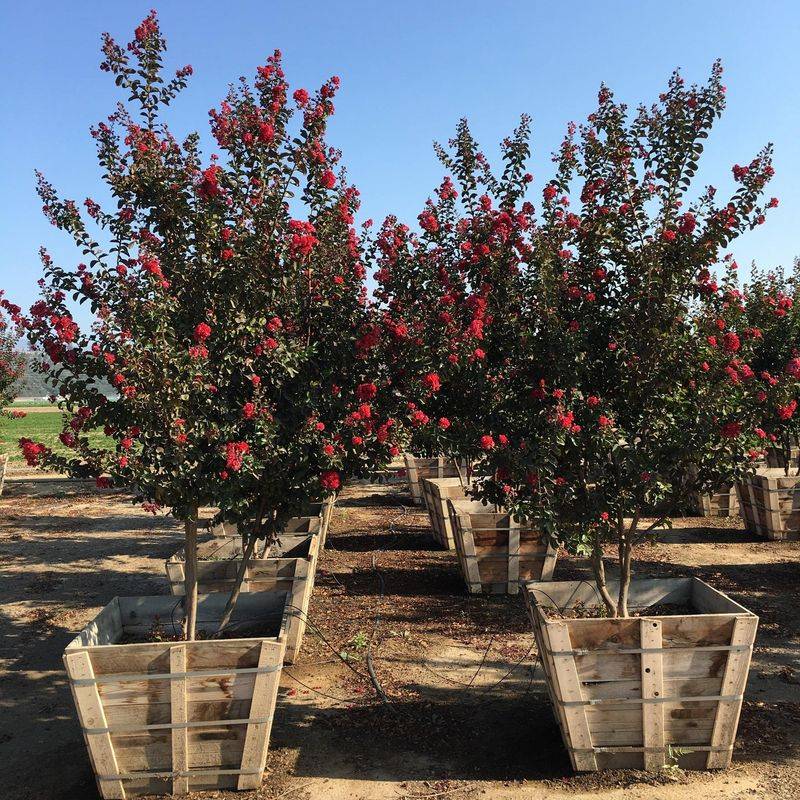
Root loss is not just a biological concept; it translates directly into a physical size requirement that stops most homeowners cold. A commonly cited planning benchmark from University of Utah Extension calls for a root-ball diameter of roughly 10 to 12 inches for every inch of trunk caliper.
Run that number on a crape myrtle with a 4-inch trunk and you are looking at a ball somewhere between 40 and 48 inches across before accounting for soil depth, cohesion, terrain, or access.
That benchmark is a rough planning estimate, not a survival guarantee. Soil type changes the math: loose sandy soil may not hold together in a ball that size, while dense clay may allow a slightly smaller ball to stay intact.
Multi-trunk specimens add another complication. Texas A&M AgriLife Extension guidance suggests adding the individual trunk diameters together when estimating root-ball requirements for multi-trunk plants, which means a three-trunk crape myrtle with 2-inch stems on each trunk could call for a ball as wide as a nursery-grown shade tree even though the plant looks modest from the street.
A nursery-grown tree arrives with its roots already pruned and conditioned to fit within a manageable ball. An established landscape tree has had years to push roots outward into soil you cannot practically excavate, wrap, and move.
University of Maryland Extension considers trees or shrubs with trunks 2 inches or larger substantially more difficult to transplant and recommends a landscape professional for specimens at that threshold and above.
Weight becomes a hard limit quickly. A properly sized root ball packed with moist clay soil can weigh hundreds of pounds, and moving it without cracking or dropping it requires more than a wheelbarrow and a strong back.
Whether specialized equipment is needed depends on the tree’s dimensions, site access, soil, and the feasible ball size, but large specimens regularly reach the point where homeowner-scale tools are not adequate for the job.
Preparation starts months before a dormant-season move
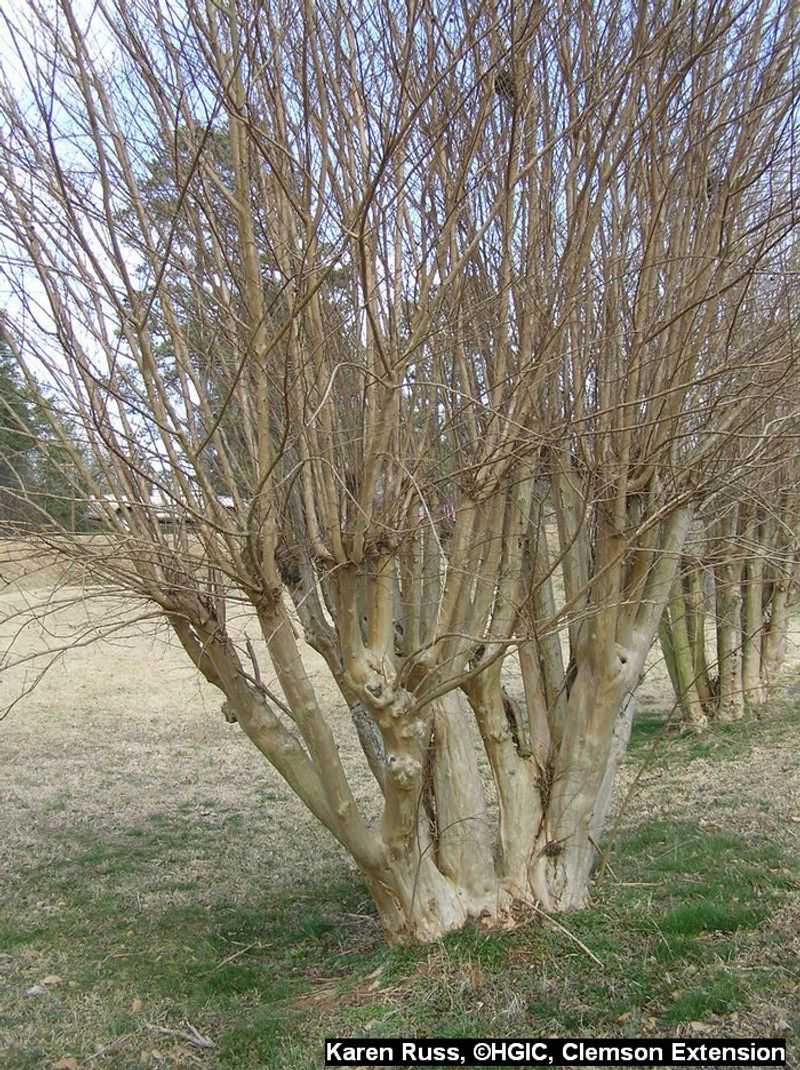
Rushing a crape myrtle move from decision to hole in one weekend is one of the most reliable ways to lose the tree. A considered transplant starts with an honest size assessment: measure the trunk caliper, count the trunks, look honestly at the root-ball diameter the tree would need, and ask whether the destination site can be reached with equipment large enough to handle it.
Timing matters across all three of North Carolina’s climate regions, but the target window is the same in principle: wait until the tree enters dormancy in fall or early winter, then complete the move before spring growth begins. Clemson Cooperative Extension’s transplanting guidance advises against moving trees while they are actively growing, drought-stressed, or exposed to extreme cold or frozen soil.
The Coastal Plain often stays warmer longer in fall and warms up earlier in spring than the mountains, so “winter” is better understood as the local dormant period rather than a fixed calendar date.
Advance root pruning is the single preparation step that can most improve the odds of a successful move. The technique involves cutting a circle in the soil at the planned root-ball boundary months before digging, which encourages new feeder roots to grow within the area that will eventually be moved.
University of Maryland Extension recommends root pruning well before the transplant, and UF/IFAS Broward County Extension notes that recommendations range from several months to a year or more depending on the plant and project scale.
Root pruning is not a shortcut to a smaller ball or a substitute for good timing and handling. It supports a broader plan that still requires an adequately sized root ball, careful digging, and sustained aftercare.
A tree that has been root-pruned but moved too early, too small, or into a poorly prepared site can still fail.
Protect the root ball during digging, lifting, and planting
Dig the new hole before you touch the tree. That single discipline prevents a root ball from sitting exposed to sun and wind while someone scrambles to break ground at the destination.
The hole should be broad rather than deep, generally two to three times the root-ball width but no deeper than the ball itself, and the trunk flare should sit at or slightly above the surrounding grade once the tree is settled. TreesAreGood guidance from ISA is specific: a hole too deep buries the flare and sets up long-term decline even if the tree survives the move.
Water the tree thoroughly a day or two before digging so the plant is fully hydrated and the soil around the roots is more likely to hold together as a cohesive ball. When digging begins, work from the outside of the planned ball inward and keep the spade angled to undercut the root mass cleanly.
Never grab the trunk to pull, lift, or lever the tree out of the ground. University of Minnesota Extension recommends supporting the root ball itself during every stage of lifting and transport, because a cracked or collapsing ball destroys the fine roots that survived the initial cut.
UF/IFAS Broward County Extension advises keeping the ball covered and moist during transport and setting it into the new hole without delay. Once the tree is positioned, backfill with the soil that came out of the hole unless a soil test gives a specific reason to amend it.
Do not add fertilizer to the planting hole; forcing top growth before the roots have recovered adds stress rather than relieving it. Finish with a shallow mulch layer about 2 to 3 inches deep, kept a few inches away from the trunk to prevent rot and discourage surface-root problems.
If the ball is too heavy or awkward to move safely by hand, that is the moment to stop and call a professional rather than improvise a solution that risks dropping or cracking the ball. Equipment needs vary by tree size, soil type, and site access, but no amount of determination replaces the right tool for a heavy, fragile load.
Aftercare determines whether the remaining roots can recover
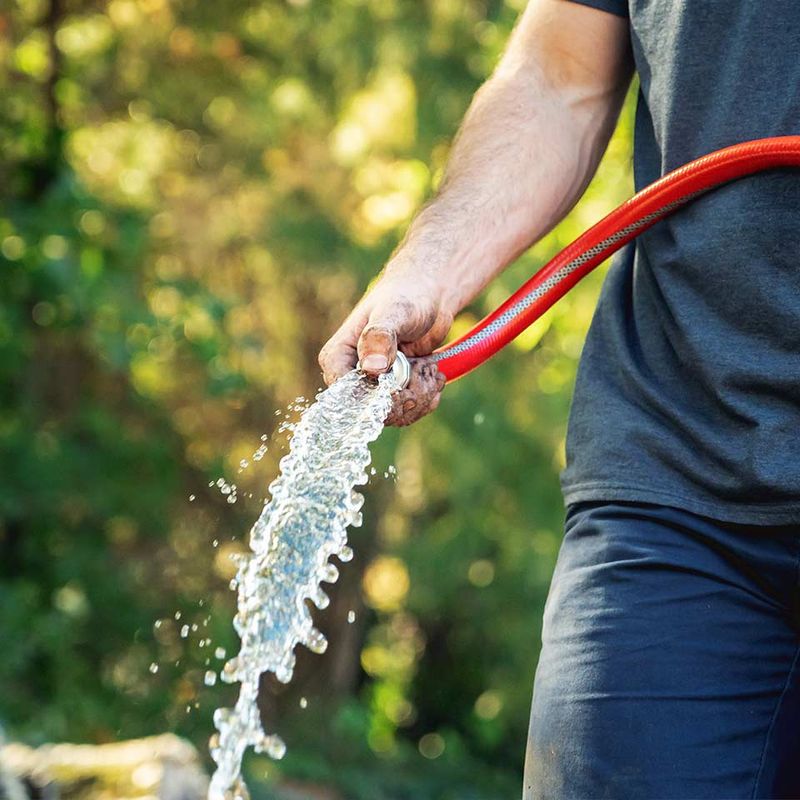
Setting the tree in the ground is not the end of the project. What happens over the following months, and sometimes years, decides whether the remaining root system can grow enough new absorbing roots to support the canopy long-term.
Consistent moisture is the most critical variable. The goal is soil that stays evenly moist without becoming waterlogged, because saturated, poorly drained soil suffocates recovering roots just as effectively as drought does.
UF/IFAS transplanting guidance warns that many large-tree projects fail not because the move itself was badly executed but because adequate care was provided for only a short time. Large transplanted trees may need regular irrigation for months or longer while new roots regenerate, and that commitment has to be planned and sustained, not assumed to be optional once the tree leafs out.
First-season leafing does not confirm recovery. ISA guidance notes that transplant stress can slow growth and reduce vitality for multiple seasons in larger trees, because the tree may be drawing on stored carbohydrates rather than a functioning root system to push those early leaves.
A tree that looks alive in May can still decline through summer if the roots cannot keep pace with the canopy’s water demand.
Readers should also understand the difference between three distinct outcomes. Top dieback, where branches die back but the root system remains alive, is not the same as failure to establish, and neither is the same as complete tree death.
University of Maryland Extension specialists confirm that crape myrtles can resprout from healthy roots after significant top dieback, though recovery may take years and the resulting plant may be shorter or structurally different from the original.
On pruning: remove dead, broken, or clearly damaged branches, but resist the urge to cut back large amounts of live growth to “balance” the root loss. Oklahoma State University Extension and current arboricultural guidance agree that removing healthy live branches reduces the photosynthetic capacity the tree needs to regenerate roots, which can make recovery slower rather than faster.
Choose professional relocation, staying put, or propagation
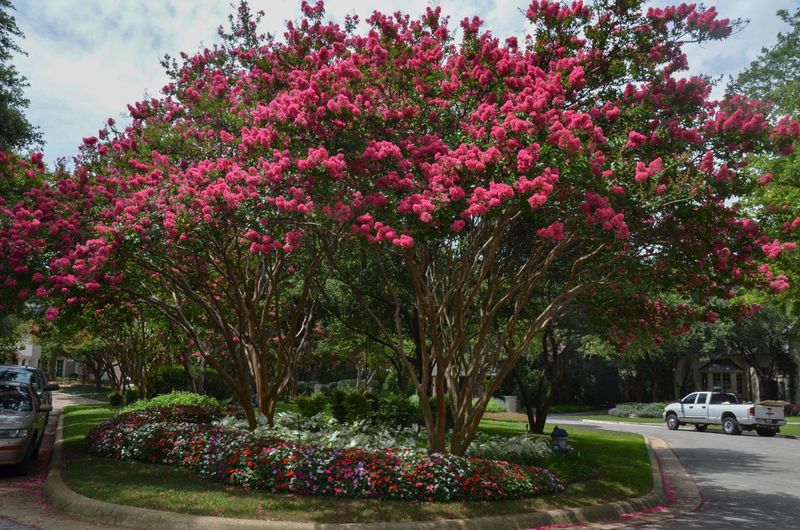
At some point, the math on a large crape myrtle move stops working for a homeowner with hand tools. A trunk caliper above 2 inches, a multi-trunk form that pushes the required ball diameter even wider, clay soil that adds weight, or a destination reachable only through a narrow gate: any one of these factors can push a project beyond safe homeowner scale.
University of Minnesota Extension recommends experienced contractors for large-tree spading because of the equipment, weight, root-ball handling, and safety considerations involved.
An experienced tree professional can assess whether the project is feasible, estimate the root-ball size needed, determine whether advance root pruning is still possible, and bring the equipment to move a heavy ball without cracking it. The decision to hire a professional depends on the tree’s dimensions, site access, soil, and what a realistically sized ball would weigh, not on a universal rule that every large tree automatically requires a tree spade.
Some mid-sized specimens on accessible, flat ground can be moved by a skilled crew with appropriate hand equipment. UF/IFAS transplanting guidance is clear that professional methods, correct timing, and sustained aftercare can support successful relocation of large established trees.
When relocation is genuinely impractical, propagation is worth considering as an alternative. Crape myrtle can be started from softwood or hardwood cuttings, and rooted basal shoots may sometimes be separated from the base of an established plant when they have developed their own root system.
NC State Extension’s propagation handbook covers cutting techniques applicable to woody ornamentals including crape myrtle. Propagation produces a new plant rather than relocating the existing specimen, and it does not preserve the established tree’s size, form, or root system.
Whether that trade-off makes sense depends entirely on what the homeowner is trying to accomplish.
The practical rule is simple: assess scale before you dig
A small, healthy crape myrtle moved carefully during dormancy, with advance root pruning and consistent aftercare, can survive the transition. A large established specimen moved quickly with a too-small ball and a few weeks of watering is a high-risk project where severe dieback, prolonged recovery, or outright loss are all realistic outcomes.
University of Tennessee Extension transplanting research and UF/IFAS transplanting guidance both point to the same conclusion: root loss, inadequate ball size, poor timing, and insufficient aftercare are what kill transplanted trees, not the species label on the plant tag.
Before picking up a shovel, measure the trunk caliper, estimate the root-ball diameter that would require, and honestly assess whether you can dig, support, move, and plant a ball that size without cracking it. Check site access, soil type, and terrain at the destination.
If those numbers push past what hand tools and a wheelbarrow can safely handle, get professional advice before the project starts rather than after the tree is already out of the ground.
Crape myrtle is not doomed by relocation. The species is vigorous, widely adapted across North Carolina, and capable of recovering from significant setbacks when the root system survives intact.
The real lesson is that scale determines risk, and a rushed move with ordinary tools is where that risk becomes hardest to manage.