
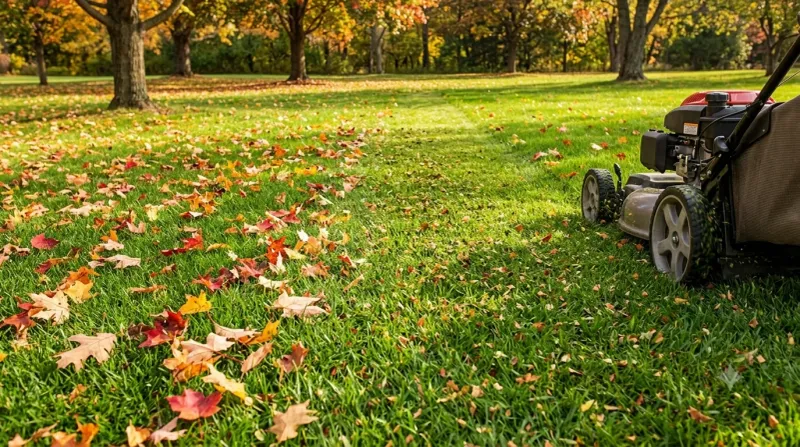
Every fall, millions of homeowners spend hours raking, bagging, and hauling leaves to the curb, but there is a simpler option worth knowing about. Running a mower over a light, dry layer of leaves can chop them into small particles that settle between grass blades and slowly feed the soil.
The catch is that this only works under the right conditions, and knowing when to mow versus when to collect can save your lawn from real damage. Here is what actually happens when you mow leaves into your turf, and how to decide which approach fits your yard.
What mowing does to fallen leaves
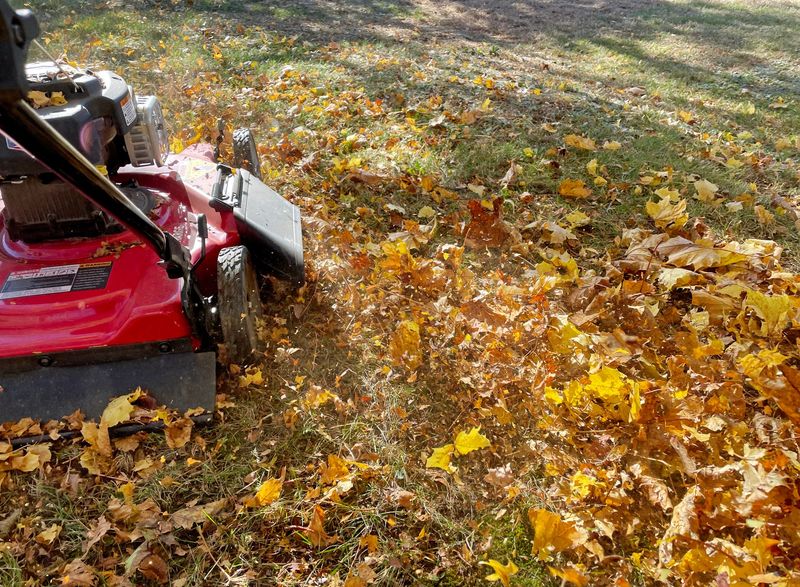
Running a mower over dry fallen leaves does something that raking cannot: it breaks those leaves into small fragments that slip down between grass blades instead of sitting on top as a smothering mat. Those particles make contact with the soil surface, where microbes and earthworms begin breaking them down.
Over weeks, that decomposition returns organic matter and some nutrients back into the root zone.
Texas A&M AgriLife Extension describes this approach as most effective for a light covering of leaves, and UF/IFAS Florida-Friendly Landscaping guidance specifically lists shredding fallen leaves and pine needles with a mower as a way to speed decomposition and return nutrients and organic matter directly to the soil. Those are meaningful payoffs from a job you were already doing anyway.
That said, mowing leaves into the lawn is not a fertilizer replacement. Nutrient quantities and release rates from decomposing leaf particles vary, and the improvement to soil organic matter happens gradually rather than all at once.
Mowing works as a smart option for suitable, light coverage, not as a reason to stop collecting leaves altogether when conditions call for it.
Let the lawn set the limit
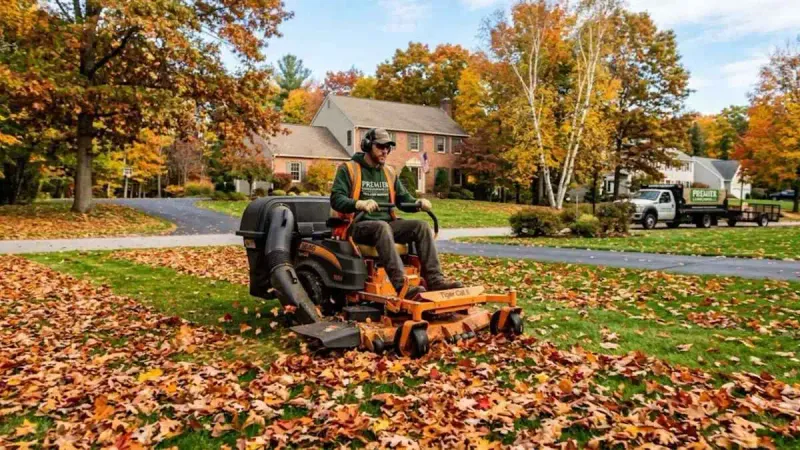
Knowing when to stop mulching matters just as much as knowing when to start. The simplest rule comes from Minnesota Extension’s fall leaf mulching guidance, which recommends continuing to mulch only while roughly half of the lawn surface remains visible.
Once less than about 50 percent of the grass is showing through the leaf layer, it is time to collect rather than mow in place. Treat that figure as a practical monitoring rule, not a precise scientific cutoff.
Whole leaves left lying on turf can block sunlight, trap moisture against the crown of the grass, and mat together into a layer that turf cannot push through. A University of Guelph study published in the International Turfgrass Society Research Journal found that heavy whole-leaf coverage of roughly 5 to 10 centimeters, along with a 3 to 5 centimeter layer of mown leaves held in place, caused substantial winter turf damage in cool-season test plots.
That study used unusually heavy, deliberately held-in-place leaf layers rather than the light, regularly mowed conditions most home lawns experience, so it does not invalidate ordinary light-layer mulching. What it does confirm is that excessive coverage can genuinely harm grass, and that conditions matter.
Start mowing before the leaf layer gets thick. Catching the lawn early, when individual leaves are scattered and grass is clearly visible between them, keeps the method working in your favor.
Once leaves pile up into a blanket, the better move is to collect them.
Mow dry and make enough passes
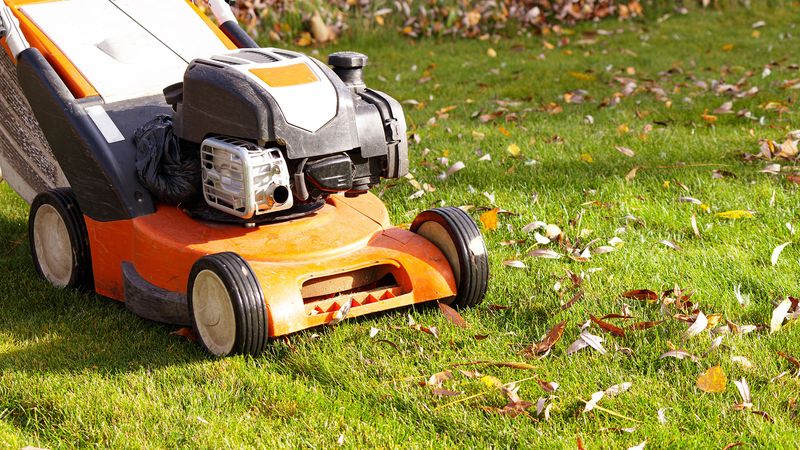
Wet leaves are the enemy of this method. Damp or freshly rained-on leaves clump together, clog the mower deck, and land in uneven piles that can shade and stress turf.
UF/IFAS mowing guidance for Florida lawns specifically recommends mowing only when the turf is dry, and that advice applies equally to the leaf layer on top of it. If the grass feels damp underfoot or leaves are sticking together, wait for a dry afternoon.
A sharp blade makes a real difference. A dull blade tears rather than cuts, leaving ragged leaf pieces that are slower to decompose and more likely to mat.
Keep the mower at the grass’s normal recommended height for its species and resist the urge to drop the deck lower to chew up more material. UF/IFAS warns that removing more than one-third of the grass blade at a time stresses turf and raises disease risk, so do not sacrifice the lawn’s health for a shorter leaf particle.
Michigan State Extension recommends going over the leaves several times so they do not mat together, and Minnesota Extension similarly advises a second pass in a different direction for finer results. A dedicated mulching mower recirculates clippings for smaller particles, but a conventional mower with a sharp blade and multiple passes can work well too.
After mowing, check for clumps and either redistribute them by hand or rake them off the lawn rather than leaving them to shade the grass below.
One conditional note on disease: if part of your lawn is actively showing signs of a fungal problem, mow that section last and rinse the mower deck before moving to healthy areas. Mowing wet turf can carry pathogens from blade to blade, so dry conditions help on that front as well.
UF/IFAS turfgrass disease management guidance notes that mulching mowers do not inherently increase disease, but recommends these precautions when active disease is present.
Separate realistic benefits from lawn-care hype
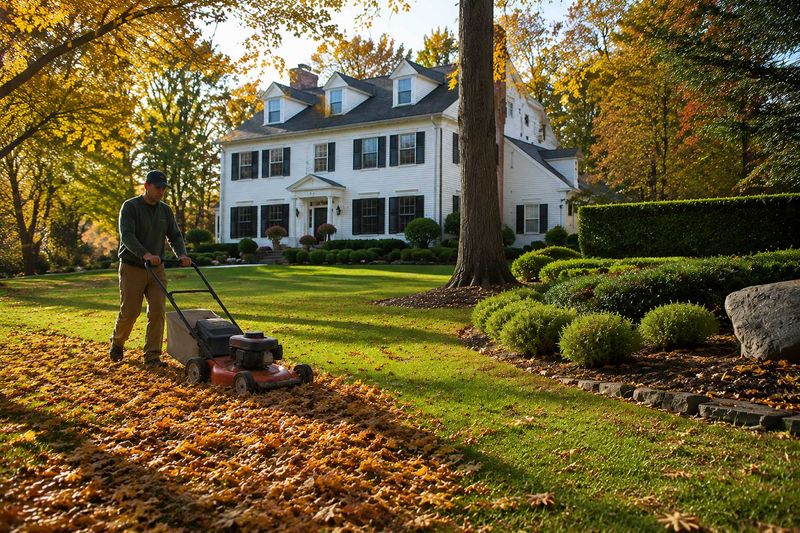
Mowing a light leaf layer into an established lawn does deliver real, measurable payoffs. Organic matter re-enters the soil as particles break down, improving soil structure over time.
A four-year study published in the Journal of Composting and Soil Utilization reported soil and turf benefits from mulching leaves in place, with no increase in pest habitat under normal conditions. For a homeowner who would otherwise haul a light leaf layer to the curb, mowing it in saves time and keeps some of that material working in the yard.
Where the claims get overstated is fertilizer equivalence. Minnesota Extension notes clearly that mulched leaves return less nitrogen than grass clippings, so leaf particles are not a substitute for a regular fertilization program.
Leaf mulch may also help cover bare soil patches and reduce some weed establishment, but it is not a weed-control program on its own.
Outcomes also depend on factors that vary from yard to yard: particle size, depth of the leaf layer, moisture levels, turf species, local climate, and whether material is regularly dispersed rather than allowed to accumulate. A Florida St. Augustinegrass lawn and a Texas bermudagrass lawn will respond differently to the same leaf layer, and neither follows the same rules as a cool-season lawn in the Midwest.
Texas A&M AgriLife Extension frames mowing as most effective for light coverage, which keeps expectations appropriately grounded.
Move ordinary excess leaves off the lawn
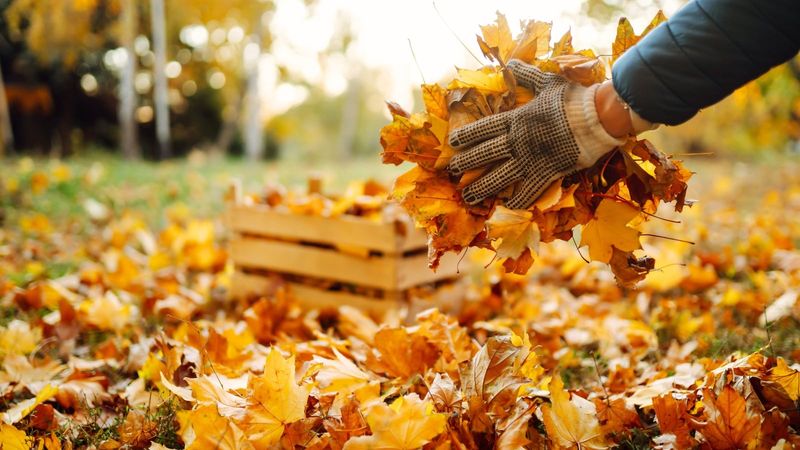
When the lawn cannot safely absorb more leaf material, the right move is to collect what remains and put it to work somewhere else. Minnesota Extension recommends stopping mulching and removing excess once less than about half the lawn surface remains visible.
Other clear stopping signals include persistent clumps after multiple mowing passes, wet material that will not shred cleanly, and a layer that begins matting against the turf surface.
Ordinary excess leaves in good condition have plenty of useful destinations. Texas A&M AgriLife Extension recommends applying roughly 3 to 6 inches of shredded leaves around trees and shrubs and 2 to 3 inches in annual and perennial beds.
Keep the mulch pulled back a few inches from trunks and plant stems to allow air circulation and prevent rot at the crown. Shredded material breaks down faster than whole leaves and settles into a tidier layer around plantings.
Diseased or insect-infested leaves are a separate category and should not be treated the same way as ordinary excess. Spreading that material through garden beds or adding it to a home compost pile can carry problems into new areas of the yard.
Penn State Extension’s home composting guide advises excluding diseased or pest-infested plant material from home compost. For those leaves, check with your local cooperative extension office or municipal waste program for appropriate handling or disposal guidance in your area.
Adjust the method for grass and weather
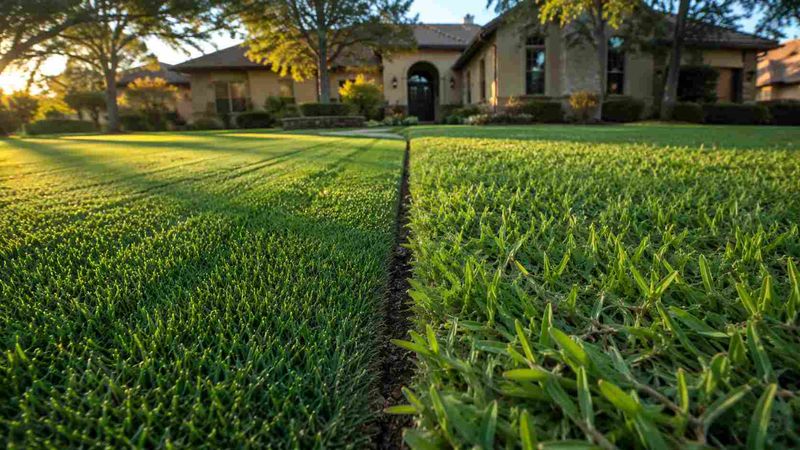
Warm-season grasses common across Florida and Texas, including St. Augustinegrass, bermudagrass, centipedegrass, and bahiagrass, each have their own ideal mowing heights, growth rates, and seasonal patterns. Mowing frequency and timing depend on how actively the grass is growing, which shifts as temperatures drop in fall.
UF/IFAS guidance on mowing Florida lawns notes that mowing frequency should follow turf growth rate and weather rather than a fixed schedule, which means a lawn in active fall growth may tolerate regular leaf-mowing sessions, while one slowing toward dormancy needs fewer passes and more careful attention to height.
Cutting below the species’ recommended height to chew up more leaf material is a mistake that can stress the turf and raise susceptibility to disease, especially as growth slows. Maintain the normal mowing height for the grass type and let the blade sharpness and multiple passes do the work instead.
UF/IFAS turfgrass disease management guidance connects scalping and low mowing with increased disease pressure, a risk worth avoiding heading into cooler months.
A practice that works well for a North Florida lawn in October may not transfer unchanged to South Florida, where the growing season extends much longer, or to a lawn farther north using a cool-season grass mix. Regional climate, turf species, and the lawn’s current growth stage all shape how the method performs.
When in doubt, contact your local extension office for species-specific guidance that fits your zip code.
Balance turf care with wildlife habitat
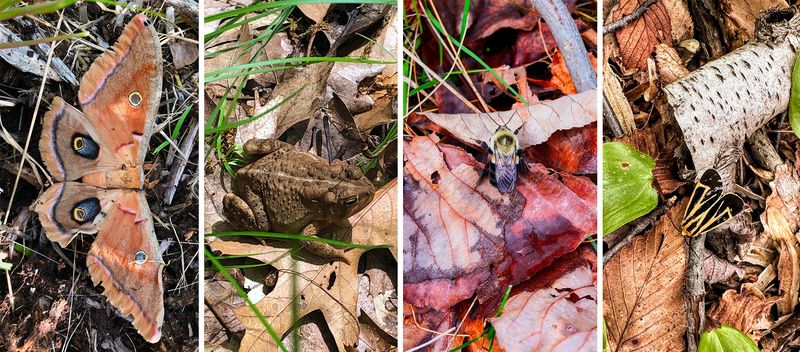
Mowing leaves into the lawn and leaving whole leaf litter undisturbed are two different choices with different outcomes for the wildlife that shares your yard. When a mower passes over fallen leaves, it breaks up or destroys some of the hiding places, egg cases, and overwintering cocoons that insects and other small animals use through winter.
That trade-off is worth knowing before deciding to mow every leaf in sight.
Georgia Extension’s Leave the Leaves guidance recommends leaving some areas undisturbed if wildlife habitat is a priority. Illinois Extension similarly suggests leaving part of the lawn unmowed or raking rather than shredding in areas where overwintering insects are a concern.
Neither source argues against lawn maintenance; both simply point out that whole leaf litter in low-traffic areas serves a different purpose than a tidy turf surface.
A practical middle path works well for most Southern homeowners: mow leaf particles into lawn areas where you walk, play, or simply want the grass to stay healthy, and designate a quieter corner under trees, along a back fence, or at a woodland edge where whole leaves can stay put through winter. That arrangement keeps the main lawn functional while giving beneficial insects, native bees, and other small creatures a place to ride out the cold months undisturbed.
Use a mow-and-monitor decision rule
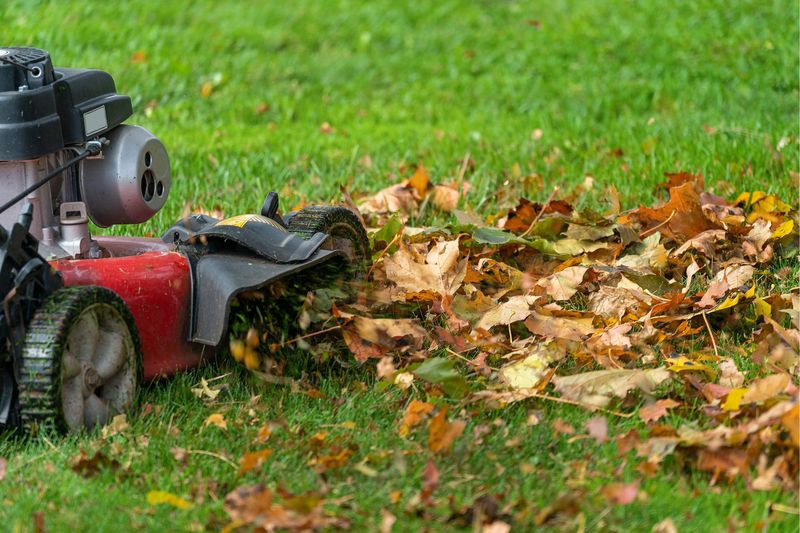
Putting it all together comes down to a short checklist before each fall mowing session. When leaves and turf are both dry, coverage is light enough that grass is clearly visible, and no diseased material is present, mow the leaves in place, make at least two passes in different directions, and check afterward for clumps.
Minnesota Extension and Texas A&M AgriLife Extension both frame the method this way: mow while conditions favor it, then collect when they do not.
When less than about half the lawn is still showing, stop mulching and move ordinary excess leaves to beds or habitat areas. Diseased or infested material is a different matter and should follow appropriate handling guidance rather than casual relocation.
The best alternative to bagging is controlled mulching with a clear stopping point, not unlimited leaf accumulation. A lawn that can see the sky through its leaf layer is a lawn that can keep growing.