
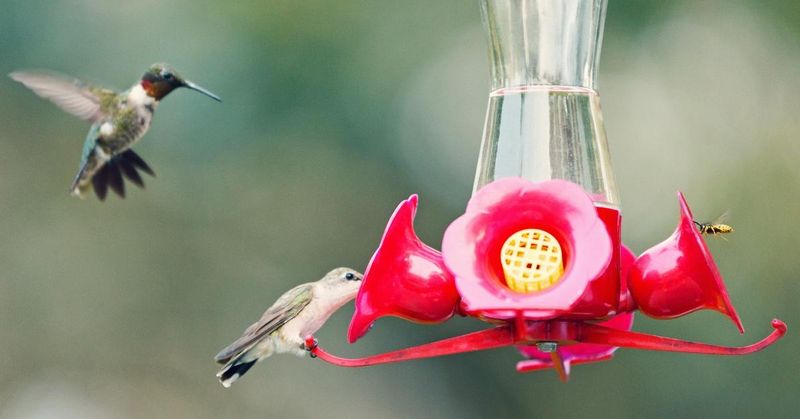
Hanging a hummingbird feeder and watching it go untouched day after day is genuinely frustrating, especially when you know the birds are out there somewhere. The good news is that placement does matter, and a few simple adjustments can make a real difference.
But location is only one piece of the puzzle, and this guide will walk you through the full picture so you can test each factor and give your feeder a real chance.
Treat an Empty Feeder as a Placement Question, Not a Diagnosis
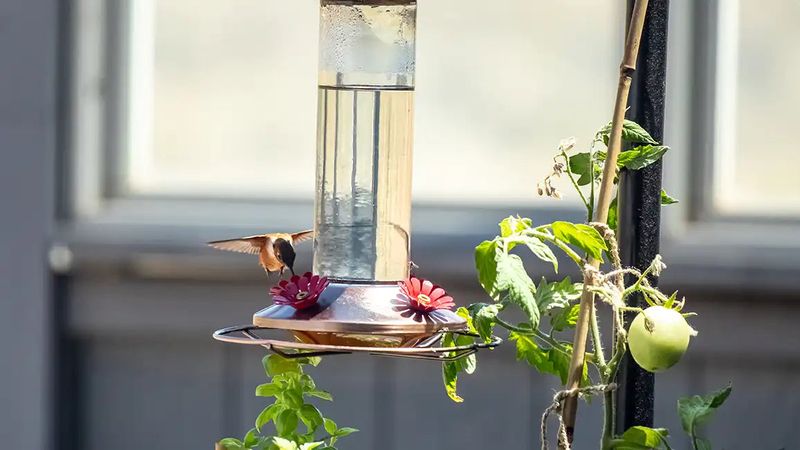
A feeder that sits untouched day after day is easy to blame on where it hangs, and placement really can play a role. But calling location the definite cause skips over several other equally plausible explanations.
Nectar freshness, local hummingbird populations, seasonal timing, nearby habitat, and even how long the feeder has been out can all affect whether birds show up.
What the evidence does support is a practical combination of conditions worth testing: a mostly shaded, sheltered spot with a clear and open approach, close to flowers hummingbirds already visit, and near safe cover like trees or shrubs that offer perches without hiding predators. Cornell Lab of Ornithology recommends shaded, wind-protected placement and advises patience along with better bird-friendly landscaping when birds are slow to appear.
That framing matters: no single spot is guaranteed to work everywhere, and the right move is to treat relocation as a test, not a fix.
This article will help Southern gardeners work through that test systematically. Along the way, it covers nectar preparation, cleaning schedules, window safety, territorial behavior, predator risks, and the time hummingbirds may simply need to find something new.
Moving the feeder is a good first step, and so is checking everything else at the same time.
Use Afternoon Shade to Slow Nectar Spoilage
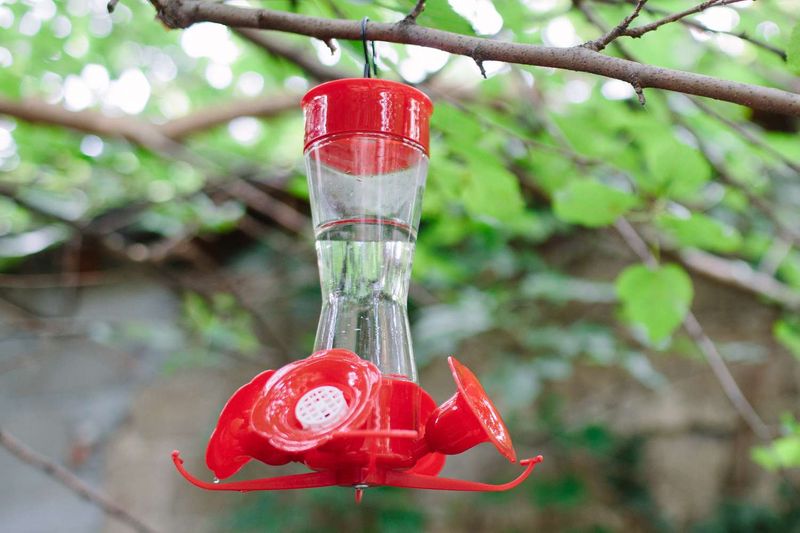
Southern summers are hard on nectar. When a feeder hangs in full sun, the combination of direct heat and UV exposure can make sugar water spoil far faster than most gardeners expect.
Bacteria and yeast thrive in warm, sugary liquid, and cloudy or fermented nectar can harm the birds you are trying to attract.
UF/IFAS guidance on hummingbirds in Florida specifically advises avoiding direct sun and notes that Florida’s heat can make contaminated nectar genuinely dangerous to hummingbirds. That warning applies equally across the Gulf Coast, Texas, and any other region where afternoon temperatures regularly climb past 90 degrees.
Shade is not a minor preference in these climates; it is a practical way to keep nectar safe longer.
Good shaded positions include the underside of a roof eave, the north or east-facing side of a house where afternoon sun rarely hits, or beneath a light tree canopy that filters rather than blocks light entirely. Cornell also recommends protection from strong wind, which can cause a hanging feeder to swing and spill.
The key distinction is that shade should protect the nectar without hiding the feeder. Hummingbirds still need a clear sightline to spot it and a comfortable approach path to use it regularly.
Keep the Approach Open and the Cover Nearby
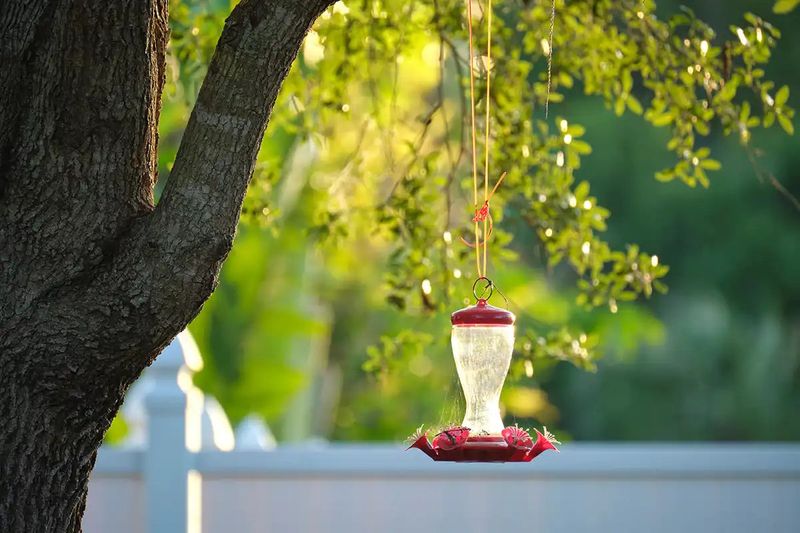
Hummingbirds are alert, fast-moving birds that constantly watch for rivals and predators while they feed. A feeder tucked deep into a shrub or pressed against a dense hedge may feel sheltered, but from a bird’s perspective it removes the wide-angle visibility they rely on to feel safe.
An open approach is not just convenient; it is part of what makes a location worth returning to.
Texas Parks and Wildlife describes an ideal hummingbird garden as an open flight area surrounded by trees and brush roughly 5 to 15 feet away, providing shelter without eliminating visibility. That distance is a useful starting guideline rather than a strict rule, but the principle behind it is well supported: birds want escape routes and resting spots nearby, not foliage pressing against the feeder itself.
Dense vegetation immediately beside a feeder also creates a different problem. Cats, in particular, can crouch in low shrubs or thick ground cover and ambush birds at close range.
Cornell advises placing feeders near shelter while specifically flagging that branches and thick cover can become predator hiding spots. A practical setup gives hummingbirds open air around the feeder, a clear view in multiple directions, and nearby trees or taller shrubs they can retreat to quickly.
Protection from strong wind and driving rain matters too; a feeder that swings wildly or fills with rainwater becomes unreliable and less appealing.
Use Flowers and Habitat to Improve Discovery
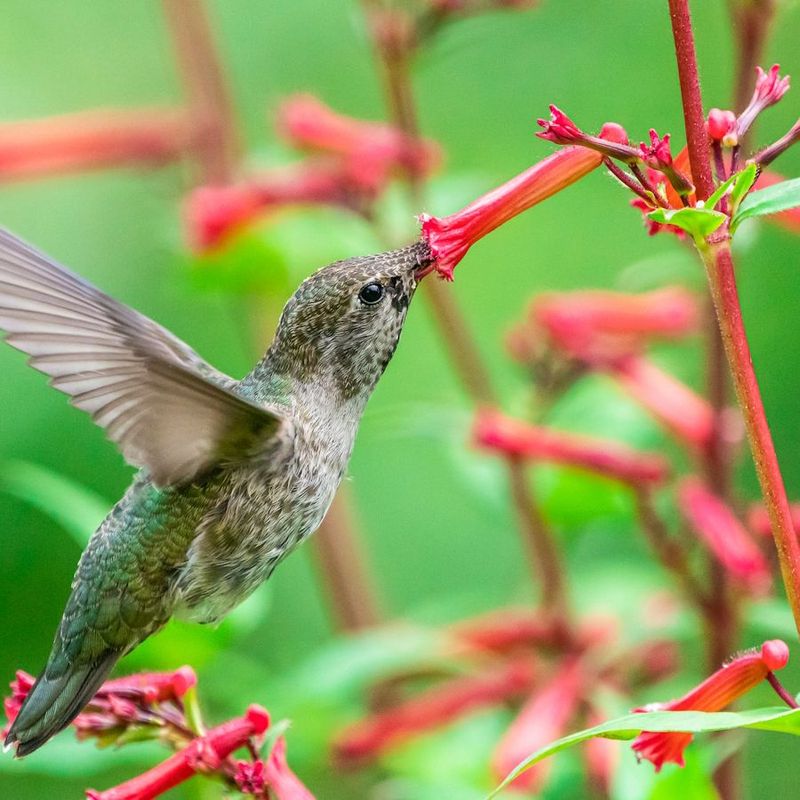
One of the most reliable ways to help hummingbirds find a new feeder is to place it near flowers they are already visiting. Birds that are actively working a garden bed will notice a feeder close by far sooner than one hanging in isolation across the yard.
Audubon’s hummingbird feeding guidance recommends positioning feeders near red or orange tubular flowers, which are the shapes and colors hummingbirds have learned to associate with nectar.
For Southern gardeners, several native and regionally adapted plants fill that role well. Firebush and scarlet sage work reliably across much of Florida.
Coral honeysuckle attracts ruby-throated hummingbirds along the Gulf Coast. Cardinal flower thrives in wetter spots throughout the Southeast, and Texas sage suits the drier conditions of central and west Texas.
These are starting suggestions based on regional fit, not a universal prescription; UF/IFAS emphasizes that native nectar plants are a better long-term food source than sugar water alone and should anchor any hummingbird-friendly yard.
Sugar water is supplemental, not a complete diet. Hummingbirds also depend on insects and spiders for protein, natural nectar from flowers, access to water, and safe perches for resting and preening.
Audubon’s yard habitat guide recommends keeping cats indoors and avoiding pesticide use around feeding areas, both because cats directly threaten birds and because pesticides reduce the insect populations hummingbirds need. A feeder placed in a yard that also offers flowers, clean water, and insect-friendly plants will always outperform one hanging in a bare or chemically treated space.
Solve Window and Territorial-Bird Problems Separately
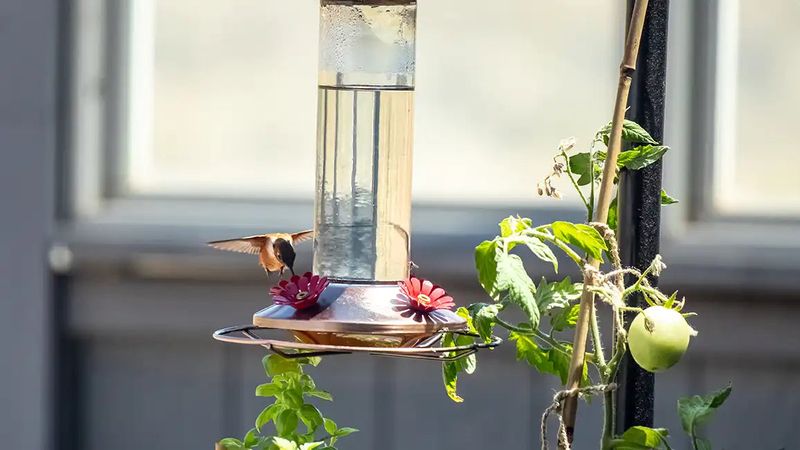
Even a well-placed feeder can cause problems if it sits at the wrong distance from a window or attracts a bird determined to chase every competitor away. These two issues look different in the yard but share a common trait: they require targeted adjustments rather than simply moving the feeder to a sunnier or shadier spot.
Window collisions are a real hazard, and the placement rule is more specific than most gardeners realize. Cornell Lab of Ornithology supports placing feeders either within about 3 feet of a window or more than 10 feet away.
At close range, a startled bird cannot build up enough speed to injure itself on the glass. At greater distances, it has time to recognize the window as a solid barrier.
The dangerous middle ground, roughly 4 to 10 feet from the glass, gives birds just enough room to accelerate into a potentially fatal collision. Check your current feeder position against that range before assuming the location is otherwise fine.
Territorial behavior is a separate complication. Male hummingbirds in particular will often guard a single feeder and actively drive other birds away.
Adding a second feeder is a more effective response than making the original one more eye-catching. UF/IFAS recommends spacing multiple feeders at least 10 feet apart, while Audubon advises placing them far enough apart that birds cannot easily see one another, which reduces the incentive to guard both at once.
Around a corner of the house or on opposite ends of a porch works well in practice.
Fresh Nectar and Clean Equipment Still Matter
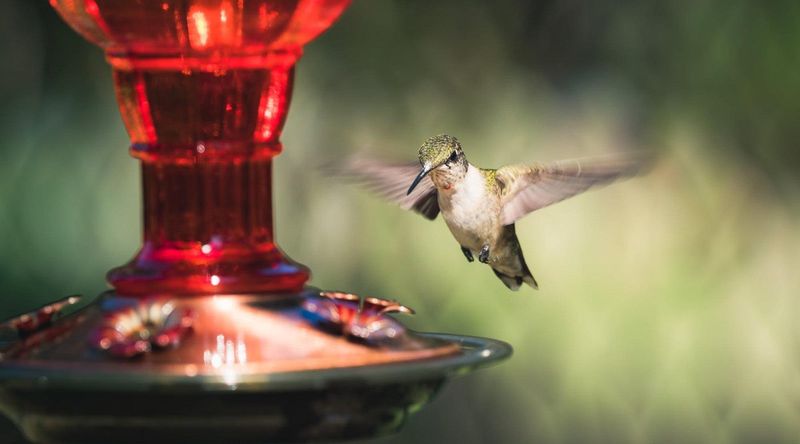
Relocating a feeder will not help much if the nectar inside it has already gone bad. In Southern heat, sugar water can ferment or grow bacteria within a day or two, especially during a heat wave.
Checking the nectar regularly and replacing it before it turns cloudy or smells off is one of the most direct things a gardener can do to make a feeder worth visiting.
The recipe itself is straightforward and should not be varied. Mix one part refined white sugar with four parts water, dissolve completely, and let it cool before filling the feeder.
UF/IFAS, Audubon, and Texas wildlife guidance all support this ratio and warn against substitutions. Honey can promote dangerous fungal growth.
Brown sugar and molasses contain compounds that may harm hummingbirds. Artificial sweeteners provide no energy.
Extra-concentrated mixtures are harder for birds to process. Red food dye is unnecessary because the feeder’s own colored parts already attract attention; adding dye to the nectar introduces a substance with no confirmed benefit and some unresolved questions about safety.
Cleaning frequency should increase with the temperature. Audubon recommends cleaning every two to three days and daily during the hottest stretches.
Empty out all remaining nectar first, scrub every surface with a bottle brush, and rinse the feeder completely before refilling. Audubon suggests white vinegar as an effective cleaning agent that rinses away cleanly; UF/IFAS also recommends hot water and white vinegar while advising against soap or chlorine bleach for hummingbird feeders specifically.
The consistent rule across sources is to discard old nectar, scrub thoroughly, and rinse completely every time.
Test the New Setup Before You Give Up
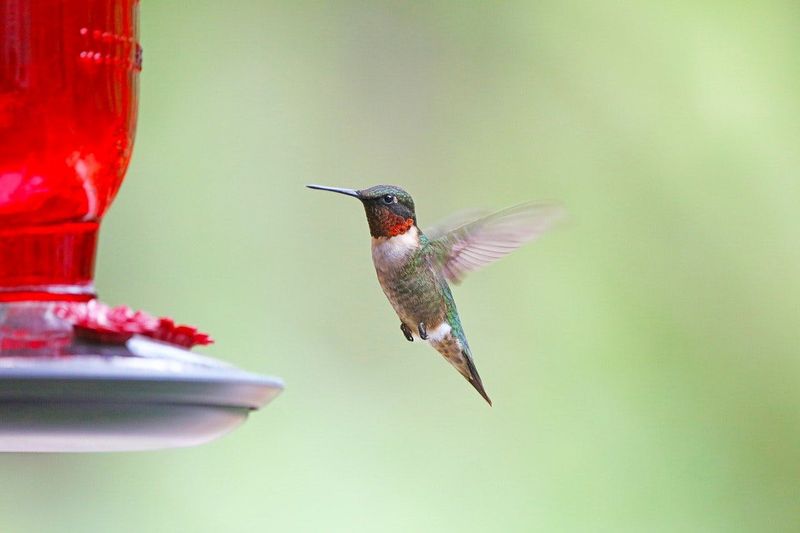
After moving the feeder, the most common mistake is expecting results within a day or two. Hummingbirds are creatures of habit and territory, and a feeder that appeared in a new spot yesterday may take considerably longer to register as a reliable food source.
Florida Museum guidance notes that birds can take up to a few weeks to locate and accept a feeder, particularly in areas where hummingbirds are not already abundant or where other food sources compete for their attention.
Run through the full checklist before concluding the new spot is not working. Confirm the feeder sits in mostly shaded or afternoon-shaded space with a clear, open approach.
Verify the window distance falls within about 3 feet or beyond 10 feet. Check that nearby cover is far enough away to give birds visibility without offering predators a hiding place.
Refresh the nectar, scrub the feeder, and watch for any territorial bird that may be guarding the spot. Cornell recommends combining better placement with bird-friendly landscaping rather than expecting the feeder alone to do all the work.
Local conditions also shape what is possible. Texas supports multiple hummingbird species and can see activity well outside the typical spring-through-fall migration window, and parts of Florida and the Gulf Coast regularly host overwintering birds.
Season, regional species, and the overall health of your yard’s habitat all factor in. Relocation is a smart and worthwhile test; the birds’ answer just sometimes takes a little longer to arrive than we would like.