
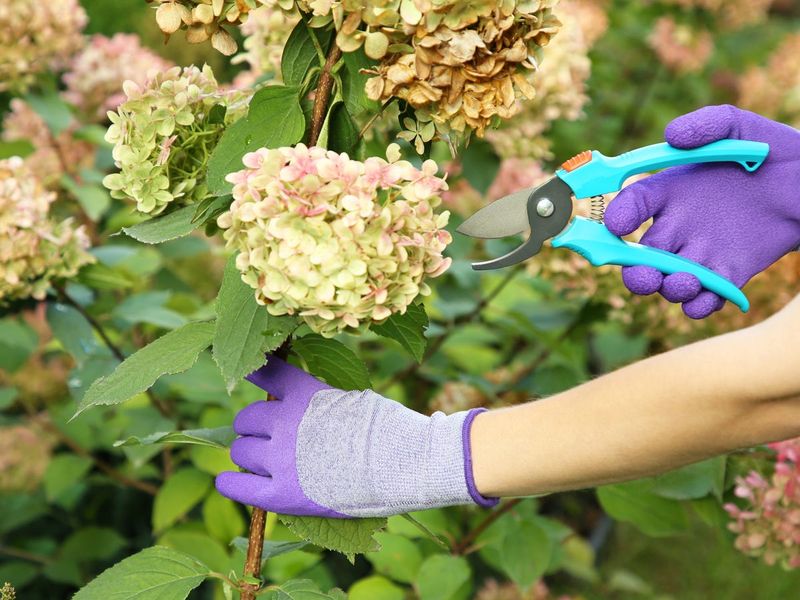
Cutting back your hydrangeas at the wrong time of year can cost you an entire season of blooms, and many Southern gardeners make this exact mistake without realizing it. The problem is not a disease, a pest, or bad soil – it is a single pruning decision made too late in the summer or into fall.
Understanding why that timing matters, and which hydrangeas are actually at risk, can save your next flowering cycle before winter arrives.
The late cut can reduce the following season’s flowers
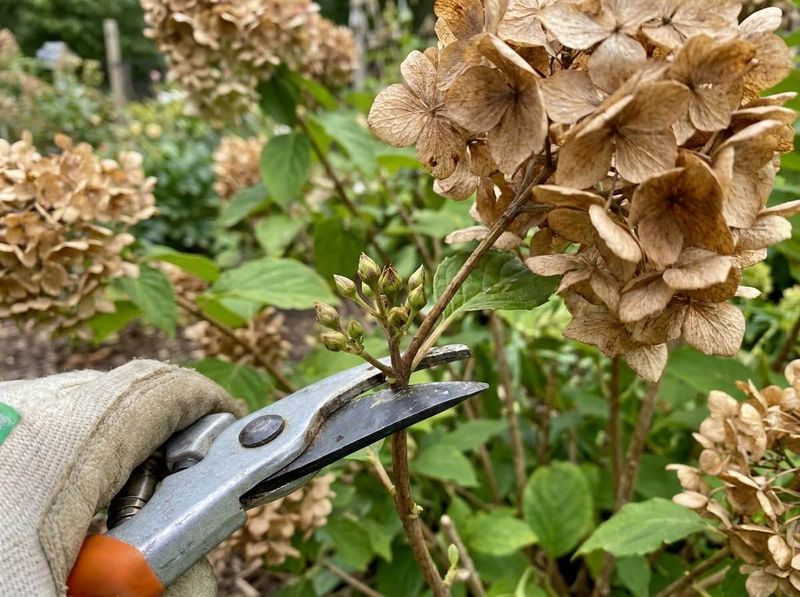
Hard-pruning an old-wood hydrangea after late summer, particularly in fall, is the specific mistake that can sharply reduce the following season’s flowers. The real consequence is not that the entire shrub becomes physiologically weak heading into winter – it is that the stems and developing buds needed for next year’s bloom cycle get removed before they ever have a chance to open.
University of Maryland Extension guidance on pruning hydrangeas confirms that old-wood types set their flower buds on existing stems during late summer and fall, so a deep cut after that window can eliminate those buds entirely.
That said, the damage is more accurately described as a flowering loss than a death sentence for the plant. Nebraska Extension explicitly frames a badly timed cut as a bloom reduction rather than permanent harm – a healthy shrub can survive the cut and recover over time, even if next season looks disappointing.
The urgency here is real, but the response needs to be matched to the plant. Not every hydrangea in your yard faces this risk equally, and the right next step depends on identifying what type you are growing before reaching for the pruners again.
Why a late cut removes developing flower buds
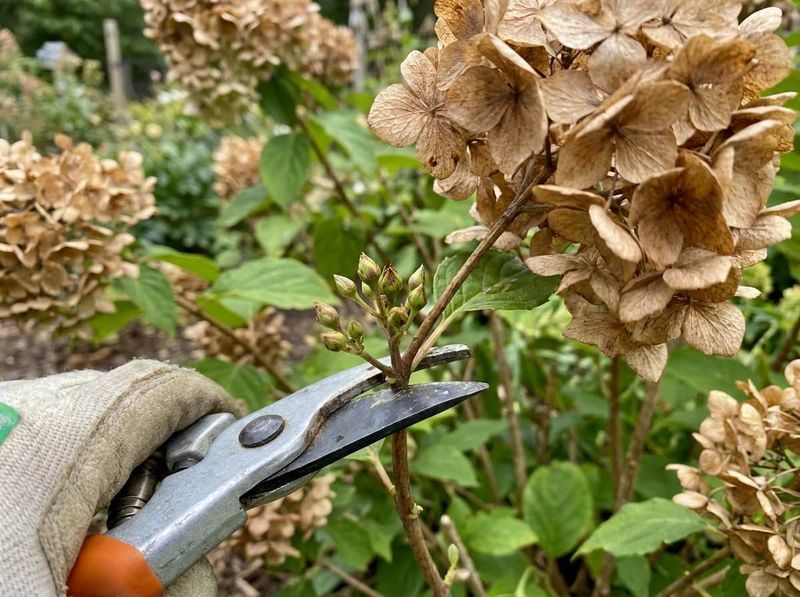
Bigleaf hydrangeas (Hydrangea macrophylla), mountain hydrangeas (H. serrata), and oakleaf hydrangeas (H. quercifolia) share a growth pattern that makes late-season pruning particularly costly. These plants begin forming the buds for the following season’s flowers on their existing stems during late summer and into fall – before those stems have even gone dormant for winter.
When you cut those stems back deeply, you are not just trimming old wood; you are removing the bud sites that were already setting up for next year.
University of Maryland Extension explains that for these old-wood bloomers, pruning should happen immediately after flowering, when the plant has finished its current bloom cycle but has not yet begun forming new buds. Clemson Cooperative Extension advises avoiding pruning of bigleaf hydrangeas after August 1 as a practical regional benchmark, though the exact window depends on when your plant finished blooming and your local conditions.
Cutting in fall does not automatically eliminate every single bud on the plant – lower buds may survive depending on how deeply you cut, and some cultivars are more forgiving than others. The supported consequence is a meaningful reduction in the following bloom cycle, not guaranteed total flower loss.
Understanding this distinction helps you respond calmly rather than assuming the worst when you assess the plant in spring.
Which hydrangeas face this pruning risk?
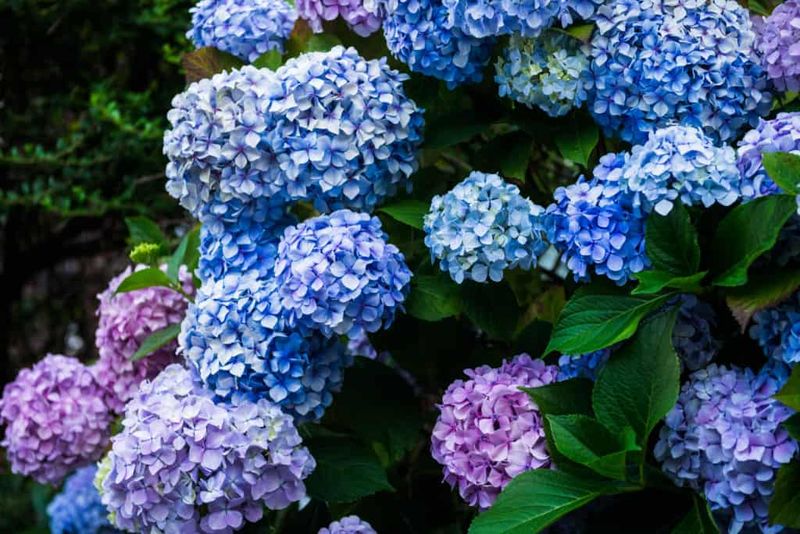
Old-wood hydrangeas are the plants at risk from a late cut. Bigleaf hydrangeas – the classic mophead and lacecap types – are the most common in Southern yards and the most frequently damaged by fall pruning.
Mountain hydrangeas, oakleaf hydrangeas, and climbing hydrangeas (H. anomala subsp. petiolaris) also flower on buds set the previous season, so they follow the same cautious timing rules.
University of Maryland Extension groups these four types together as old-wood bloomers that should be pruned immediately after flowering rather than in fall or winter. Smooth hydrangeas, such as the popular ‘Annabelle,’ and panicle hydrangeas, such as ‘Limelight’ and ‘Quickfire,’ work differently.
Iowa State University Extension confirms that smooth and panicle types flower on current-season growth, meaning they can generally be pruned in late winter or early spring before new growth begins – a fall or dormancy-season cut does not carry the same flowering risk.
Reblooming bigleaf cultivars, including many plants sold under names like ‘Endless Summer’ or ‘Blushing Bride,’ add a layer of complexity. These cultivars can produce flowers on both old and new wood, which means a late cut may not eliminate every bloom, but it can still remove the early-season old-wood buds.
Check your plant’s tag or look up the cultivar name before assuming it is exempt from careful timing. When in doubt, treat an unidentified bigleaf-looking hydrangea as an old-wood plant until you can confirm otherwise.
What should you stop cutting now?
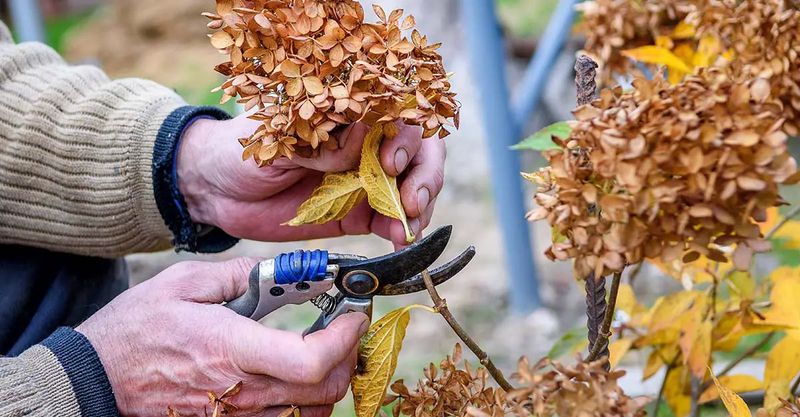
For gardeners with old-wood hydrangeas – bigleaf, mountain, oakleaf, or climbing types – the answer right now is straightforward: stop cutting healthy stems. Once the post-bloom pruning window has passed, any deep cut into living canes risks removing buds that are already developing for the following bloom cycle.
Clemson Cooperative Extension uses early August as a practical regional cutoff for bigleaf hydrangeas in the South, though the actual window depends on when your specific plant finished blooming and your local growing conditions.
Removing a spent flower head – just the dried bloom cluster at the tip of the stem – is a much lighter action than cutting several inches or feet back into the cane. University of Maryland Extension notes that deadheading is generally optional for plant health and is far less disruptive than hard pruning.
If you want to tidy up the appearance, snipping only the spent bloom cluster right below the flower head is a much safer choice than a deep stem cut this time of year.
Clearly dead, broken, or diseased wood is a different matter and can be removed at any time of year without the same flowering risk. The goal for now is to leave every healthy green or woody stem intact on old-wood plants, so any buds already forming along those canes have the best chance of surviving into next season.
If you already pruned, avoid another major cut
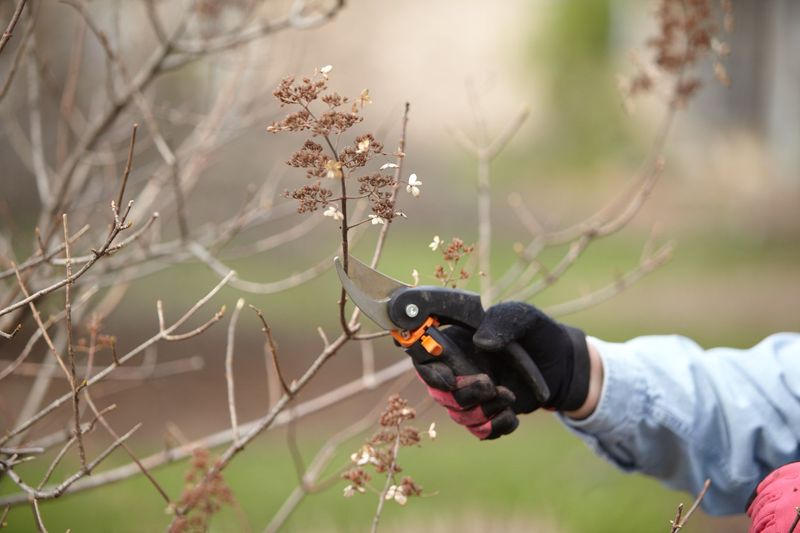
Finding out you already made a late cut on an old-wood hydrangea can feel discouraging, but the response does not need to be dramatic. The most important thing to do right now is stop cutting.
Making additional cuts to clean up the appearance or even out the shape removes more of the bud-bearing stems that remain, compounding the problem rather than fixing it.
For old-wood or unidentified hydrangeas, University of New Hampshire Extension guidance on protecting hydrangeas over winter supports leaving healthy stems in place and waiting until after the next flowering period before making routine pruning cuts. Nebraska Extension reinforces that a poorly timed cut is a flowering loss, not permanent damage – the plant is not necessarily in crisis, even if next season’s bloom is reduced.
Bare or brown-looking stems after winter do not automatically mean those canes are dead. Assess winter injury after spring leaf-out, when you can scratch the bark lightly to check for green tissue underneath.
Remove only what is clearly dead at that point, and observe where new growth and flower buds emerge before deciding on any further pruning.
If you have identified your plant as a smooth or panicle hydrangea, the situation is less urgent. Iowa State University Extension confirms these new-wood types follow a late-winter or early-spring pruning schedule, so a fall cut does not carry the same bud-removal risk for those plants.
Reblooming cultivars still need careful timing
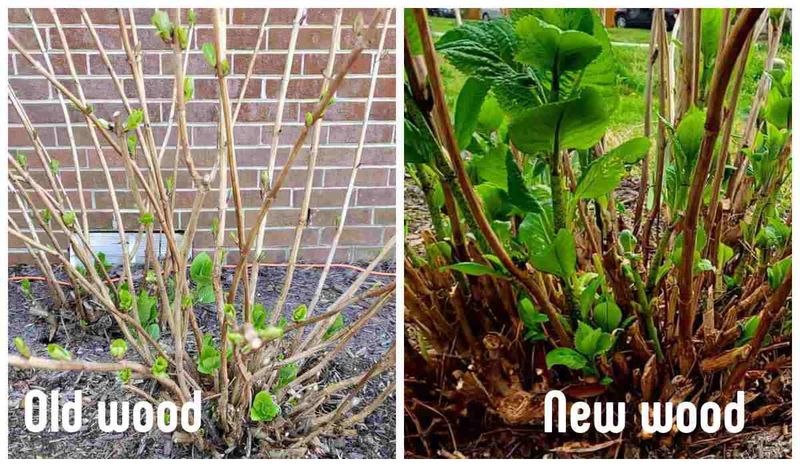
Reblooming bigleaf cultivars – plants marketed as ‘Endless Summer,’ ‘Blushing Bride,’ ‘Twist-n-Shout,’ and similar series – carry a reputation for being more forgiving, and in some ways they are. These cultivars can produce flowers on both existing stems and current-season new growth, which means a late cut does not automatically eliminate every bloom you will see the following season.
That flexibility is real, but it is not a free pass to prune at any time. University of Maryland Extension notes that reblooming bigleaf types are not exempt from careful pruning – cutting them late in the season can still remove the old-wood buds responsible for the first and often most robust flush of flowers.
What you may get instead is a later, lighter bloom on new wood, rather than the full flowering cycle the plant is capable of producing.
University of New Hampshire Extension cautions that even Endless Summer types benefit from leaving stems intact over winter to protect as many buds as possible, particularly in areas where cold snaps can damage exposed canes. The reblooming trait improves the odds of some flowers appearing after a late cut, but it does not replace correct timing.
Treating a reblooming cultivar with the same post-bloom pruning discipline as a standard bigleaf hydrangea is the safest approach for consistently strong flowering.
Support fall growth without forcing new growth
Pruning is not the only factor that shapes how a hydrangea performs the following season. Drought stress, heat, poor siting, overfertilization, and winter injury can all reduce flowering independently of when or whether you pruned.
Addressing those other stressors during fall gives the plant the best possible foundation, even if the pruning window has already passed.
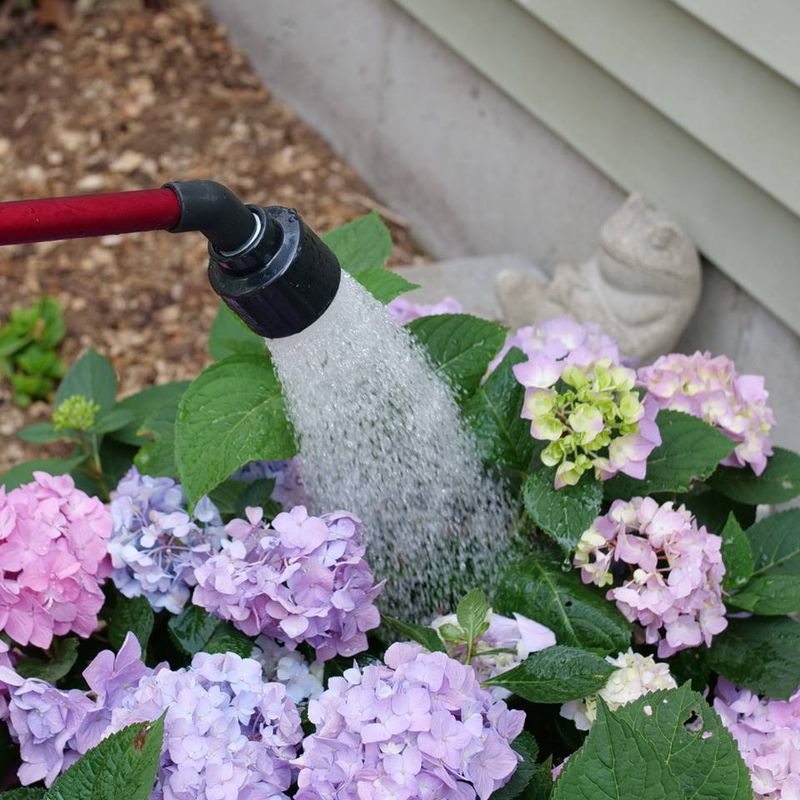
Keeping the soil consistently moist during dry fall weather matters more than most gardeners realize. University of Connecticut Extension recommends continuing to water hydrangeas until the ground freezes in colder climates, and Arkansas Extension notes that hydrangeas are not drought tolerant.
In Florida, the situation is a bit different – heat-related wilting can occur even when the root zone has adequate moisture, so check the soil before irrigating rather than watering on a fixed schedule. Saturated soil stresses roots just as drought does, so the goal is consistent moisture, not constant wetness.
Fertilizer is another area where restraint pays off in fall. Routine late-season nitrogen applications can push leafy growth at the expense of flower production, and feeding a stressed plant without knowing the soil conditions can cause more harm than good.
UF/IFAS Extension advises that bigleaf hydrangeas in Florida perform best with shade, moist soil, and relatively cool winters – conditions that not every Florida site can provide. UF/IFAS fertilization guidance recommends fertilizing landscape plants only when justified and following product labels closely, particularly avoiding applications to stressed or recently transplanted plants.
Skip the fall fertilizer push and focus on stable moisture and site suitability instead.
Identify the flowering wood before you reach for pruners
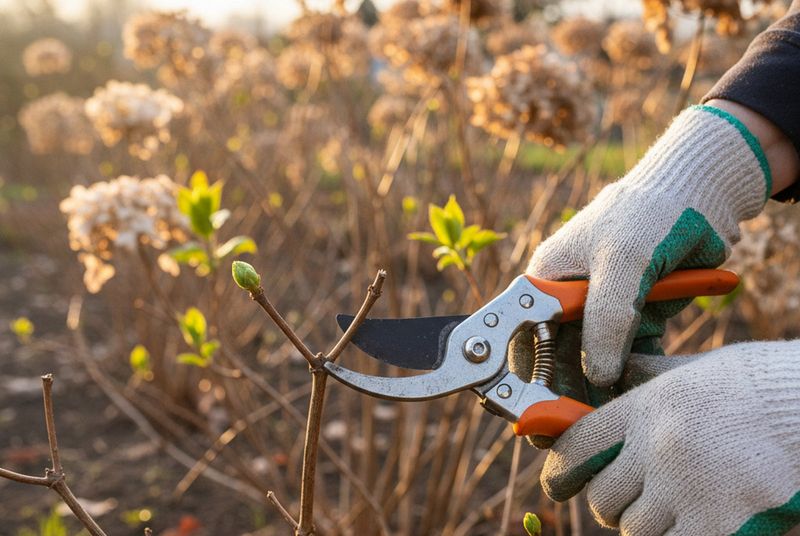
The single most useful habit any hydrangea grower can build is identifying the plant before picking up the pruners. Old-wood bloomers – bigleaf, mountain, oakleaf, and climbing hydrangeas – get their routine pruning immediately after flowering, while the window is still open.
New-wood bloomers, meaning smooth and panicle hydrangeas, can wait for dormancy or late winter without any flowering penalty.
When the plant type is uncertain, the safest move is to leave healthy stems intact through the season and watch where flowers emerge the following year. University of Maryland Extension and Iowa State University Extension both emphasize that correct pruning advice depends entirely on species and cultivar – a blanket rule applied to all hydrangeas will eventually cost you a bloom cycle on the wrong plant.
Stopping the late hard cut on old-wood hydrangeas protects the following bloom cycle, which is the real payoff this article has been building toward. Winter cold, drought, deer pressure, and site conditions can still affect flowering on their own terms – but at least the buds will be there to give the plant its best chance.