
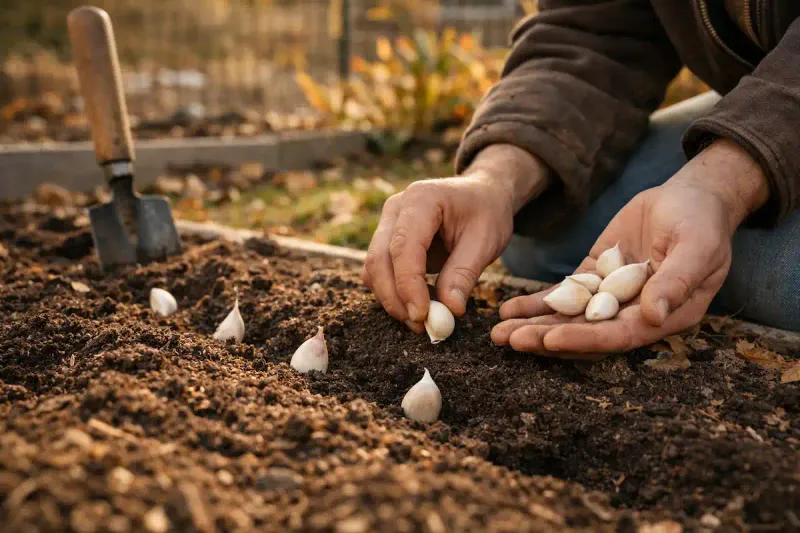
Planting garlic in the fall sets the stage for everything you pull out of the ground next summer, and one common prep error quietly works against you from the very first step. Many North Carolina gardeners reach into a bag of bulbs and plant whatever cloves are handy, including the smallest ones at the center, without realizing that clove size at planting is a real factor in how large the mature bulb turns out.
Selecting the biggest, healthiest outer cloves is one of the most straightforward things you can do to improve your odds, though timing, soil, spacing, and moisture all play a role too. Get the selection right before you even touch a trowel, and the rest of the season starts from a stronger position.
North Carolina garlic planting dates vary by region
Garlic needs a cool period after planting to develop its root system and build enough leaf mass before spring triggers bulb formation. Skip that establishment window, or plant too late to get it, and the plant simply runs out of time to size up.
That biological need is exactly why fall planting matters so much across North Carolina, and why the timing decision has to be made before you ever select a clove.
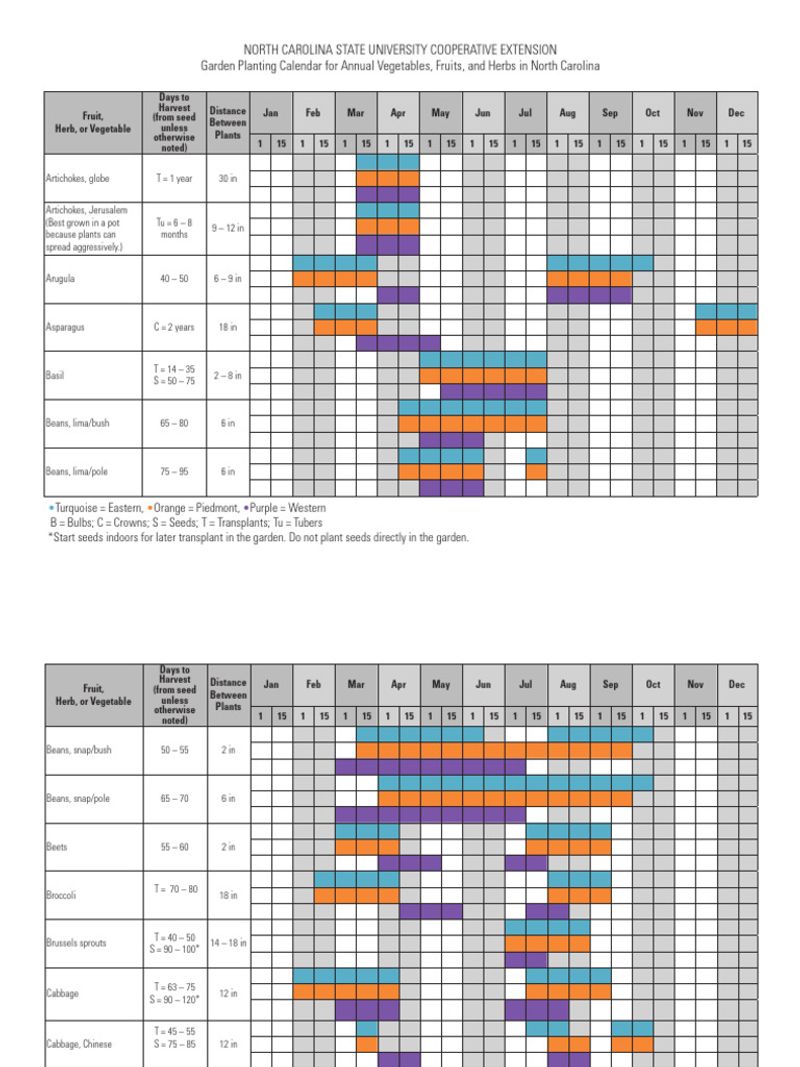
Planting windows differ considerably depending on where in the state you garden. The Southeastern Vegetable Crop Handbook lists approximately August 15 through October 15 for western North Carolina and approximately September 15 through November 10 for eastern North Carolina.
Piedmont gardeners often use October 15 as a traditional target date, a reference point confirmed by NC State Extension guidance, though that date should be treated as a useful benchmark rather than a hard statewide deadline.
Elevation, local weather patterns, cultivar choice, and soil conditions can all shift the ideal planting date earlier or later within those windows. A mountain garden at 4,000 feet and a Foothills garden at 1,200 feet are not the same situation, even if both fall inside the western window.
Pay attention to what your specific site does in October and November before committing to a single date.
The practical takeaway is that clove selection and bed preparation need to happen before your regional window opens, not after. Western NC gardeners may need to act earlier in the season than they expect, while eastern growers have a somewhat longer runway.
Whatever your location, having your seed garlic sourced and your best cloves chosen before planting day keeps you from rushing and grabbing whatever is available at the last minute.
Choose large, healthy cloves for the best start
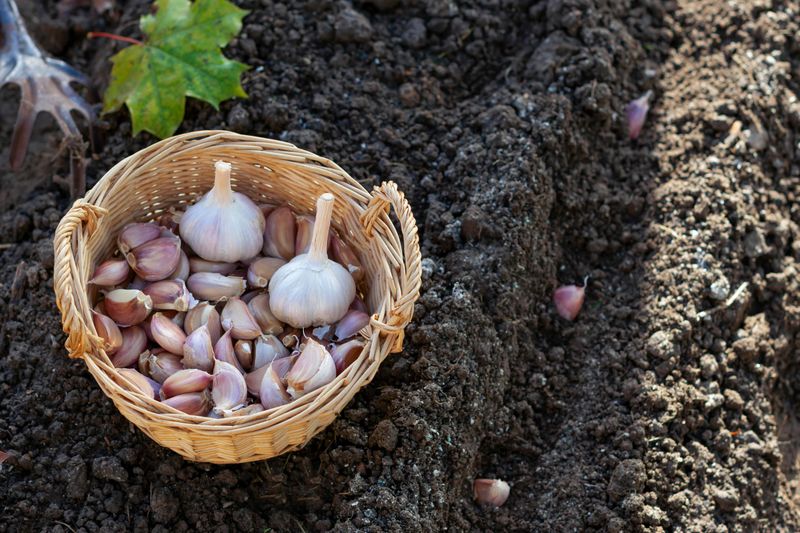
The single most preventable mistake many gardeners make when setting up a fall garlic bed is planting the smallest cloves, particularly the small inner cloves that get left over after the bigger ones are used in the kitchen. It feels practical to save the best cloves for cooking and plant the leftovers, but that habit tends to produce exactly the kind of harvest you were hoping to avoid.
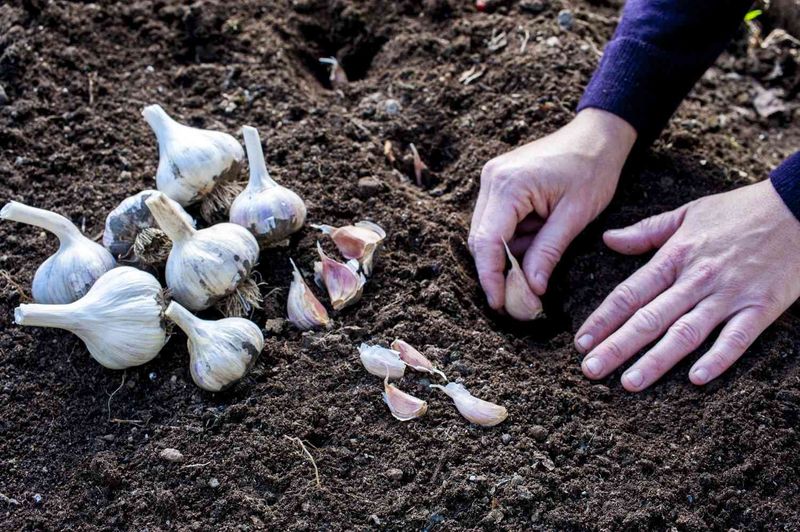
UGA Cooperative Extension recommends selecting large, firm, clean bulbs and using the largest healthy outer cloves for planting. The outer cloves on a well-formed bulb carry more stored energy than the small inner ones, and that reserve gives the developing plant a stronger start.
Choosing planting-quality or certified seed garlic from a reputable supplier is also worth the investment, since WSU Extension notes that grocery-store garlic may carry diseases and may not be adapted to your local climate.
Keep the papery skin on each clove intact right up until you are ready to plant. UGA also points out that separating a bulb too far in advance can reduce performance, so break the bulb apart shortly before it goes into the ground rather than days ahead of time.
Check each clove for soft spots, discoloration, or damage and set those aside.
Smaller cloves are not worthless. They can still grow into usable plants, and gardeners who want green garlic, garlic greens, or simply want to multiply their seed stock can plant smaller cloves with those specific goals in mind.
The key is matching your clove selection to your actual goal. If large, full bulbs are what you are after next summer, start with the largest healthy outer cloves available and plant the small ones only when you have a separate purpose for them.
Clove size improves the odds of a larger bulb
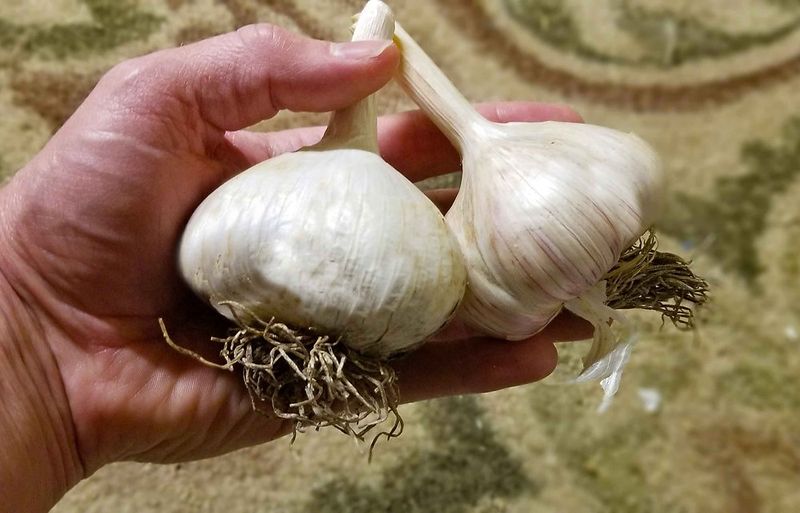
Larger planting cloves tend to produce larger mature bulbs, and the connection is backed by more than gardening folklore. UGA Cooperative Extension states directly that larger cloves produce larger bulbs, and a peer-reviewed review of garlic bulb development links greater clove weight with heavier harvested bulbs.
Research published at PubMed Central on clove size and bulb yield supports the same general finding.
That said, clove size at planting is a starting advantage, not a guarantee. Final bulb size and the number and size of cloves inside that bulb also depend on cultivar genetics, temperature during bulbing, day length, nutrition, soil moisture, plant spacing, and whether disease or pest pressure interferes during the season.
Planting a large clove gives the plant a better foundation, but the growing conditions between fall and the following summer still determine what you actually dig up.
There is also an important distinction worth keeping straight. “Tiny cloves” can describe two very different things: the small cloves you put in the ground in autumn, or the small cloves you find inside the harvested bulb next summer. A gardener who plants large cloves but runs into drought stress, weed competition, or a nitrogen shortage during spring bulb development may still end up with a disappointing harvest.
Conversely, small bulbs at harvest are not automatic proof that the wrong cloves were planted.
Think of clove selection as setting the odds in your favor from the start. A large, healthy outer clove carries more stored energy into the ground and generally gives the plant a stronger launch into fall root development.
What happens after that depends on the whole growing system, not on clove size alone.
Match depth and spacing to your site
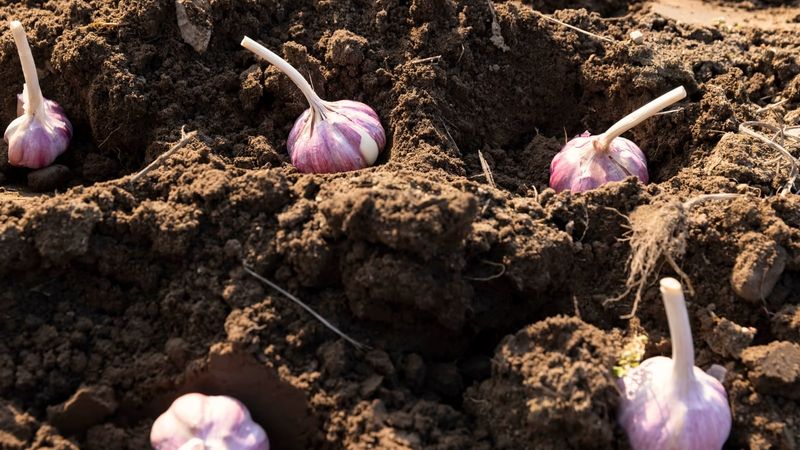
Once you have your best cloves selected, planting technique matters more than most gardeners expect. Every clove goes in flat-side down with the pointed tip facing up.
Cloves dropped carelessly into a furrow often end up sideways or inverted, which can lead to crooked-necked plants and uneven growth.
Depth is one of those decisions where a single statewide rule does not serve every North Carolina garden well. The Southeastern Vegetable Crop Handbook recommends covering the clove tops with approximately 1 to 1.5 inches of soil for Southeastern conditions.
Other extension recommendations suggest 2 to 3 inches depending on climate, soil type, and whether mulch will be applied on top. Both approaches can work when matched to the right site.
Going too deep creates its own problem. Excessive depth can physically interfere with the swelling bulb as it tries to expand in late spring, and heavy clay soils compound that issue.
On the other end, planting too shallow leaves cloves exposed to heaving from freeze-thaw cycles, heavy rain, and even birds. Southeastern production guidance notes that cloves must not be so shallow that heaving or birds dislodge them, which is a real concern in North Carolina’s variable winter weather.
Spacing deserves the same site-specific thinking. A common home-garden range is 4 to 6 inches between cloves, while intensive bed systems sometimes use a tighter 4-by-4-inch grid.
UGA’s garlic guidance addresses spacing in the context of bed layout and available equipment, and the right choice depends on your cultivar, whether you are irrigating, and whether you are prioritizing maximum bulb size or maximum total yield from a limited bed. Crowding cloves too closely competes for nutrients, moisture, and light during the long growing season and can reduce the size of individual bulbs even when every other condition is favorable.
Prepare a sunny, well-drained bed
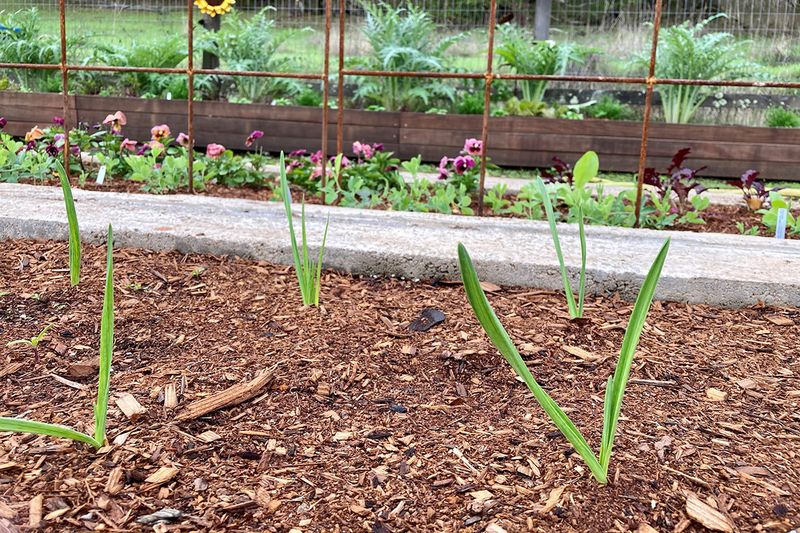
Bed conditions can protect or completely erase the advantage you built by choosing large, healthy cloves. Garlic is not particularly forgiving of poor site selection, and two problems show up repeatedly in underperforming beds: too much shade and too much standing water.
Full sun is non-negotiable for good bulb development. A bed that gets six or more hours of direct sun daily gives garlic the light energy it needs through a long growing season.
UGA Cooperative Extension recommends a well-drained bed with added organic matter, and explains that garlic performs poorly in persistently wet soil where bulb rots become far more likely. If your chosen spot holds water after rain or stays soggy through the winter, raised beds or improved drainage are worth the effort before you plant.
Garlic has a shallow, relatively weak root system and competes poorly with weeds. A weed-heavy bed will rob moisture and nutrients right at the soil level where garlic roots are actively working, and that competition can limit bulb size even when everything else is managed well.
Shallow cultivation between rows helps, but a clean straw mulch applied after planting addresses both weed suppression and moisture retention at the same time.
Mulch also buffers the temperature swings that North Carolina winters can deliver, particularly in the Piedmont and mountains where hard freezes followed by warm spells are common. Use clean straw or another suitable organic mulch and avoid pressing wet mulch directly against the plant stem, since that contact can encourage rot at the base.
Mulch depth varies by material and climate, with recommendations commonly ranging from about 2 to 4 inches depending on what you are using and how cold your location gets. A lighter layer works fine in eastern NC, while mountain gardeners may want to go a bit deeper to protect against harder freezes.
Manage water and fertility through bulb development
Planting day is just the beginning. What happens between fall establishment and early summer harvest shapes the final bulb more than most gardeners realize, and water management is one of the biggest levers available after the cloves are in the ground.
Consistent moisture during active growth, especially through the spring bulbing period, supports good bulb development. UGA’s garlic guidance explains that drought or moisture stress can reduce bulb size, while overwatering and poor drainage increase the risk of rot.
As the tops begin to yellow, fall over, or dry out in late spring or early summer, reduce or stop irrigation. Keeping the soil wet at that stage can interfere with curing and encourage disease at the bulb neck.
Fertility decisions should start with a soil test rather than a general fertilizer recommendation. University of Minnesota Extension lists nitrogen deficiency among the causes of pale plants and undersized bulbs, but excessive or late nitrogen creates a different set of problems, including excessive leaf growth and reduced storage quality.
Adding more fertilizer is not a reliable fix for small bulbs, and it can cause harm if applied at the wrong time or in the wrong amount. A soil test tells you what your specific bed actually needs.
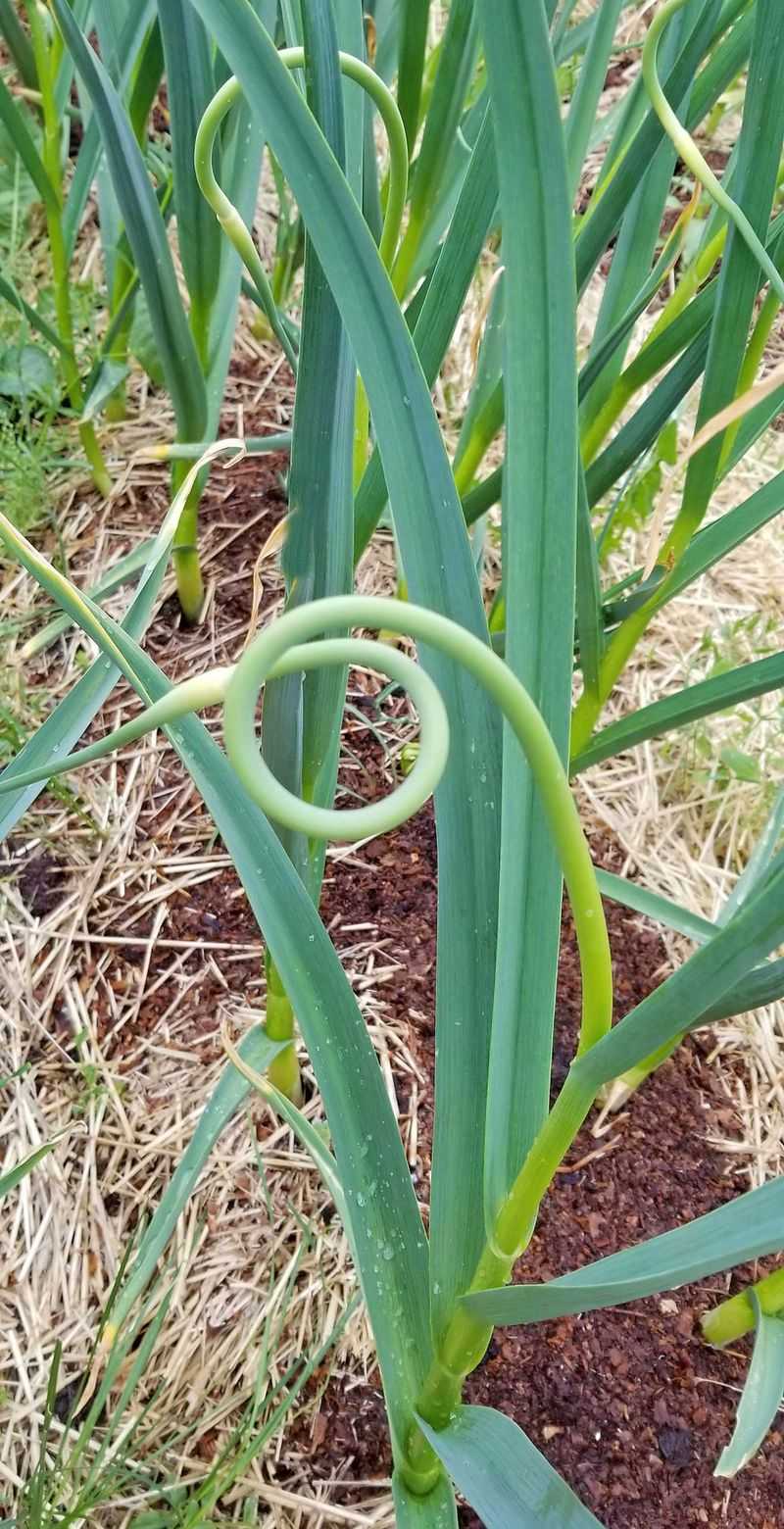
Hardneck garlic produces a scape, a curling flower stalk, in late spring. University of Maine Cooperative Extension cites research showing substantially smaller bulbs when scapes were left on the plant rather than removed, though that research was conducted in Maine and the same magnitude of effect should not be assumed for North Carolina conditions.
Removing scapes when they curl is a reasonable practice, but treat it as one favorable management step rather than a guaranteed yield booster for every NC site and cultivar.
Diagnose small bulbs before blaming the cloves
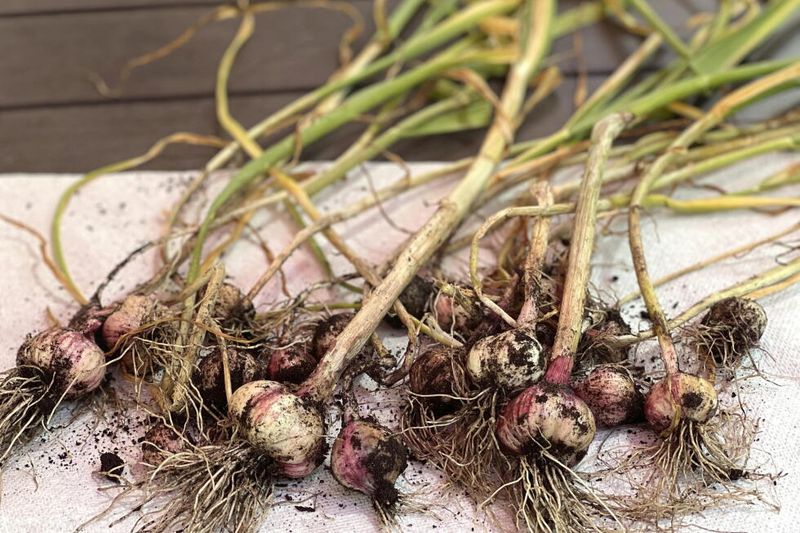
A disappointing harvest is frustrating, but jumping straight to clove selection as the explanation can send you in the wrong direction. Small bulbs at harvest have multiple possible causes, and identifying the right one is the only way to actually fix the problem next season.
University of Minnesota Extension’s garlic diagnostic tool lists nitrogen deficiency, garlic rust, pink root, onion yellow dwarf virus, and downy mildew among the conditions that can limit bulb development. Late planting, crowded spacing, weed competition, inadequate spring moisture, and poor drainage all appear on the same list of possible culprits.
None of these problems shows up in the cloves you selected, yet each one can produce a bed full of small bulbs.
Variety choice also affects what a normal result looks like. Hardneck types generally produce fewer but larger individual cloves, while softneck types, which are common in the Southeast, tend to produce more cloves per bulb with a wider range of sizes.
UGA’s garlic variety guidance notes that hardneck cultivars typically perform better in colder regions, while softneck types are better suited to warmer Southeastern conditions. Planting a hardneck variety in a warm, humid location can produce poor results regardless of clove size, because the cultivar simply is not adapted to the environment.
Local adaptation matters more than many gardeners expect. A variety that produces excellent bulbs in the North Carolina mountains may underperform in the Piedmont or coastal plain, and vice versa.
UGA’s production guide emphasizes matching variety to region as a foundational decision. If bulbs remain small after you have improved clove selection, work through the full growing system, including timing, variety fit, spacing, weed pressure, moisture, fertility, drainage, and disease history, before concluding that the seed stock was the problem.
Use the clove-selection rule without overpromising
Putting this all together comes down to a clear sequence of decisions, starting before the first clove goes in the ground. Match your planting date to your North Carolina region: roughly August 15 to October 15 in the west, around October 15 as a Piedmont reference point, and September 15 through November 10 in the east, adjusted for your elevation, weather, and cultivar.
Source planting-quality or certified seed garlic from a reputable supplier when possible, select the largest healthy outer cloves, keep their skins intact until planting day, and set the smaller inner cloves aside for another purpose. Plant at a depth suited to your soil and mulch plan, space cloves to avoid crowding, and site the bed in full sun with good drainage.
Maintain consistent moisture through spring, base fertilizer decisions on a soil test, and stay ahead of weeds throughout the season.
UGA Cooperative Extension and Southeastern production guidance both support starting with the largest available cloves as a sound practice, and the evidence is clear that larger planting cloves improve the odds of producing larger bulbs. What the evidence does not support is treating clove selection as a guarantee.
Every other factor in the growing system still matters, and the best harvest comes from getting as many of those factors right as possible. A large clove in well-prepared soil, planted on time, is simply the strongest starting point available.