

Every fall, garden centers fill up with those bright, rounded mums, and every spring, a lot of gardeners wonder where they went wrong. The truth is that not all fall mums are built to return, and the ones that can come back need the right conditions to pull it off.
Understanding what kind of mum you actually bought, and giving it a fighting chance in the ground, can make the difference between a one-season splash and a plant that keeps showing up year after year.
Some fall mums can return, but the label matters
Walk through any garden center in September and you will see tables loaded with mums in every warm color imaginable. What those displays rarely make obvious is that not every plant sitting in that sea of orange and gold has the same chance of surviving to bloom again next year.
The difference usually comes down to what kind of mum it actually is.
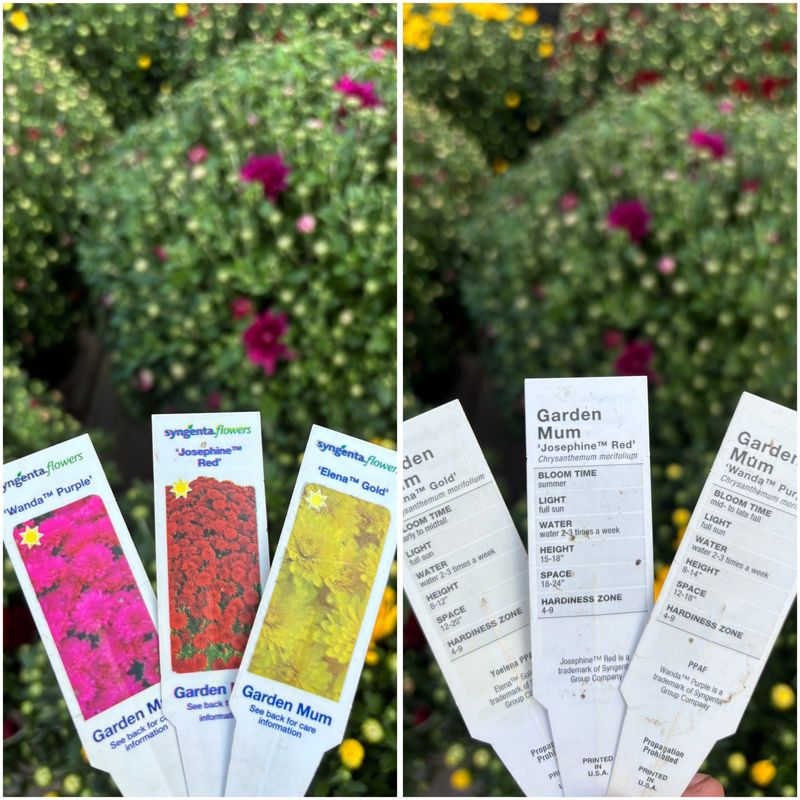
UGA Cooperative Extension draws a clear line between garden mums, which are perennial varieties, and pot mums, which are greenhouse-grown plants bred primarily for temporary indoor or seasonal display and can be hard to re-flower reliably outdoors. Garden or hardy mums are the ones worth trying to overwinter.
Florist or pot mums are less dependable for outdoor survival and should not be treated as guaranteed returners, even with attentive care.
Before buying, check the label carefully. Look for the words “garden mum,” “hardy mum,” or a named perennial cultivar.
If the tag is vague or missing, ask someone at a reputable local nursery or contact your county extension office about the specific variety. Perennial performance is a real possibility with the right plant, but this guide is about improving the odds for a suitable mum, not about making every seasonal retail plant come back on command.
Why a fall purchase often fails before winter
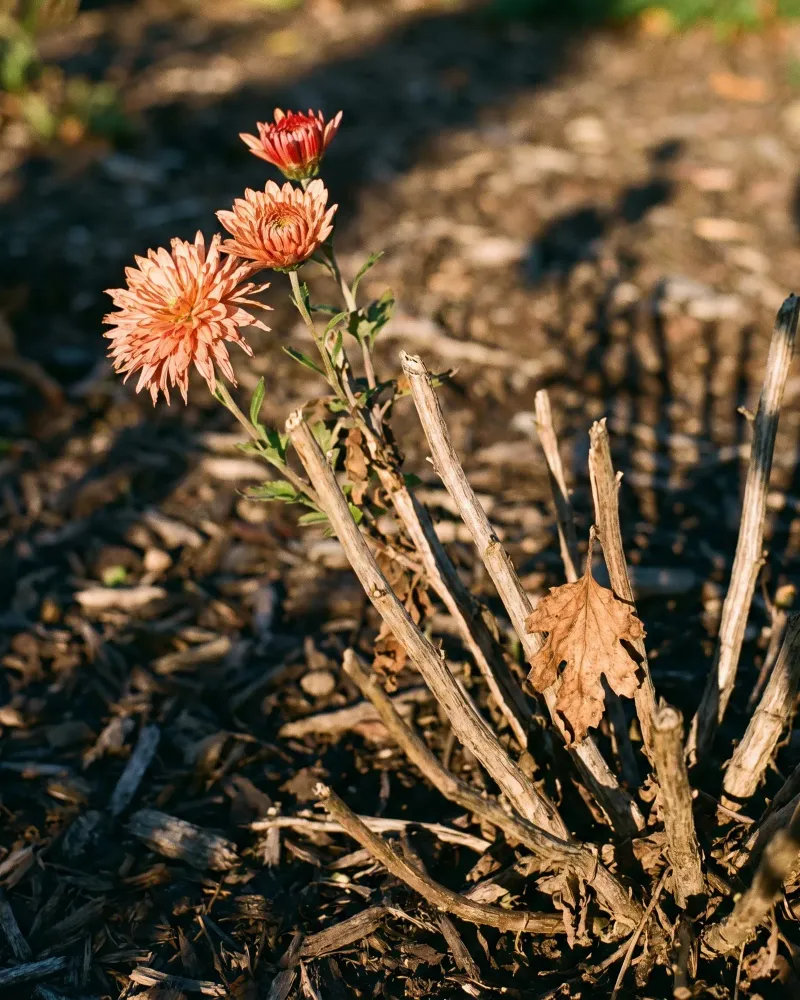
Most mums fail not because the gardener did something dramatically wrong, but because the calendar was already working against the plant when it came home from the store. A mum purchased in full bloom in late September or October has very little time to push roots into surrounding soil before cold, heat, or drought stress arrives.
Illinois Extension explains that mums have shallow, fibrous root systems and that late-season availability is one of the main reasons they fail to overwinter, because the roots simply do not have enough time to establish before stressful conditions set in.
Beyond timing, several other problems can cut a plant short. Container soil dries out faster than garden soil, especially when a pot is wrapped in decorative foil or placed in a waterproof cachepot that blocks drainage.
A plant that arrived with limited root development may also struggle to take up water quickly enough during warm Southern fall days.
A mum can be a botanical perennial and still fail in a specific yard. UGA’s perennial guide notes that not all mum varieties are cold-hardy, and that growing conditions, cultivar suitability, and site factors all play a role in survival.
If the roots visibly circle or crowd the container when you remove the plant, that is a sign of limited establishment worth addressing before planting, but not every retail mum will show that symptom.
Plant a suitable mum early and give its roots room
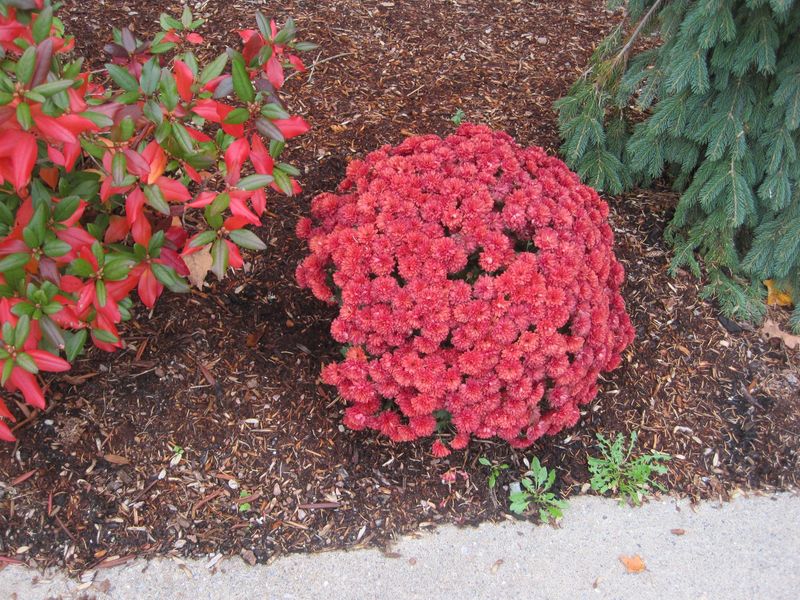
The single most effective thing a gardener can do to improve a mum’s chances of returning is to get it into the ground as early as possible. Spring is the best time to plant a mum intended for perennial performance, because the plant has months to push roots deep before the stresses of summer heat or winter cold arrive.
Illinois Extension specifically recommends spring planting for gardeners who want reliable overwintering, and Oklahoma State advises that fall purchases should go into the garden right away rather than sitting in a pot through the season.
If you are working with a fall-bought plant, do not wait until it finishes blooming or until the weather turns cold. Plant it promptly.
Gently loosen any compacted root mass before setting the plant in a hole that gives the roots space to spread. Illinois Extension’s fall mum resource points out that container mums can dry out quickly and that drainage holes must remain open, so remove any decorative foil or waterproof sleeve before planting or before placing the pot in a saucer that might trap water.
Ground planting improves a mum’s odds by giving the roots more room and reducing the temperature swings that small containers experience, but it does not guarantee survival. Cultivar choice, drainage, moisture, and local climate all still matter.
Think of planting in the ground as removing one obstacle, not as a complete solution on its own. Oklahoma State’s mum care guidance reinforces that timing and site preparation together give the plant its best footing.
Use sunlight, drainage, and moisture to reduce stress
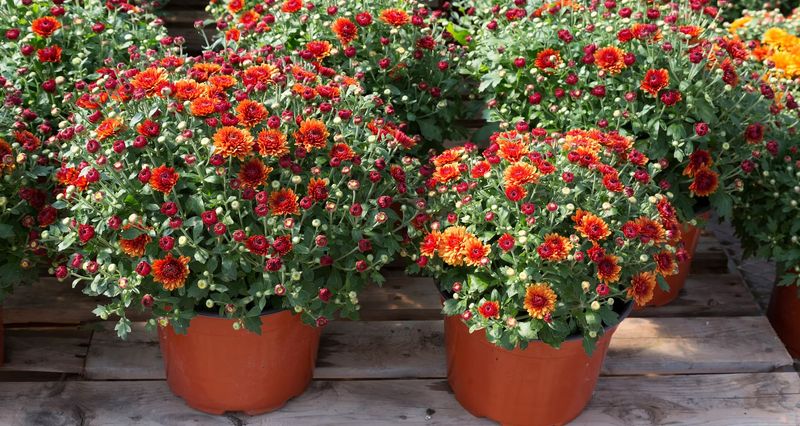
Mums are not shade plants. Most extension guidance recommends at least six hours of direct sun per day, and a spot that receives less than that tends to produce a weaker, leggier plant with fewer blooms.
Illinois Extension lists full sun and well-drained soil as two of the most important site requirements, and those two factors matter just as much in Georgia and Texas as they do in the Midwest.
Drainage is where many mums run into quiet trouble. Soil that stays wet after rain can damage shallow roots, and container mums face a related problem: a pot wrapped in decorative foil or set inside a waterproof cachepot can trap water at the bottom and keep roots sitting in moisture they cannot escape.
Illinois Extension’s fall mum PDF specifically flags foil wrapping as a drainage problem worth correcting. Remove the foil or poke drainage holes through it if you want to keep the decorative look.
Watering should follow the soil, not a fixed schedule. Check the root zone before watering and add water when it feels dry at depth, then let excess drain freely.
Mums need consistent moisture during establishment and during dry spells, but saturated soil creates its own risks. UF/IFAS guidance on garden mums for central and north Florida emphasizes well-drained soil as a baseline requirement, a point that applies across Southern gardens where heavy clay or poor drainage can undermine even a well-chosen cultivar.
Match winter protection to the region
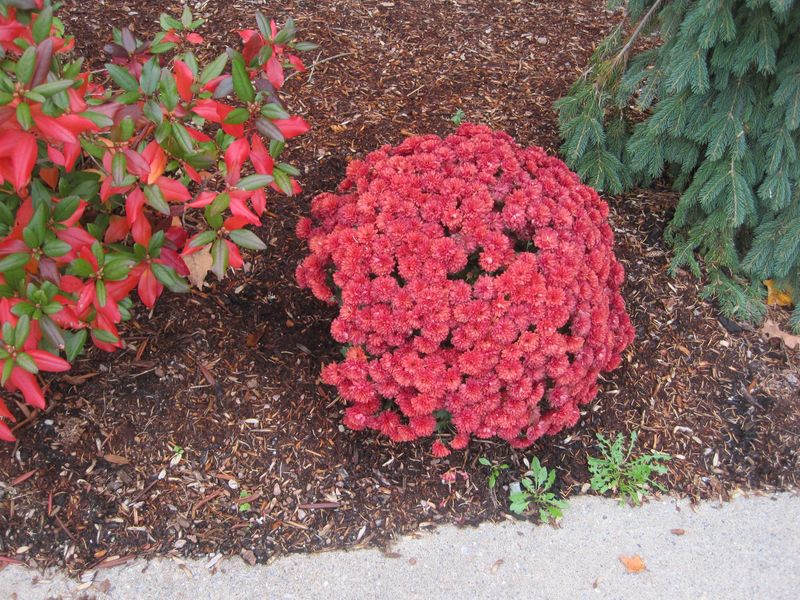
Winter care advice for mums varies depending on where you garden, and applying the wrong regional recommendation can do more harm than good. In colder Northern climates, Illinois Extension recommends leaving old stems standing through winter and applying several inches of loose organic mulch after the ground begins to freeze.
The standing stems help trap insulating mulch and protect the crown from freeze-thaw cycles.
Southern gardeners often operate under different conditions. Oklahoma State’s fall mum guidance describes cutting plants back after the display or first frost and then adding mulch as protection against severe temperatures and drying.
Mississippi State Extension similarly supports cutting back spent plants and covering roots with mulch to help them through winter. These approaches are not contradictions of the Illinois advice; they reflect the reality that warmer Southern winters often make stem removal practical while mulch still protects the crown.
In Georgia, Texas, and central or north Florida, heavy winter mulching for cold protection is usually less urgent than in the upper Midwest, but mulch still helps moderate soil temperature swings and reduce moisture loss. UGA’s perennial garden guide notes that garden mums perform well in Georgia, though cultivar hardiness and site conditions still influence survival.
The safest approach in any Southern yard is to watch the plant, adapt to local weather patterns, and remember that mulch should be pulled back or reduced once new spring growth begins to emerge.
Pinch spring growth for a fuller autumn bloom
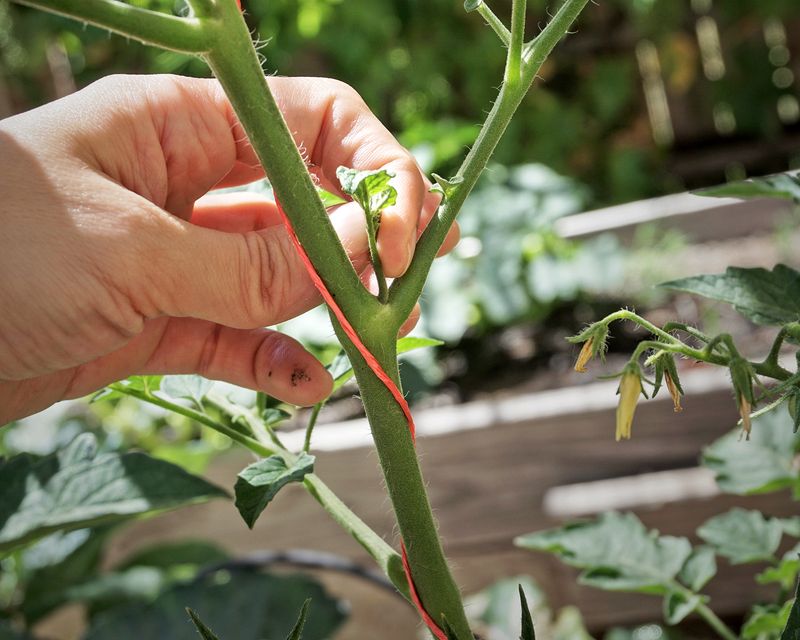
Once a mum survives winter and sends up new growth in spring, that is the moment to start shaping the plant for a better fall display. Pinching, which means removing the soft growing tip of each stem, encourages the plant to branch rather than grow straight up.
Each pinched stem produces two or more side shoots, and each of those can carry flower buds by fall. Illinois Extension’s perennial mum guide explains that pinching is one of the most reliable ways to build a fuller, better-branched plant before the blooming season.
The general recommendation from Illinois Extension is to begin pinching when stems reach several inches tall and to repeat the process every few weeks, stopping by early to mid-July so the plant has enough time to set flower buds before fall. Pinching too late can delay or prevent blooming altogether.
Florida gardeners may need to adjust that cutoff. UF/IFAS guidance for central and north Florida suggests lightly pruning stems from late spring through mid-August when they exceed six inches, reflecting the region’s longer warm season and different flowering schedule.
Mums also bloom in response to shorter days and longer nights, and as Illinois Extension notes, artificial light at night can interfere with that process. Avoid planting mums directly beneath bright security lights, porch fixtures, or streetlights if you want reliable fall flowering, because even a small amount of nighttime light can delay or disrupt bud formation.
Choose cultivars that fit Texas, Georgia, or Florida

Cultivar choice matters more in the South than most retail displays suggest. In Texas, Texas Master Gardeners describe a garden mum as a cultivar that flowers naturally early enough in the local climate to avoid a heavy frost, making that early-season bloom window a practical selection criterion for Texas gardeners.
Where autumn is short or weather shifts quickly, a mum that needs a long bud-development period may never get there before a killing frost cuts it short.
Georgia gardeners benefit from choosing cultivars suited to local hardiness zones and growing conditions. UGA’s flowering perennials guide lists garden mums as perennials for Georgia landscapes, with the note that variety hardiness and site conditions influence performance.
Consulting a local nursery or extension office about which cultivars have performed well nearby is a practical first step before buying.
For central and north Florida, UF/IFAS guidance on garden mums focuses on full sun to partial shade, well-drained soil, consistent moisture, and regular pruning rather than cold protection. That guidance applies specifically to central and north Florida and should not be extended automatically to South Florida, where different heat, humidity, and rainfall patterns create a different growing environment entirely.
One more consideration for any Southern household: the ASPCA lists chrysanthemums as toxic to dogs, cats, and horses, with possible signs including vomiting, drooling, incoordination, and skin irritation. Keep that in mind when deciding where to place mums in a yard or on a porch where pets spend time.
Expect a living plant, not an identical store display
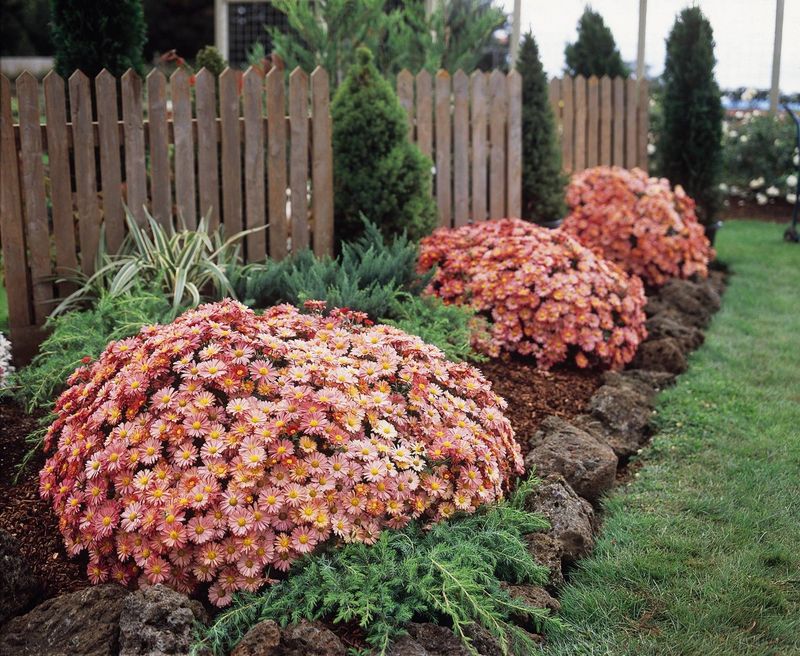
Retail mums arrive looking like perfect rounded mounds because growers pinch them repeatedly under controlled greenhouse conditions, often starting months before they reach the shelf. That dense, symmetrical shape is the result of professional management, not something the plant produces naturally on its own.
A mum that survives in your landscape and returns the following year will likely grow taller, spread a bit more loosely, and carry flowers across a more open framework rather than the tight dome you brought home.
That is not failure. Illinois Extension’s perennial mum guide makes clear that consistent pinching through the growing season improves plant form and increases the number of flowering stems, but it will not recreate a supermarket-style mound without the greenhouse conditions behind it.
A well-pinched landscape mum can still be full and attractive; it will just look more like a garden plant than a product.
Measure success by whether the plant returns and blooms, not by whether it matches its original shape. Illinois Extension frames the whole project simply: choose the right type, get it in the ground early, manage moisture and drainage, adapt winter care to your region, and pinch spring growth to build toward fall.
A mum that comes back and blooms on its own terms is worth more than a perfect-looking plant that disappears every January.