
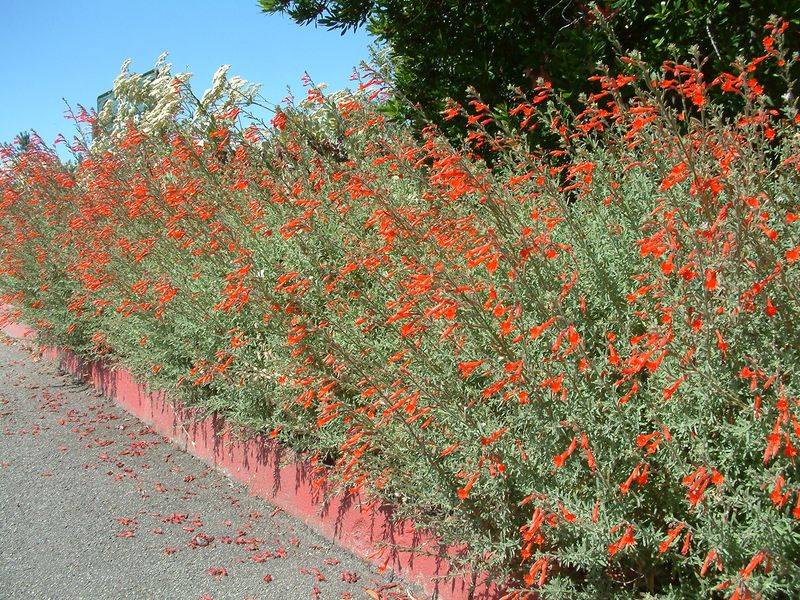
California fuchsia is a tough, sun-loving native perennial that can bring hummingbirds to your yard from late summer well into fall, right when many other flowering plants are fading. Known botanically as Epilobium canum, it produces slender, tubular flowers in shades of red, orange-red, salmon, pink, or white that are shaped perfectly for hummingbird feeding.
Getting the most from this plant comes down to one key decision: where you put it. Choose the right spot and you will have a reliable late-season nectar source that is also water-wise and low-maintenance once it settles in.
California fuchsia provides late-season hummingbird nectar
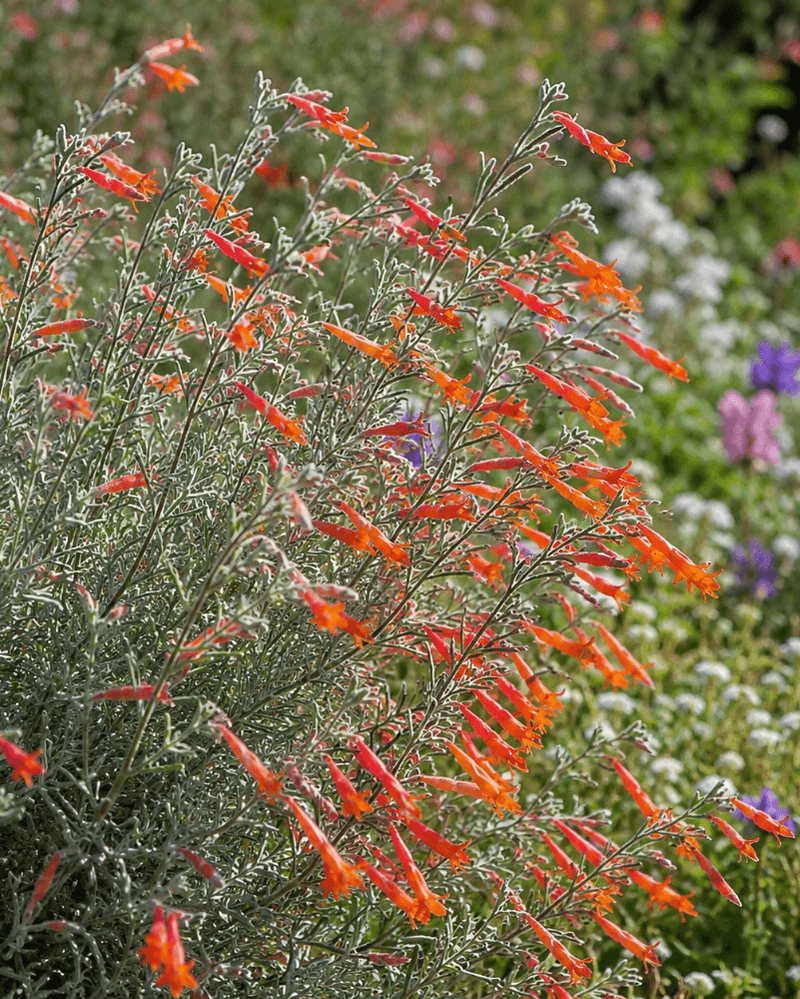
Epilobium canum goes by several names at the nursery. You may see it labeled California fuchsia, hummingbird flower, or under the older horticultural name Zauschneria californica.
All refer to the same plant or closely related cultivars within the same species group. Calflora’s taxon record for Epilobium canum confirms that Zauschneria californica is a widely used synonym still common in the nursery trade, so either name on a plant tag is pointing you toward the same California-native perennial.
The flowers are tubular, typically about an inch long, and flare slightly at the tip. Colors range from the classic red-orange to salmon, soft pink, or occasionally white depending on the cultivar.
That shape and color combination matters because hummingbirds are drawn to tubular flowers they can probe with their long bills, and bright reds and oranges are easy for them to spot. The California Native Plant Society’s hummingbird gardening guide identifies California fuchsia as one of the key native plants for supporting hummingbirds in a California garden.
Bloom timing is real but not absolute. The UC Davis Arboretum’s California fuchsia profile notes that flowering can range from June to January depending on the cultivar and growing conditions, but the strongest, most reliable display typically falls from mid- or late summer into fall.
Expect variation based on your climate zone, irrigation, and which cultivar you choose.
One clarification worth making: California fuchsia is not a true fuchsia. The familiar hanging-basket fuchsias belong to a separate genus and, as UC IPM’s fuchsia care guide explains, those plants generally prefer partial to full shade and consistent moisture.
California fuchsia is the opposite: it thrives in full sun and handles dry summers well once established. They share a common name but almost nothing else in terms of garden needs.
The flowers help hummingbirds, but the habitat does the rest
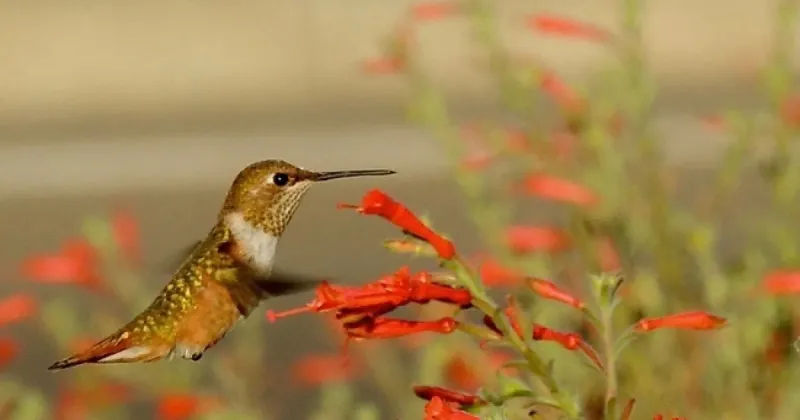
Tubular flowers in red or orange shades are well suited to hummingbird feeding because the flower shape matches the bird’s bill length and the nectar sits at the base where only long-tongued visitors can reach it. Color plays a role in advertising, but as the National Park Service’s overview of hummingbird pollinators points out, hummingbirds also learn from experience and will visit flowers of many colors once they associate a plant with reliable nectar.
Bright color helps a new plant get noticed; after that, nectar quantity and consistency keep birds coming back.
California fuchsia can be a meaningful nectar source, particularly from late summer into fall when competing blooms are thinning out. What it cannot do is serve as a complete food supply.
Hummingbirds also need insects and spiders for protein, a reliable source of clean water, perches for resting, and enough surrounding cover to feel safe. Planting one California fuchsia in an otherwise barren or pesticide-heavy yard will accomplish less than placing it inside a yard that already supports a range of conditions.
A practical yard strategy pairs California fuchsia with other plants that bloom at different times, so nectar is available from early spring through late fall rather than only during one window. The CNPS hummingbird gardening guide recommends building a sequence of overlapping blooms using California natives, and lists California fuchsia as a strong contributor to the late-season portion of that sequence.
Reducing or eliminating pesticide use matters as much as the plant list. Insecticides applied to flowering plants can harm the very insects that hummingbirds depend on for protein, and systemic pesticides can persist in nectar.
Think of California fuchsia as one well-placed piece of a habitat that earns its visitors through variety, continuity, and a reasonably pesticide-light approach.
Give California fuchsia a sunny edge where it can spill
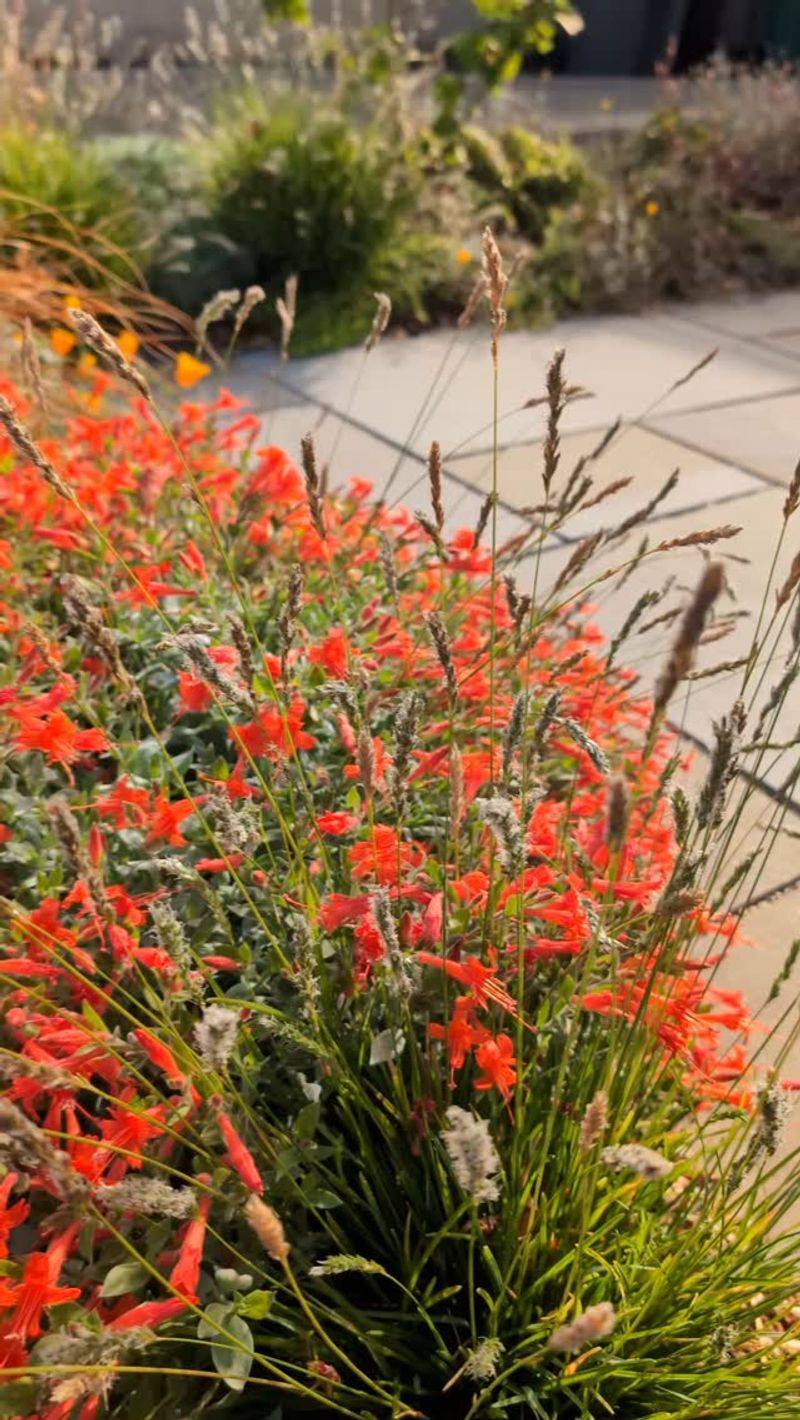
Full sun is the starting point for strong flowering. California fuchsia blooms most reliably when it gets at least six hours of direct sun per day, and a site with morning sun and open sky through the afternoon is usually ideal.
The Waterwise Garden Planner’s Epilobium canum profile recommends full sun as the primary light condition and notes that the plant handles the dry, exposed conditions that come with open, sunny placements better than many other perennials.
Drainage matters just as much as light. California fuchsia does not tolerate standing water or heavy clay that stays wet after rain.
A border edge along a path is one of the most practical placements because the soil there typically drains faster than the center of a bed, the flowers are at eye level for anyone walking by, and the plant has room to spread outward without immediately crowding other plantings. A rock garden or gravel-mulched area works for the same reasons: fast drainage, reflected heat, and open space around the root zone.
Slopes and raised beds solve drainage problems in yards where flat ground stays soggy. On a dry slope, California fuchsia can sprawl naturally downhill, covering bare soil while its flowers face outward where they are visible and accessible to birds.
A raised bed built 12 to 18 inches above grade gives the same drainage benefit in a smaller footprint. The top of a retaining wall is another excellent option: the plant can spill over the edge, the wall face stays dry, and the flowers hang where hummingbirds can hover and feed without obstruction.
Containers work well for gardeners who want to control spread or test the plant before committing to a permanent spot. Use a container with generous drainage holes and a porous mix, and position it somewhere it gets full sun for most of the day.
The UC Davis Arboretum’s profile also supports use along paths and informal borders as placements that let the plant perform naturally while keeping it visible and manageable.
Avoid planting California fuchsia in the middle of a crowded bed where it will be hemmed in on all sides, or in a low spot where water collects after irrigation or rain. Those two conditions, restricted spread and poor drainage, are the most common reasons the plant disappoints.
Give it an edge, a slope, or a raised position and it will generally reward you. UC Master Gardeners of Sacramento County include California fuchsia on their summer water-efficient plant list, specifically noting its suitability for borders and informal garden areas.
Match the planting spot to heat, soil, and water
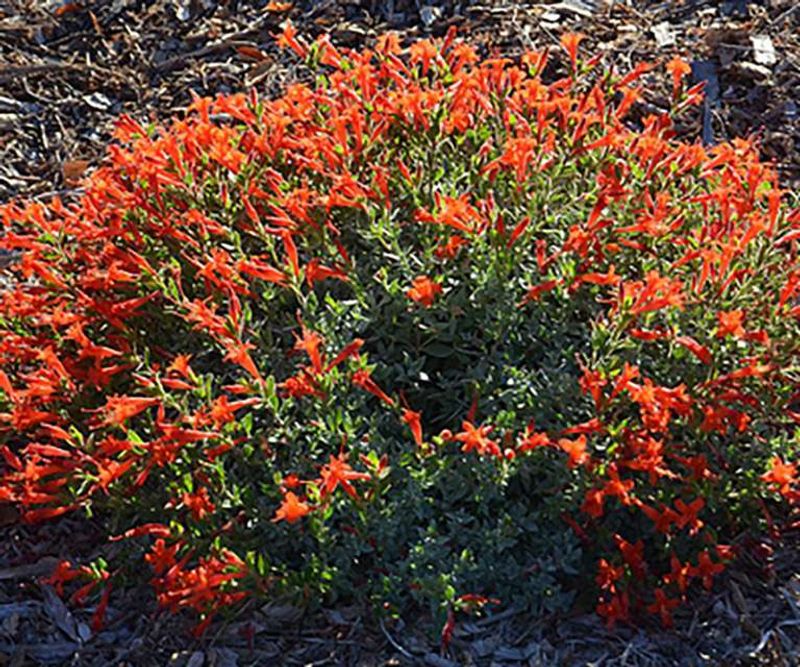
California fuchsia tolerates poor, rocky, or sandy soil that would frustrate many other perennials, but it does need that soil to drain freely. Heavy clay that holds water for hours after rain is the main soil-related problem to avoid.
If your yard has clay soil and you want to plant in the ground rather than in a raised bed or container, amend the planting area with coarse grit or decomposed granite to open up the texture, and build the planting mound slightly above the surrounding grade so excess water runs away from the root zone.
New plants need regular irrigation during the establishment period, which typically runs through the first growing season and into the second. Water deeply and allow the soil to dry somewhat between sessions rather than watering lightly every day.
The Waterwise Garden Planner’s profile for Epilobium canum describes establishment irrigation as essential and notes that the plant’s drought tolerance builds gradually as the root system expands.
Once established, watering needs depend heavily on your specific site. Coastal gardens and cooler inland valleys may need little or no supplemental summer water once the plant is settled in.
Hot, exposed sites in the Central Valley or inland Southern California are a different story: occasional deep watering every two to four weeks during the driest months can help the plant maintain flowering and avoid stress-related dieback. UC Master Gardeners of Sacramento County list the plant as water-efficient but acknowledge that site conditions determine actual water needs.
In very hot inland locations, afternoon shade from a nearby wall, fence, or large shrub can reduce heat stress and help extend the bloom period. This is not the default recommendation, since full sun drives the best flowering in most California climates, but it is a practical adjustment when summer temperatures regularly exceed 100 degrees Fahrenheit.
The UC Davis Arboretum notes that part shade is an acceptable light condition for the plant, especially in hotter exposures, while full sun remains the preference for reliable bloom production in moderate climates.
Choose a cultivar that fits the space, not just the flower color
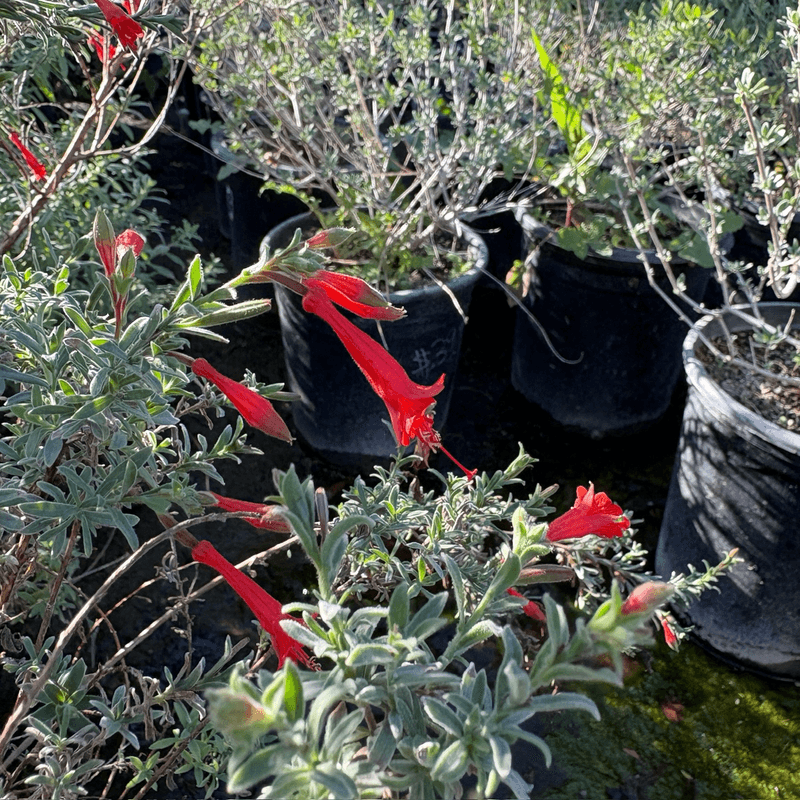
Walk into a well-stocked California native plant nursery and you may find several California fuchsia options on the same bench, each with a different tag and a noticeably different habit. That variation is real and worth paying attention to before you buy.
UC Master Gardeners of Sacramento County note that cultivars differ in height, spread, foliage color, and flower color, so checking the label is the practical first step rather than assuming all California fuchsias behave the same way.
Height ranges from low groundcover forms that stay under a foot tall to upright selections that reach roughly three to four feet. Spread can be equally variable.
Many cultivars spread by rhizomes, which means underground stems that push outward and send up new shoots beyond the original planting footprint. In a spacious informal border or on a slope, that behavior is useful because it fills bare ground quickly.
In a small raised bed or a tightly planted border, the same habit can crowd neighboring plants within a season or two.
The Waterwise Garden Planner’s cultivar notes flag rhizomatous spread as something to plan for rather than ignore. If your space is limited, look for compact or clumping selections and plant them inside a defined edge, a container, or a raised bed with solid walls that slow lateral spread.
Alternatively, plan to pull back or divide spreading shoots each year before they overtake adjacent plants.
Flower color, foliage tone, and whether the plant behaves as evergreen or deciduous in your specific climate zone are also worth confirming on the label. Some forms hold their leaves through mild coastal winters; others die back to the ground and re-emerge in spring.
Neither behavior is better, but knowing which one you have helps you plan the right timing for winter cleanup and avoids the alarm of finding bare stems where a green mound used to be.
Establish it first, then cut it back and contain it
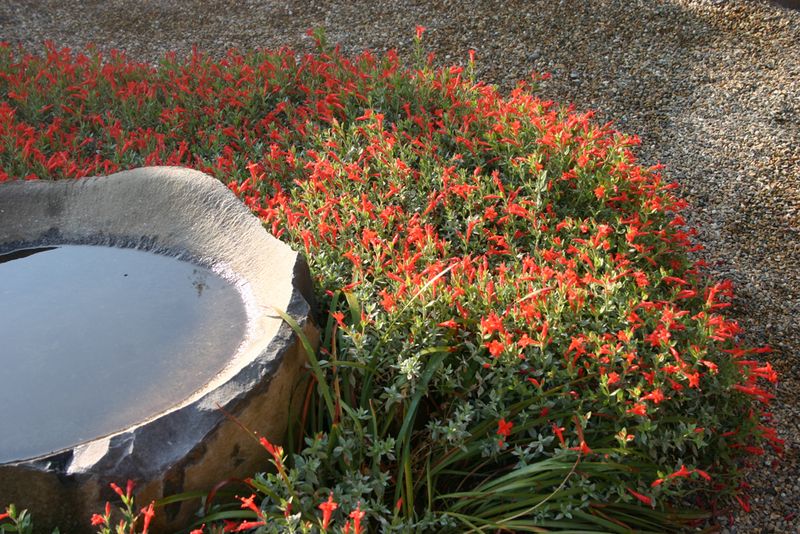
The first year after planting is the period that determines whether California fuchsia becomes a long-lived fixture or a frustrating disappointment. Water new plants consistently during that first growing season, keeping the soil moist but not waterlogged between sessions.
Resist the urge to cut the plant back aggressively before the root system is fully established, since heavy pruning in year one removes the foliage the plant needs to build root energy. Let it grow, monitor for spreading shoots that stray too far into neighboring plants, and redirect or remove those shoots by hand as needed.
Once the plant is established, usually by the second year, a consistent annual cutback becomes the main maintenance task. The CNPS hummingbird gardening guide recommends cutting established plants to the ground or near-ground level during winter dormancy or shortly after the main flowering period ends.
This removes accumulated dead material, encourages fresh growth, and keeps the plant compact enough to manage in the following season.
Spreading shoots on rhizomatous forms need ongoing attention. The Waterwise Garden Planner notes that some forms can spread aggressively, and that dividing or pulling back the outer perimeter of the plant every year or two prevents it from overwhelming nearby plants.
This is straightforward work, but skipping it for a few seasons can turn a manageable groundcover into a space that requires significant effort to reset.
Fire safety adds a non-negotiable layer to placement and maintenance decisions. No plant should be labeled fire-safe or described as safe to grow against a structure, and California fuchsia is no exception.
California Board of Forestry and Fire Protection guidance on defensible space zones specifies that Zone 0, the area immediately surrounding a structure, should be kept free of combustible vegetation and materials. Local rules may be stricter.
Removing dead stems promptly after cutback, keeping plants properly spaced and irrigated, and checking your local defensible-space requirements before placing any vegetation near a building are all steps that matter more than any species label.
Plant the right California fuchsia in the right California yard
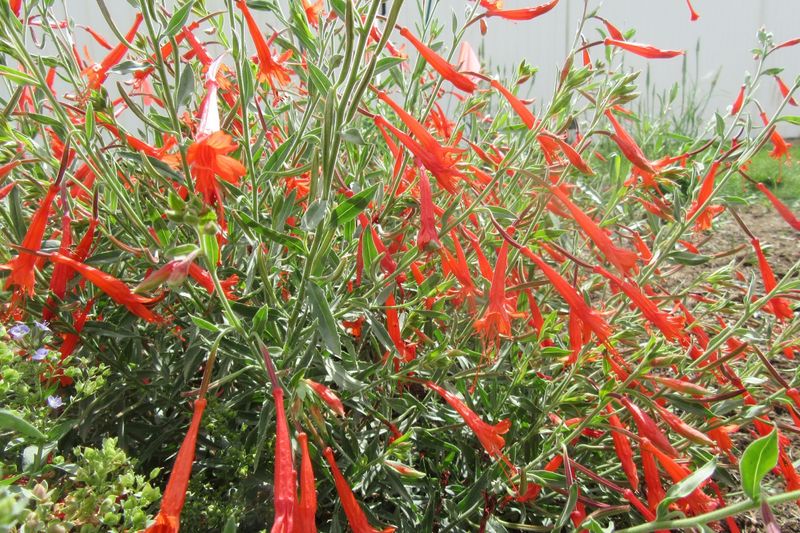
Before buying a plant, run through a short checklist. First, confirm that California fuchsia is a reasonable fit for your area by checking Calflora’s county-level distribution map for Epilobium canum or consulting local CNPS chapter resources.
California-native status does not automatically make every cultivar the right ecological choice for every California yard. Distribution across the state is broad but uneven, and local ecotype guidance from your regional native plant society is more reliable than a general statewide recommendation.
Second, select a cultivar whose mature spread fits the space you have. A low-spreading groundcover form belongs on a slope or along a wide path edge; a compact upright selection belongs in a raised bed or container where lateral spread needs to stay contained.
Provide full sun and well-drained soil, water consistently through the first growing season, and plan for annual cutback and occasional thinning of spreading shoots once the plant is established.
Third, treat California fuchsia as one part of a broader, pesticide-conscious hummingbird habitat rather than a standalone fix. The CNPS guide to choosing your plants emphasizes building a yard that supports wildlife through plant diversity, seasonal bloom continuity, and reduced chemical inputs.
California fuchsia earns its place in that yard by covering the late-summer-to-fall nectar window, but the birds that find it will stay longer and return more reliably when the surrounding habitat gives them reasons to.
Place the plant where its flowers are actually visible from a seating area, a window, or a well-used path. A California fuchsia tucked behind a fence or buried under taller shrubs may bloom reliably and still go unnoticed by both you and the hummingbirds you were hoping to watch.
The best spot is the one where the plant can do its job and you can see the result.