
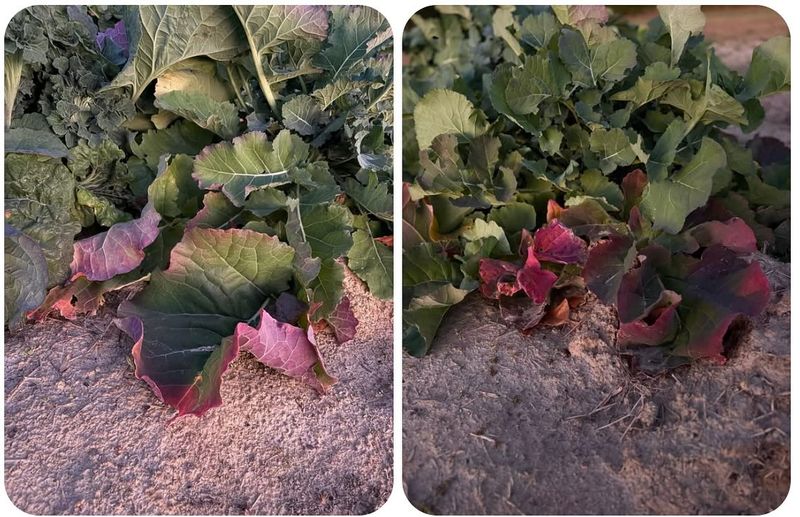
Fall collard season in North Carolina is one of those satisfying stretches when the garden finally cools down and the greens get serious. After a heavy rain rolls through, though, a lot of gardeners wonder whether their leaves are about to turn bitter or go bad.
The good news is that ordinary rain is not the main enemy of good-tasting collards. What matters most is how you handle the harvest that follows the storm.
Ordinary rain is not a proven cause of bitter collards
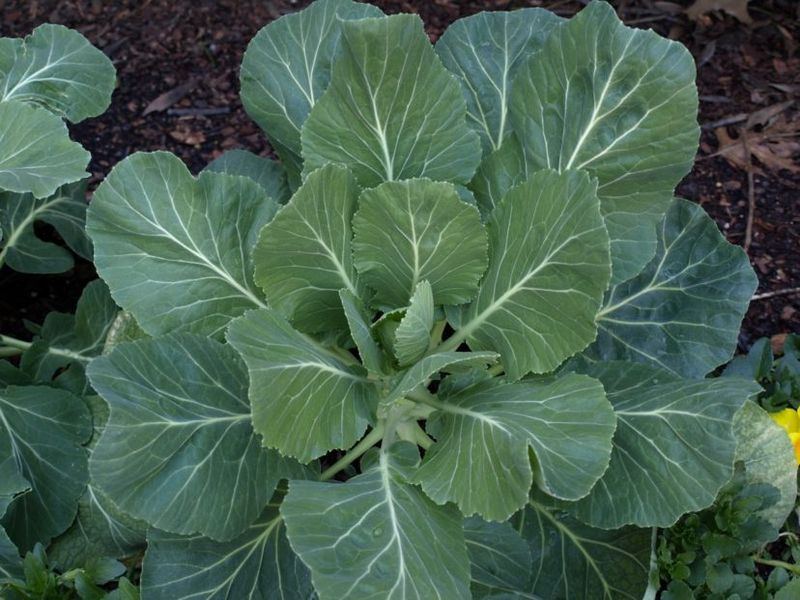
Somewhere along the way, a story got started that a hard fall rain can turn collard leaves bitter overnight. That idea is understandable because timing makes it feel true: a storm rolls through, and a few days later the greens taste sharper than expected.
But NC State Extension’s collard guidance does not identify ordinary rainfall as a direct cause of bitterness. The sources that extension educators actually rely on point elsewhere.
Heat, bolting, inconsistent moisture stress, and leaves that have grown oversized and fibrous are more commonly associated with poor flavor or tough texture in collards. When temperatures climb or a plant shifts its energy toward flowering, the eating quality of the leaves can decline noticeably.
Ordinary garden rain, by contrast, does not have a documented mechanism for pulling sweetness out of healthy foliage.
That does not mean a heavy rain is a non-event. Saturated soil, wet foliage, and warm late-season temperatures can create conditions that stress plants or favor disease.
NC State’s Extension Gardener Handbook connects cool-season crop quality problems with heat and stress rather than rainfall itself. So the first job after a storm is not to reverse a chemical change in the leaves.
The real priorities are dry handling, choosing the right leaves to pick, and getting them cooled quickly.
Think of the post-rain routine as a harvest and handling practice, not a bitterness cure. If your collards tasted fine before the storm, a single heavy rain is unlikely to be what changes them.
If the flavor has been off for a while, look at the temperature trend, the age of the outer leaves, and whether the plant is showing signs of bolting before blaming the weather.
Let the foliage dry before harvesting
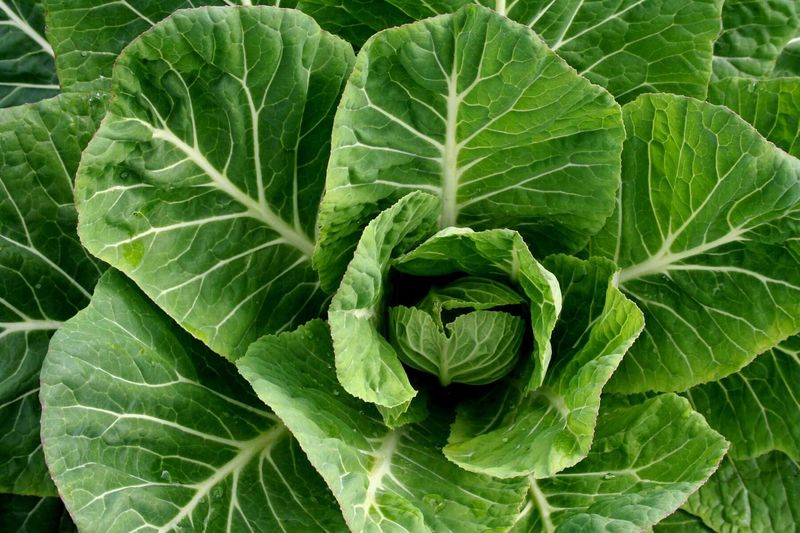
After a heavy rain, the urge to get outside and check on the garden is completely natural. Resist the pull to harvest right away.
UGA Extension’s garden harvest guidance favors picking during the coolest, driest part of the day because moist conditions can encourage fungal pathogens and make handling more difficult. Wet leaves bruise more easily, and any surface moisture you carry into storage can speed up deterioration.
The practical rule is straightforward: wait until the rain or dew has dried from the leaf surfaces before you pick. That might mean waiting until mid-morning on the day after a storm, or even until the following dry afternoon if the weather stays overcast and humid.
There is no hard deadline that forces you to harvest the same day the rain stops.
Disease risk is one reason the timing matters. NC State’s black rot guidance explains that splashing water can spread the bacterium responsible for black rot in brassicas, and that warm, wet conditions favor the disease.
Harvesting while foliage is still dripping does not cause black rot on its own, but handling wet plants and then moving through the garden can move pathogens from leaf to leaf or from soil to cut stems.
Dry harvesting also just produces a better result in the kitchen. Leaves picked while wet tend to clump, wilt faster, and are harder to dry before storage.
Give the plants a few hours of sun and airflow after the storm passes, then head out with your harvest basket during that calm, dry window. Your greens will hold up better from the moment you cut them.
Pick tender outer leaves instead of oversized ones
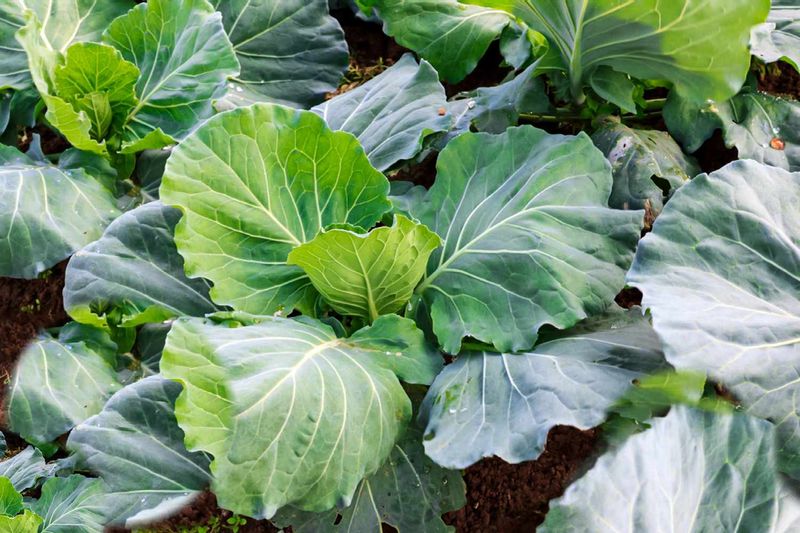
Once the plants are dry and ready to harvest, leaf selection is where you have the most control over what ends up on the dinner table. Tender outer or lower leaves picked before they reach maximum size consistently outperform the big, floppy leaves at the edge of the plant in both flavor and texture.
NC State’s collard guide recommends harvesting tender leaves from full-grown plants, with older lower leaves at roughly 8 to 12 inches as a useful reference point. UGA Extension notes that leaves under 10 inches tend to be especially desirable for flavor and texture.
Neither of those measurements is a rigid cutoff. The better test is to press gently on a leaf: if it feels supple and the midrib bends without cracking, it is likely at a good stage.
A leaf that has gone stiff, yellowed at the edges, or developed a very thick, woody stem has probably passed its best window.
Oversized, mature leaves are not necessarily unsafe, but they are more likely to be coarse or have a stronger, more assertive flavor that some cooks find less pleasant. Clemson Cooperative Extension recommends picking only a few leaves at a time so the plant can keep producing.
Grabbing every large leaf in one pass does not improve the plant’s condition; it just depletes the foliage it needs to keep growing.
Selecting tender leaves improves the quality of the harvest you take home. It does not fix a plant that has bolted, correct a heat problem, or make tough remaining leaves suddenly palatable.
Think of it as editing the harvest rather than treating the plant. The best collard meals come from leaving the plant healthy enough to keep giving you good leaves through the rest of the fall season.
Cool the leaves promptly after picking
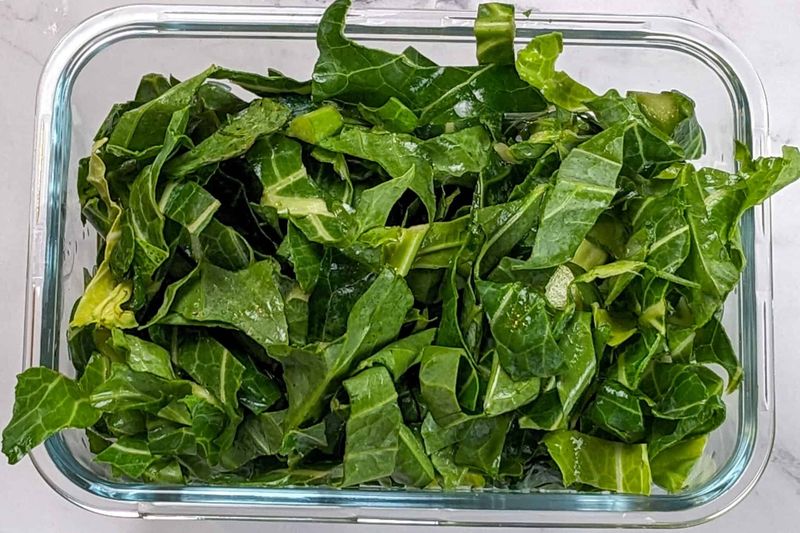
Field heat is the enemy of freshly harvested greens. Collard leaves cut on a mild fall afternoon can still be holding quite a bit of warmth when they come in from the garden, and that warmth accelerates wilting, yellowing, and texture breakdown in storage.
NC Cooperative Extension’s postharvest guide for leafy greens recommends harvesting when temperatures are cool, removing field heat promptly, and storing leafy greens in cold, humid conditions. For a home gardener, that translates to a simple routine: bring the leaves inside, shake off any remaining surface moisture, and get them into the refrigerator quickly rather than leaving them on the counter while you finish other chores.
A damp paper towel or cloth inside a loosely sealed bag or container helps maintain humidity around the leaves without trapping excess water that could cause rot. Storing collards cold and slightly moist keeps them crisp and slows the natural breakdown that begins the moment a leaf is cut from the plant.
Prompt cooling supports the quality and storage life of what you have harvested. It does not sweeten a heat-stressed plant or reverse any flavor change that happened in the garden before you picked.
The cooling step is the last part of a connected routine: wait for dry foliage, choose tender leaves, then get them cold. Each step protects the harvest you have already selected, which is the most practical outcome you can count on from good post-rain handling.
Separate ordinary rain from floodwater
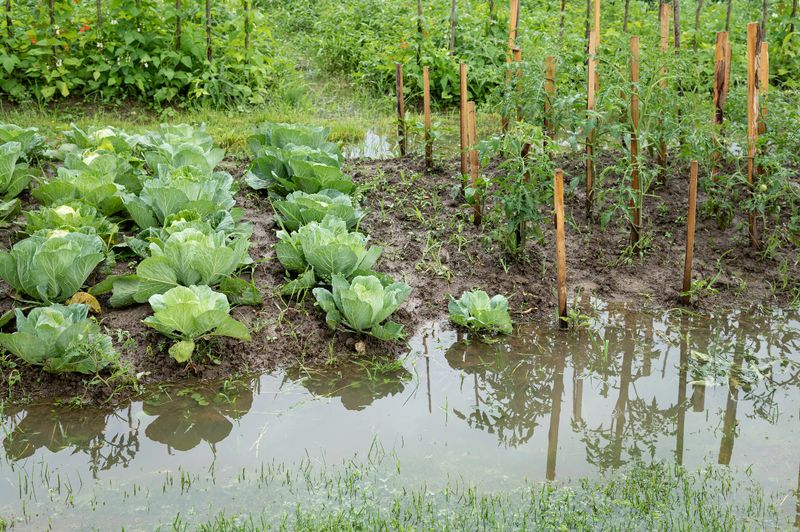
Rain and floodwater are not the same thing, and treating them as equivalent can lead to either unnecessary waste or a genuine food safety mistake. Most fall garden showers, even heavy ones, are ordinary rainfall.
The water falls on the leaves, runs off, and drains away. Leaves that received ordinary rainfall and show no other signs of contamination are not automatically unsafe to eat.
Floodwater is a different category entirely. When a storm causes water to back up from a ditch, overflow a creek bank, or carry runoff from roads, fields, or septic areas across your garden, that water can carry pathogens, sewage, agricultural chemicals, petroleum products, and heavy metals.
University of Minnesota Extension’s food safety guidance for flooded fields is direct on this point: edible parts of plants that were directly contacted by floodwater should be discarded. Washing cannot reliably remove all microbial or chemical hazards, and cooking does not neutralize heavy metals or certain chemical contaminants.
The key question to ask after a major storm is whether the water that reached your collard leaves came straight down from the sky or traveled across the ground from somewhere else. If your garden sits low, borders a road or drainage channel, or showed standing muddy water that rose up around the plants, treat those plants as flood-contacted and err on the side of discarding the affected leaves.
Rain itself also does not replace washing. University of Minnesota Extension’s guidance on washing fresh produce advises rinsing vegetables under cool running water and avoiding soap, detergent, bleach, or unapproved produce washes.
Rainwater sitting on a leaf surface is not a cleaning step. Rinse your harvest under the faucet before cooking, regardless of how much rain fell in the garden.
Cool weather has stronger flavor support than ordinary rainfall
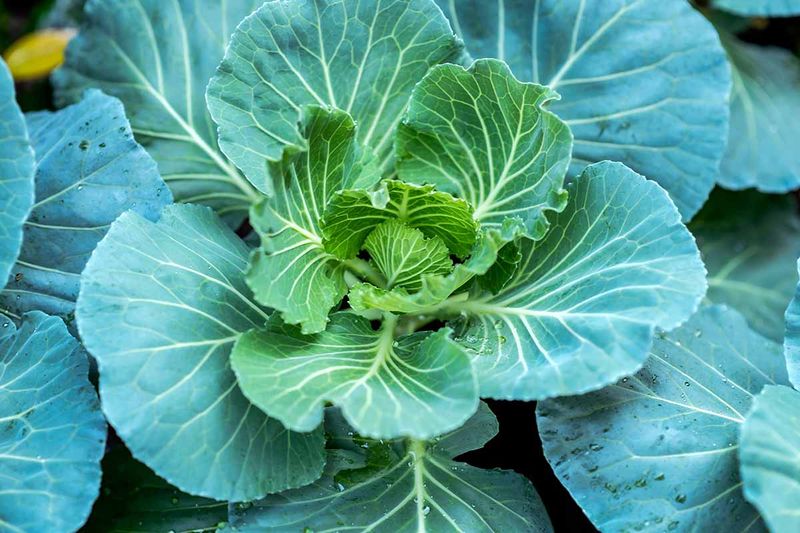
Gardeners who have grown collards through a North Carolina fall know the pattern: the greens get noticeably better as the temperatures drop. That improvement is not coincidence.
NC State Extension notes that collards generally have their best flavor in cool weather and after frost. Frost appears to trigger a conversion of starches to sugars in the leaves, which is why a post-frost collard often tastes milder and slightly sweeter than one cut in early September.
That seasonal temperature effect is well-established in extension guidance. Rainfall does not have the same documented relationship with flavor.
There is no reliable evidence that ordinary garden rain directly sweetens or bitters collard leaves the way temperature does. NC State’s Plant Toolbox profile for collards reinforces that cool-season performance is the baseline expectation for the crop, not a weather bonus.
Rainfall can still matter indirectly. Saturated soil for extended periods can stress roots.
Wet, warm conditions can favor disease. A plant that is already heat-stressed or beginning to bolt may respond poorly to additional disruption.
But those are indirect pathways, not a direct rain-to-bitterness chain. NC State’s Extension Gardener Handbook ties cool-season crop quality problems to heat and stress rather than to rainfall as a primary driver.
When collards taste sharp or bitter in fall, the first questions to ask are about temperature history, plant age, and whether any bolting has started. A single heavy rain is rarely the explanation.
If cool nights are arriving and the plant is healthy, the flavor is likely to improve on its own as the season settles in. Post-rain harvesting and cooling protect what you pick today; the season’s cooling trend is what shapes the weeks ahead.
Protect the growing point for later fall harvests
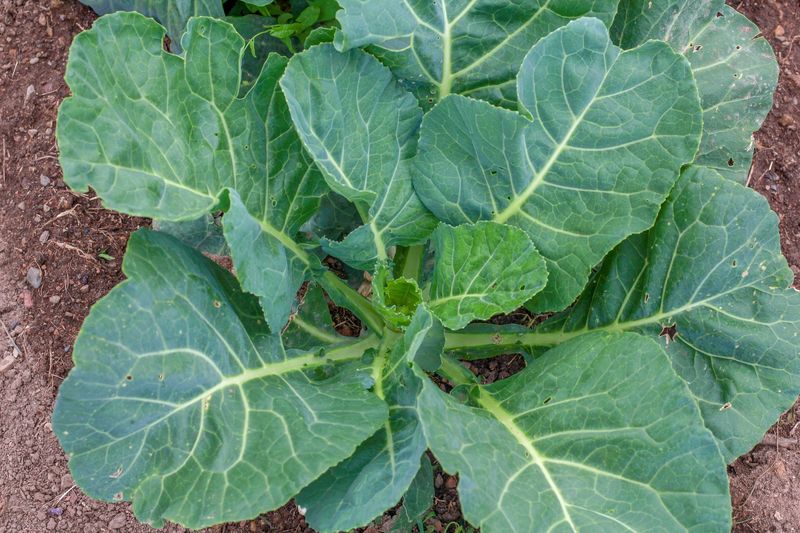
Every leaf you remove is a decision about the plant’s future as much as today’s meal. Collards produce from a central growing point at the top of the stalk, and as long as that point stays intact and healthy, the plant keeps pushing out new leaves.
Strip too many leaves at once and you slow that process considerably, sometimes to a halt for the rest of the season.
Clemson Cooperative Extension recommends picking only a few leaves at a time so the plant can recover and continue producing. A good working rule is to take two or three outer or lower leaves per plant per harvest and leave everything near the top and center untouched.
The plant looks a little trimmed at the bottom but remains vigorous at the growing tip.
Fall timing varies across North Carolina. NC State’s Extension Gardener Handbook notes that planting windows differ by region: mountain gardeners typically plant earlier, Piedmont gardeners around early August, and coastal plain gardeners somewhat later.
Those staggered starts mean harvest timing also shifts by region, so there is no single statewide date when every NC gardener should be picking. Judge your plants by leaf tenderness and size rather than the calendar.
NC State’s collard guide also advises rinsing harvested leaves thoroughly to remove any grit or mud that clings after a rain. A quick rinse under cool running water before cooking handles that step cleanly.
The full post-rain routine comes down to three connected habits: let the foliage dry, harvest tender outer leaves while leaving the growing point intact, then cool the greens promptly. Good collards in November depend on the choices you make at the plant today.