
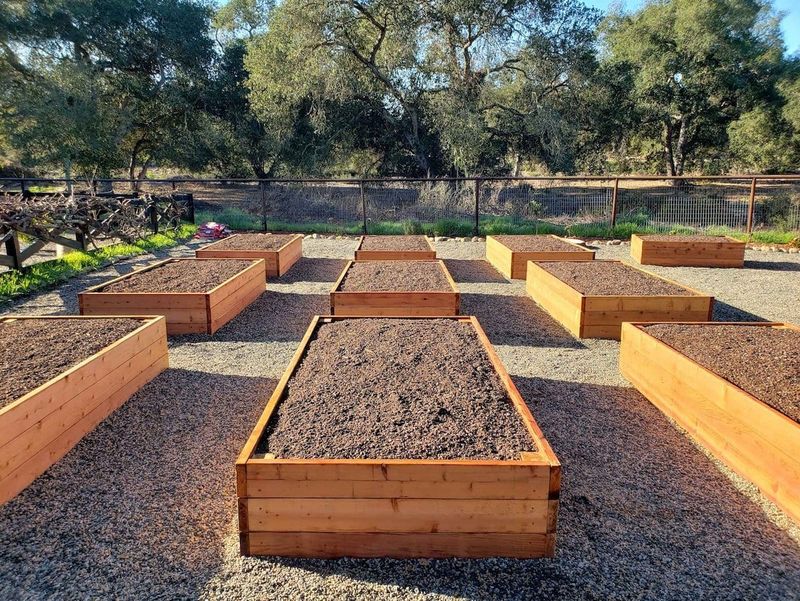
Fall is supposed to bring relief to Southern gardeners, but sometimes the cooler weather arrives and the crops still look rough. Yellowing leaves, stunted seedlings, and thin harvests after a long summer can feel discouraging, especially when you have been working that bed all year.
The problem is not always the soil, and when it is, it rarely comes down to one universal fix. Knowing which conditions to actually look for puts you in a much better position than reaching for the nearest bag of fertilizer.
Treat the three needs as a diagnosis, not a verdict
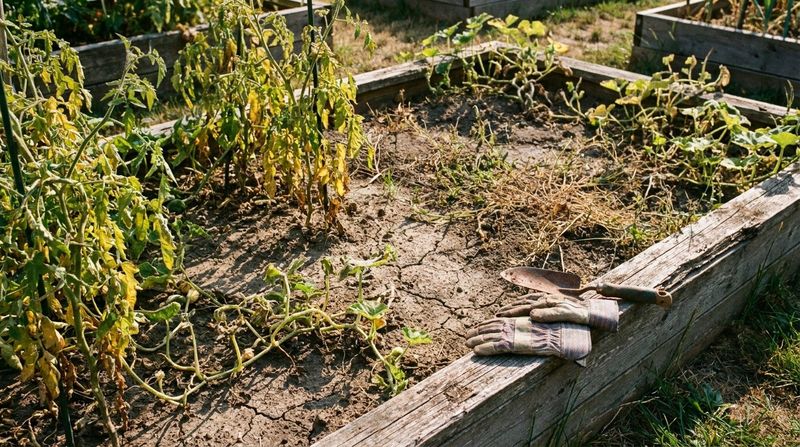
Weak fall crops do not automatically prove that every raised bed is short on the same three things. Before adding anything to the soil, it helps to identify what you are actually looking for: stable organic matter, available nutrients at a suitable pH, and a root zone that provides both moisture and oxygen.
Those are the three conditions worth investigating, not three products to purchase by default.
Yellowing leaves, small foliage, poor fruiting, and slow growth can each point in several directions at once. Heat stress carried over from summer, inconsistent irrigation, root compaction, pest pressure, disease, insufficient light, or a planting date that does not match your local temperature window can all produce the same tired look that gardeners often blame on the soil.
UGA Extension fall vegetable guidance notes that planting dates and regional conditions are central to crop success, independent of soil quality.
A post-harvest inspection and a soil test give you actual data. UF/IFAS raised-bed guidance and Florida organic matter research both point toward site-specific assessment rather than routine amendment.
Testing and inspecting first means you correct only what needs correcting, instead of stacking amendments on a bed that may already have too much of something.
Rebuild structure with stable organic matter
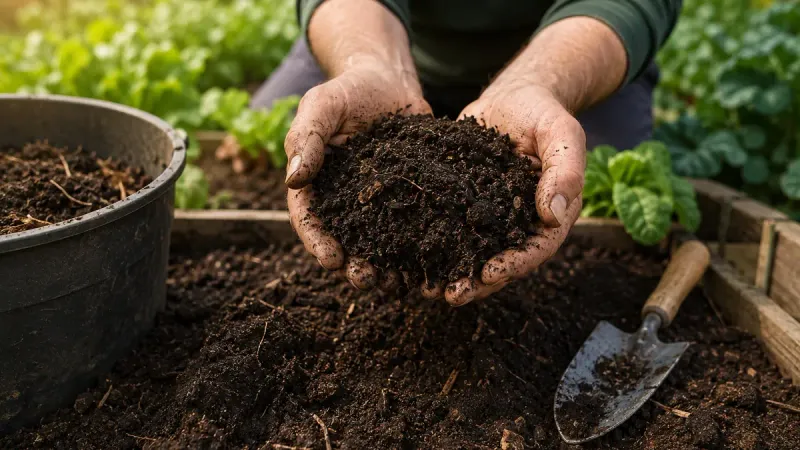
Finished compost, decomposed leaves, and other stable organic materials do specific physical work inside the soil that fertilizer cannot replicate. They bind soil particles into aggregates, which opens up pore space for both air and water.
That improved structure lets roots push deeper, helps sandy beds hold onto moisture and nutrients longer, and gives heavier soils a better chance of draining without becoming waterlogged.
Organic matter also feeds the microbial community that keeps nutrients cycling. UF/IFAS soil organic matter research shows that Florida’s sandy soils tend to have naturally low organic matter levels, which makes regular replenishment practical.
For Texas gardeners working with clay-heavy beds, Texas A&M organic production guidance supports organic amendments as a way to improve both drainage and water retention depending on the starting soil type.
Organic amendments, fertilizer, and surface mulch are three different tools. Compost adds structure and feeds biology; fertilizer delivers specific nutrients at a known concentration; mulch protects the surface.
UGA Extension compost guidance is clear that compost enriches soil but does not function as a complete fertilizer replacement. Compost quality, the existing bed mix, and what the soil already contains all determine how much benefit a new application will actually provide.
And as University of Minnesota Extension notes, repeated applications can raise phosphorus, salts, or alkalinity even when the bed looks like it needs more.
Use soil testing to guide fertility and pH corrections
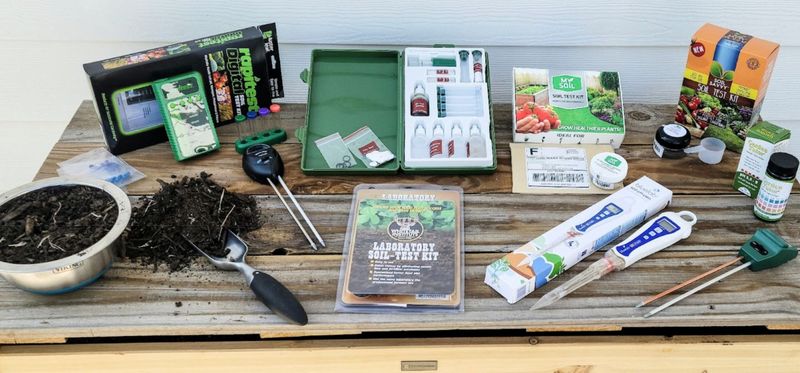
A summer of cropping changes what is available in the soil, but it does not prove the bed is short on everything. Crops remove nutrients as they grow, rainfall and irrigation move soluble nutrients downward, and decomposition releases others.
The only way to know what actually changed is to test the soil after harvest and read the results before adding anything.
Sampling correctly matters as much as testing at all. Pull samples from the raised bed itself, not from the surrounding ground or adjacent paths.
If you manage two beds differently, test them separately. University of Minnesota Extension soil testing guidance explains that a standard report typically covers pH, organic matter percentage, phosphorus, and potassium, along with lime and fertilizer recommendations tied to your specific results.
Texas gardeners can submit samples through the Texas A&M AgriLife soil testing lab, which provides region-specific recommendations.
Nitrogen is the one nutrient that does not show up reliably on a standard test because it changes quickly with rain, irrigation, and decomposition. That means you cannot read a low nitrogen number and assume the bed is simply depleted.
UF/IFAS vegetable fertilization guidance addresses how Florida’s leaching conditions affect nitrogen management specifically. pH is equally important: a bed can hold adequate phosphorus or iron yet show deficiency symptoms if the pH sits too far outside the range where those nutrients become available to roots. Penn State high-tunnel soil nutrient guidance points out that beds amended repeatedly with manure-based composts often show excess phosphorus and potassium even when nitrogen appears low.
Follow the test report rather than applying a balanced N-P-K fertilizer out of habit, because adding unneeded nutrients wastes money and increases leaching or runoff risk. Penn State’s pH guidance covers how to interpret pH results and decide whether lime or sulfur is actually warranted.
Balance root-zone moisture with oxygen
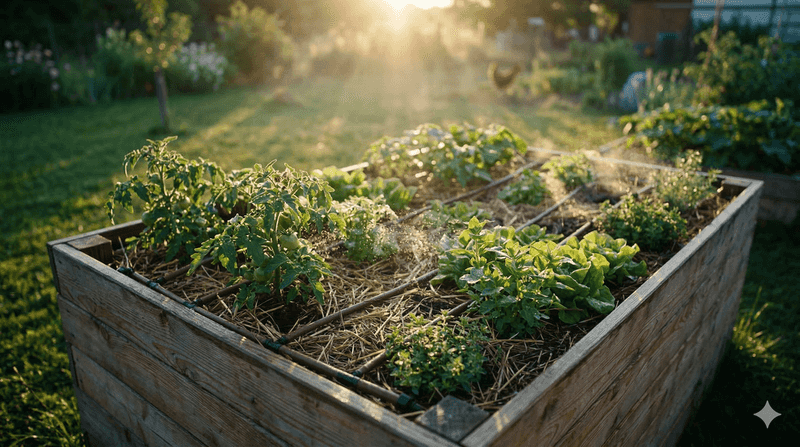
Roots need two things at the same time: moisture and oxygen. When a bed dries out completely between waterings, roots stop taking up nutrients even if the nutrients are present.
When a bed stays saturated or becomes compacted, the pore space that roots depend on for oxygen fills with water instead, slowing growth and setting up conditions where root rot and other diseases can take hold.
Sandy beds, especially common in Florida, can lose water so quickly that nutrients leach below the root zone before plants can use them. UF/IFAS irrigation management guidance notes that Florida raised beds can dry faster than flat ground, which means irrigation frequency and fertilizer timing need to work together to avoid flushing nutrients out with every watering event.
Frequent, smaller applications reduce that leaching risk compared to single heavy doses.
Texas conditions vary more widely. Texas A&M raised-bed production guidance notes that sandy Texas soils share the same fast-draining tendency as Florida’s, while heavier clay soils in other parts of the state can hold too much water and restrict root development in a different way.
Texas A&M soils and fertilizers guidance and cultural practices guidance both address how bed depth, soil mix, site drainage, and irrigation management interact. UF/IFAS raised-bed guidance reinforces that raised beds do not automatically drain well; the outcome depends on the bed media, the depth, the underlying soil, and whether compaction has closed off the pore space that once made the bed perform well.
Repair the bed according to its test results
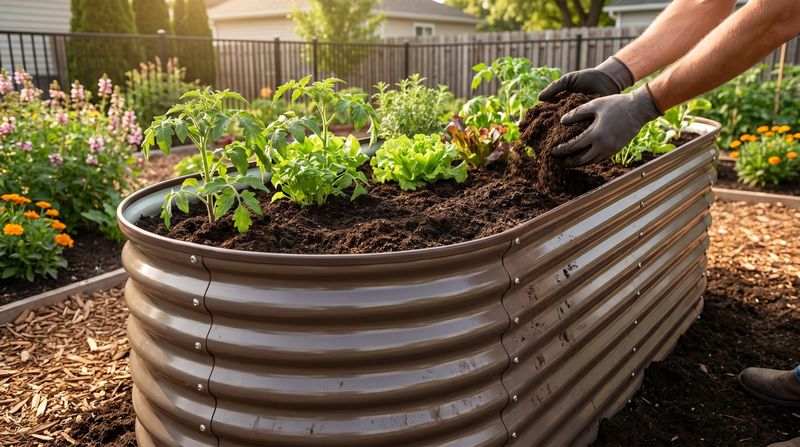
Once you have the soil test results and a clear picture of the bed’s physical condition, the repair sequence becomes straightforward. Start by clearing out spent crop debris, then pull a soil sample if you have not done so already.
Let the lab results, not the calendar, tell you whether fertilizer or lime is needed and at what rate.
If the test or a hands-on inspection shows that organic matter is low or structure has degraded after a full season of root growth and irrigation, adding a modest layer of high-quality finished compost is a practical step. Texas A&M fall vegetable garden guidance commonly suggests 2 to 3 inches of organic matter for soil improvement, while other raised-bed programs recommend smaller maintenance additions.
The right amount depends on your existing soil volume, the compost quality, and what the test shows. Work it in lightly with a fork or leave it as a surface dressing and let irrigation carry it down gradually.
Apply fertilizer or lime only at the rates the test report recommends. More is not better: excess phosphorus and potassium accumulate in the bed and can interfere with other nutrients over time.
Do not replace the bed’s mineral soil component with pure compost. Penn State raised-bed soil health guidance and Penn State raised-bed construction recommendations both note that a stable structural component, such as mineral soil, should remain part of the growing medium.
A bed built from pure compost loses structure quickly and can create drainage and fertility problems of its own. Use the Texas A&M AgriLife lab or your state’s cooperative extension service to confirm whether a second test is warranted after amendments are in place.
University of Minnesota Extension recommends retesting periodically to track whether changes are holding and to catch new imbalances before they affect the next crop. Texas A&M soil preparation guidance provides additional context on amendment rates and timing for Texas-specific conditions.
Avoid amendments that create new problems
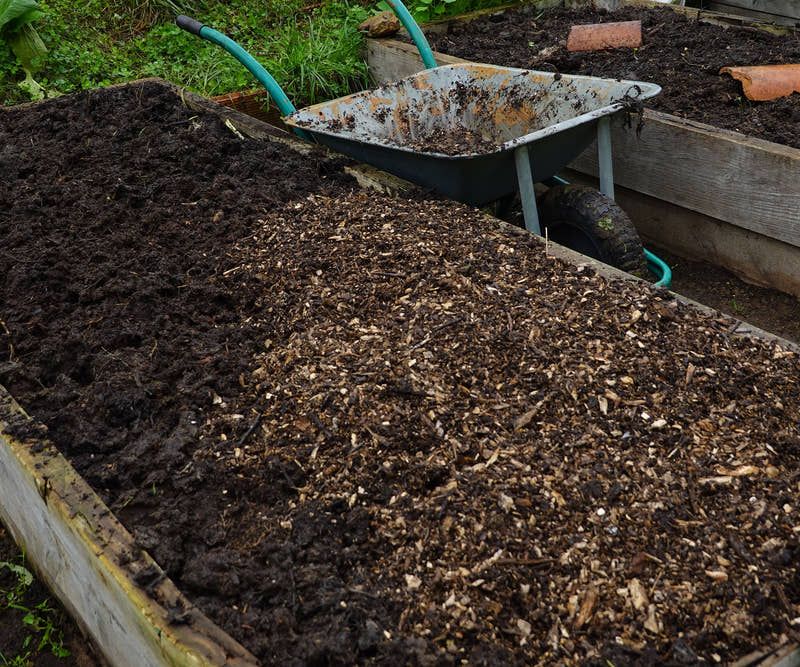
Adding something to the bed feels productive, but the wrong amendment can leave the soil in worse shape than before. Repeated applications of compost or manure-based products are one of the most common ways a well-intentioned bed ends up with too much phosphorus, elevated salts, or rising pH.
University of Minnesota Extension documents how phosphorus and potassium can accumulate in beds that receive heavy organic inputs year after year, even when nitrogen remains difficult to supply in adequate amounts.
Gypsum is sometimes marketed as a cure for compaction or poor drainage, but it is not a general-purpose fix. Texas A&M soil preparation guidance notes that gypsum has specific applications in certain soil conditions and should not be applied without a clearly identified need.
Similarly, adding large amounts of sand to a clay-heavy bed without enough organic matter to bind it can produce a concrete-like result rather than improved drainage. Texas A&M fall garden guidance also cautions that spring crop residues may carry insects or disease pathogens, which is why diseased or heavily infested plant material should be removed and disposed of rather than automatically composted.
Fresh or insufficiently treated manure near edible crops is a food-safety concern, not just a fertility question. Aging alone does not reliably eliminate pathogens.
University of Minnesota Extension food safety guidance on animal-based compost outlines why properly treated, finished compost or reputable commercial products are safer choices, and why harvest-interval guidance matters when any manure-derived material is used near edible crops. UGA Extension herbicide carryover research adds another reason to source compost carefully: persistent herbicide residues can move from hay or manure into finished compost and damage vegetable crops.
UGA Extension manure safety guidance reinforces that safe use depends on proper treatment, not simply time elapsed since application.
Protect the root zone between plantings
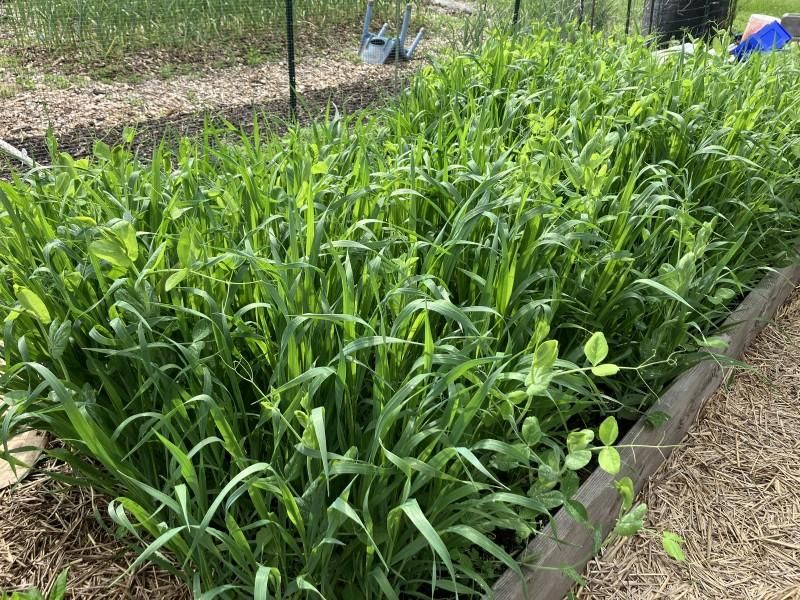
An empty raised bed left bare between crops loses moisture faster, erodes under rain, and gives weed seeds an open invitation. A layer of suitable mulch costs little and does real work: it slows surface evaporation, moderates soil temperature swings, and reduces the physical impact of heavy rain on soil structure.
Over time, organic mulches break down and contribute small amounts of organic matter as well.
Penn State raised-bed soil health guidance and Texas A&M raised-bed management guidance both support mulching or using living cover between crops as a practical soil-protection strategy. For gardeners who have enough time between fall and spring crops, a managed cover crop can add biomass, protect the soil surface, and in the case of legumes, potentially contribute nitrogen when properly terminated before the next planting.
The nitrogen contribution depends on species choice, how much biomass develops, and how and when the cover crop is incorporated or killed.
Planting dates ultimately control whether a fall crop succeeds, and no amount of soil improvement changes that reality. UF/IFAS Florida vegetable gardening guidance and Texas A&M fall garden guidance provide region-specific planting windows because Florida and Texas do not share the same temperature timeline.
UGA Extension fall vegetable guidance similarly emphasizes matching crop choice and timing to local conditions. A bed in excellent shape will still produce a poor crop if seeds go in when night temperatures are still too high or when the first frost arrives before harvest.
Test first and correct only the condition you find
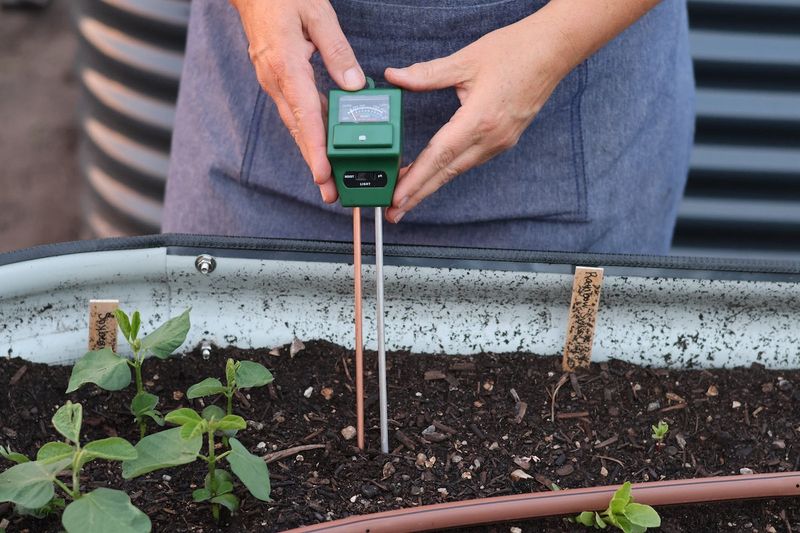
The three conditions worth assessing in a tired fall raised bed are stable organic matter, available nutrients at a workable pH, and a root zone that supplies both moisture and oxygen. None of them are guaranteed to be the reason your crops struggled, and you may find that only one needs attention.
Inspect the bed after harvest, pull a soil sample, and read the results before reaching for any product. Improve organic matter when structure or biology has clearly declined, correct nutrients or pH only at the rates the test recommends, and manage irrigation and drainage to keep the root zone from swinging between drought and saturation.
University of Minnesota Extension, UF/IFAS raised-bed guidance, and Penn State soil health resources all point toward the same principle: a functioning root zone is the goal, not an accumulation of amendments. The best thing you can add to a bed that does not need fixing is nothing at all.