
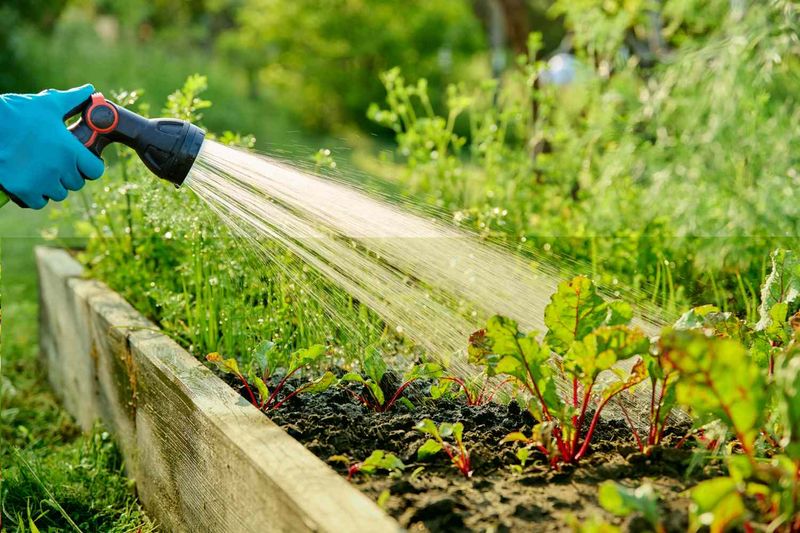
Late summer in North Carolina is brutal on vegetable gardens, with temperatures staying high well into September across the Piedmont, Coastal Plain, and mountains. Many gardeners keep their plants alive with a quick sprinkle every day, thinking regular watering is the right move.
The problem is that frequent, shallow watering can quietly stress established plants just as much as skipping water altogether. Understanding what is actually happening below the soil surface can make the difference between a decent fall harvest and a garden that limps to the finish line.
The daily sprinkle keeps established roots too close to the surface
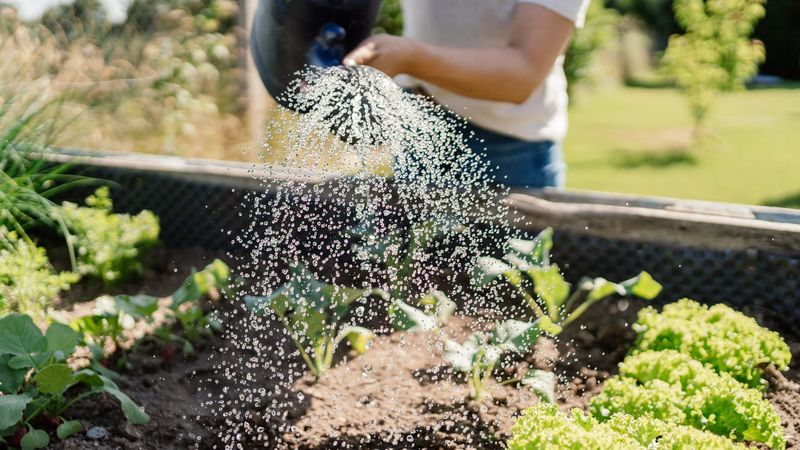
Grabbing the hose for a quick pass over the vegetable bed every morning feels responsible, especially when temperatures are pushing into the 90s and the soil looks dry by noon. For established plants, though, that habit can be the very thing undermining the harvest.
The issue is not watering during the day by itself, but rather how little water actually reaches the roots when the application is brief and shallow.
When a sprinkle only wets the top inch or two of soil, vegetable roots have no reason to grow deeper. Over time, NC State Extension’s vegetable gardening guidance notes that frequent, shallow watering encourages roots to stay in the upper soil layer, where heat dries things out rapidly during North Carolina’s late-summer conditions.
A tomato or pepper plant with roots concentrated at the surface is far more vulnerable to heat and drought stress than one with a deeper, well-established root system.
This article focuses on mature, established plants growing in in-ground beds. Seedlings, new transplants, containers, and sandy soils operate by different rules that later sections address.
The late-summer and September growing window in North Carolina makes this particularly urgent: warm-season crops like tomatoes, peppers, squash, and eggplant are still setting and ripening fruit, and they need reliable moisture in the right place to finish strong.
Recognizing the daily sprinkle as a form of shallow watering, rather than a genuine root-zone soak, is the first step. The fix is not complicated, but it does require paying attention to where the water is actually going.
A damp surface can hide a dry root zone
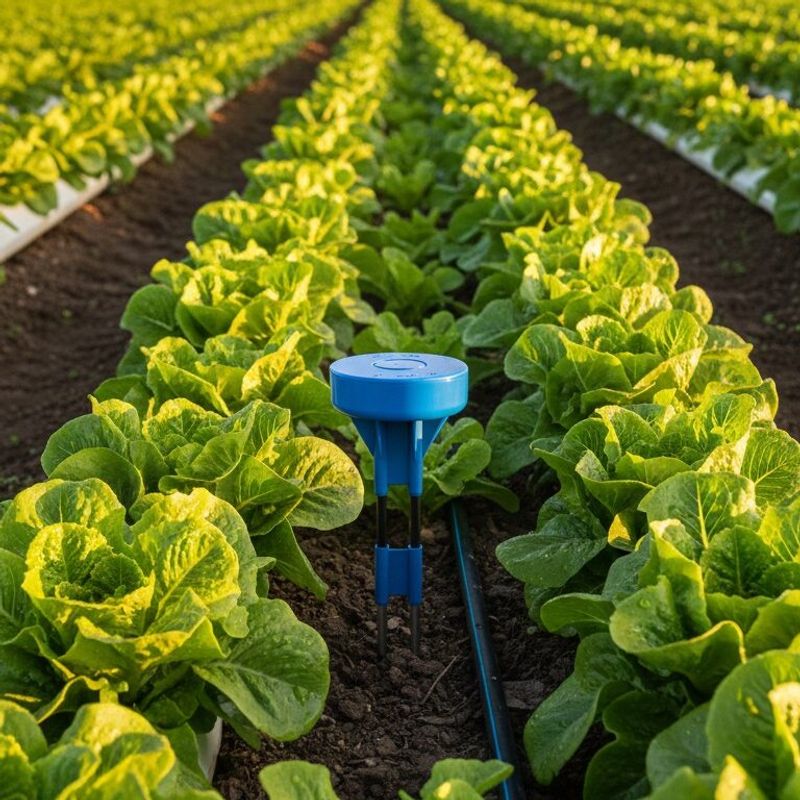
Soil can look perfectly watered from above while being bone dry four inches down. After a short sprinkle, water soaks into the top layer and then stops.
The surface stays dark and damp long enough to seem fine, while the zone where established vegetable roots actually do most of their work remains parched. This is the core of why the daily sprinkle is so easy to miss as a problem.
Inadequate root-zone moisture during North Carolina’s late-summer heat contributes to reduced growth, lower fruit yields, wilting, and leaf scorch. NC State’s guidance on drought for small-scale vegetable production points out that wind and heat reduce irrigation efficiency, and that overhead watering compounds the problem by losing water to evaporation before it ever reaches the root zone.
Wet foliage and soil splash from overhead sprinklers also raise disease pressure, creating a second problem on top of the moisture deficit.
One persistent myth worth setting aside: water droplets sitting on leaves do not magnify sunlight and burn or cook plants. Penn State Extension identifies this as a garden myth without scientific support.
Leaf damage that appears after watering is far more likely linked to drought stress, disease, wind, insects, or other environmental factors. The real concern with overhead watering is disease pressure from prolonged leaf wetness and soil-to-leaf splash, not optical burning.
Keeping foliage dry matters, but the more pressing issue for established vegetable beds is simply getting enough water to the right depth. Food safety guidance from NC State also cautions against soil splash onto edible portions of plants, another reason to direct water at the soil rather than overhead.
Check the soil before you turn on the hose

Before reaching for the hose, it pays to spend thirty seconds actually checking the soil. Push a finger, a wooden dowel, or a screwdriver about four to six inches into the bed near the base of a plant.
If the soil feels moist at that depth, the root zone likely has what it needs. If it feels dry an inch or two down, watering is genuinely warranted.
Afternoon wilting is easy to misread. During peak heat, many vegetable plants temporarily wilt as a way of reducing water loss through their leaves, even when soil moisture is adequate.
University of Georgia Extension’s vegetable water conservation guidance recommends checking whether plants recover in the morning or early evening before concluding they are water-stressed. A plant that looks fine again by the next morning was probably responding to heat, not drought.
Persistent wilting in the early morning or early evening is a more reliable signal that the root zone is dry and water is needed. However, there is another possibility worth knowing: overwatered or diseased roots can also cause wilting.
When soil is saturated for extended periods, oxygen around the roots is reduced and root function declines. Colorado State University Extension explains that waterlogged conditions can lead to root damage and wilting even when the soil appears wet.
Adding more water to a plant wilting from root disease or oxygen deprivation makes the situation worse, not better.
The NC State beginner’s vegetable gardening guide also recommends this kind of direct soil check rather than relying on plant appearance alone. A two-minute diagnostic routine replaces guessing and keeps established plants from receiving either too little or too much water.
Measure a root-zone soak instead of guessing
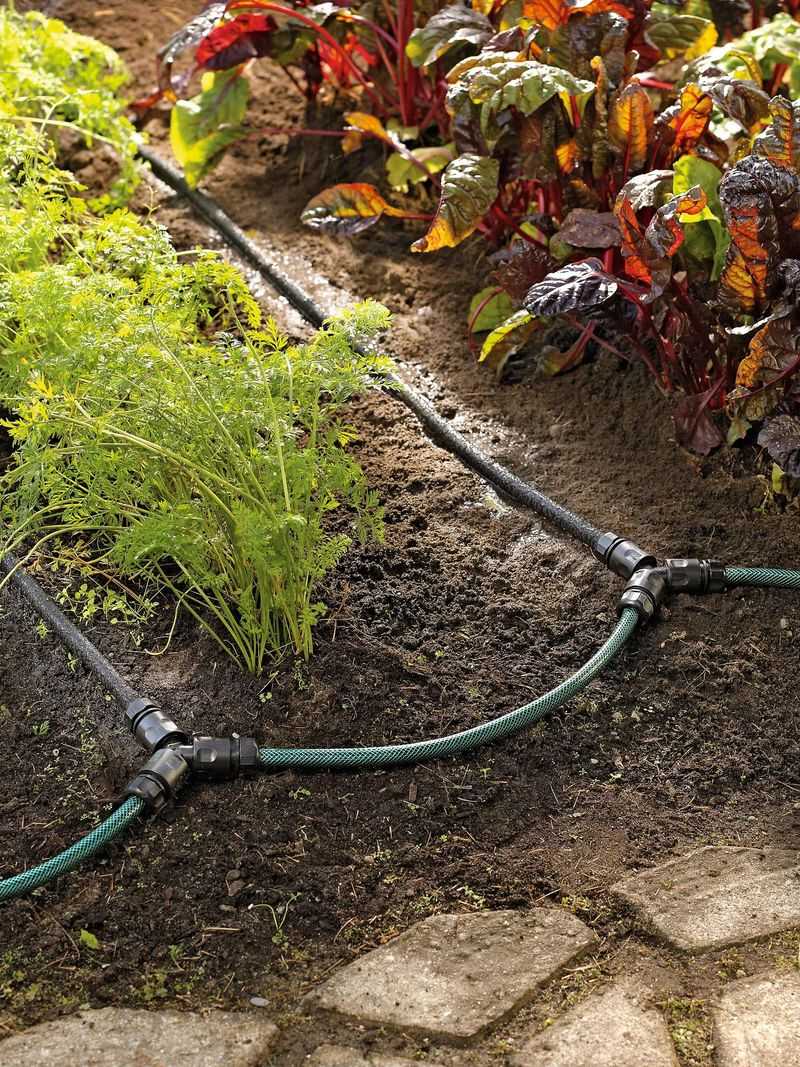
Replacing the daily sprinkle with a measured soak starts with redirecting where the water goes. A soaker hose, drip line, or low-flow watering wand aimed at the base of plants puts water directly into the soil rather than broadcasting it through the air.
NC State Extension recommends targeting the soil rather than the foliage to reduce evaporation, limit leaf wetness, and minimize soil splash onto plant leaves and edible portions.
As a starting point for established in-ground vegetable beds, aim for roughly one inch of total water per week, counting any rainfall that falls on the bed. NC State’s guidance sets a target of wetting soil to approximately six inches.
That depth is where the bulk of an established vegetable plant’s active root zone sits, and reaching it consistently is what separates a real soak from a surface sprinkle.
Measuring is straightforward. Place several straight-sided containers, such as empty tuna cans or short glass jars, around the bed while running the irrigation system.
When the containers hold about one inch of water, the system has delivered roughly that amount to the bed. After the water has had time to move through the soil, use a hand trowel or a probe to check that moisture has genuinely penetrated to six inches rather than pooling near the surface.
University of Georgia Extension recommends soaking to at least six to eight inches for established vegetables rather than applying a light spray every day. NC State’s drought guidance reinforces that consistent moisture reaching the root zone matters far more than keeping the soil surface constantly damp.
The goal is reliable, even moisture, not soil that swings between soggy and bone dry.
Delivery and timing change how much water reaches the plants
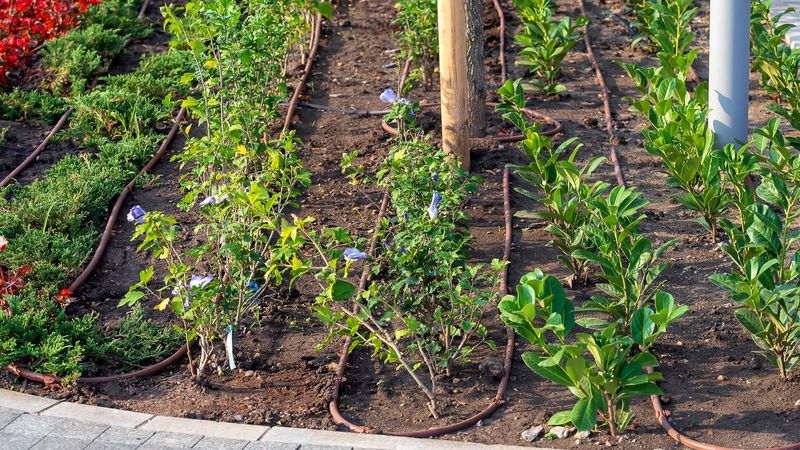
How water is delivered matters almost as much as how much is applied. Soil-level irrigation, whether a soaker hose, a drip line, or a low-flow wand held close to the ground, limits the amount of water lost to evaporation and wind before it reaches the soil.
In North Carolina’s late-summer heat, NC State’s evapotranspiration guidance for vegetables makes clear that wind and high temperatures significantly reduce how efficiently overhead irrigation delivers water to the root zone. Keeping water close to the ground sidesteps much of that loss.
Early morning is a broadly safe default for any irrigation that wets foliage, including overhead sprinklers. Applying water in the morning gives leaves time to dry as temperatures rise through the day, which reduces the window for fungal and bacterial diseases to take hold.
NC State’s cucurbit anthracnose guidance specifically notes that keeping foliage dry is an important management step for crops prone to foliar disease.
Midday watering is not inherently harmful or forbidden. A plant genuinely wilted from a dry root zone should be watered when it needs water, not left stressed until a preferred time of day arrives.
The practical downside of running sprinklers at midday is mainly greater evaporation and wind drift, not any sunlight-focusing effect through water droplets.
NC State Extension notes that evening or nighttime watering can reduce evaporation during hot, dry conditions. However, if overhead sprinklers are used in the evening, foliage may stay wet through the night, which raises disease risk.
Soil-level delivery at any time of day avoids that concern entirely because leaves stay dry regardless of when the system runs.
North Carolina soil and crop conditions set the schedule

One inch per week is a useful starting point, but treating it as a fixed calendar rule will lead to trouble across North Carolina’s varied growing conditions. Coastal Plain sands drain quickly and hold relatively little water, meaning beds on that soil type may need more frequent irrigation than the weekly guideline suggests.
Piedmont clay or clay loam holds moisture longer but can also become compacted and slow to absorb water. Mountain soils vary considerably.
NC State’s irrigation scheduling guidance explains that soil texture directly affects both water-holding capacity and infiltration rate, so the right watering interval differs by location.
Raised beds and containers dry out faster than in-ground beds regardless of soil type, because they have less total soil volume and often drain more freely. NC State’s beginner’s guide notes that containers and sandy soils require more frequent attention.
During extreme heat, containers may need daily watering to keep plants viable.
Crop choice also shapes the schedule. Lettuce, corn, and other relatively shallow-rooted plants can need more consistent moisture than established tomatoes, squash, or melons, which develop deeper root systems when watered properly.
University of Minnesota Extension’s drought gardening guidance identifies corn as a crop with relatively shallow roots that may need more frequent irrigation, though local soil, weather, and crop stage always factor into the actual schedule.
Newly seeded beds and fresh transplants deserve separate treatment. Seeds need consistent surface moisture to germinate, and transplants need frequent water until their roots establish in the surrounding soil.
Daily watering for new plantings is not a mistake; it is often necessary. NC State’s drought production guidance also distinguishes drip systems from hand sprinkling: a drip line running daily or even hourly applies water to a targeted root-zone area and can legitimately operate on a high-frequency schedule without the problems caused by shallow overhead sprinkling.
The problem is not frequency by itself; it is applying too little water in the wrong place.
Steady moisture helps carry the late-summer harvest
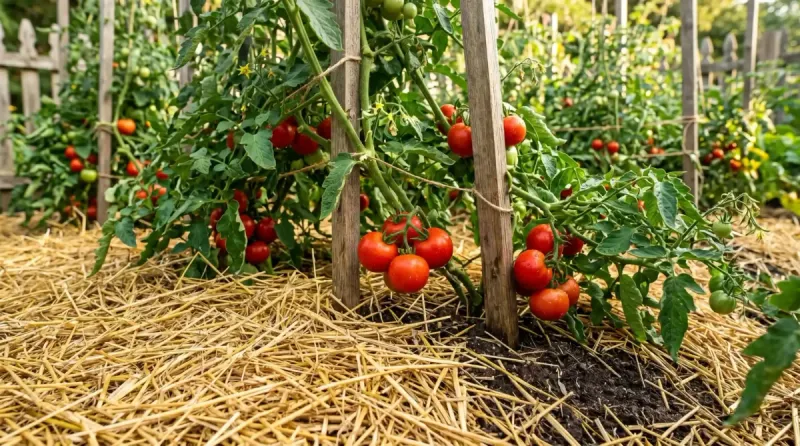
Fruiting vegetables are the most sensitive to moisture swings during late summer. Tomatoes in active fruit production are particularly demanding: NC State’s home tomato guide gives approximately 1.5 inches of water per week during fruiting as a condition-dependent reference point, with the actual amount adjusted for rainfall, temperature, soil, and plant size.
That is a higher baseline than the general vegetable garden guideline, and it reflects how much water a tomato plant actively moving sugars into developing fruit actually requires.
Sharp swings between dry and wet soil are directly tied to blossom-end rot, the dark, sunken patch that appears on the bottom of tomatoes, peppers, and watermelons. NC State’s blossom-end rot publication explains that the disorder is associated with inconsistent or extreme soil moisture, which interferes with how calcium moves into developing fruit tissue.
Applying calcium sprays or fertilizers without correcting the underlying moisture pattern often fails to solve the problem, because the calcium is already present in most NC soils; the issue is delivery to the fruit.
Organic mulch is one of the most practical supporting tools available. Straw, shredded leaves, or compost spread two to three inches deep around vegetable plants conserves soil moisture, moderates soil temperature, and reduces soil splash onto leaves and fruit.
NC State Extension recommends organic mulches specifically for vegetable beds as a way to stretch the interval between waterings and protect plants during heat events.
Steady, reliable moisture, not constantly saturated soil, is the target. Keeping the root zone consistently available to the plant through the late-summer fruiting window gives tomatoes, peppers, and other warm-season crops the best chance to ripen cleanly and fully before cooler weather arrives.
The fix is simple: water deeply enough to reach the roots
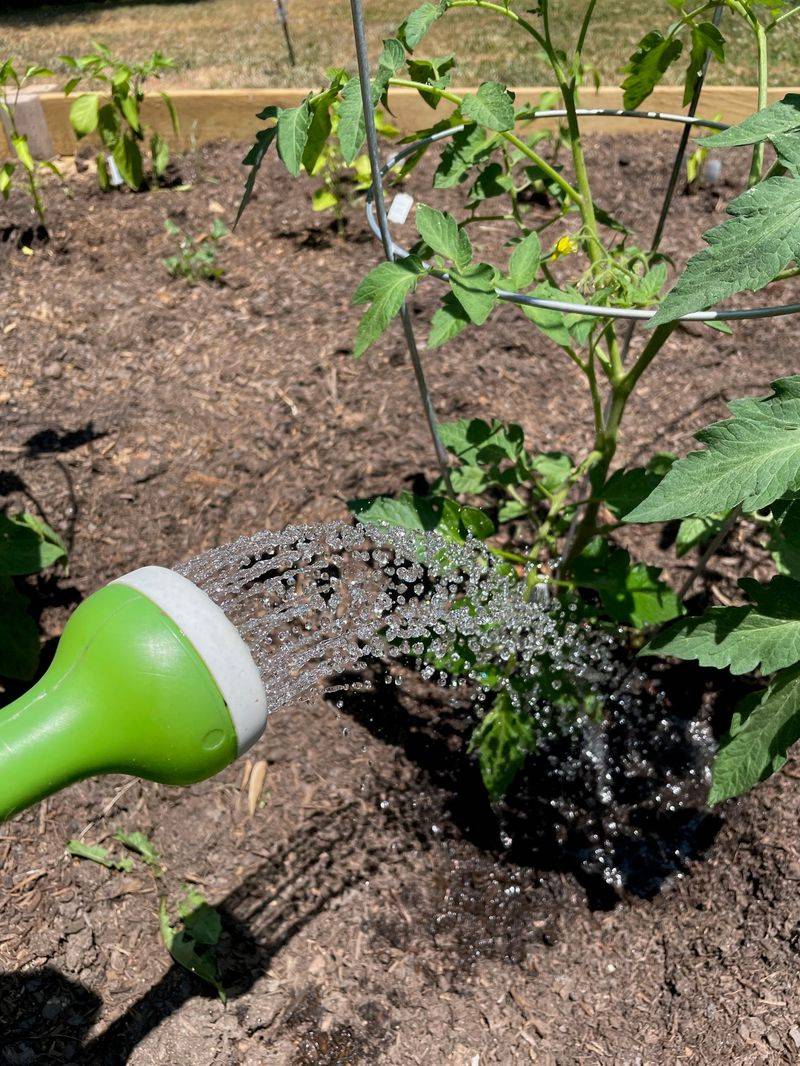
Correcting the shallow-watering habit comes down to a few straightforward steps. Check the soil a few inches below the surface before deciding whether to water, rather than reacting to an afternoon wilt or a dry-looking surface.
When water is genuinely needed, direct it to the base of the plants and run the system long enough to wet the root zone to about six inches. Then measure what you delivered and verify it reached the right depth.
NC State Extension and the beginner’s vegetable guide both frame this as a habit of measuring and adjusting rather than following a rigid calendar. Containers, sandy soils, raised beds, shallow-rooted crops, and newly planted seedlings all warrant more frequent attention than established in-ground beds on heavier soils.
The goal is not a perfect schedule or permanently wet soil. Reliable moisture where established roots can actually reach it, combined with dry foliage and cleaner edible portions, is what the corrected routine delivers.
Getting water to the right depth, consistently and efficiently, is what keeps a late-summer North Carolina garden productive when the heat refuses to let up.