
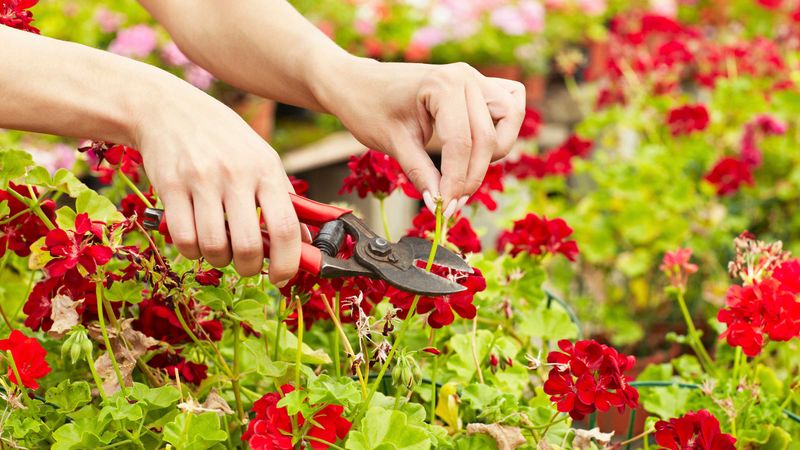
Most gardeners walk right past a spent geranium bloom without realizing it is signaling a simple task that could keep color coming through fall. The plants sold as garden geraniums at nurseries and home improvement stores are actually Pelargoniums, and they respond well to a bit of regular attention.
Removing a finished flower cluster at the right time and in the right way can give a healthy plant a better shot at continuing to bloom, though the result depends on more than just one cut.
Treat the Faded Cluster as a Cue, Not a Guarantee
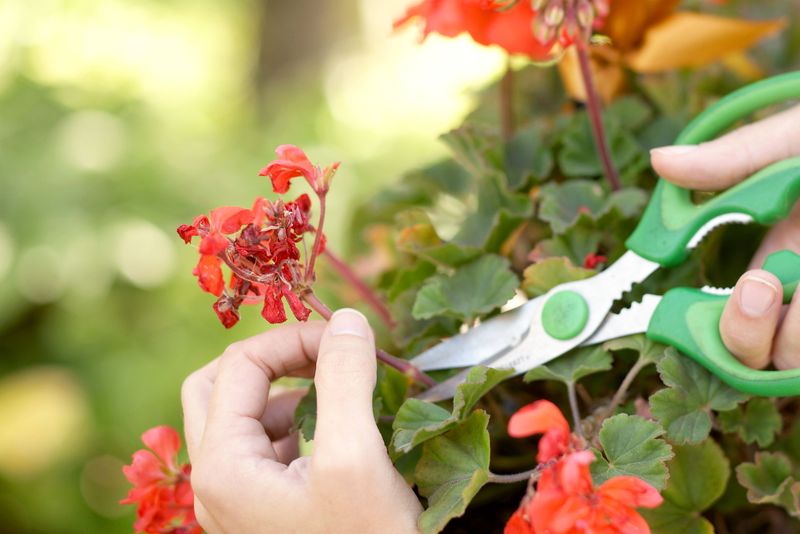
A flower cluster that has faded, browned, shriveled, or started dropping petals is sending a clear message: it has finished its job. The plants covered in this guide are common garden or annual geraniums in the genus Pelargonium, especially Pelargonium x hortorum, the zonal types most often sold in six-packs and hanging containers across the South.
These are not the same as true hardy cranesbill Geraniums, which belong to a separate genus and behave differently.
When a Pelargonium cluster reaches that visibly spent stage, that is the cue to remove it. Some clusters will also begin forming small seed structures where the petals were, which is another reliable sign the flower is finished.
Iowa State Extension’s guide to growing annual geraniums confirms that deadheading these plants regularly can help maintain flowering through the season.
Removing the cluster may help a suitable plant continue producing flowers, but it does not guarantee a fall flush. Whether the plant responds depends on its overall health, the light it receives, soil drainage, watering, temperature, and cultivar.
The faded cluster is a prompt for a helpful maintenance step, not a switch that automatically triggers new blooms.
How Deadheading Can Support Continued Flowering
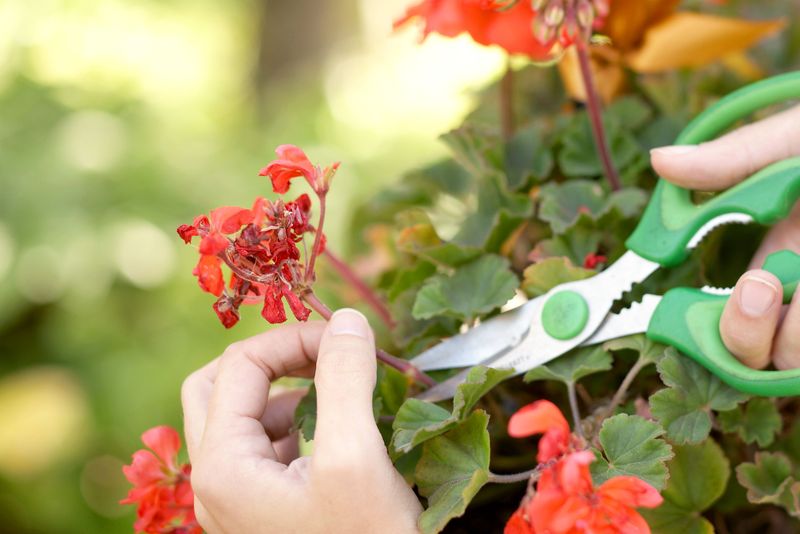
Removing a spent flower stalk does something specific: it takes away the developing seed structure that forms after a bloom finishes. When a plant puts resources into ripening seeds, it may invest less in producing new flower buds.
Clearing that spent tissue can reduce seed development and leave the plant better positioned to keep flowering, at least in plants that are otherwise healthy and growing under suitable conditions.
South Dakota State Extension’s guide on deadheading for more flowers describes the practice as a way to encourage continued blooming by preventing seed set. The key word in that framing is “encourage.” Extension sources consistently use terms like “promote” or “may support” rather than promising a fixed number of new flowers or a guaranteed bloom period.
Deadheading works alongside the other conditions a plant needs, not instead of them. Kansas State Extension’s horticulture deadheading guidance reinforces that the response varies by cultivar, plant health, and growing environment.
A plant struggling with heat stress, low light, waterlogged roots, or poor nutrition will not respond to deadheading the same way a healthy, well-sited plant will. The cut helps, but it cannot carry the full load on its own.
Remove the Whole Flower Stalk, Not the Whole Plant
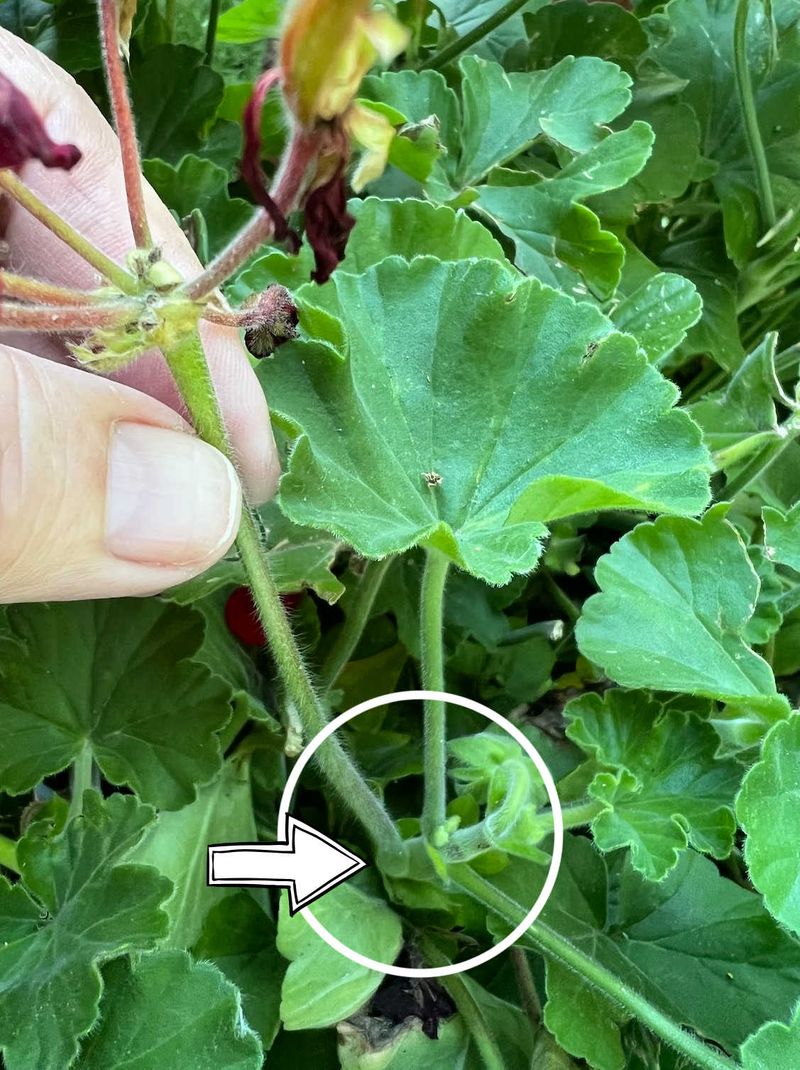
Once a cluster looks clearly finished, follow the flower stalk down with your fingers. The stalk is the slender stem that connects the flower cluster to the main body of the plant.
Trace it all the way to the point where it meets the main stem or a leaf node, because that junction is exactly where the cut belongs.
Many gardeners find they can snap the stalk downward with a firm, quick motion and it releases cleanly without leaving a stub. When the stalk is tough or does not snap easily, use clean, sharp pruners or scissors to cut it at the base.
Illinois Extension’s deadheading guide recommends tracing the stem back to where it originates and cutting there, rather than leaving a partial stalk behind.
Routine deadheading for common Pelargoniums means removing one stalk at a time as each cluster finishes. This is not the same as cutting the entire plant back hard after every faded bloom.
Larger structural pruning is a separate task, and treating it as normal deadheading can remove healthy stems and set the plant back unnecessarily. For container plants and bedding geraniums alike, the goal is a clean removal of the individual spent stalk, leaving the rest of the plant intact and ready to push new growth.
Inspect for Disease While You Remove Spent Flowers
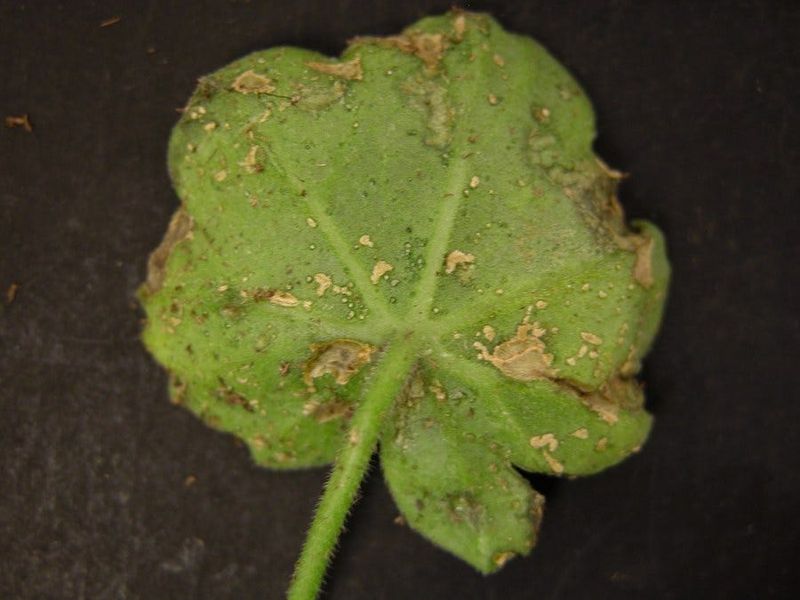
Deadheading creates a natural pause to look closely at the plant beyond just the finished flowers. Spent petals that fall and collect on leaves or at the base of the plant can hold moisture against the foliage, which encourages problems.
Gray mold, caused by Botrytis cinerea, is one of the more common issues on geraniums and thrives on old or dead tissue, especially when plants are crowded, foliage stays wet, or air circulation is poor.
Penn State Extension’s geranium disease resource lists Botrytis as a significant concern for Pelargoniums, noting that the fungus spreads readily through infected plant debris. Cornell’s Botrytis blight fact sheet connects the disease directly to old tissue, moisture, and conditions that limit airflow around the plant.
While deadheading, remove any leaves that look spotted, mushy, or discolored, along with the spent flower stalks. Clear fallen petals from the soil surface or pot saucer as well.
Diseased flowers and leaves should go into the trash rather than a compost pile, since composting suspicious material can allow the pathogen to persist. Cleaning up debris during deadheading improves the plant’s appearance and may reduce the conditions that favor disease, but removing spent flowers will not cure an infection that is already established in the stems or roots.
Give the Plant Conditions That Support More Flowers
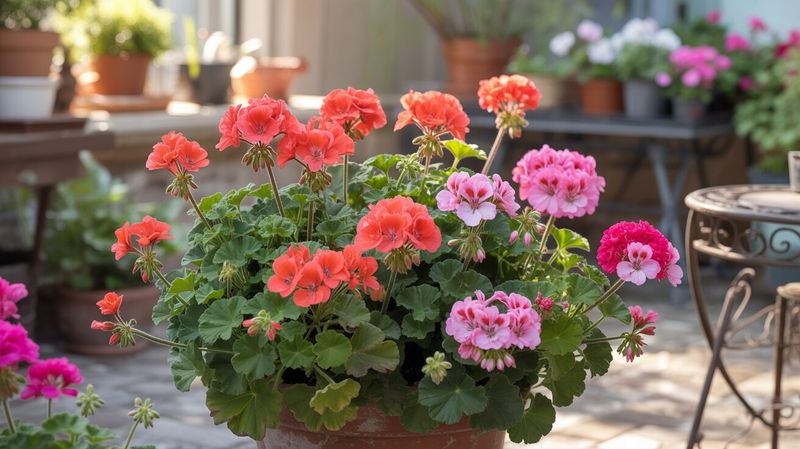
After deadheading, the most useful question is whether the plant’s basic growing conditions are set up to support new flowers. Deadheading a plant that lacks adequate light, sits in waterlogged soil, or has gone without fertilizer for months will produce little visible improvement.
Checking these factors is what separates a pruning problem from a cultural one.
Iowa State Extension’s geranium care FAQ recommends at least six hours of direct sun daily for common garden geraniums to flower well. Shade is one of the most common reasons a Pelargonium produces weak or sparse blooms regardless of how often it is deadheaded.
If the plant is on a porch or under a tree that blocks afternoon sun, moving it to a brighter spot may matter more than any pruning.
Watering needs some attention too, especially for container plants. Pots dry out much faster than garden beds, so the potting mix surface is worth checking regularly.
Water when the surface feels dry, but avoid letting the plant sit in standing water or keeping the roots constantly wet. Overwatering and poor drainage can lead to root and stem rot, which deadheading cannot fix.
University of Georgia Extension’s geranium publication also notes that balanced fertilization supports healthy growth and continued flowering, so a slow-release granular or diluted liquid fertilizer applied through the growing season gives the plant the nutrients it needs to produce new buds after spent clusters are removed.
Let Region, Temperature, and Plant Type Set Expectations
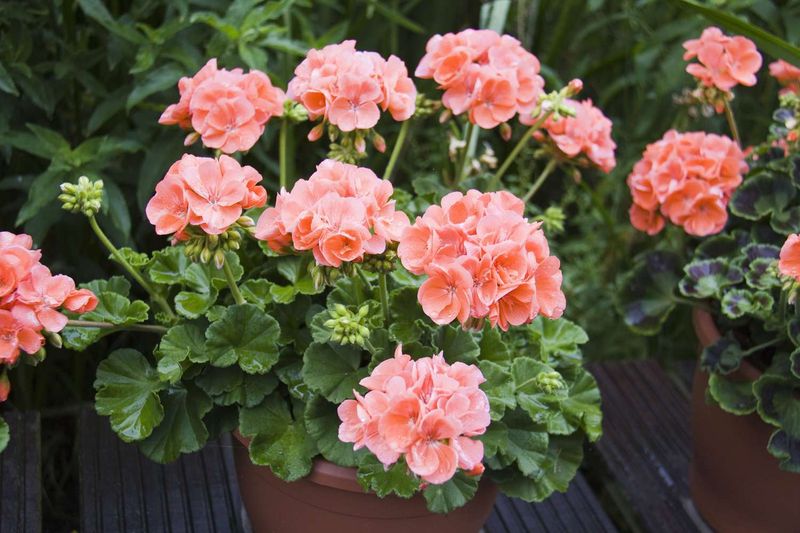
Fall timing and bloom potential vary considerably across the South, and they vary even more across different types of plants sold under the geranium name. Florida gardeners work with a different seasonal window than gardeners in the Carolinas or Tennessee, and the type of geranium in the pot changes what to expect from deadheading.
Common Pelargoniums can struggle in Florida’s summer heat and humidity. UF/IFAS Gardening Solutions notes that Central and South Florida gardeners often grow geraniums from about October through March, treating them as winter annuals rather than summer plants.
A UF/IFAS Charlotte County blog post on geranium season reinforces that cooler fall conditions can provide better flowering opportunities after summer stress. That said, a plant severely damaged by prolonged heat, humidity, or root problems may not recover with deadheading alone, even when temperatures drop.
Not all geraniums respond the same way. Iowa State Extension identifies ivy geraniums as less heat tolerant than zonal types, and Regal or Martha Washington geraniums as cool-season plants that do not share the same summer or fall blooming window.
Scented geraniums are grown primarily for fragrance rather than flower production, so deadheading expectations differ there as well. True hardy Geraniums in the genus Geranium, such as wild geranium, are a separate category entirely.
Iowa State’s perennial geranium guide and Wisconsin Extension’s wild geranium profile both note that these plants generally do not repeat bloom and do not need deadheading for that purpose.
Use This Honest Fall-Bloom Checklist
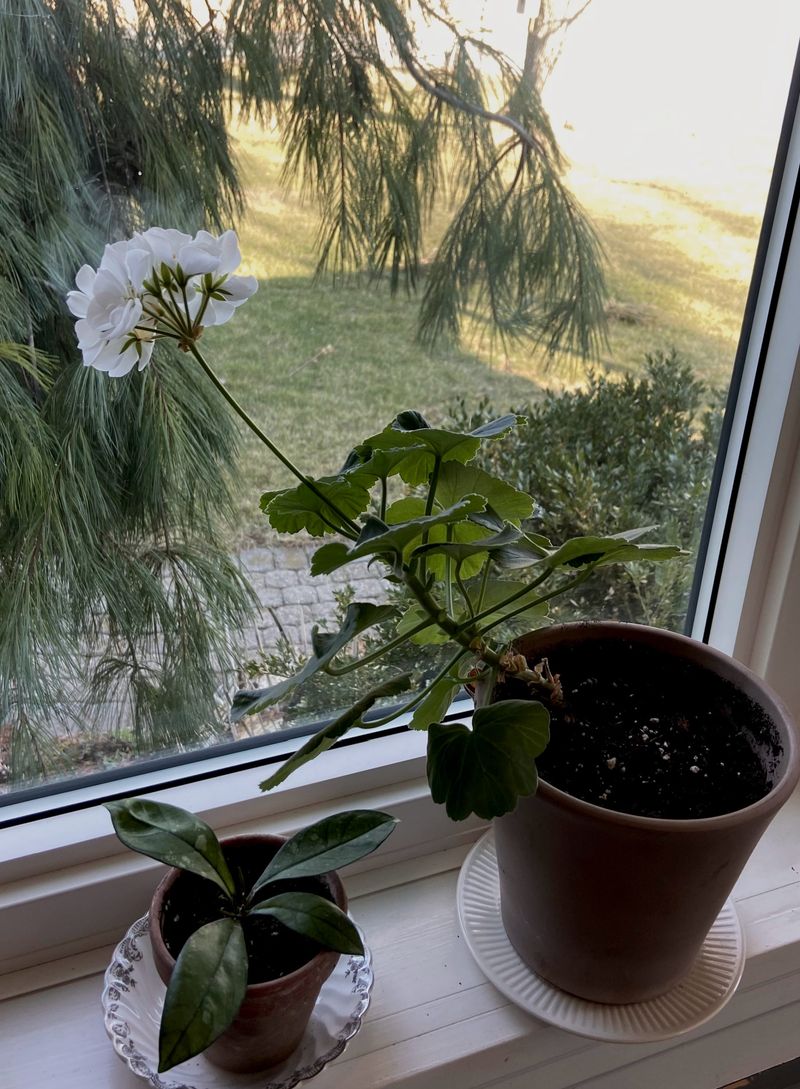
Before expecting a new round of color, run through a short mental checklist. Wait until a cluster is visibly finished, with faded, shriveled, or dropped petals or visible seed structures forming.
Then remove the entire flower stalk at the point where it meets the main stem, clear any fallen petals or diseased leaves from around the plant, and take those materials to the trash rather than the compost bin.
Next, check conditions honestly. Iowa State Extension’s annual geranium guide and UF/IFAS Gardening Solutions both point to light, drainage, watering, and temperature as factors that shape whether deadheading produces a noticeable response.
Ask whether the plant gets six or more hours of direct sun, whether the soil or potting mix drains well, and whether heat stress, disease, or cultivar behavior may be working against recovery.
Deadheading gives a healthy Pelargonium a better chance to keep flowering when conditions support it. The cut alone cannot manufacture blooms when the plant is fighting heat, poor drainage, or disease.
A modest, honest expectation going in makes the result easier to read and the next step easier to choose.