

Rosemary has a reputation for being tough, and most of the time it earns that reputation. But when a culinary rosemary shrub gets ignored for a few seasons, it turns into a tangled, bare-stemmed mess that looks beyond saving.
Before you yank it out, there is a real chance it can recover, though the process takes more than one cut and more than one afternoon. Knowing what to look for and where to cut makes all the difference between a plant that comes back and one that just gets worse.
Check whether your rosemary is alive before pruning
A sprawling, woody rosemary can look completely finished without actually being dead. Mature culinary rosemary, known botanically as Salvia rosmarinus, naturally develops thick, bark-covered stems over time, and those stems are not automatically dead just because they carry no leaves.
Before you reach for the pruners, spend a few minutes reading what the plant is actually telling you.
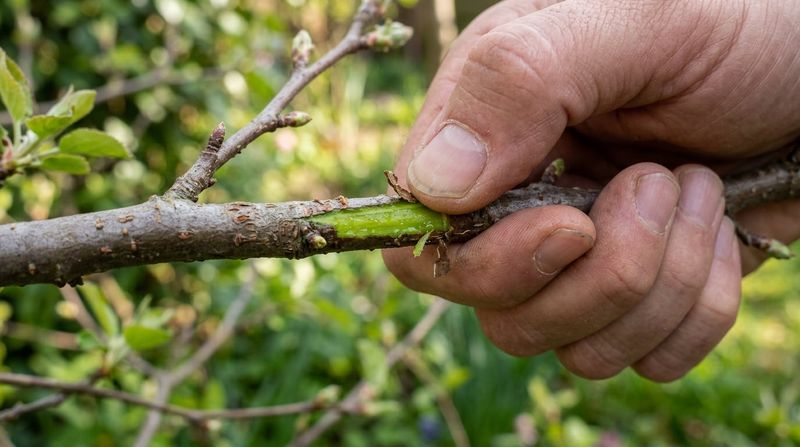
The most reliable check is a simple scratch test. Use your thumbnail or a small blade to scrape away a thin sliver of bark on one of the suspect stems.
Moist, green tissue underneath means the stem is alive. Dry, brown, or black tissue means it has likely died.
New Mexico State University Extension guidance on rosemary confirms that this scratch test is the clearest way to distinguish living wood from dead wood when surface appearance is ambiguous.
Stem flexibility is another clue worth checking. A stem that bends without snapping still has moisture and life in it, while a brittle stem that breaks cleanly is almost certainly dead.
Look at the base of the plant too, because basal shoots or any new green growth emerging from the crown are strong signs that the root system is still functional.
Brown foliage after a freeze or a dry spell does not prove the whole plant is gone. University of California Agriculture and Natural Resources rosemary guidance notes that woody stems can carry living tissue even when the foliage above looks completely dead.
If every stem fails the scratch test, snaps without bending, and shows no green anywhere, replacement or propagation from a healthier source is the more practical path forward.
Understand why a hard reset can leave bare gaps
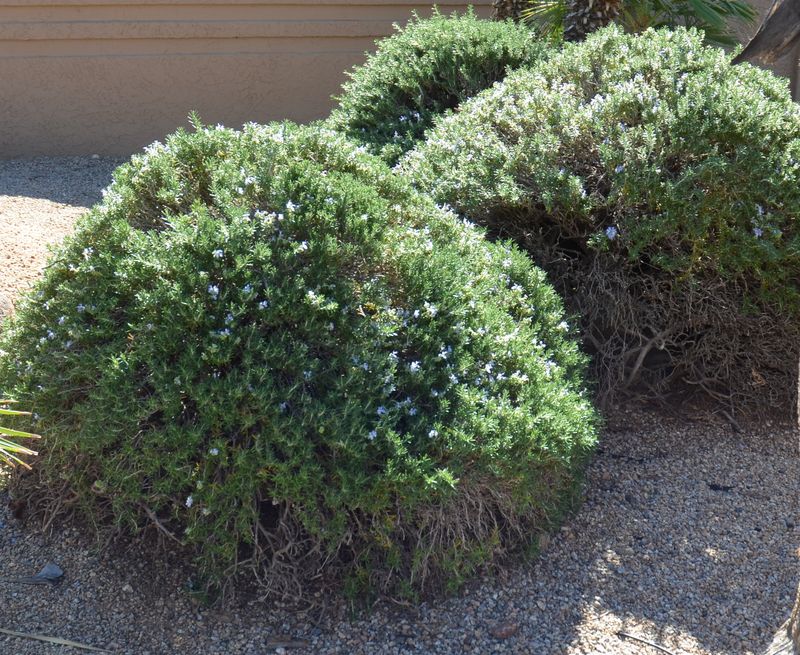
One of the most common mistakes with an overgrown rosemary is treating it like a forsythia or a butterfly bush, plants that can be cut nearly to the ground and still push out lush new growth. Salvia rosmarinus does not work that way.
Thick, leafless old wood generally will not produce fresh green shoots after a hard cut, and removing most of the foliage at once can cause severe decline or failure to recover entirely.
UC Agriculture and Natural Resources states plainly that cutting rosemary back into old wood can leave permanent bare gaps because the plant does not reliably back-bud from leafless stems. University of Arizona Cooperative Extension guidance on pruning desert shrubs specifically excludes rosemary from the category of plants suited to hard renewal cuts down to 12 to 18 inches.
Cutting to a uniform low height is not a safe general strategy for this plant.
Some extension sources are more permissive. North Carolina Extension’s rosemary profile mentions severe pruning after flowering as an option, while University of Georgia Extension’s renewal pruning guidance cautions that narrow-leaf evergreens like rosemary may not recover after foliage is stripped.
The Royal Horticultural Society similarly warns against cutting into old wood. Given this disagreement, the safer path is to preserve as much green foliage as possible and thin the plant gradually, which gives it the photosynthetic capacity it needs to recover without betting everything on one aggressive cut.
Prune after flowering and prepare clean tools
Timing matters more than most gardeners expect with culinary rosemary. The general recommendation from the Royal Horticultural Society is to prune after flowering, which in most of the Southern U.S. falls in late spring or early summer.
At that point the plant is actively growing and has the energy reserves to respond to structural cuts.
That timing is a guideline, not a hard rule. Gardeners in South Texas or Central Florida may see rosemary bloom earlier in the year, or not bloom uniformly at all, depending on the cultivar and local conditions.
Watch your specific plant rather than the calendar, and aim to work when you can see active green growth and the heaviest flowering has passed. Avoid pruning during a heat wave or a drought, when the plant is already under stress.
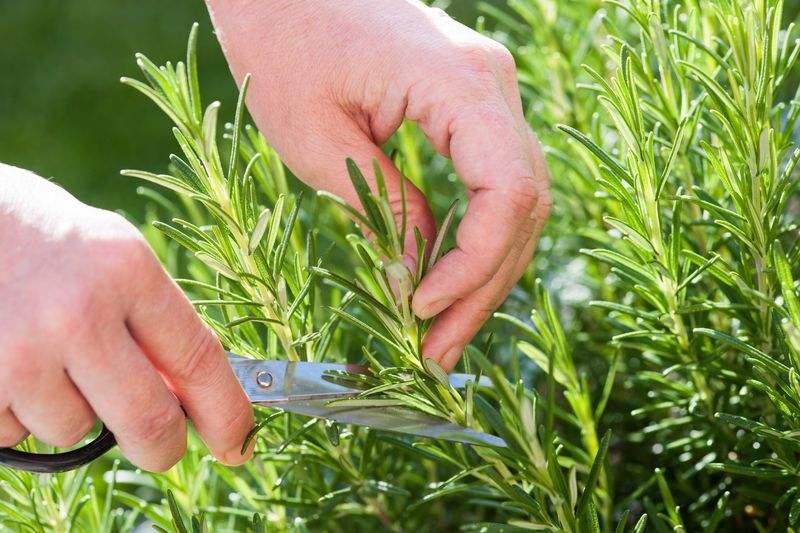
Tool preparation deserves as much attention as timing. Sharp bypass pruners make clean cuts that heal faster than the ragged tears left by dull blades.
Penn State Extension’s guidance on pruning evergreens recommends cleaning tools before and between plants to reduce the chance of spreading plant pathogens from one stem or shrub to another. A quick wipe with rubbing alcohol or a diluted bleach solution does the job.
Before working inside a large, dense rosemary shrub, put on gloves, a long-sleeved shirt, and eye protection, because the woody interior can scratch exposed skin and send debris toward your face.
Remove dead and damaged stems first
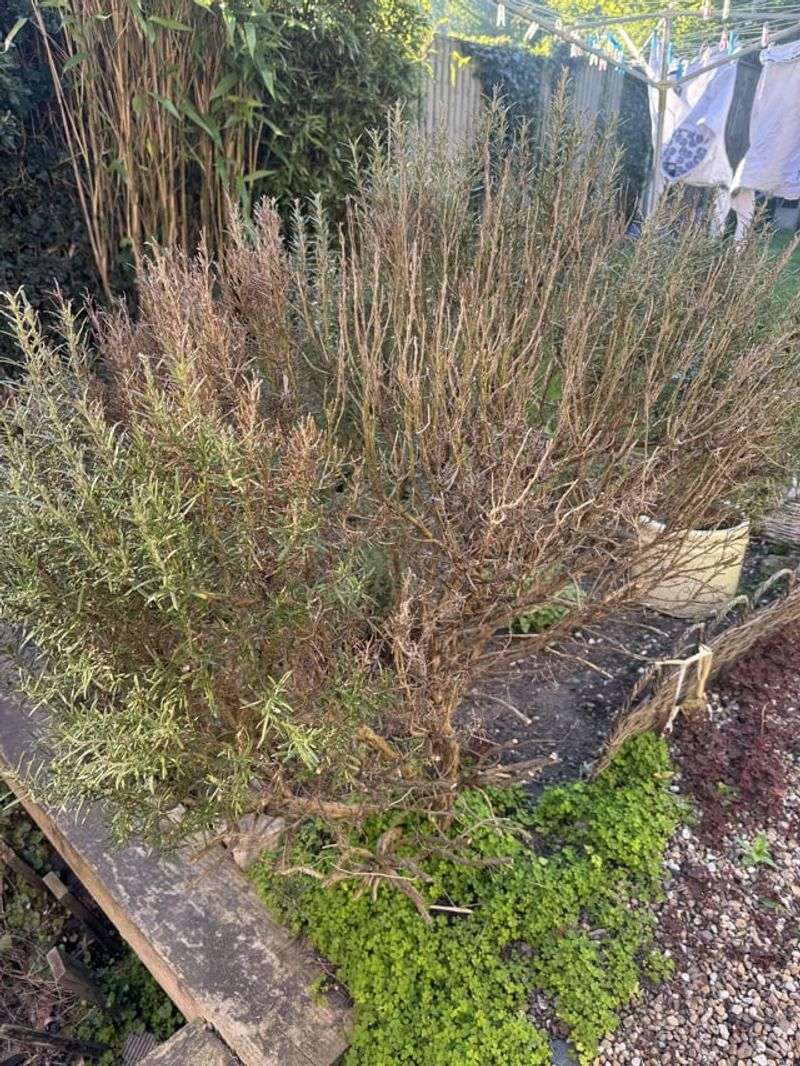
Before any shaping or thinning begins, clear out what is definitively gone. Dead, dry, brittle, or diseased stems take up space, block light from reaching healthy growth, and can harbor the fungi or bacteria that spread disease to living tissue.
Removing them first gives you a much clearer picture of what you are actually working with.
Work through the shrub section by section rather than cutting broadly from the outside. Trace each questionable branch from its brown tip back toward the base, using the scratch test as you go.
New Mexico State University Extension advises checking for living tissue before removing stems that might still be viable lower down, especially after freeze damage when upper growth dies but basal tissue survives. Cut dead stems back to where living tissue begins, or remove them entirely at their origin point if the whole branch is dead.
One caution applies specifically after a hard freeze: do not rush. Brown foliage that appears a week after a cold snap may sit above stems that are still alive.
Give the plant two to four weeks before making final decisions about freeze-damaged sections, and let the scratch test guide each cut rather than surface color alone. UC Agriculture and Natural Resources notes that apparent die-back can be deceptive, and removing living tissue too quickly narrows the plant’s recovery window.
Once the dead wood is out, you will have a much cleaner view of which stems still carry foliage and which are candidates for selective thinning.
Thin a few old bare branches at the base
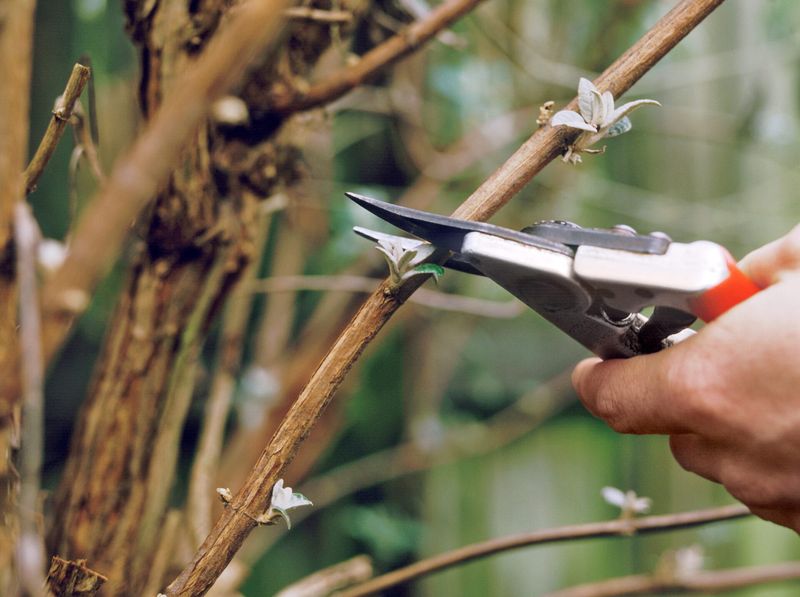
After dead wood is cleared, the core of the rescue method comes down to selective thinning at the base. Rather than shortening every stem from the top down or cutting the whole plant to a uniform height, the goal here is to remove some of the oldest, most unproductive branches entirely, cutting them where they join a larger stem or at the plant’s crown.
This opens the interior without stripping the shrub of the foliage it needs to survive.
Choose the most obviously bare and unproductive branches first, the ones with no leaves along their length and no living side shoots branching off them. Cut them cleanly at their origin rather than leaving a stub.
UC Agriculture and Natural Resources describes this approach as removing selected older stalks rather than cutting the whole plant, which preserves enough photosynthetic capacity for recovery. The light and airflow that open up after each removed branch give remaining green growth more room to spread.
Resist the urge to remove every bare branch in a single session. A staged renovation over multiple seasons is far safer than a wholesale reset.
University of Arizona Cooperative Extension guidance on shrub pruning frames a conservative approach for woody shrubs as removing roughly one-quarter to one-third of the oldest unproductive branches per year, spreading the work across two or three seasons. That pacing keeps enough foliage on the plant at all times to support continued growth.
The objective is better light and space for what is already green, not forcing shoots from bare wood that has no viable buds left to push.
Shorten living branches back to leafy growth
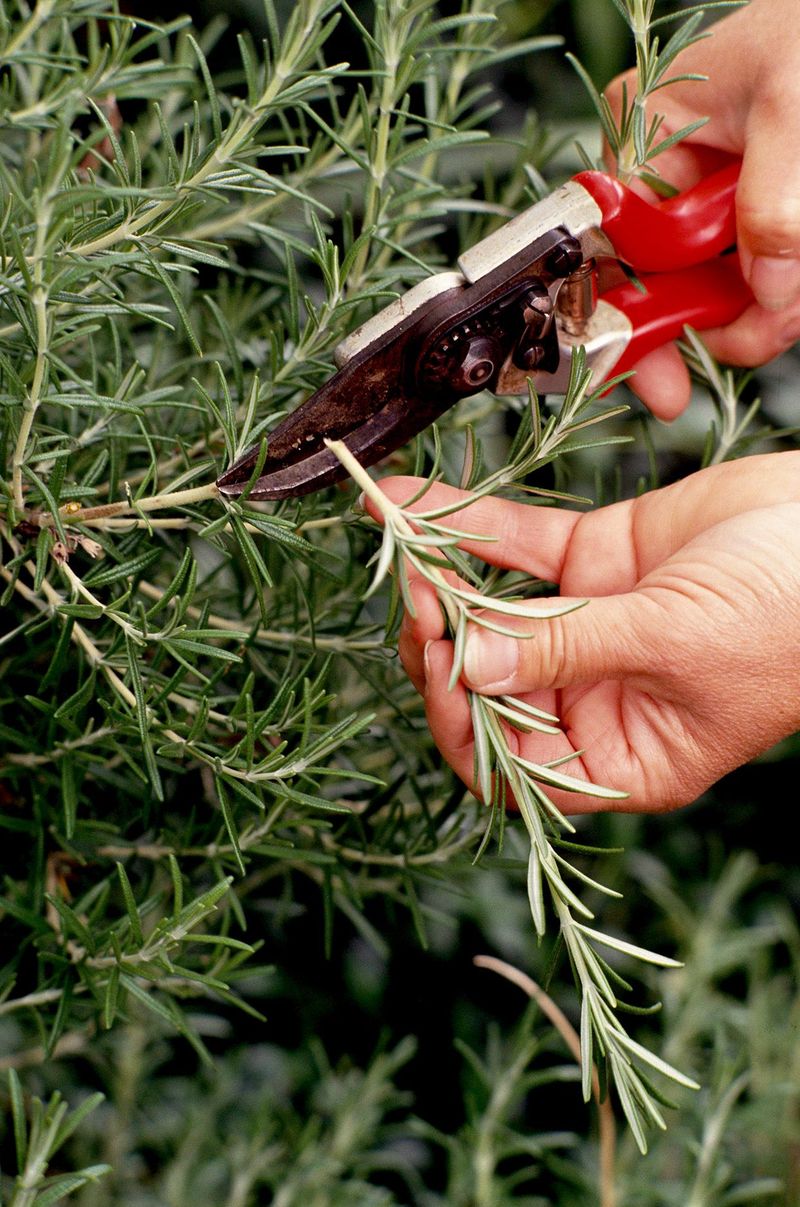
Thinning at the base handles the oldest, most unproductive wood, but many overgrown rosemary plants also have long, sprawling branches that still carry green foliage. Those branches can be shortened, but only as far back as a leafy section or a living side shoot.
That single rule prevents the most common pruning error on this plant.
When you shorten a branch, look for the nearest healthy cluster of leaves or an active side shoot below where you want to cut, and make your cut just above it. Avoid leaving a long, bare stub above the last leaves, because that stub will likely die back anyway and can become an entry point for disease.
More critically, do not follow the branch into thick, bare wood just because you want the plant to look smaller. UC Agriculture and Natural Resources is direct on this point: cutting into old leafless wood can leave permanent gaps because rosemary does not reliably produce new buds from that tissue.
The Royal Horticultural Society reinforces the same boundary, recommending that cuts stay within the green, leafy portion of the plant. Shaping the outer canopy this way can make the shrub look tidier and encourage the green growth that remains to branch more densely.
What it cannot do is guarantee that an old, bare center will fill back in. The center may stay open even after successful thinning and shaping, and accepting that limitation is part of working honestly with this plant rather than against it.
Fix drainage and watering problems that pruning cannot solve
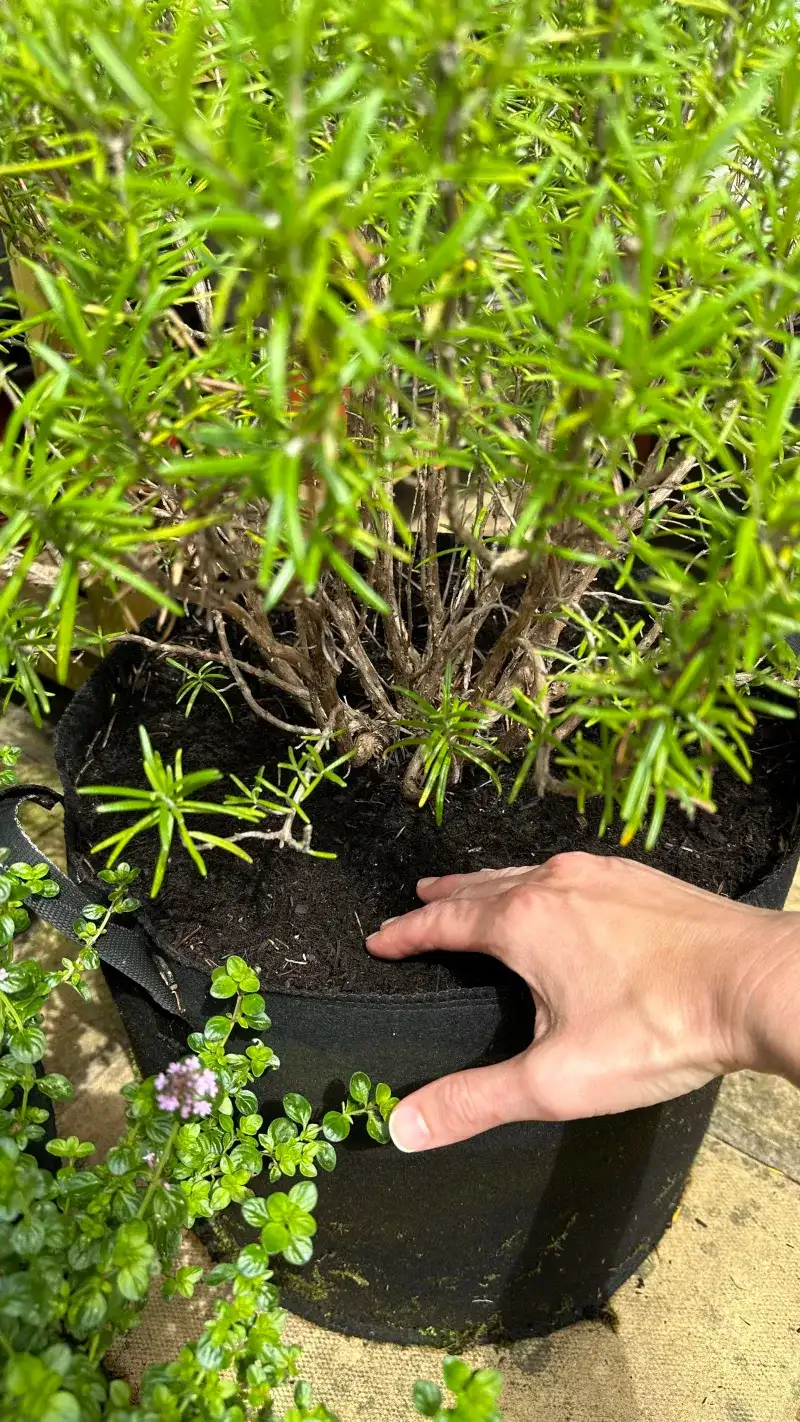
Pruning can open a rosemary plant and improve its structure, but it cannot fix what is happening underground. If the shrub declined because of root rot, crown rot, chronic overwatering, or poor drainage, the right cuts will not bring it back.
Addressing those conditions is just as necessary as any work done above the soil line.
Culinary rosemary, Salvia rosmarinus, performs best in full sun, well-drained soil, and relatively restrained watering once it is established. Texas A&M AgriLife Extension’s rosemary guide identifies wet soil and poor drainage as among the most common reasons rosemary fails in Texas.
If your plant sits in a low spot, clay-heavy soil, or a bed that stays wet after rain, improving drainage before or alongside any pruning work gives the plant a realistic chance. Raised planting, amended beds, or moving the plant entirely to a better-draining location may be necessary.
Florida gardeners face the same drainage priority. UF/IFAS landscape recovery guidance identifies well-drained, low-fertility conditions as the right fit for rosemary in Florida landscapes.
One name-confusion issue is worth clearing up for Florida readers: “Florida rosemary” sometimes refers to Ceratiola ericoides, a native Florida shrub that is a completely unrelated species, as confirmed by UF/IFAS documentation on Ceratiola ericoides. Advice about culinary rosemary does not apply to that plant, and vice versa.
For the culinary herb, the drainage rule is the same in Florida as in Texas: keep the root zone from staying wet, provide full sun, and water only when the soil has dried out between sessions.
Monitor recovery and keep a healthy backup
After staged pruning, the most important thing to do is watch and wait rather than cutting more. New green growth on remaining stems, fresh basal shoots, or increased density in the foliage that was preserved are all positive signs that the plant is responding.
Give it at least one full growing season before drawing conclusions about whether the renovation worked.
If the plant shows no new growth after several weeks of warm weather and corrected growing conditions, go back to the scratch test on remaining stems. A rosemary with no viable green tissue anywhere on the plant, or one whose root system has rotted beyond recovery, is a better candidate for replacement than for further pruning.
More cuts will not rescue a plant that has no living tissue left to work with, and recognizing that limit early saves time and frustration.
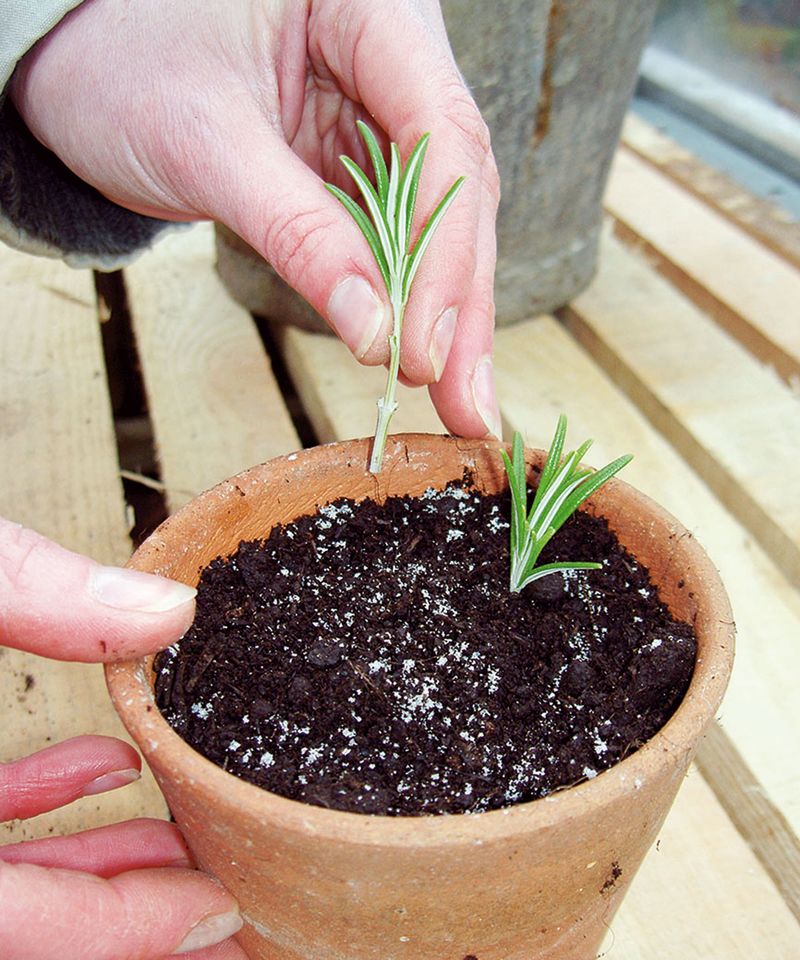
Taking backup cuttings while the plant is being renovated is practical insurance. UC CalFresh Healthy Living’s rosemary fact sheet describes taking 4- to 5-inch softwood cuttings from healthy, nonflowering growth in late spring or early summer, with the lower leaves removed, and notes that rooting can occur in roughly two to five weeks under suitable conditions.
Even if the parent plant recovers fully, a rooted cutting gives you a younger, more manageable plant to grow alongside it or use as a replacement. The rule that holds across every step of this process is the same one that applies to every cut: remove dead wood and selected old branches, but always stop at living, leafy growth.