
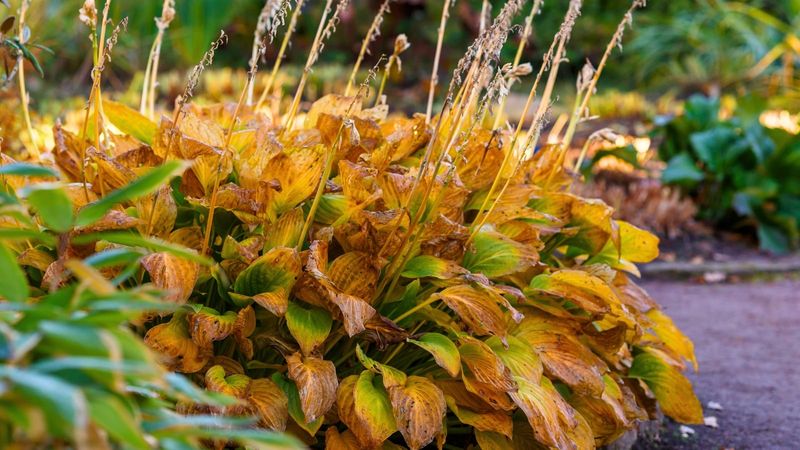
When your hostas start turning yellow as the weather cools, it can feel like something has gone seriously wrong in the garden. Most of the time, though, that broad fade is simply the plant wrapping up its growing season before winter.
Understanding what normal dormancy looks like, and knowing when yellowing is a warning sign instead, can save you from unnecessary worry and misguided treatments. This guide walks through the most likely cause, how to tell it apart from real trouble, and exactly what to do next.
Late, even yellowing usually signals normal dormancy
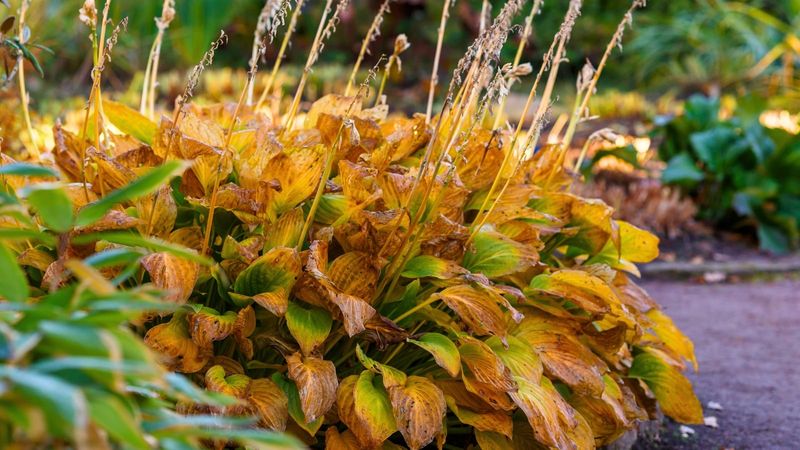
An established hosta that turns broadly and evenly yellow as late fall temperatures drop is most likely doing exactly what it is built to do. Hostas are herbaceous perennials, which means the above-ground foliage dies back each year while the underground crown and root system stay alive and wait out the cold.
North Carolina State Extension notes that hosta foliage dies back when temperatures approach 28 degrees Fahrenheit, and the plant requires that dormant period to cycle properly into spring.
The key word in that diagnosis is “broadly.” When the whole plant fades together, starting with older outer leaves and moving inward as temperatures continue to fall, that gradual and even progression fits the dormancy pattern. The crown below the soil is not in danger; it is simply conserving energy for next year’s growth.
Timing matters just as much as pattern. Uniform yellowing that arrives late in the season and is followed by the foliage collapsing on its own is a very different situation from yellowing that appears in midsummer, shows up in isolated patches, or comes alongside wilting and soft stems.
Reassurance is reasonable when the timing and pattern match, but it should rest on those specifics rather than on the color alone.
You cannot re-green leaves that are entering senescence
Once a hosta’s foliage begins senescing in fall, no amount of fertilizer, extra irrigation, or foliar spray will bring those leaves back to summer green. The plant is actively moving energy away from its leaves and into the crown and roots below ground.
Trying to push the foliage back into active growth at that stage works against the plant’s own process rather than supporting it.
Heavy watering is a common mistake at this point. Hostas prefer evenly moist, well-drained soil and do not tolerate soggy conditions, especially heading into cooler weather when root rot becomes a real risk.
Adding water to keep dying leaves looking better can actually damage the crown you are trying to protect.
The goal worth pursuing is not green foliage through winter. University of Illinois Extension guidance on fall hosta care makes clear that the practical target is a healthy, intact crown that can push out strong new growth in spring.
Shifting focus from the dying leaves to the surviving root system puts your energy exactly where it can make a difference.
Compare the timing and pattern before diagnosing a problem
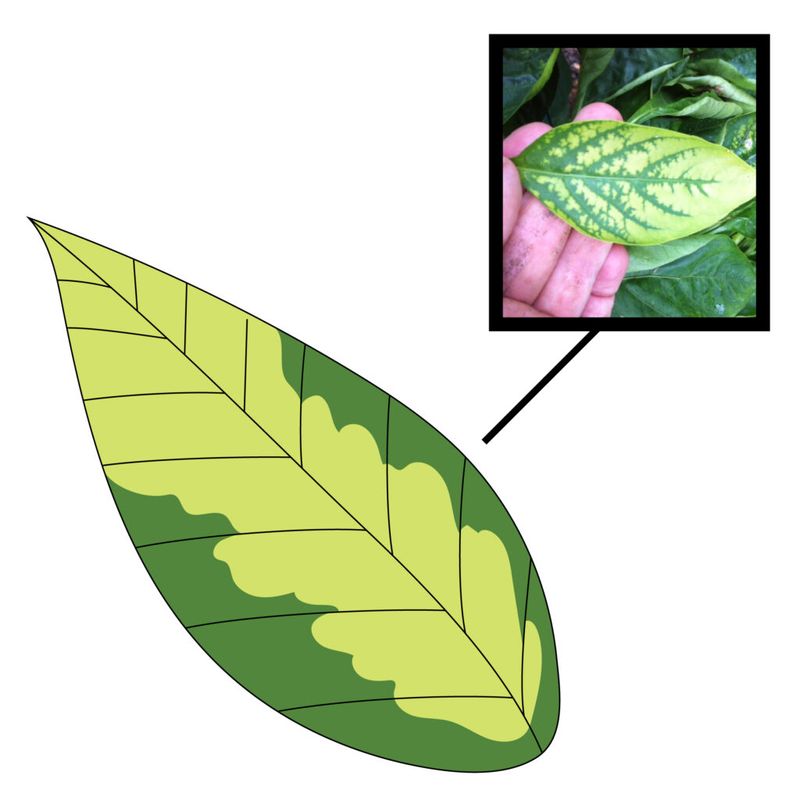
A quick visual check can separate routine dormancy from a condition that actually needs attention. Normal fall decline looks even: the foliage fades across the whole plant together, the leaves hold their shape as they yellow, and the plant gradually collapses as temperatures keep dropping.
Yellowing that shows up well before fall, affects only certain sections of a leaf, or leaves the veins distinctly green while the tissue between them turns yellow points toward a different problem entirely.
University of Illinois Extension explains that interveinal chlorosis, where leaf tissue yellows while the veins stay green, often signals a nutrient or root-related issue rather than seasonal decline. That pattern tends to appear on younger leaves first and looks quite different from the broad, uniform fade of a plant heading into dormancy.
Before labeling any hosta unhealthy, also consider the cultivar. Iowa State University Extension notes that many hostas are specifically bred for chartreuse or golden foliage, and their color shifts further with light exposure.
A plant that looks yellow compared to a neighbor’s deep-green variety may simply be expressing its normal color. Compare the plant to its own appearance earlier in the season and factor in how much direct sun it receives before drawing any conclusions.
Warning signs point beyond ordinary fall color
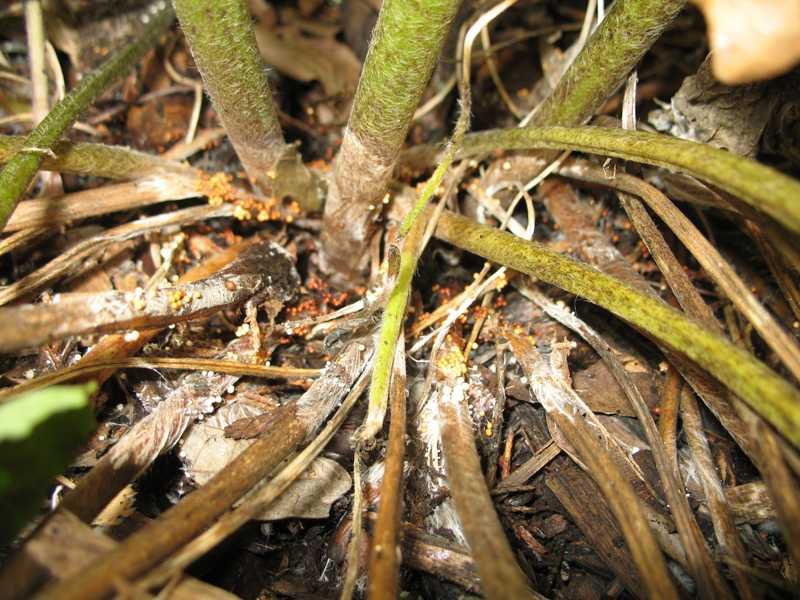
Some symptoms on a yellowing hosta deserve a closer look before you chalk the decline up to the season. Soft, brown, or mushy tissue at the base of the petiole, leaves that pull away from the crown with almost no resistance, and a flat collapse of otherwise intact-looking foliage are not signs of dormancy.
Iowa State University Extension identifies this pattern as characteristic of petiole rot, a serious disease favored by warm, humid conditions that is common in the South. White fungal threads at the soil line are another indicator, and Iowa State specifically warns that common garden fungicides are not effective against it.
Infected plants may need to be removed and destroyed rather than treated in place.
Penn State Extension’s overview of hosta diseases covers Hosta Virus X, which can produce irregular yellow blotches, streaking, or mosaic patterns on leaves and spreads through tools and hands during division or cleanup. That kind of patterned discoloration has nothing to do with fall timing and will not resolve on its own.
Brown streaking between leaf veins, especially starting on older outer leaves and progressing inward, may suggest foliar nematodes rather than seasonal color. University of Illinois Extension advises inspecting for this pattern during fall cleanup because it looks different from the broad, even fade of dormancy.
Younger-leaf interveinal yellowing, meanwhile, points more toward chlorosis from soil, drainage, or root conditions. One yellow leaf cannot establish any of these diagnoses; the full symptom picture, including where on the plant it starts and what the tissue feels like, is what points you in the right direction.
Use cleanup and sanitation instead of rescue treatments
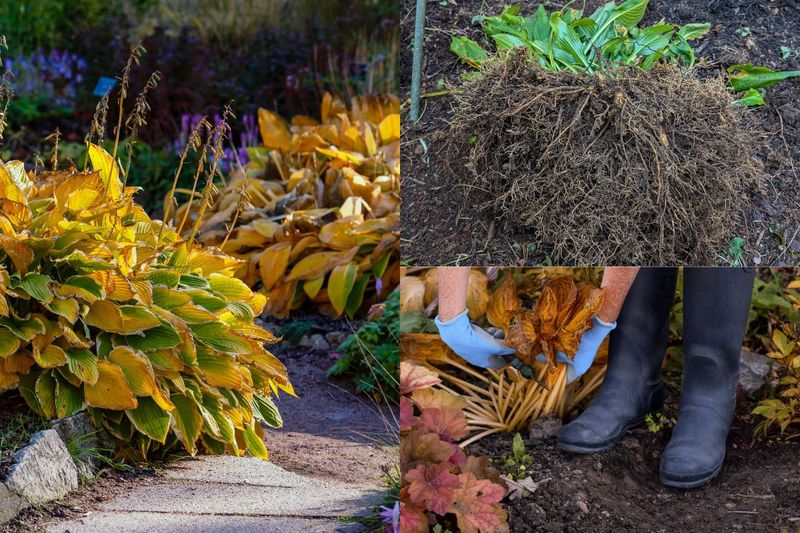
When a hosta is clearly finishing its natural decline, the most useful thing you can do is wait for the foliage to fully collapse before cutting it back. University of Illinois Extension recommends cutting the leaves and petioles back once they have finished changing color and begun to collapse, noting that removing spent foliage can reduce overwintering pest and disease pressure.
Cutting too early, before the foliage has completed its die-back, is not necessary and may disturb the crown unnecessarily.
Sanitation becomes especially important when any symptoms of disease were present during the season. Penn State Extension emphasizes that Hosta Virus X spreads through hands and tools, so clippers used on a suspected plant should be cleaned before moving to the next one.
Foliage from plants that showed signs of petiole rot, viral symptoms, or foliar nematodes should be bagged and disposed of rather than added to a compost pile, where pathogens can persist.
Soil moisture during fall cleanup deserves a check rather than an automatic increase in watering. North Carolina State Extension notes that hostas need evenly moist, well-drained conditions, and UF/IFAS Extension similarly cautions against waterlogged soil.
Feel the soil a few inches down before deciding whether to water; if it is already moist, hold off. Keeping the crown healthy through winter requires drainage as much as moisture.
Adjust hosta care to Southern shade, soil, and winter conditions
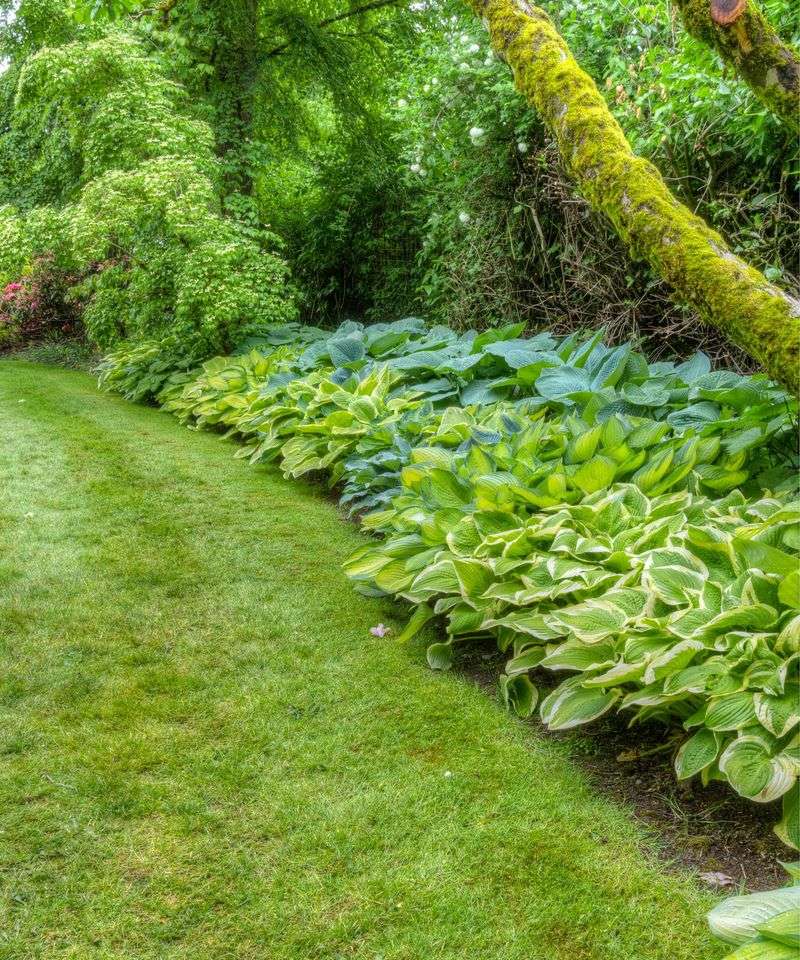
Hostas in the South face conditions that differ significantly from the mid-Atlantic or Midwest gardens where much general hosta advice originates. North Carolina State Extension recommends full shade or dappled shade for hostas in hot Southern locations, where too much direct sun causes leaf scorch and bleaches out the foliage well before fall arrives.
Well-drained soil matters even more in humid Southern climates, where excess moisture around the crown encourages the fungal and bacterial problems described in the previous section.
Most established hostas do not require any special winter protection, but there is a useful exception. Iowa State University Extension notes that a few inches of clean straw or pine needles can help recently planted hostas survive repeated freeze-thaw cycles that heave roots out of the ground.
In most Southern gardens, where hard freezes are infrequent or brief, established hostas handle winter without added mulch. Pine straw mulch applied loosely around the crown can still be worthwhile for newly planted specimens in areas that see occasional hard freezes.
Florida gardeners face a different challenge altogether. UF/IFAS Extension notes that hostas require a period of temperatures below roughly 45 degrees Fahrenheit to cycle properly, with the exact chill requirement varying by cultivar.
In Florida’s mild-winter zones, plants may emerge weakly or decline over time because they simply do not receive enough cold to complete dormancy. UF/IFAS Gardening Solutions suggests exploring alternatives better suited to Florida’s winters rather than expecting hostas to perform reliably across the whole state.
Texas conditions vary just as widely by region, so what works in the Dallas area may not translate to the Rio Grande Valley.
Judge success by the surviving crown, not winter-green foliage
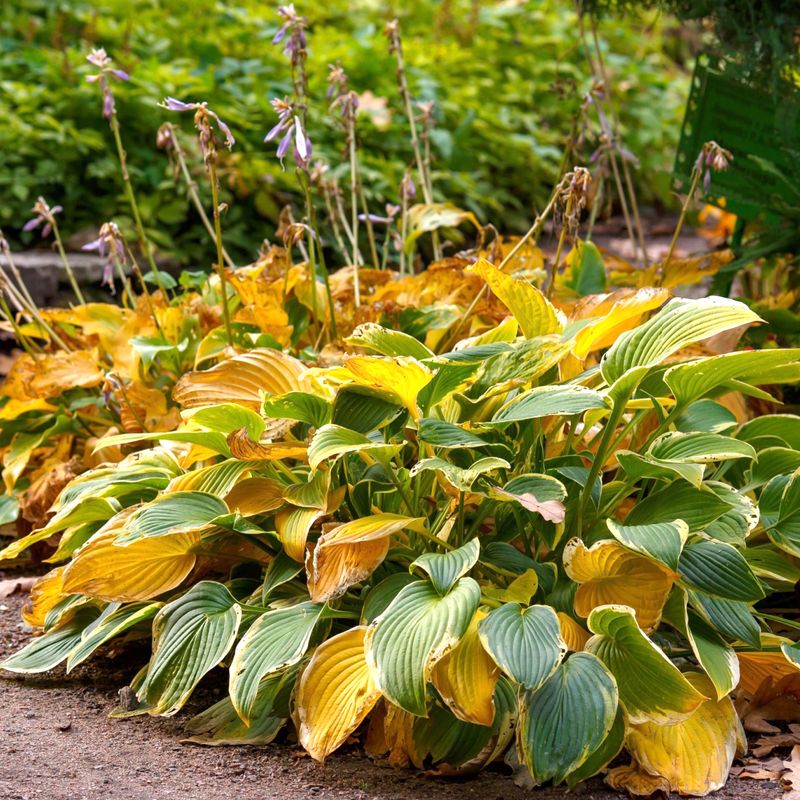
A hosta that turns uniformly yellow in late fall and then collapses as temperatures drop is almost certainly preparing for winter, not failing. North Carolina State Extension confirms that this die-back is a normal part of the hosta life cycle, and the plant’s survival depends on the underground crown, not on keeping any above-ground tissue alive through the cold months.
Green foliage in December is not the goal and is not realistic for most hostas in most climates.
The practical checklist for fall is short: remove finished foliage after it fully collapses, dispose of any material from plants that showed disease symptoms during the season, avoid unnecessary fertilizer or heavy watering, and give the crown well-drained soil to rest in. University of Illinois Extension and Penn State Extension both point toward clean beds and good sanitation as the most reliable protection against the problems that actually threaten hostas over winter.
Any yellowing that started early, appeared in patches, streaked between veins, came with soft stems, or included spotting warrants closer attention before the season ends rather than a wait-and-see approach. A crown that goes into winter undamaged and disease-free is the real measure of a successful fall, and strong new growth pushing up in spring is the payoff that makes the cleanup worthwhile.