
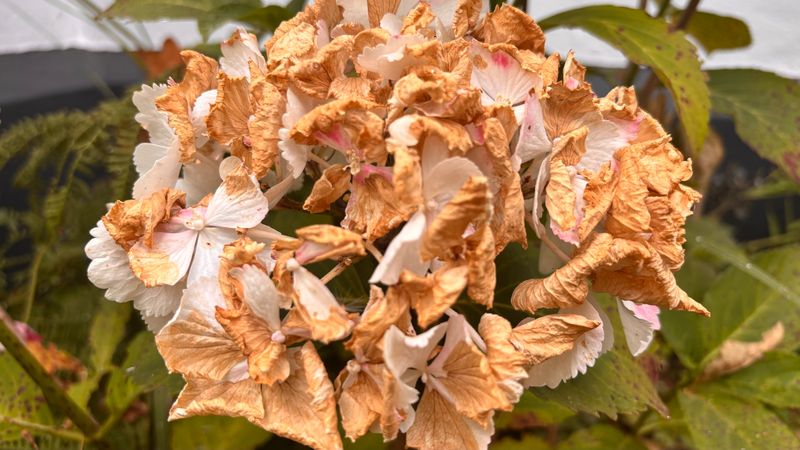
Hydrangea flowers turning brown at the edges this fall can send a gardener straight into panic mode, but the cause is not always what you think. Some browning is simply the plant doing what it does every year as the season winds down.
Knowing the difference between normal aging and a real problem can save you from cutting off next year’s flowers, overwatering, or spraying something your plant does not need.
Fall fading may be normal seasonal aging
Older hydrangea flower heads that slowly shift from their original color into shades of pink, tan, gray, or brown are often doing exactly what they are supposed to do at this time of year. The change tends to be gradual and fairly even across the whole bloom, and the petals take on a dry, papery feel without the rest of the plant showing any signs of trouble.
That pattern is consistent with normal senescence, meaning the flowers have simply completed their cycle.
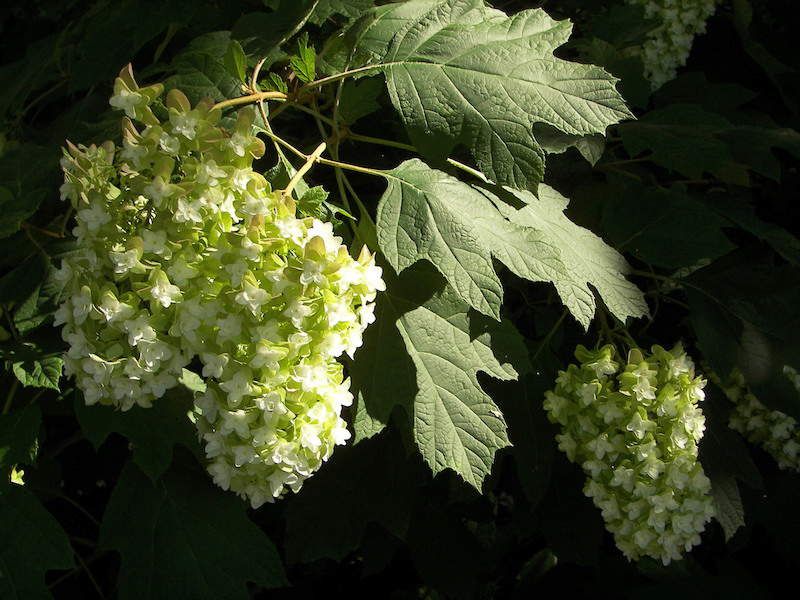
Oakleaf hydrangeas are a clear example of this. UF/IFAS Gardening Solutions notes that oakleaf hydrangea blooms naturally age to tan or rusty brown and can stay on the plant well into fall and winter, giving the garden structure even after the growing season slows.
Bigleaf and panicle types also mature through a range of colors before browning, and that shift alone does not signal a failing plant.
Leaving naturally aged flower heads in place is a reasonable choice. They add texture and a quiet seasonal look, and removing them is largely a matter of personal preference rather than plant health.
That said, this pattern only applies when browning is gradual and uniform on older blooms. If flowers are turning brown early, unevenly, or in patches, that is worth a closer look at the whole plant before drawing any conclusions.
Inspect flowers, leaves, buds, and stems before treating
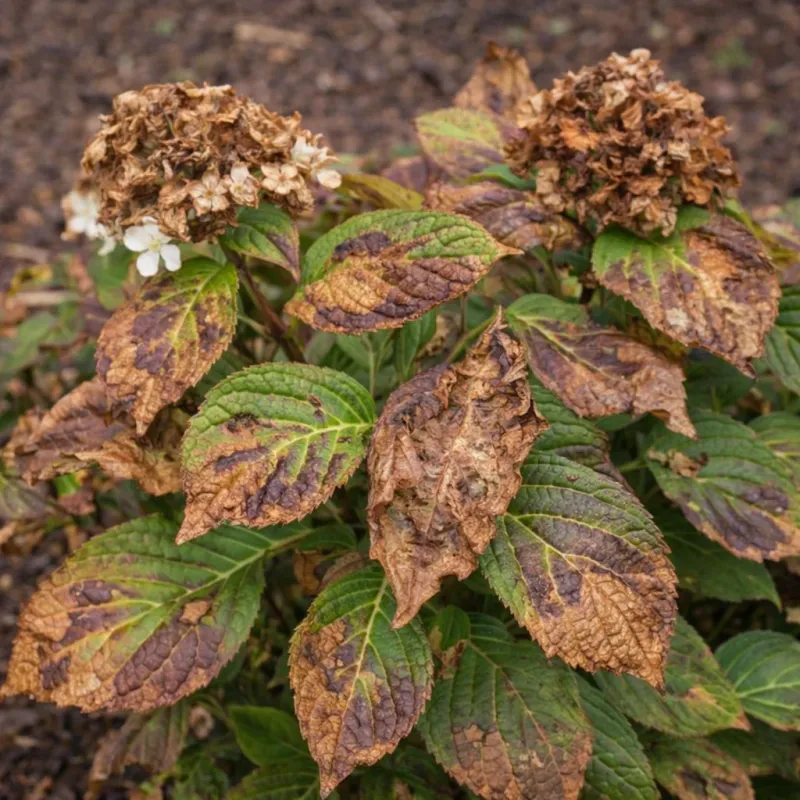
Before changing anything about how you water or reaching for a product, walk up to the plant and look at it carefully. Ask yourself where the browning is concentrated.
Is it mostly on the side that faces the afternoon sun? Did it show up after a stretch of hot, dry weather or after a bout of wind?
Has the sprinkler been hitting those flowers regularly? Each of those details points in a different direction and keeps you from making a change that does not match the actual problem.
Pay attention to what part of the plant is actually affected. “Browning at the edges” can mean the outer petals or sepals of the flower clusters, but it can also mean the margins of the leaves. Extension plant diagnosticians point out that leaf-edge browning opens up a wider list of possible causes, including drought, root problems, poor soil, excess fertilizer, salt injury, or a leaf disease entirely separate from what is happening to the flowers.
Treating for one when the other is the real issue will not help.
Early or uneven browning on its own does not establish any specific diagnosis. A single brown flower cluster, even one that browned faster than expected, is not enough to conclude the plant has Botrytis or any other disease.
UF/IFAS Bay County Extension notes that environmental stress, including heat and moisture fluctuations common in the South, can accelerate browning without any pathogen involved. Use the inspection to separate a localized cosmetic issue from a pattern of decline that involves multiple parts of the plant.
Disease brings additional warning signs
When browning on hydrangea flowers comes with other specific symptoms, disease becomes a more reasonable explanation than aging or environmental stress. The pattern to watch for is different from the gradual, even fading described in normal senescence.
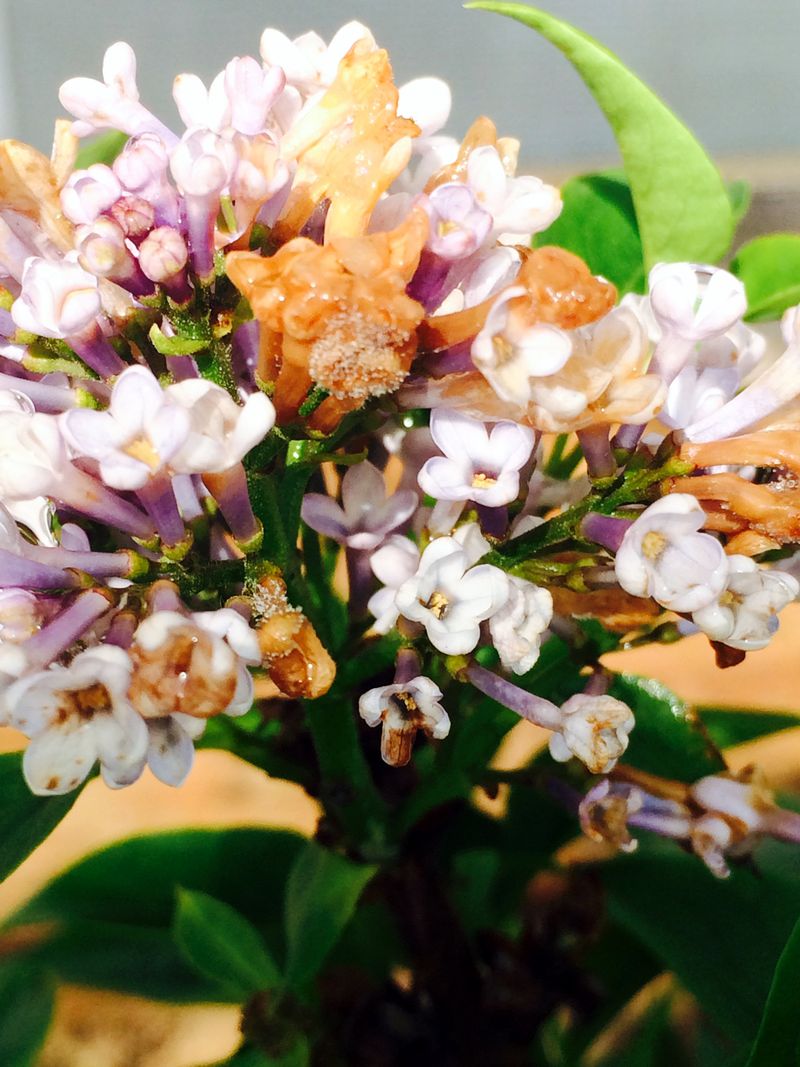
Disease-related browning tends to show up as spreading, water-soaked, or irregularly shaped spots on the petals or sepals, and the affected tissue often turns dark brown or black rather than the soft tan or papery beige of aged blooms.
Other red flags include flowers dropping before they should, buds that die without ever opening, spots or lesions appearing on nearby leaves, visible damage on stems, or a gray fuzzy coating on affected tissue. That last detail, the fuzzy gray growth, is a hallmark of Botrytis blight, which Penn State Extension’s hydrangea disease guide identifies as one of the documented fungal diseases affecting hydrangeas.
A single aging brown flower does not meet that threshold.
When those additional symptoms are present, the practical response is to remove the affected flowers, leaves, and stems and put them in the trash rather than leaving them on the ground beneath the plant. Infected debris sitting under the canopy can keep the problem cycling.
Improving air circulation around the plant and avoiding overhead wetting of the foliage also help reduce conditions that favor fungal spread.
Fungicide is one possible tool, but only when a disease is plausible or reasonably confirmed based on the full picture of symptoms. University of Minnesota Extension notes that cultural controls are generally sufficient for gray mold in flower gardens.
Any product used must be registered for the plant and applied exactly according to its label. Spraying because a flower turned brown in October is not a sound reason to treat.
Correct heat, dryness, and overhead watering stress
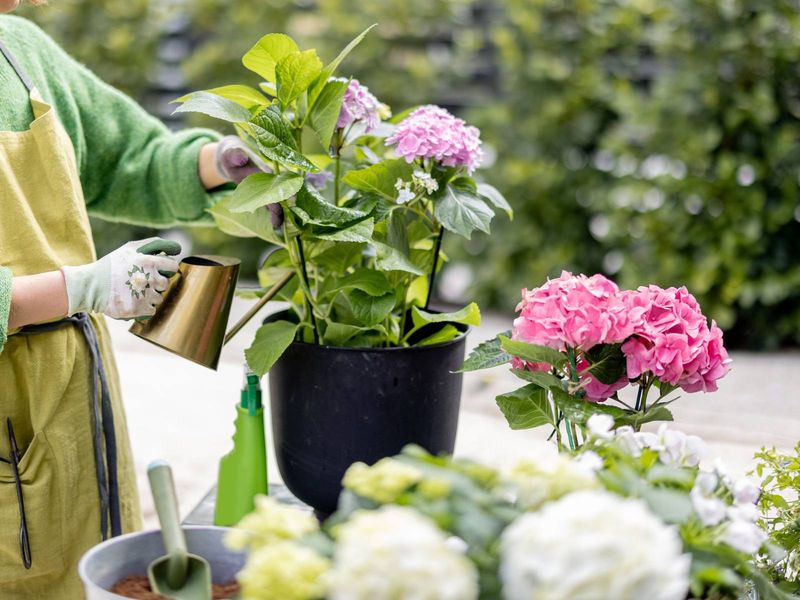
Hot afternoon sun, drying winds, soil that dries out between waterings, and repeated sprinkler spray landing on flower heads can all push browning along faster than the plant’s normal aging schedule, and none of those causes involve disease. Southern gardeners in Florida and Texas deal with heat and evaporation that can stress a hydrangea quickly, especially one planted in a spot with afternoon exposure or thin, sandy soil that drains fast.
Rather than watering on a fixed daily or weekly schedule, check what the soil is actually doing a few inches below the surface. University of Minnesota Extension’s soil moisture guide describes how to assess root-zone moisture by feel and appearance, which gives a more accurate picture than a calendar.
Factors like rainfall, soil type, temperature, sun exposure, and plant age all affect how quickly the root zone dries out, so the right answer varies from yard to yard and week to week.
When the root zone is dry, water deeply at the soil line using a soaker hose, a drip system, or a slow trickle from a regular hose held near the base of the plant. UF/IFAS Bay County Extension recommends keeping the flower heads and foliage as dry as possible during watering, since prolonged surface wetness and water splashing can accelerate petal browning and raise the risk of fungal issues over time.
Shifting sprinkler heads away from the plant canopy is worth doing if overhead irrigation is the current routine.
Organic mulch helps stabilize both soil moisture and temperature around the root zone. University of Georgia Extension’s bigleaf hydrangea publication supports using organic mulch around hydrangeas; aim for roughly 3 to 4 inches in depth where the soil and drainage allow it.
Keep the mulch pulled back from direct contact with the stems, since material piled against the base of a shrub can trap moisture and invite stem problems.
Match light and location to the hydrangea type
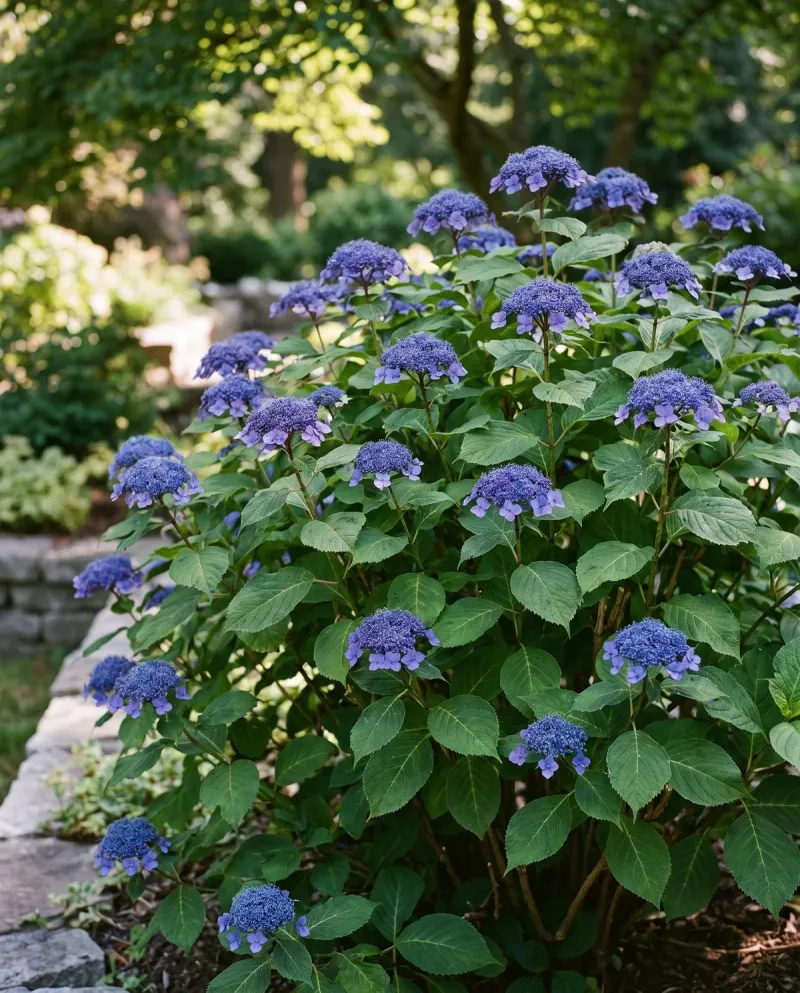
Recommending full shade for every hydrangea is an overcorrection that can create its own problems. The right amount of light depends on which type of hydrangea you have, where you garden, and what conditions already exist in your yard.
Getting that match right is one of the most effective ways to reduce recurring premature browning, even though it will not restore flowers that have already changed color.
Bigleaf hydrangeas, which include most of the classic mophead and lacecap types, generally perform best with morning sun and afternoon shade, along with consistently moist but well-drained soil. University of Georgia Extension’s growing guide for bigleaf hydrangea outlines those site preferences and notes the importance of protecting plants from intense afternoon heat.
Panicle hydrangeas are more sun-tolerant and can handle fuller exposure without browning as quickly. Oakleaf hydrangeas fall somewhere in between, with light needs that also shift depending on the region.
For Southern gardeners, site suitability also varies by geography. A University of Georgia Extension publication on hydrangeas notes that French hydrangeas, another name for bigleaf types, are better suited to North and Central Florida, while conditions in South Florida can be unfavorable for standard hydrangeas.
That limitation applies specifically to those types and should not be extended to every hydrangea species or cultivar.
UF/IFAS Gardening Solutions also notes that even oakleaf hydrangeas benefit from some shade in Florida’s intense heat. If your plant is in a spot that routinely cooks it during the hottest part of the day, adjusting the site or adding shade from a nearby structure or tree can reduce stress-driven browning in future seasons, even if nothing can be done about this year’s blooms.
Prune only after identifying where next year’s buds form
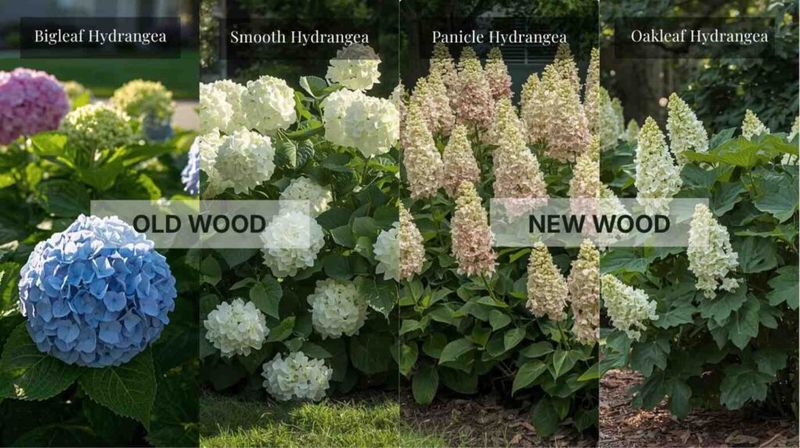
Cutting off every brown bloom in fall sounds like a sensible cleanup task, but on the wrong type of hydrangea it can quietly wipe out next summer’s flowers before they ever get a chance. The key factor is whether your hydrangea blooms on old wood, meaning stems that grew the previous season, or on new wood that emerges in spring.
Bigleaf hydrangeas, which include the mophead and lacecap varieties that are common in Southern gardens, set next year’s flower buds on older wood. UGA Extension Forsyth County’s pruning identification guide explains that cutting these plants back heavily in fall removes the buds that were already forming for the following bloom season.
Oakleaf hydrangeas also bloom on old wood and are generally best pruned only when necessary, and shortly after flowering rather than in fall.
Panicle hydrangeas work differently. They bloom on new wood produced each spring, so they are more forgiving of fall or late-winter pruning.
University of Georgia Extension and University of Minnesota Extension’s pruning guide both distinguish between these types for exactly this reason.
For naturally aged flower heads that are simply brown and papery, removal is optional and mostly a cosmetic choice. UF/IFAS notes that oakleaf hydrangea flower heads can remain on the plant into winter without harming the shrub.
Diseased tissue is a different matter and should be removed and discarded, but that is a targeted action based on confirmed symptoms, not a reason to shear the whole plant. Identify the type before making any significant cuts.
Follow a proportionate care plan
Working through a short sequence of checks gives you a proportionate response instead of a guessing-game treatment. Start by looking at the browning pattern.
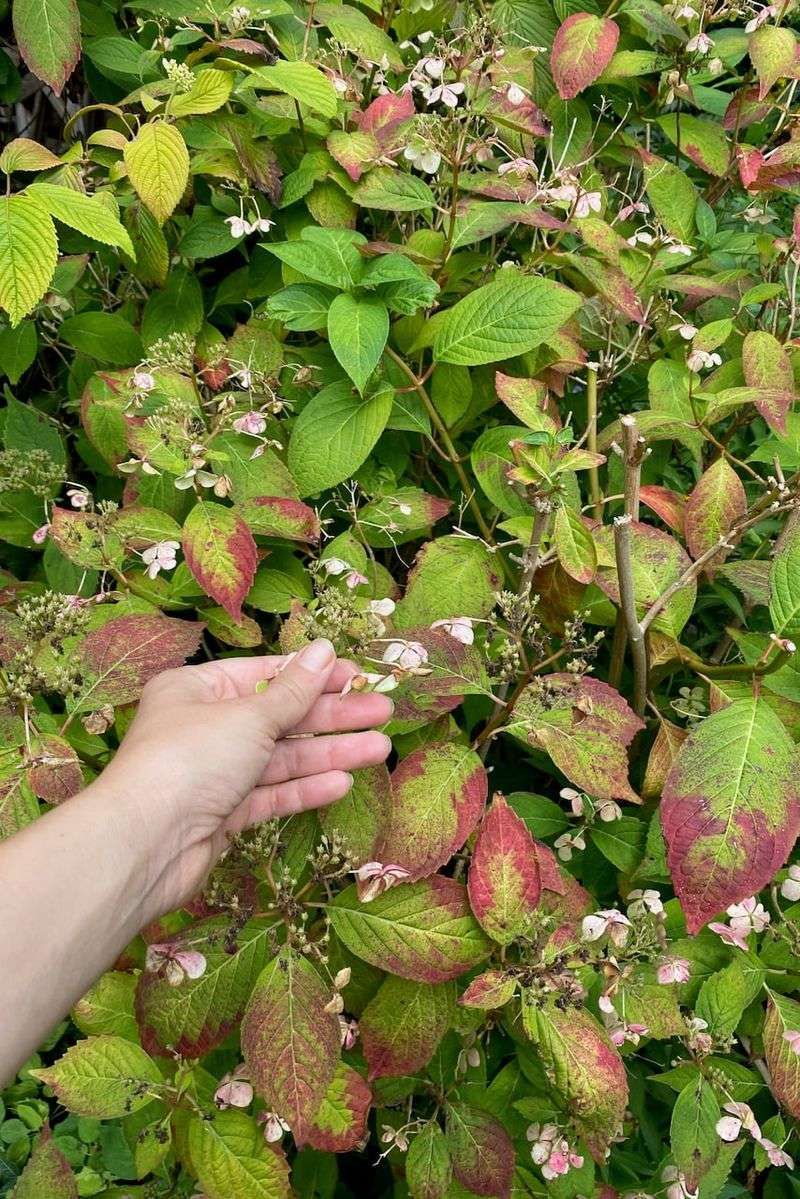
Gradual, fairly even fading on older blooms points toward normal aging and needs no intervention beyond deciding whether you want to leave the heads in place or remove them for appearance. Irregular, patchy, or rapidly spreading browning means the plant deserves a closer look.
Check the leaves, buds, stems, and the interior of the canopy for the disease clues described earlier: dark irregular spots, premature drop, dead buds, leaf lesions, or gray mold. If those signs are absent, shift attention to the root zone.
Checking soil moisture several inches below the surface tells you more than the surface appearance does. Water deeply at the soil line when the root zone is dry, and stop routine sprinkler wetting of the canopy.
Add correctly placed mulch if the root zone is bare, keeping it at roughly 3 to 4 inches deep and away from the stems.
If disease symptoms are present, remove and discard the affected tissue and improve air circulation, as Penn State Extension’s hydrangea disease resource recommends. Reassess afternoon sun exposure and consider whether a site or shade adjustment makes sense for next season.
Do not reach for fertilizer, pH amendments, or fungicide as automatic attempts to reverse brown flowers. Extension plant specialists are clear that excess fertilizer can contribute to browning rather than fix it, and no soil amendment restores tissue that has already aged or been damaged.
The realistic outcome here is that you can leave normal fall blooms alone, reduce stress-driven browning with better siting and watering, or manage a plausible disease with targeted sanitation. Some hydrangea flowers simply brown as fall arrives, and that is not a failure worth fighting.