
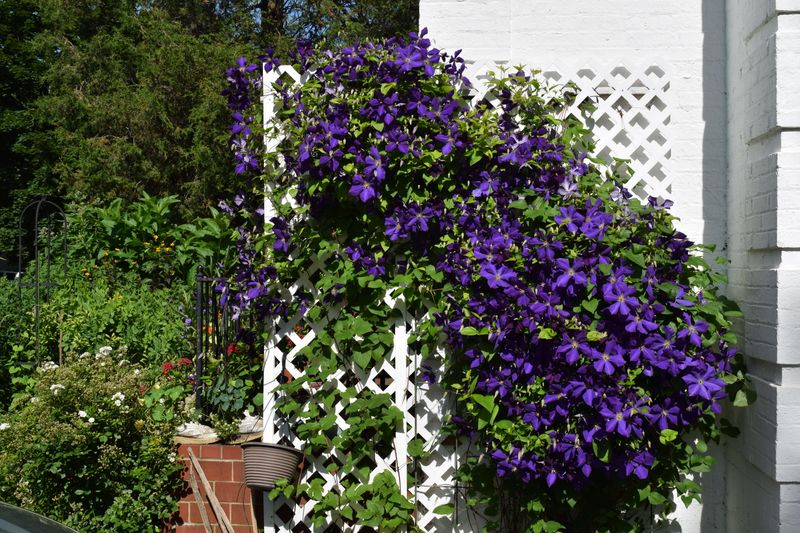
A clematis that shoots up six feet of lush green growth and then produces almost no flowers can leave you scratching your head. The instinct is to reach for a fertilizer and hope for a better show next year, but that move can actually make things worse.
Understanding why your vine grew so vigorously without blooming is the real starting point, and the answer is almost never as simple as one missing bag of plant food.
Tall growth is a clue, not a diagnosis
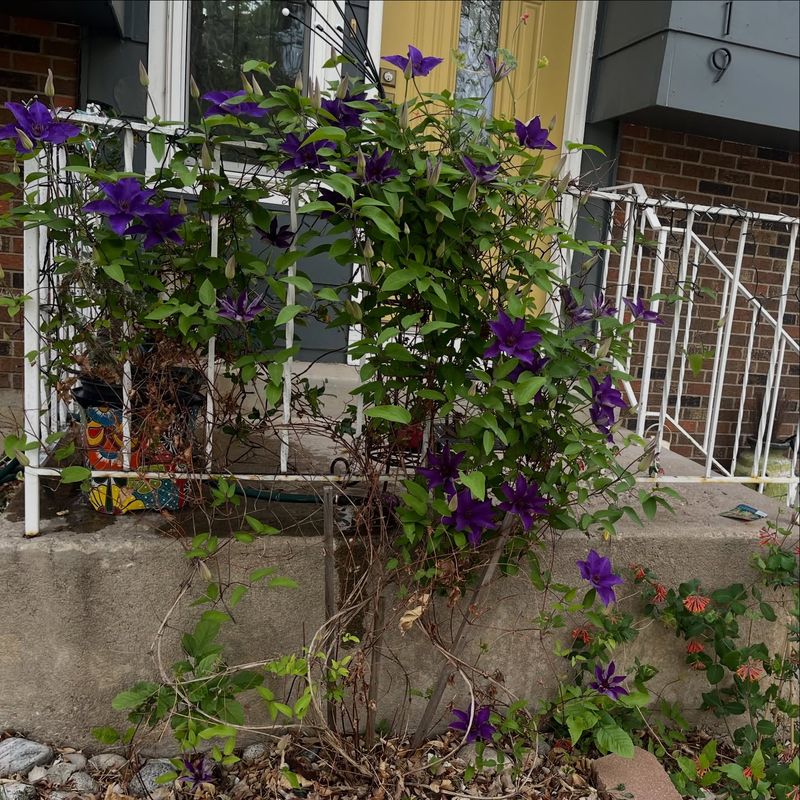
A vigorous clematis that barely flowered this season is sending you information, but that information is easy to misread. The most common reaction is to assume the plant is hungry and needs a fertilizer boost before winter.
Pause before doing that, because the same leafy-but-flowerless symptom can come from at least half a dozen unrelated causes.
Excess nitrogen is one real possibility. Clemson Extension’s clematis guidance notes that overfertilization with nitrogen stimulates lush, succulent vegetative growth and can actually increase the plant’s disease susceptibility rather than improve flowering.
If your clematis is growing near a regularly fertilized lawn, it may already be pulling in more nitrogen than it needs through shared soil.
But excess nitrogen is only one possibility. Shade creeping in from a maturing tree, a pruning mistake that removed next season’s flower buds, heat stress on the root zone, drought, waterlogged soil, root damage, plant age, disease, or simply a cultivar that blooms on older wood can all produce the same picture of a tall, leafy vine with few flowers.
University of Maryland Extension’s fertilization guidance for clematis specifically advises against fertilizing unless a soil test or clear deficiency points to a need. A vine that grew tall is not automatically deficient.
Before you open any bag or bottle, work through the diagnostic steps in the sections that follow.
Your clematis type determines the pruning decision
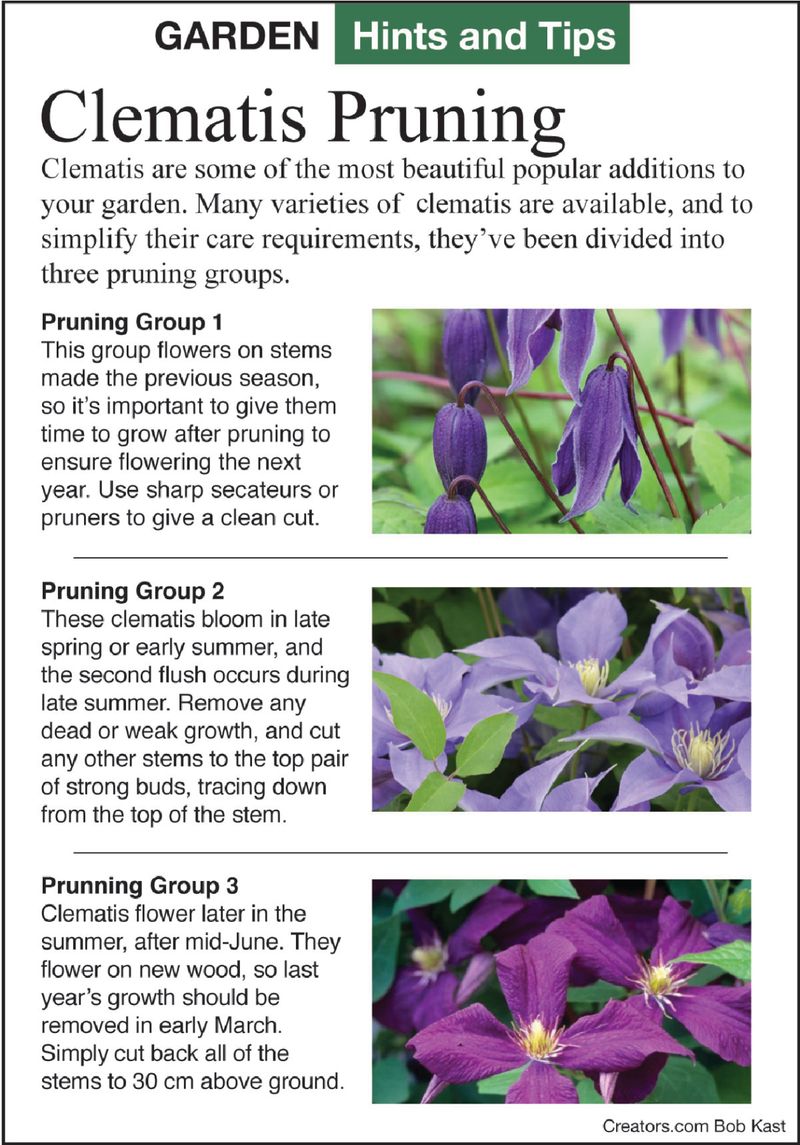
Before you touch a pair of pruners this fall, you need to know which pruning group your clematis belongs to. Cutting at the wrong time is one of the most common and most damaging mistakes home gardeners make, and it can directly cost you next season’s flowers.
University of Illinois Extension’s clematis guide outlines the three-group framework clearly. Group 1 plants bloom in spring on wood that grew the previous season.
Because their flower buds form on old stems, they should generally be pruned right after they finish blooming, not in fall. Cutting them back in autumn removes exactly the stems that would have carried flowers in spring.
Group 2 clematis bloom on both old wood and new growth, often producing two flushes of flowers. Heavy pruning can strip away the old-wood buds that drive the first flush, so these plants need a lighter touch and careful timing.
Group 3 plants bloom on the current season’s new growth, usually in summer or fall, and are generally the ones that can be cut back hard in late winter or early spring without sacrificing flowers.
Finding your plant’s group starts with the label, the cultivar name, or simply noting when it blooms. If you bought it without a tag and the label is long gone, watch it through one full season before pruning aggressively.
Autumn is not the moment to guess. Incorrect pruning on a Group 1 or Group 2 plant can wipe out an entire season’s bloom display before it ever starts.
Check light, water, and roots before feeding
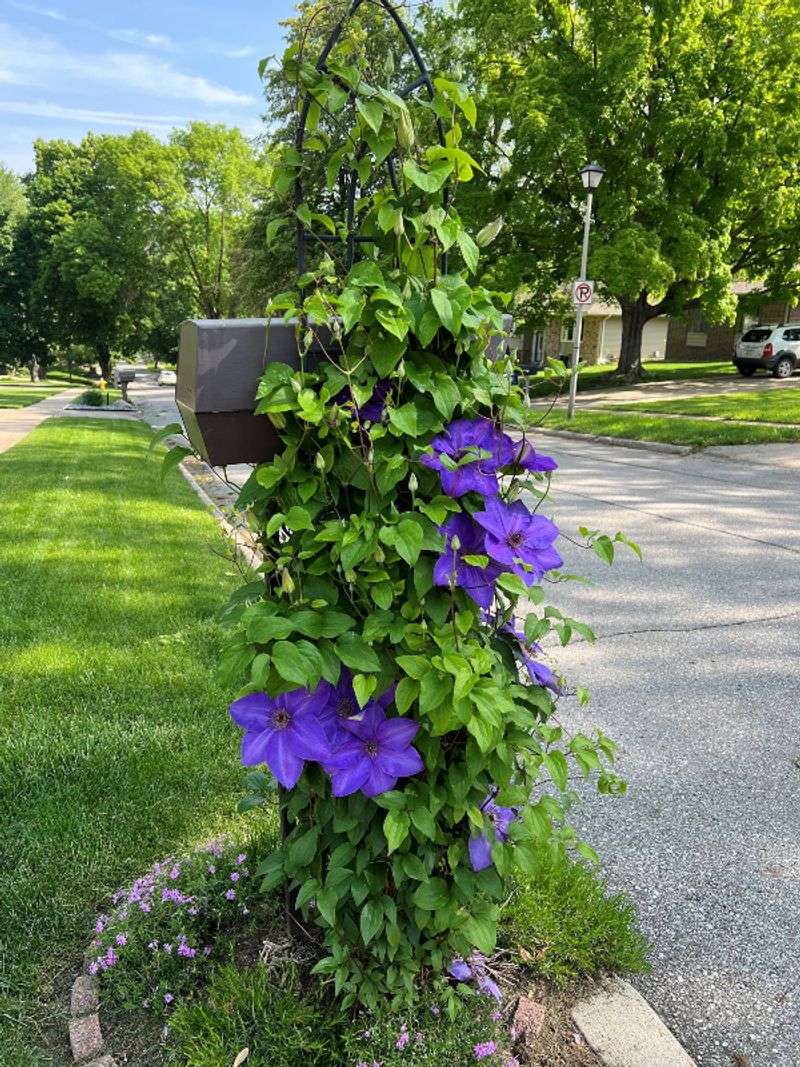
Fertilizer cannot fix a site problem. If your clematis is struggling because of shade, heat stress, drought, or poor drainage, adding nutrients will not change those conditions and may create new ones.
Working through the site checklist first is the more useful move.
Light is often the overlooked culprit. Clemson Extension recommends at least six hours of direct sun for best flowering, with some afternoon protection in hot Southern climates where intense heat can stress the foliage.
A vine that was planted in full sun five years ago may now be sitting in partial shade as nearby trees or shrubs have filled in. Check the actual hours of light the plant receives before assuming nutrition is the bottleneck.
Root-zone conditions matter just as much. Clematis performs best when the soil stays consistently moist but drains freely.
Both waterlogging and drought can suppress flowering even in an otherwise healthy plant. RHS clematis guidance confirms that dry or waterlogged soils are unsuitable and that deep shade reduces flowering significantly.
Keeping the root zone cool is a specific concern in Southern gardens. Mulch applied around the base of the plant helps retain moisture and moderate soil temperature, but it should be kept several inches away from the stems themselves to reduce the risk of moisture-related crown and stem problems.
Shallow-rooted companion plants can also shade the root zone without competing aggressively. If watering has been inconsistent during hot, dry stretches, that stress alone may explain a thin flower display.
Make fall feeding a conditional choice
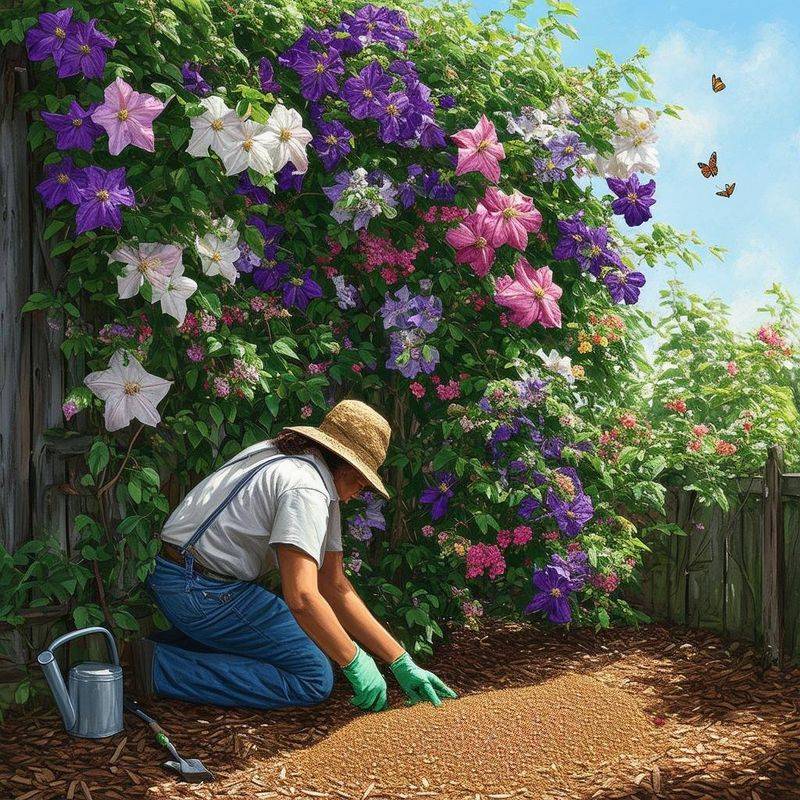
The most honest thing to say about fall fertilizing is that reputable authorities do not agree on whether established clematis need it at all. Some extension services recommend light feeding during the active growing season; others include a fall application; and University of Maryland Extension advises against fertilizing clematis unless a soil test or clear deficiency indicates a need.
That range of opinion is a strong signal that no single calendar instruction applies to every plant or every garden.
The practical takeaway is to treat fall feeding as a conditional decision rather than a routine task. If your plant is growing vigorously, the soil has not been tested in several years, and you have no evidence of a nutrient shortage, adding fertilizer this fall is unlikely to produce a noticeably better flower display next season.
Flowering also depends on pruning group, retained old wood, light, moisture, heat, cultivar traits, and plant health, none of which a fertilizer application can address.
North Carolina State Extension recommends a low-nitrogen, slow-release fertilizer applied every four to six weeks during the growing season for clematis, which reflects a routine-light-feeding approach rather than a fall-bloom-booster strategy. That is a meaningful distinction.
Compost or well-rotted manure applied as a soil amendment is a different category from commercial fertilizer. UF/IFAS Nassau County Extension’s clematis notes discuss organic matter as a soil conditioner.
Neither compost nor commercial fertilizer is a guaranteed trigger for more flowers, and they should not be treated as interchangeable products.
Choose measured nutrition instead of a bloom booster
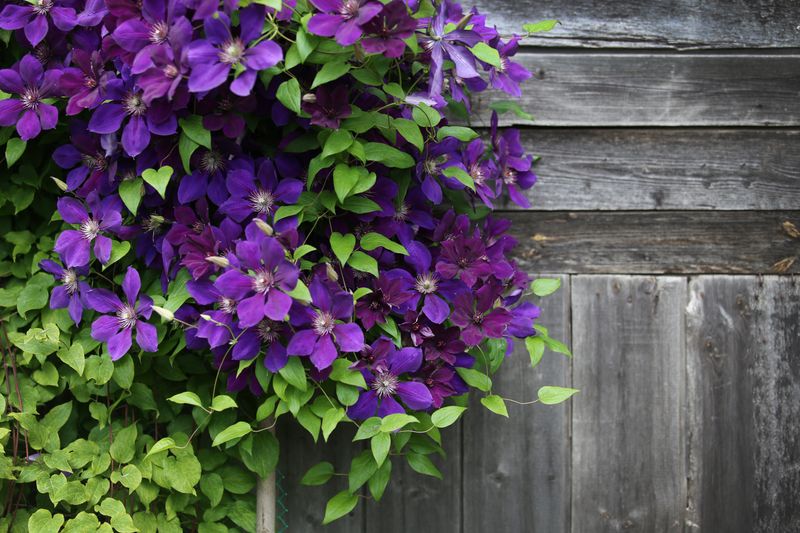
Walk past the high-phosphorus bloom booster products when you are at the garden center. North Dakota State University Extension describes the claim that extra phosphorus increases flowering as a myth when soil phosphorus is already adequate.
Plants do need phosphorus, but if your soil already contains enough, adding more will not reliably push the plant into producing more blooms. In some soils, excess phosphorus can interfere with the plant’s uptake of other nutrients.
Heavy nitrogen applications carry their own risks. High nitrogen encourages the kind of soft, leafy, rapid growth that looks impressive but can come at the expense of flower production.
It can also make stems more susceptible to disease and, in concentrated doses, cause fertilizer burn or salt stress at the root zone. Runoff from overfertilized beds is an environmental concern as well, particularly in areas with sandy soil or proximity to water bodies.
UF/IFAS guidance on fertilizer basics emphasizes using the minimum amount needed, following product label directions precisely, and checking local regulations before applying anything to an established landscape plant. If a soil test or a visible, evidence-supported deficiency does justify feeding, a low-nitrogen or balanced, slow-release product applied according to the label is a reasonable choice.
What measured nutrition cannot do is repair the problems that most commonly cause a clematis to flower poorly. Texas A&M AgriLife Extension’s plant nutrition guidance makes clear that nutrients support healthy plant function, but they cannot compensate for shade, incorrect pruning, drought, root damage, or disease.
Address those limiting factors first, and use fertilizer only when the evidence actually points to a nutrient gap.
Adjust fall care for Southern conditions
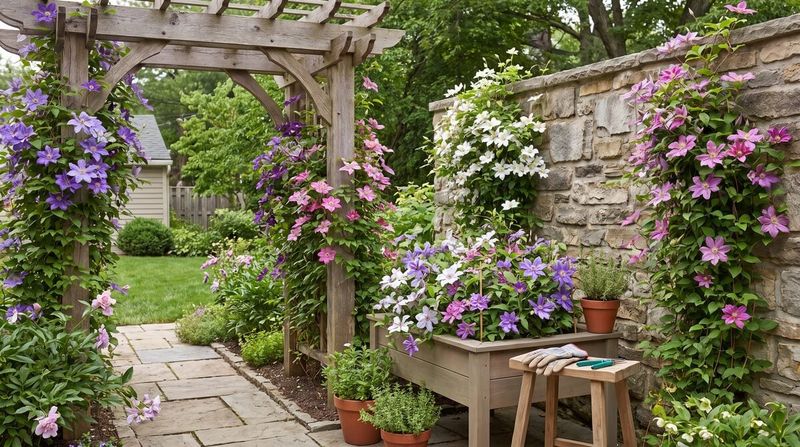
Fall in Florida and large parts of Texas is not the same season gardeners in Ohio or Virginia experience. Temperatures stay warmer longer, some plants remain actively growing well into what the calendar calls autumn, and local conditions including sandy soil, heavy rain events, drought cycles, and municipal fertilizer ordinances can all change whether feeding makes sense and when.
UF/IFAS guidance on fertilization and irrigation needs for Florida landscapes emphasizes soil testing, using the minimum amount of product necessary, following label directions carefully, and checking local fertilizer ordinances before applying anything. Some Florida counties restrict certain fertilizer applications during the rainy season or near waterways, and those rules apply to ornamental plants in home landscapes.
Ignoring them can result in fines and contributes to water quality problems.
A calendar instruction like “feed your clematis every October” does not hold up across the Southern region. A plant in a North Florida garden with sandy, fast-draining soil may have genuinely different nutritional needs than one growing in a Central Texas clay-heavy bed.
Soil testing is the most reliable way to find out what your specific plant actually needs before you add anything.
Florida gardeners also need to pay attention to species identity when it comes to clematis sold as “sweet autumn clematis.” UF/IFAS lists Clematis terniflora as a high invasion risk in Florida and does not recommend it for Florida landscapes. The native Clematis virginiana is a different plant and can be difficult to distinguish at the nursery because both species are sometimes sold under similar common names.
Confirming which species you have matters before you invest significant care into a plant that may not be appropriate for your region.
Use a diagnosis, not a promise, to plan next season
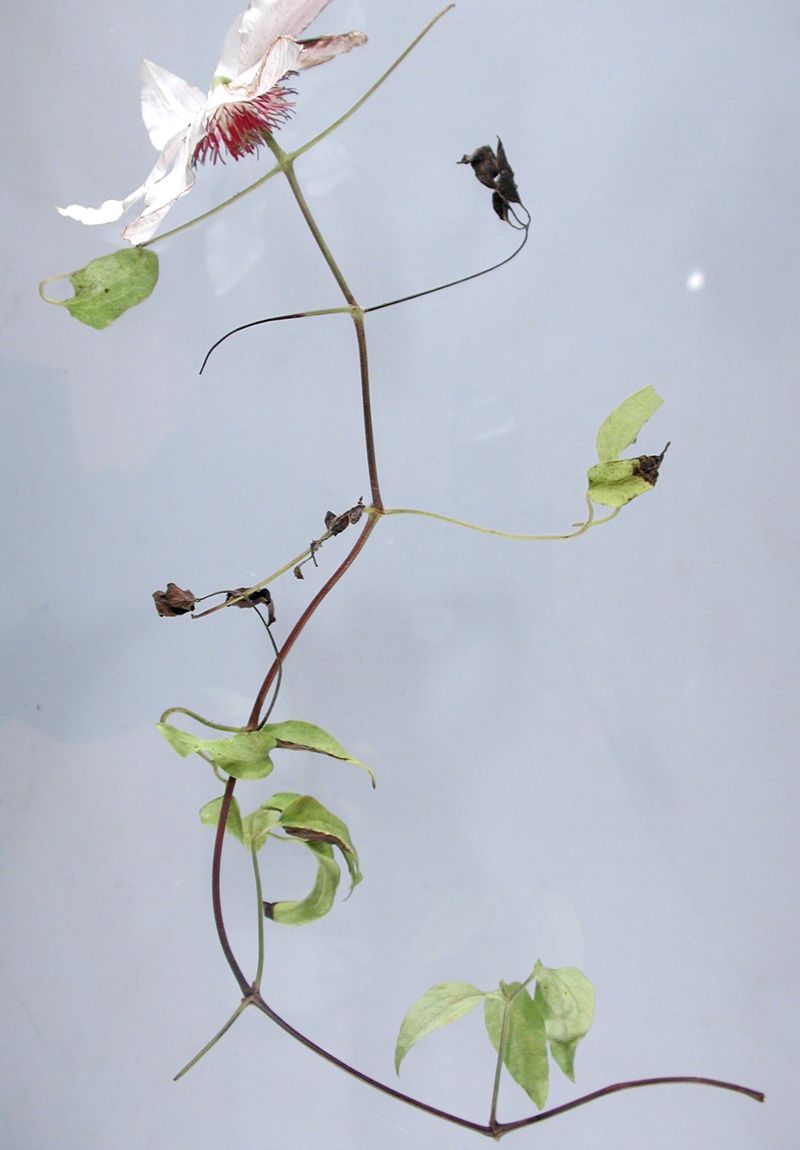
The most useful fall move for a clematis that grew tall but barely bloomed is not a product. Working through a short diagnostic sequence will do more to set up next season than any fertilizer applied without evidence.
Start by identifying the cultivar and its pruning group. University of Illinois Extension’s clematis guide lays out the group framework clearly and is worth bookmarking.
Once you know the group, you can decide whether any fall pruning is appropriate or whether the smarter move is to leave old stems in place to protect next season’s flower buds. Correct pruning timing is the one fall action with direct, documented potential to preserve flower-bearing wood on Group 1 and Group 2 plants.
Next, check light exposure, root-zone moisture, drainage, and any signs of disease or root damage. Clemson Extension’s clematis factsheet covers site requirements thoroughly and is a reliable reference for matching conditions to what the plant actually needs.
If those conditions are off, correcting them will matter more than any fertilizer decision.
If everything else checks out and you still suspect a nutrient gap, get a soil test before adding anything. RHS clematis FAQ guidance reinforces that poor flowering has multiple possible causes, and fertilizer addresses only one of them.
A clematis that gets the right pruning, the right light, and consistently good root-zone conditions tends to reward that care more reliably than one that gets a bag of fertilizer and nothing else.