
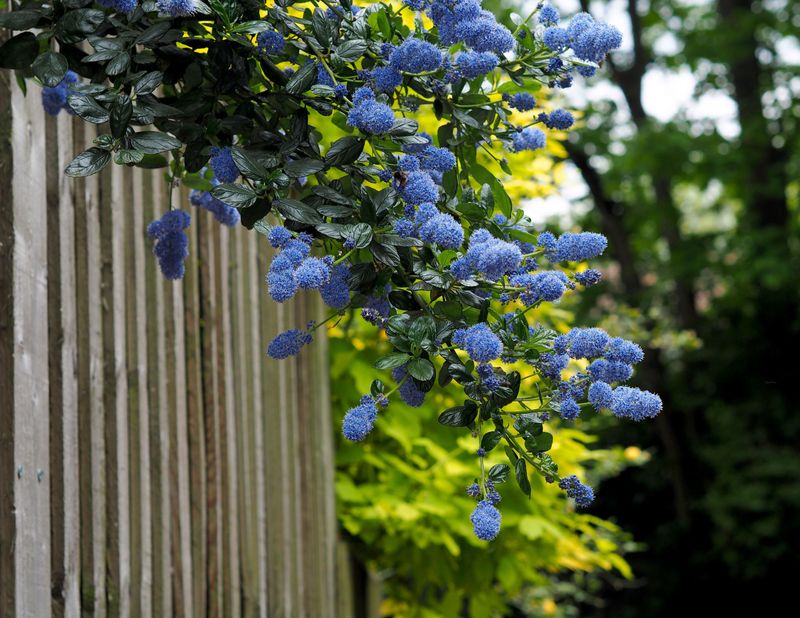
Arborvitae looks great in the garden center, but here in California it often browns out, thins in the heat, or dies in the spots where you needed privacy most. The good news is that California native shrubs can build a thick, living screen that shrugs off drought, feeds local birds and bees, and handles our dry summers without a fuss.
Below are seven natives that hold up in the tough places where arborvitae keeps letting you down. Pick the one that matches your trouble spot and you will get a privacy wall that actually lasts.
1. Toyon (Heteromeles arbutifolia)
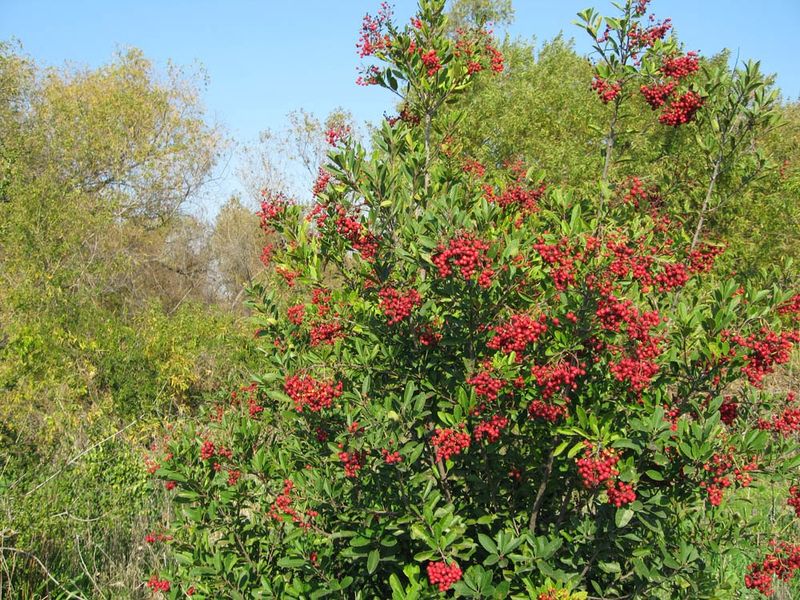
Growers call it California holly for good reason, and legend even says Hollywood took its name from the hillsides once blanketed in this plant. Toyon grows into a dense evergreen wall six to fifteen feet tall, exactly the height most homeowners want for blocking a neighbor’s window.
Where arborvitae fries on a hot inland fence line, toyon stays leafy and green through the driest months once its roots settle in. The glossy foliage stays thick from the ground up, so you do not get those bare, see-through gaps at the bottom.
Come winter, clusters of red berries light up the branches and pull in cedar waxwings, robins, and mockingbirds. It suits full-sun yards, slopes, and fire-aware landscapes since it is relatively resistant to burning when kept hydrated and pruned.
Plant it where you need year-round cover with a bonus of holiday-red color.
2. Coffeeberry (Frangula californica)
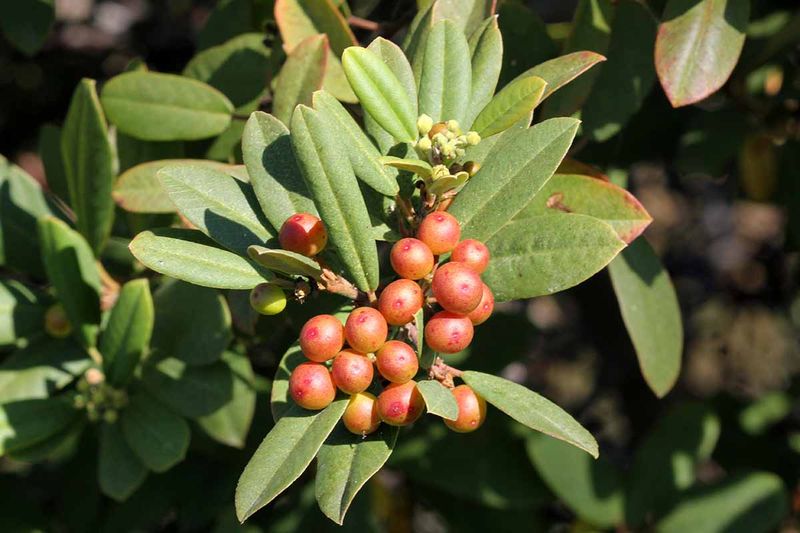
If your problem spot swings between blazing sun and half-day shade, coffeeberry is the flexible native that handles both without complaint. It fills in as a rounded, leafy mound that easily reaches five to eight feet, giving you a soft green barrier that feels lush rather than stiff.
Arborvitae tends to sulk in dappled light and clay soil, but coffeeberry takes those conditions in stride and keeps its foliage dense. Varieties like ‘Eve Case’ and ‘Mound San Bruno’ were selected specifically for tidy, compact hedging.
The little berries shift from green to red to black through the season, feeding songbirds while tiny flowers quietly draw pollinators. Once established, it asks for almost no summer water, which makes it a smart pick for water-conscious California yards.
Use it along a mixed-light fence where other screens thin out.
3. Lemonade Berry (Rhus integrifolia)
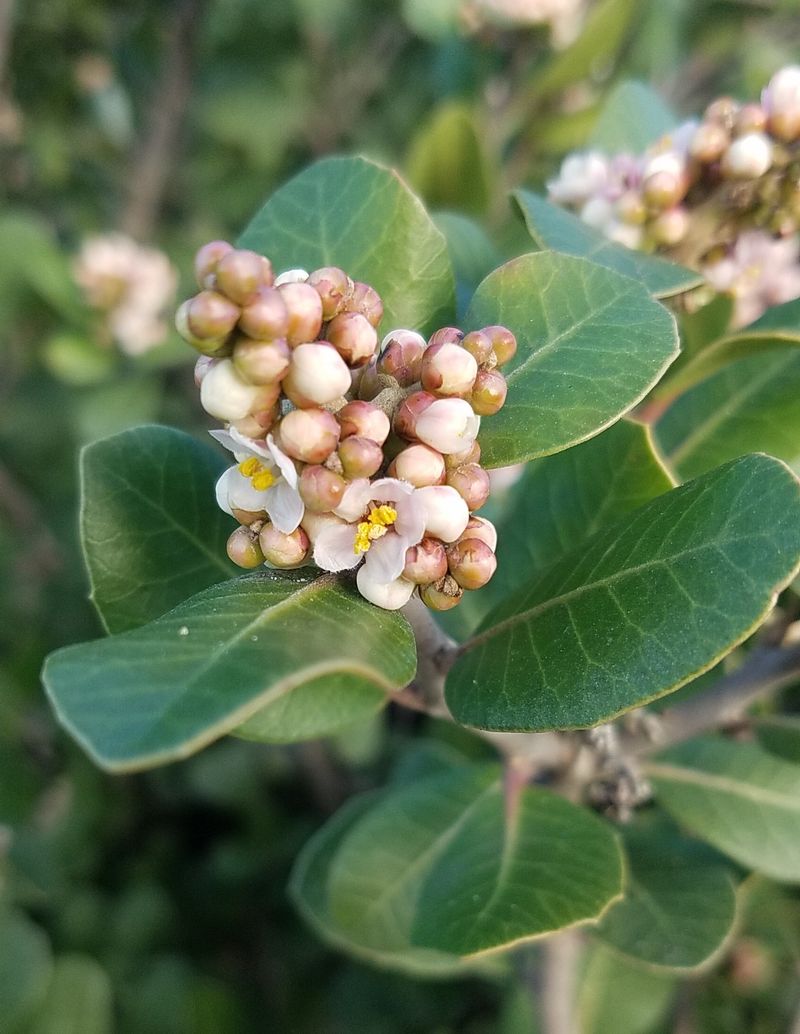
Coastal homeowners battling salty wind and sandy soil finally have a screen that thrives on it. Lemonade berry earns its name from the tart, sticky coating on its pinkish fruit, which early Californians soaked in water for a lemonade-like drink.
Along the coast, arborvitae often looks scorched by salt spray and struggles in fast-draining ground. Lemonade berry does the opposite, spreading into a thick evergreen mass eight to ten feet tall and just as wide with leathery leaves that laugh off ocean air.
Its dense, mounding habit blocks views and wind at the same time, and clusters of small pink flowers feed bees in late winter. Birds nest happily in the tangled interior.
For beach-adjacent lots and bluff-top yards, this is the tough coastal workhorse arborvitae wishes it could be.
4. Hollyleaf Cherry (Prunus ilicifolia)
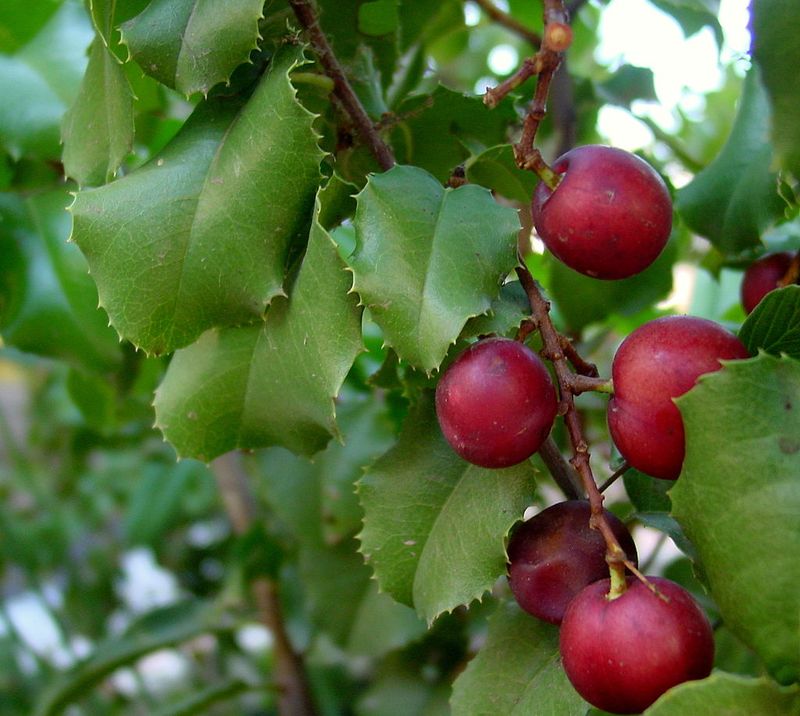
Want that clipped, formal hedge look without the constant heartbreak of dead patches? Hollyleaf cherry shears into a crisp evergreen wall, and its spiny, glossy leaves genuinely resemble holly.
Arborvitae shaped into a tidy hedge often develops brown holes that never fill back in, especially in hot inland zones. Hollyleaf cherry regrows densely after trimming and can climb to fifteen feet or more, making it one of the best natives for a truly private, tall boundary.
Spring brings small white flower spikes, followed by dark cherries that birds devour. It is remarkably drought-hardy once rooted and tolerates a range of soils.
Choose it when you want structure and formality that still supports California wildlife instead of fighting it.
5. Manzanita (Arctostaphylos species)
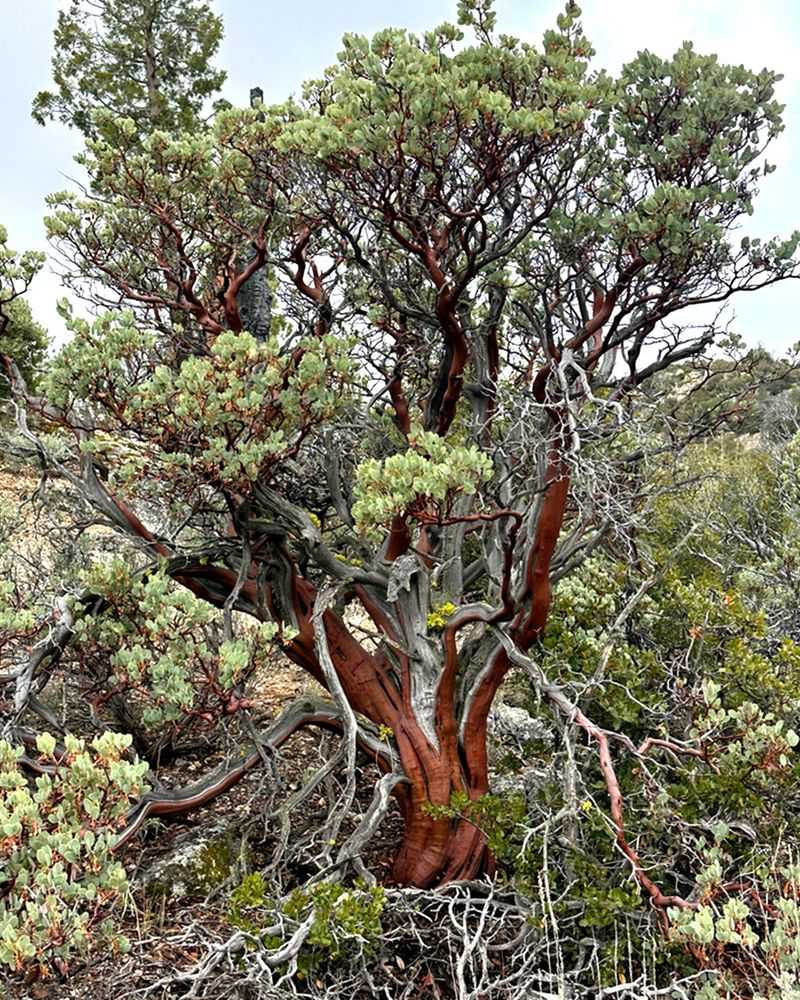
Few shrubs pull double duty as privacy screen and living sculpture like manzanita, with its smooth mahogany-red bark that practically glows. Taller varieties such as ‘Dr. Hurd’ or ‘Howard McMinn’ build a substantial evergreen mass six to twelve feet high.
On dry, rocky, or steep sites where arborvitae simply gives up, manzanita is right at home and needs almost no irrigation once settled. The tight, layered foliage screens views while the framework of colorful branches adds year-round interest.
In the cool months, tiny urn-shaped pink and white flowers appear and become a critical early nectar source for native bees and hummingbirds. It is also a strong choice for fire-aware plantings when spaced and maintained properly.
Reach for manzanita on hot slopes and gravelly spots that defeat everything else.
6. Ceanothus (California Lilac)
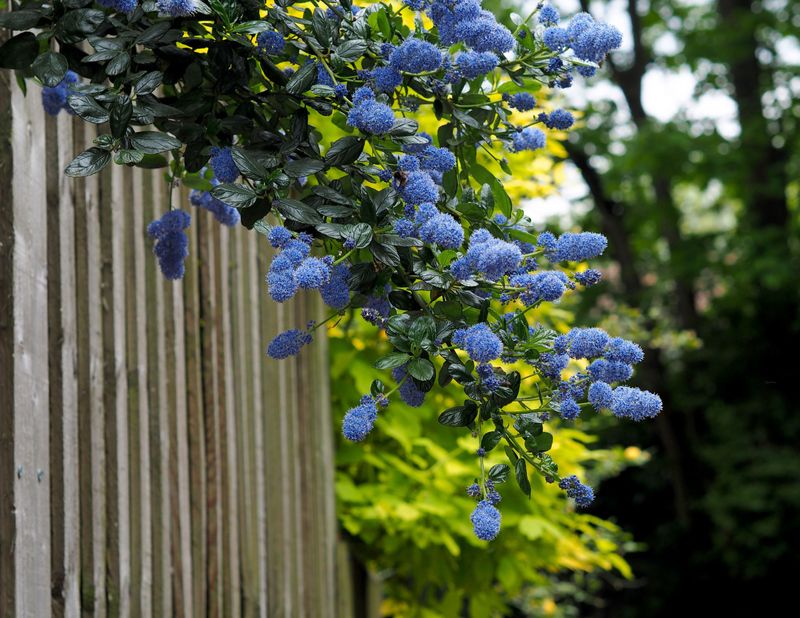
Picture a privacy screen that explodes into clouds of blue in spring and hums with bees from ten feet away. That is ceanothus, often called California lilac, and the larger forms like ‘Ray Hartman’ grow fast into a leafy screen twelve to twenty feet tall.
Arborvitae grows slowly and offers nothing but green, while ceanothus fills a gap quickly and rewards you with a spectacular bloom show. The small, dark, evergreen leaves stay dense enough to block sightlines through most of the year.
Pollinators adore it, and few native shrubs draw more bees during peak bloom, which makes it a stewardship win for worried homeowners. It wants good drainage and hates soggy summer water, so give it a sunny, well-drained spot.
Plant it where you need cover fast and want color that stops traffic.
7. Island Bush Poppy (Dendromecon harfordii)
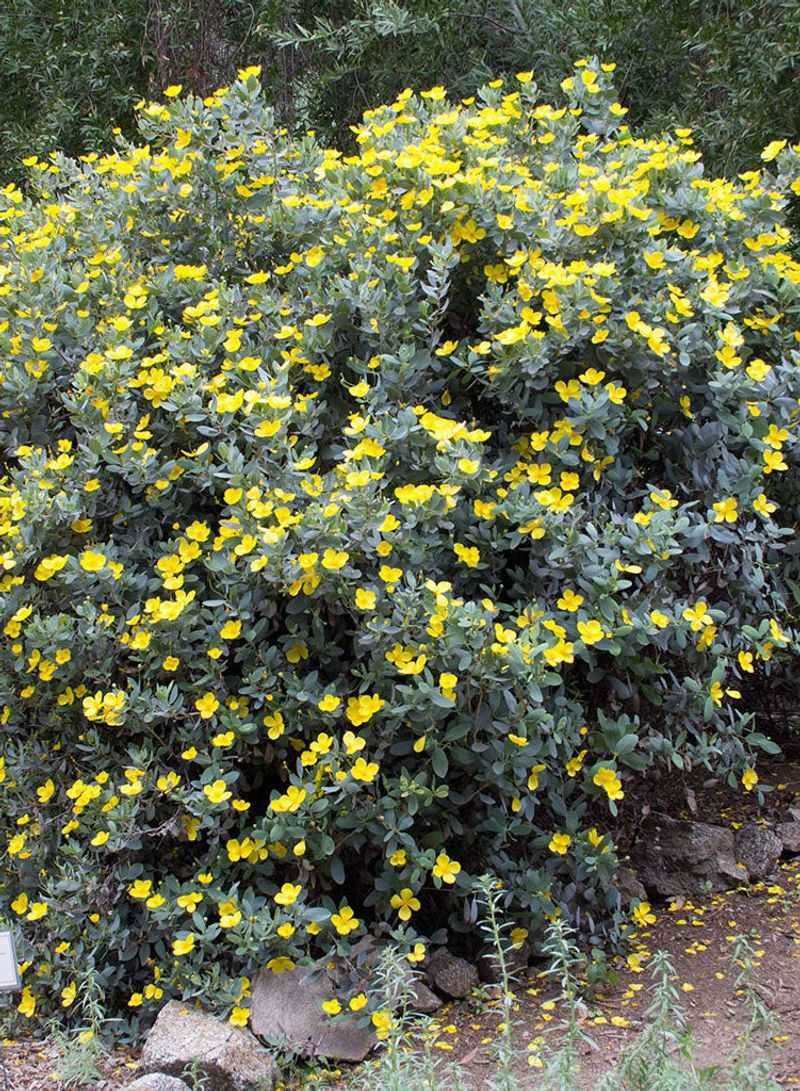
For the hottest, driest corner of the yard where nothing seems to survive, meet a screen that actually enjoys the abuse. Island bush poppy comes from the Channel Islands and shrugs off heat and drought that would crisp an arborvitae in a single summer.
It grows quickly into a rounded evergreen shrub six to ten feet tall, cloaked in soft blue-green leaves that stay handsome year-round. Bright yellow poppy flowers appear over a long stretch of the warm season, so you get privacy and cheer at the same time.
Because it thrives on lean soil and minimal water, it fits perfectly into water-wise and low-maintenance designs. Give it full sun and sharp drainage and mostly leave it alone.
This is your answer for the scorched, forgotten spot where every conventional hedge has failed.