
If you live in California, you already know summer means bone-dry soil, water limits, and the nervous glance up the hillside when fire season rolls in. Your mailbox and curbside beds are the first thing neighbors see, but a lot of the go-to landscaping plants are thirsty, flammable, or both.
The good news is that plenty of low-water California plants stay handsome through the driest weeks while helping keep flames from creeping toward your home. Here are ten fire-smart picks that hold their color, feed pollinators, and give your curb a polished look without breaking water rules.
1. California Fuchsia (Epilobium canum)
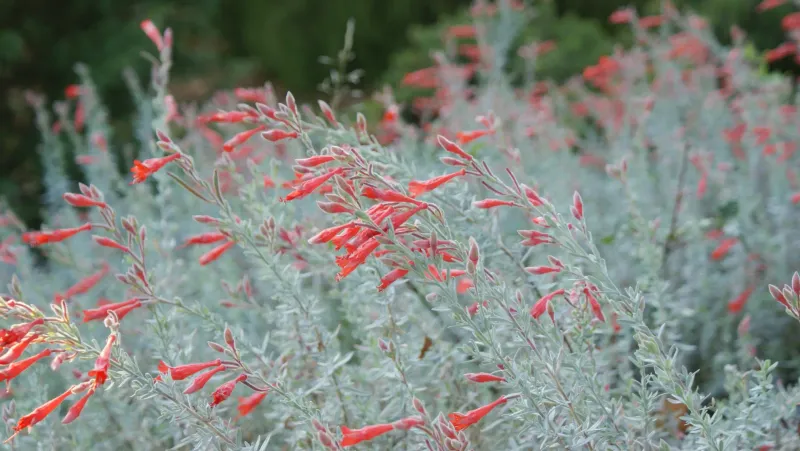
Picture a splash of fiery orange-red flowers right when everything else in the yard has gone crispy and tired. California fuchsia hits its stride in late summer, exactly when your beds need a rescue.
The low, spreading habit makes it a natural along mailbox borders, where it softens hard edges and pours over curb lines. It asks for almost no water once it settles in, which suits both drought rules and lazy weekends.
Hummingbirds treat those tubular blooms like a diner, so you get free entertainment along with color. From a fire-smart angle, its low-growing form and high moisture in the foliage make it a gentler choice near the house than woody, resinous shrubs.
Cut it back in winter and it comes roaring back the next season.
2. Deer Grass (Muhlenbergia rigens)
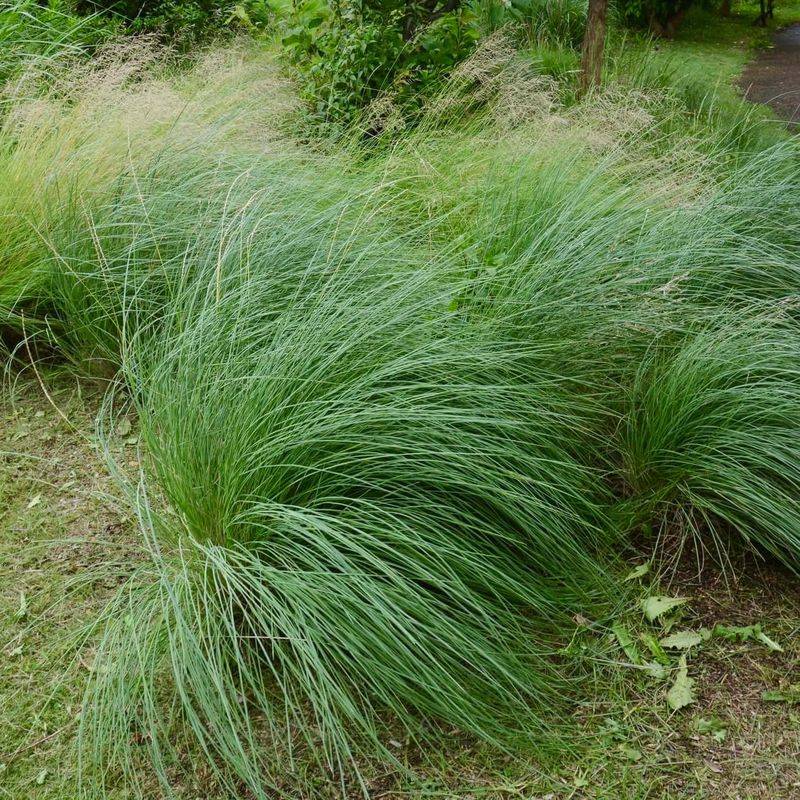
Some plants earn their spot by being calm and dependable, and deer grass is the quiet workhorse of the group. It forms a soft, fountain-shaped clump that looks intentional and tidy, even in September heat.
Native across much of California, it thrives on neglect and shrugs off long dry spells. Space a few along the curb and they read like a designer planting rather than a struggle to keep things alive.
Because it stays green and pliable rather than turning into dry thatch, it behaves better in fire-prone zones than many ornamental grasses. Just give it a haircut every year or two to clear old growth.
The feathery seed plumes catch evening light and give your front bed a little movement when the breeze picks up.
3. Cleveland Sage (Salvia clevelandii)
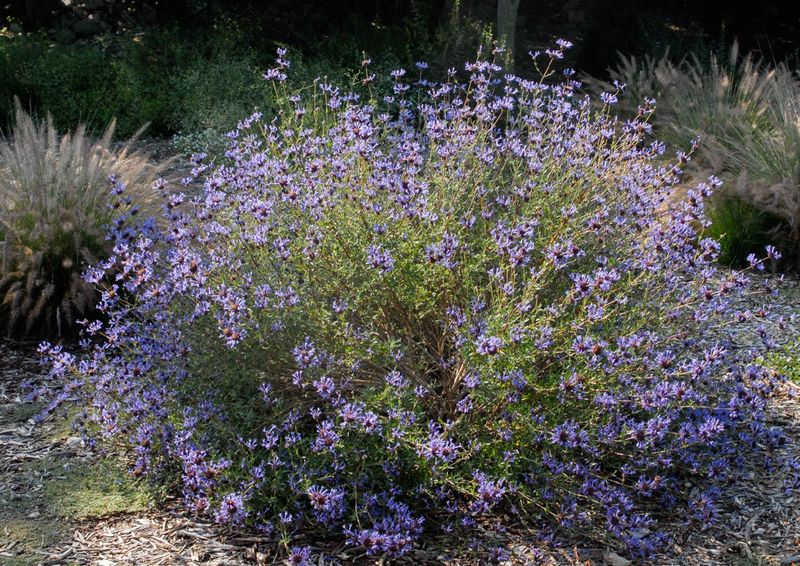
Brush past this one on a warm afternoon and you will understand its nickname as the fragrant sage of the chaparral. The scent alone makes it worth planting near a walkway or mailbox.
Rounded whorls of purple-blue flowers stack up the stems in late spring and early summer, and bees swarm them like it is the best restaurant in town. It handles heat, poor soil, and skipped waterings without complaint.
Give it room, good drainage, and full sun, and it rewards you with a neat mounding shape. Prune lightly after bloom to keep it from getting leggy and woody, which also keeps dead material from building up.
In fire-aware yards, keeping salvias well spaced and trimmed helps them stay an asset rather than fuel.
4. Coyote Mint (Monardella villosa)
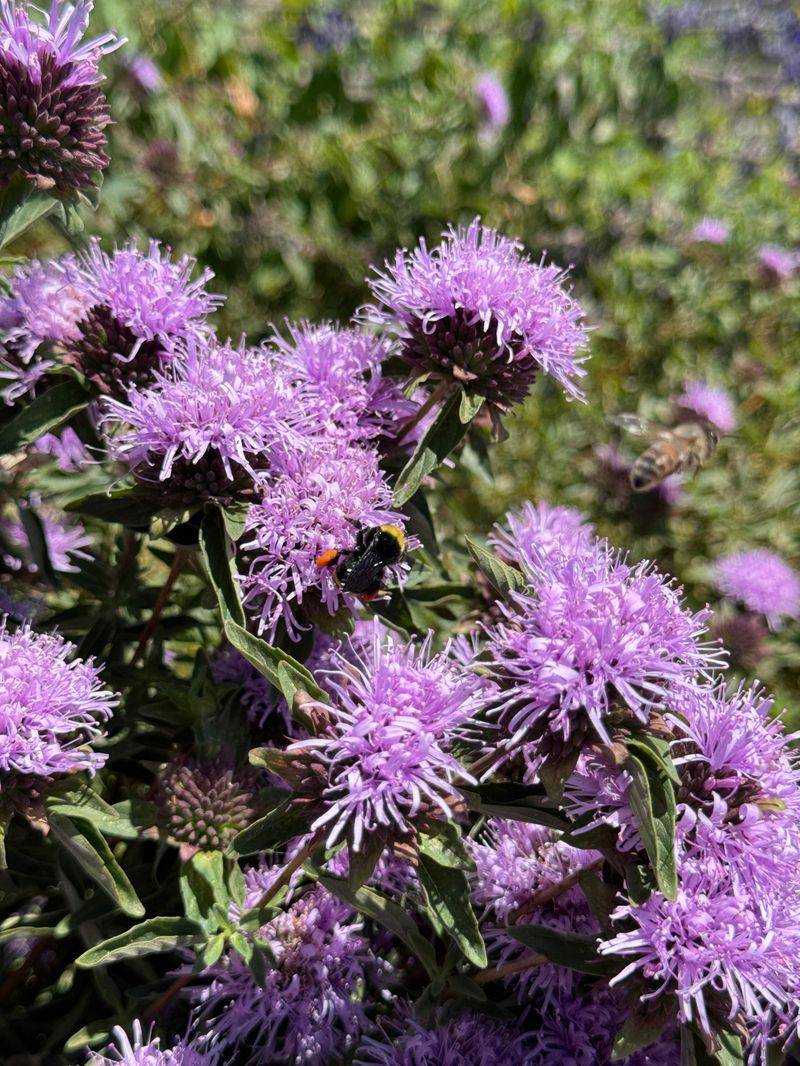
Here is a low, tidy native that punches way above its size when it comes to pollinator traffic. Coyote mint sends up fluffy lavender-pink flower heads that butterflies and native bees cannot resist.
The aromatic leaves release a minty scent when you brush them, which is a nice bonus right by the mailbox. It stays compact and neat, making it easy to tuck into the front row of a curbside bed.
Drought is not a problem once it is established, and it prefers to be left a little dry rather than pampered. Its modest size and soft, non-woody growth keep it low on the fuel scale for fire-conscious plantings.
Trim spent blooms and it often gives you a second, smaller flush.
5. Yarrow (Achillea millefolium)
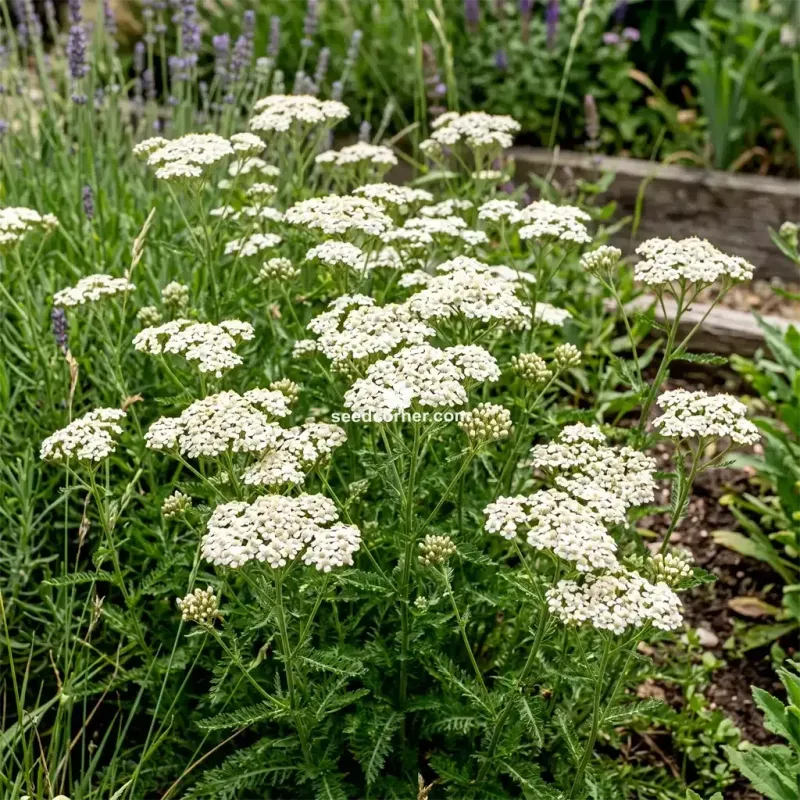
Tough as nails and pretty enough for a bouquet, yarrow bridges the gap between wild and refined. Flat-topped clusters of tiny flowers float above ferny foliage in white, gold, or soft peach.
It spreads into a low, weed-smothering mat that keeps beds looking full without demanding water. Beneficial insects and pollinators flock to those landing-pad blooms all season.
Yarrow also earns points as a low-growing groundcover in defensible-space planning, since a green living mat resists ignition better than dry mulch or dead grass. Shear it back after the first bloom and fresh flowers usually follow.
It handles foot traffic near the curb better than most flowering perennials, so it is forgiving if the mail carrier cuts a corner.
6. Red Yucca (Hesperaloe parviflora)
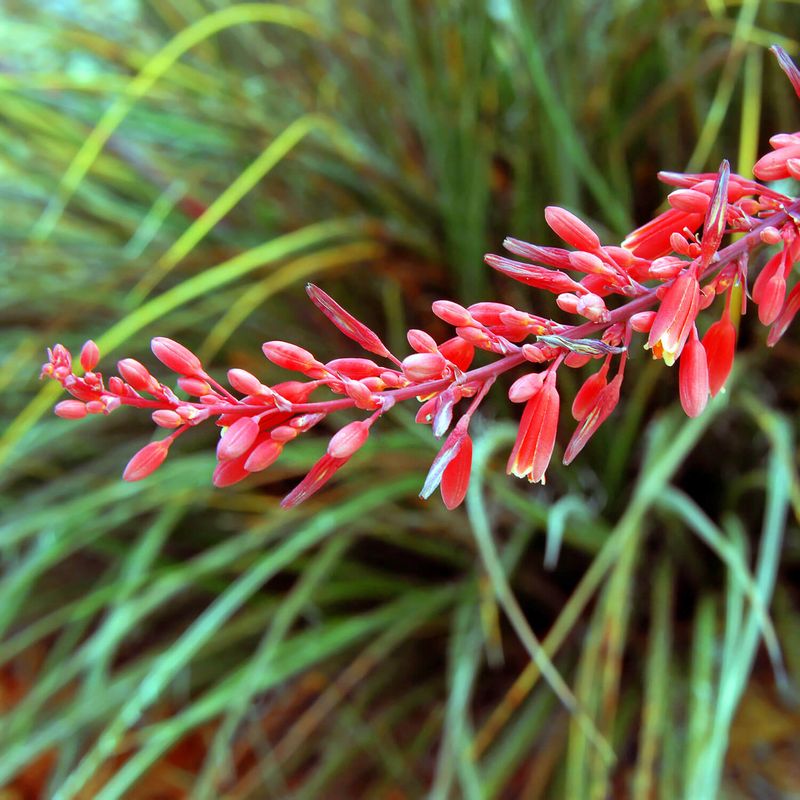
Do not let the name fool you, this is not a true yucca and it is far friendlier to walk past. Grassy, blue-green foliage sends up tall coral spikes that bloom for months in the worst heat of summer.
It sips water, asks for nothing, and still looks polished at the curb when neighboring plants have thrown in the towel. Hummingbirds work the flower spikes from spring well into fall.
The architectural shape gives structure to a bed, so it anchors a mailbox planting nicely. Its succulent-like leaves hold moisture, which makes it a smart pick for hot, exposed spots in fire-prone neighborhoods.
Snip old flower stalks at the base and it stays crisp and clean-looking year round.
7. California Buckwheat (Eriogonum fasciculatum)
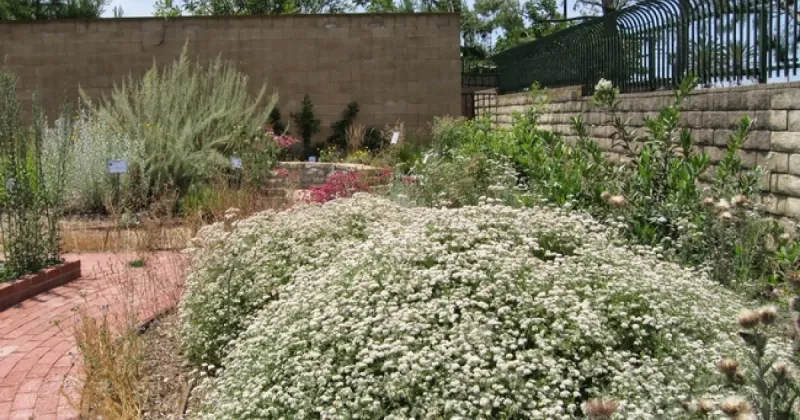
Few natives feed more wildlife per square foot than California buckwheat, a true backbone plant of local ecosystems. Clouds of creamy flowers cover it in summer, then fade to a warm rust that carries color into fall.
Native bees, butterflies, and beneficial insects rely on it, so planting it feels like doing right by the neighborhood pollinators. It is genuinely drought-proof once established and thrives in lean, rocky soil.
Its naturally low, mounding form keeps it manageable near the house, and it is often included on fire-wise plant lists when kept trimmed and spaced. A light shearing after bloom keeps it from getting rangy.
For a curbside bed that supports wildlife and shrugs off the dry season, this one earns its keep.
8. Blue Fescue (Festuca glauca)
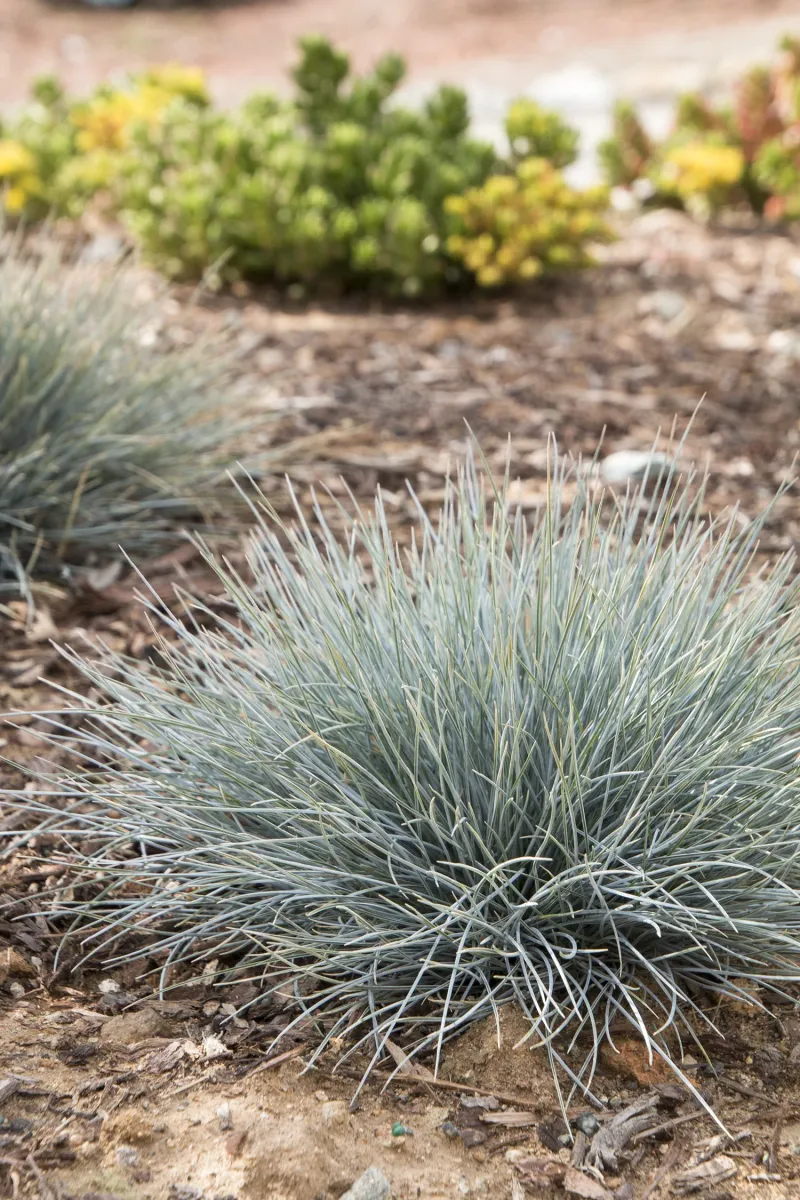
Think of little silver-blue pincushions marching neatly along your curb, and you have blue fescue. Its cool, icy color stands out against warm gravel or terracotta and keeps beds looking crisp all summer.
Each tidy tuft stays small and predictable, which makes it a favorite for edging and repeating rhythm down a front bed. It handles heat and low water once rooted, and it never sprawls into a mess.
Because it stays low and can be kept green with minimal irrigation, it works well in the tidy, well-maintained zone closest to your home. Comb out old blades in early spring to refresh the color.
Group several in a row for a clean, modern look that reads well from the sidewalk.
9. Agave (Agave species)
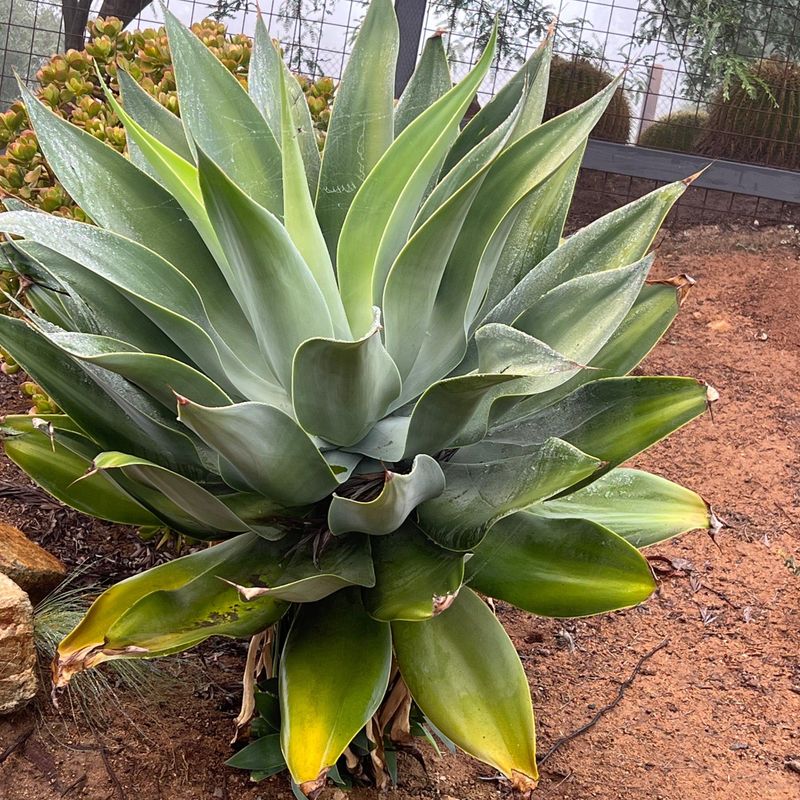
Want a plant that looks like living sculpture and practically ignores the drought? Agave delivers bold, symmetrical rosettes that hold their shape no matter how brutal the summer gets.
A single specimen can anchor a mailbox bed as a focal point, surrounded by gravel and low groundcovers. It stores water in those thick leaves, so it can go a long time between drinks.
Those same juicy, high-moisture leaves make agave a common recommendation for fire-smart landscaping, since succulents resist ignition far better than dry brush. Just place it where the spines will not surprise passersby, a step or two back from the sidewalk edge.
Choose a well-behaved variety if space is tight, and enjoy a plant that basically maintains itself.
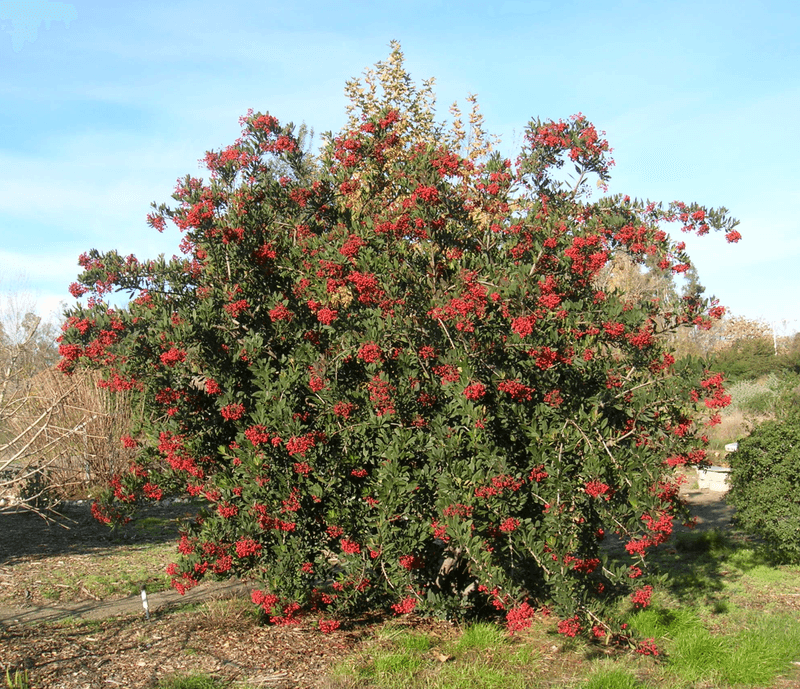
10. Toyon (Heteromeles arbutifolia)
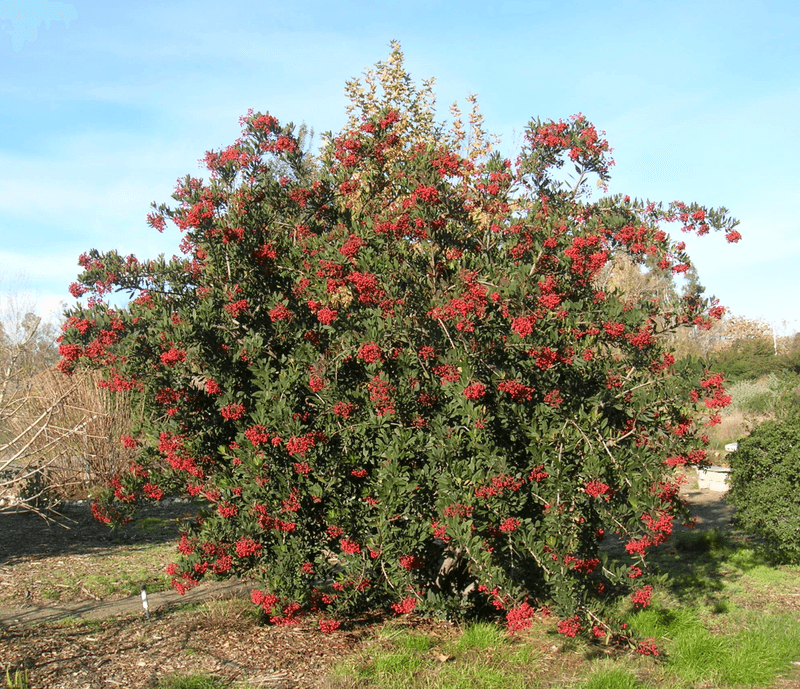
The plant that reportedly gave Hollywood its name closes out the list with real California credentials. Toyon carries glossy evergreen leaves all year, then lights up with clusters of bright red berries in winter.
Birds feast on those berries, making it a genuine wildlife magnet during the leaner months. It is deeply drought-tolerant and holds its green when thirstier shrubs turn to straw.
Toyon’s high leaf moisture and evergreen density have earned it a spot on many fire-resistant plant lists, provided you keep it pruned and clear of dead wood. Give it a little room to breathe and thin it occasionally to reduce interior buildup.
As a taller backdrop or corner anchor for a curbside bed, it delivers structure, wildlife value, and year-round good looks.