
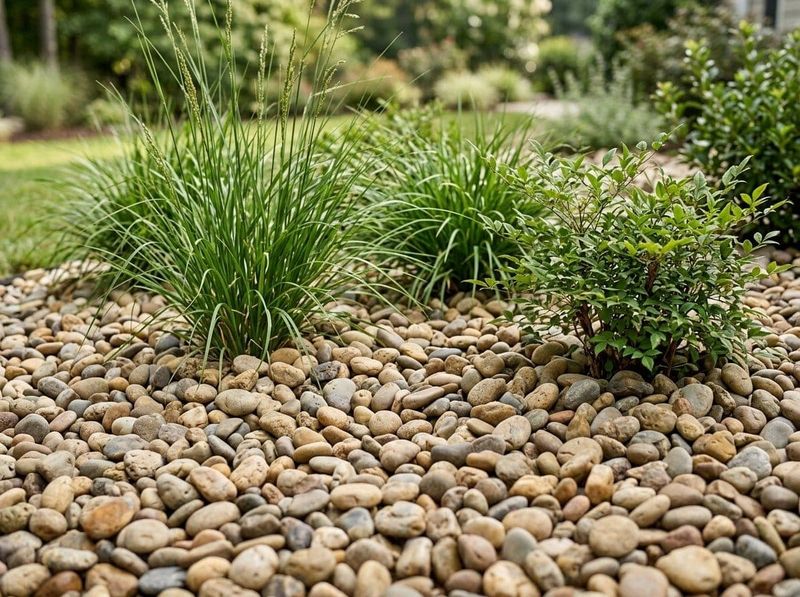
Pebbles and decorative gravel have a way of making a garden bed look sharp and finished, and it is easy to understand why so many California homeowners reach for a bag of river rock. But what happens below that tidy surface is more complicated than the clean look suggests.
The choice of mulch quietly shapes how warm the soil gets, how much water your plants need, and whether the ground underneath stays healthy over time. Getting the match right between your rock, your plants, and your yard can mean the difference between a thriving bed and one that quietly struggles.
The clean look hides a root-zone tradeoff
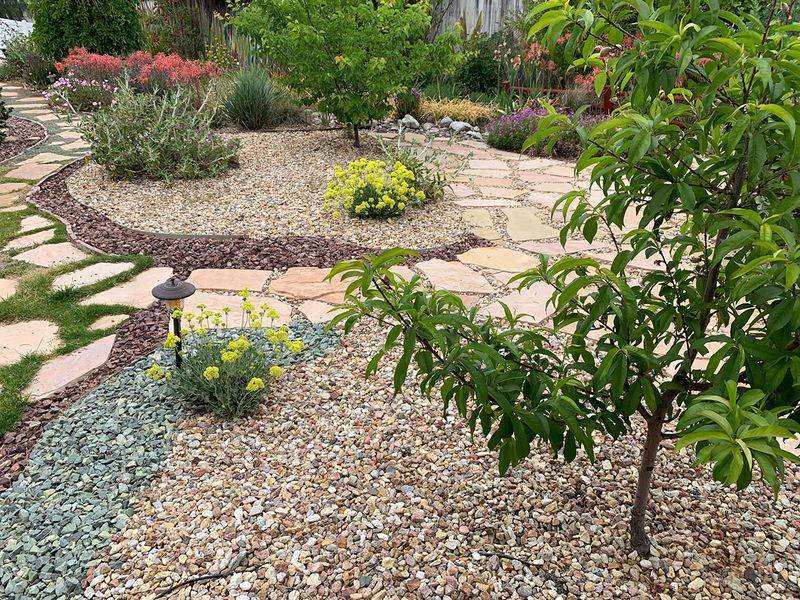
Pebbles, gravel, and decorative rock belong to a category called inorganic mulch. They are durable, they do not blow away as easily as lighter materials, and they give a planting bed a finished, low-clutter appearance that holds up through wind and rain.
Those qualities are real, and they explain why rock mulch has become a go-to choice for California homeowners who want less yard work and a cleaner look.
The tradeoff shows up in what inorganic mulch cannot do. Wood chips, bark, leaves, straw, and other organic materials slowly break down and feed the soil below them.
As they decompose, they add organic matter, support microbial life, and gradually improve soil structure. UC Master Gardener guidance on mulch makes this distinction plain: rocks and gravel are long-lasting and low-maintenance, but they do not improve soil the way organic materials do.
A layer of pebbles will look the same in ten years as it did on day one, and the soil beneath it will have received nothing from the stones themselves.
That does not make rock mulch a bad choice across the board. Durability, permeability, and visual consistency are legitimate benefits in the right setting.
The problem comes when gardeners treat pebbles as a universal upgrade rather than one option among several, each with its own strengths and limitations. The right call depends on the plant, the site, and the purpose the mulch is meant to serve.
A succulent bed in a sunny inland yard and a woodland fern planting near the coast have almost nothing in common, and the mulch that suits one may quietly work against the other.
What happens beneath the stones
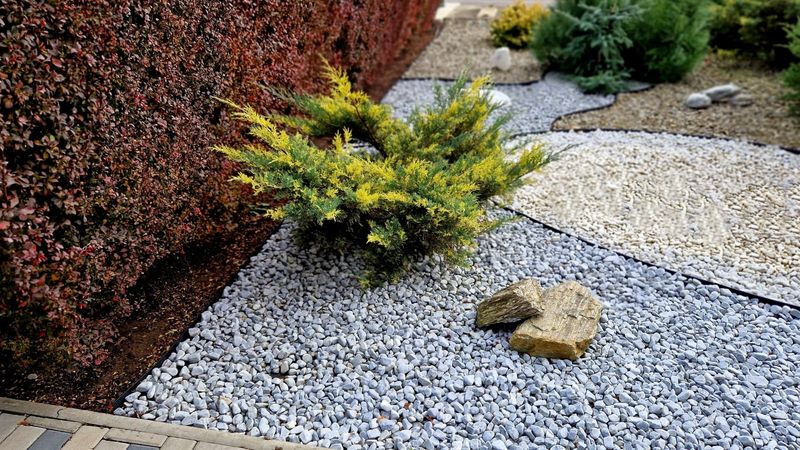
Rock absorbs solar energy during the day and releases it back into the soil. That heat transfer is the central root-zone concern with stone mulch, and it is more pronounced than many gardeners expect.
A peer-reviewed study of ornamental prairie plantings found significantly higher soil temperatures under gravel mulch than under unmulched topsoil, and it also found that plant responses varied by species. Some plants handled the heat well; others showed measurable stress.
The study supports a site-specific warning rather than a blanket condemnation of all rock mulch.
CSU Extension guidance on mulching adds that gravel transfers more heat to the soil beneath it than wood-chip mulch does, and that this difference can increase water requirements for some plants in some settings. The key phrase is “some plants in some settings.” A heat-adapted desert shrub may show no visible stress under the same gravel that pushes a shallow-rooted coastal plant into wilting.
Soil temperature risk is real, but it is not uniform.
The second limitation is separate from heat. Rock does not decompose, which means it contributes nothing to the organic matter in your soil over time.
UC Master Gardener mulch guidance notes that organic mulches can improve soil biology and structure as they break down, benefits that stone cannot replicate no matter how long it stays in place. For plants that depend on a biologically active, organically rich root zone, that gap matters more as the years go by.
Putting both issues together, rock mulch poses a meaningful risk for heat-sensitive plants in exposed beds, while offering few of the soil-improvement benefits that organic mulch delivers over time. Neither problem is inevitable, but both are worth understanding before you spread the first bag of stones.
Plant habitat should decide the mulch
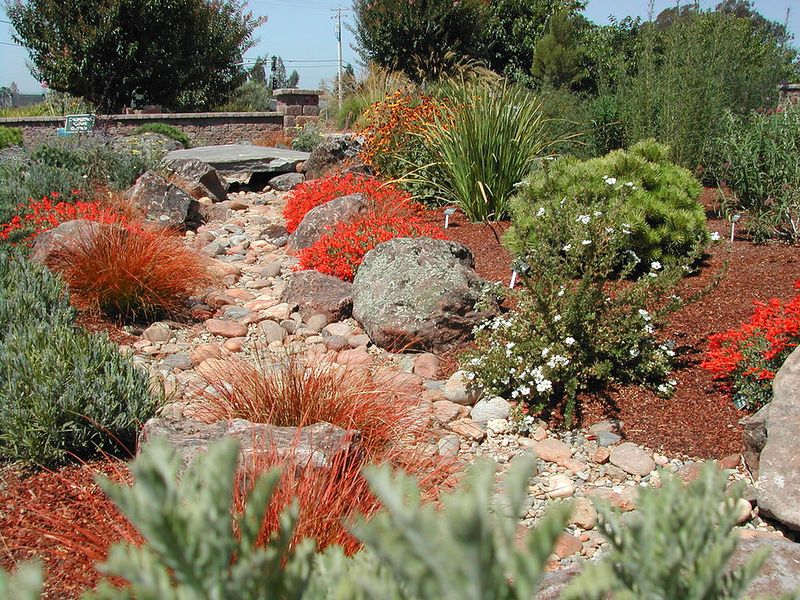
The single most useful question to ask before choosing a mulch is: where did this plant come from? A plant that evolved on a rocky, sun-baked hillside has roots adapted to fast drainage, low organic matter, and fluctuating soil temperatures.
Spreading gravel around it mimics that environment reasonably well. A plant that evolved on a shaded forest floor or in a foggy coastal scrub is adapted to cool, moist, organically rich soil, and a gravel surface pushes conditions in exactly the wrong direction.
UC ANR guidance on selecting and planting California native plants identifies gravel or decomposed granite as suitable around succulents, chaparral plants, and desert-adapted species, while recommending wood chips, bark, or arborist mulch for woodland and coastal-scrub plants. That distinction is grounded in habitat, not just aesthetics.
Drought tolerance is a common source of confusion here. A plant labeled drought-tolerant is not automatically a plant that prefers a hot, rock-covered root zone.
Many California natives that survive dry summers still perform best with the cooler, biologically active soil that organic mulch supports. UC ANR summer care guidance for California native plants recommends matching mulch to the plant’s natural habitat rather than treating all garden beds the same way.
California’s climate diversity makes this especially important. Gravel may be a sensible choice for a sunny succulent planting in inland Southern California, where summer heat and fast-draining soil already match the conditions stone mulch creates.
The same gravel spread around shallow-rooted woodland plants in a Bay Area yard or a coastal garden in Santa Cruz could amplify afternoon heat stress rather than ease it. Region, microclimate, and plant origin all belong in the decision.
Sun exposure and nearby hardscape can magnify the problem
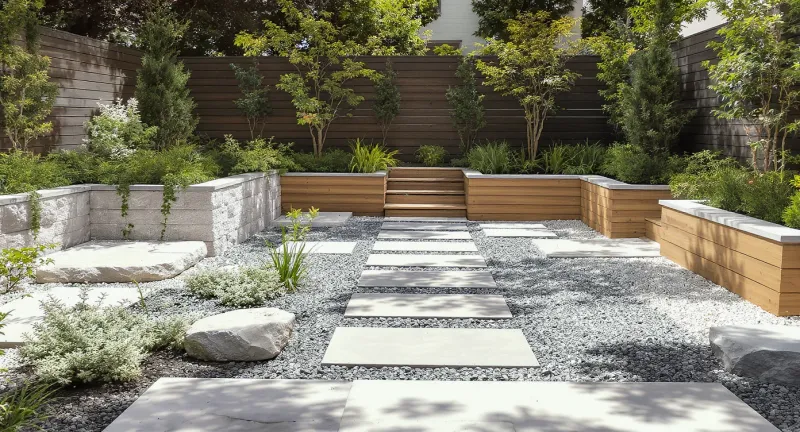
Rock mulch in a shaded north-facing bed behaves very differently from the same rock pressed against a south- or west-facing wall with afternoon sun bearing down. Orientation matters because the angle and duration of sunlight determine how much heat the stones absorb and how much they radiate back into the root zone.
CSU Extension mountain microclimate guidance describes rock mulch and adjacent masonry as potential heat sinks and recommends factoring shade and plant placement into any bed design that includes stone.
Nearby hardscape compounds the effect. Concrete driveways, stucco walls, brick edging, and paved patios all absorb heat during the day and release it in the afternoon and evening.
A gravel bed that sits between a south-facing wall and a dark paved surface can create a microclimate several degrees hotter than the surrounding yard. CSU Extension mulching guidance flags this combination as a reason to think carefully about plant selection and placement before committing to rock in heat-exposed areas.
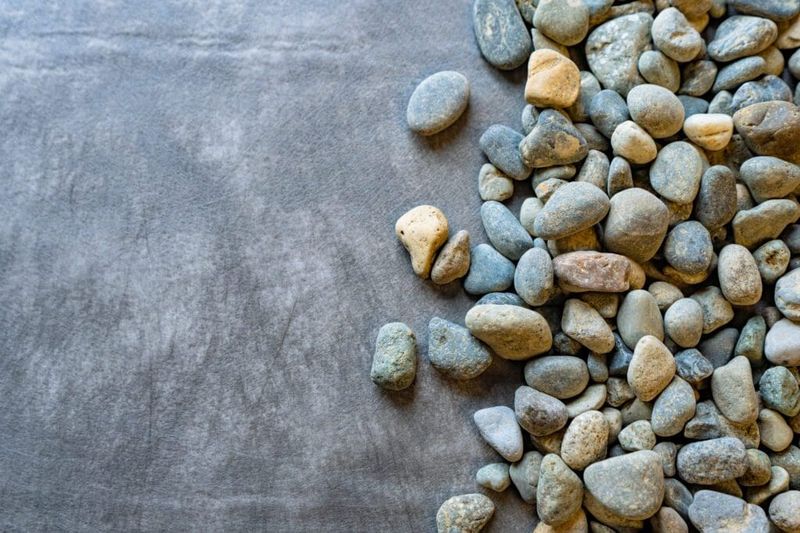
The stone itself also varies. Small dark pebbles absorb more solar energy than light-colored decomposed granite.
Dense river rock holds more heat than porous lava rock, which has more air space and reflects some heat differently. Large cobbles leave gaps that allow more air movement around plant bases, while fine decomposed granite can compact over time and slow water penetration.
No single description of “pebbles” covers all of these products, and evidence about one type should not be assumed to apply to another.
A simple site check before buying rock: note which direction the bed faces, identify any walls or pavement nearby that could reflect heat, observe how much shade the bed receives in the afternoon, and match the stone type to those conditions rather than choosing by appearance alone.
Install rock without burying the plant
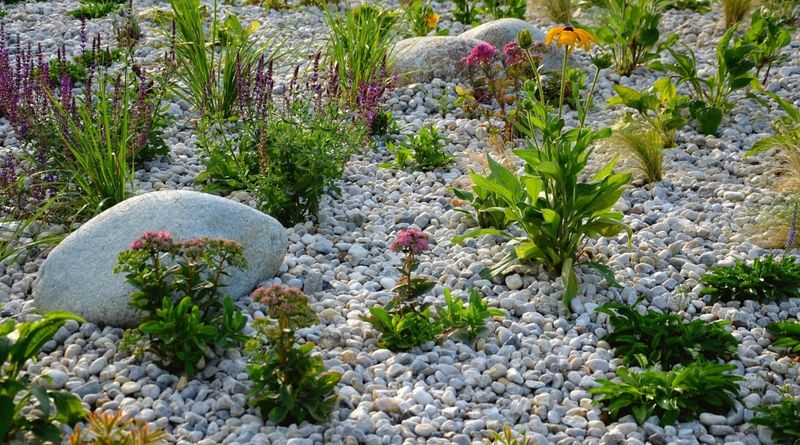
Depth and placement are where rock mulch most commonly goes wrong. UC ANR Southern California drought guidance gives approximately 2 inches as the recommended depth for pebbles or decomposed gravel in a planting bed, compared with roughly 3 to 4 inches for wood chips.
Piling rock deeper than that increases heat retention and can restrict air exchange at the soil surface without adding any benefit.
Keeping rock away from stems, crowns, and tree trunks is just as important as controlling depth. UC Master Gardener mulch guidance recommends leaving a clear area several inches wide around plant bases, with some tree-mulching guidance suggesting 6 to 12 inches of clearance around trunks.
Mulch of any kind piled against a crown or root flare traps moisture, creates conditions that invite rot and disease, and can hide whether a plant was installed at the wrong depth. Rock is not exempt from this rule simply because it looks dry on the surface.
That dry surface is another practical trap. Gravel looks the same whether the soil beneath it is moist or bone dry.
UC IPM mulch guidance makes clear that water requirements vary with plant type, soil, exposure, irrigation method, and local climate. Checking root-zone moisture means pushing a finger or a soil probe a few inches into the ground beneath the rock, not glancing at the surface.
Newly planted California natives and drought-tolerant species still need regular establishment watering during their first season regardless of what mulch covers the bed. UC ANR native plant care guidance advises adjusting irrigation to the plant’s actual needs rather than following a fixed schedule, and that advice applies whether the surface is wood chips or stone.
A tidy gravel bed is not a signal that your plants are fine; only the soil moisture and the plant itself can tell you that.
Pebbles will not fix every bed problem
Spreading rock over a problem bed rarely solves the underlying issue, and in some cases it makes things harder to diagnose later. Compacted soil stays compacted under gravel.
Poor drainage does not improve because the surface looks different. Clogged irrigation lines, incorrect planting depth, and grading problems all continue below the stones, invisible until a plant begins to fail.
Rock is a surface treatment, not a correction for what is happening deeper in the soil.
Weed management is another area where expectations can outpace results. UC IPM weed management guidance notes that porous geotextile fabric placed under rock can reduce mixing of rock and soil and improve long-term weed suppression in some established plantings.
That same guidance is clear that roots can grow through the fabric over time, and that fabric is not a permanent, maintenance-free barrier. Weeds can also establish in the organic debris that accumulates on top of rock, so the gravel surface itself eventually becomes a growing medium for opportunistic plants.
Black plastic sheeting is a separate and more problematic choice. Unlike porous geotextile, plastic restricts both air and water movement through the soil surface, which can harm roots and soil biology in planted beds.
The two materials are often sold side by side, but their effects are meaningfully different. Choosing porous fabric over plastic is the better option when a barrier is used at all, and planted native beds may be better served without any fabric, since it can interfere with natural plant spread and soil organism movement.
Container drainage deserves its own note because it is a separate situation from surface mulch. UC Master Gardener container soil guidance states clearly that placing gravel at the bottom of a pot does not improve drainage and can actually raise the saturated zone, creating conditions that promote root problems.
A thin layer of pebbles on top of outdoor garden soil is not the same situation, and the two should not be confused when making decisions about either.
Fire-safe hardscape serves a different purpose
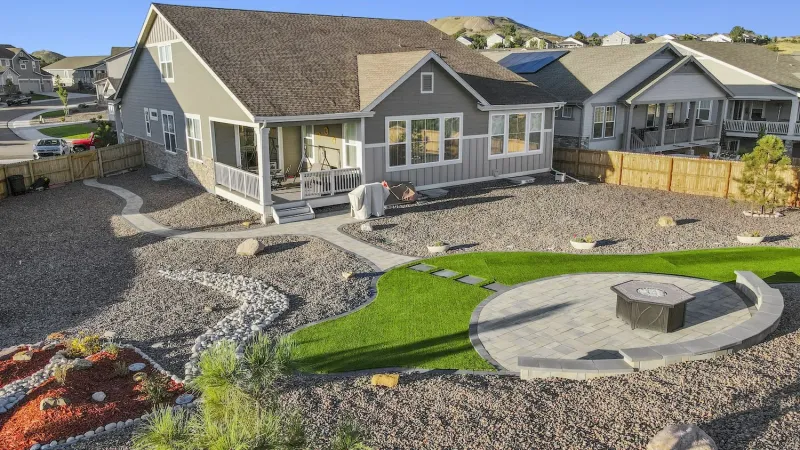
California homeowners near wildland areas often hear that gravel is a smart landscaping choice, and in one specific context that advice is well-supported. CAL FIRE defensible space guidance recommends using noncombustible materials, such as gravel, pavers, or concrete, in the zone immediately adjacent to a structure, typically the first five feet from the foundation or deck.
The reasoning is straightforward: combustible bark and organic mulch in that zone can catch embers and carry fire directly to a building. Gravel cannot ignite.
That fire-safety recommendation is about ember exposure and flame spread near structures, not about what is best for plant roots in a garden bed. Using CAL FIRE guidance to justify spreading rock across every planting bed in the yard stretches the recommendation well beyond its intended scope.
A bed of salvias or native grasses ten feet from the house does not share the same fire-exposure conditions as the strip of ground directly against the foundation, and the mulch choice there can be made on plant and soil grounds rather than purely on fire-safety grounds.
Defensible space involves more than material selection. UC ANR landscape guidance for Southern California and CAL FIRE both emphasize plant spacing, removal of dead and dry material, broader vegetation management across the property, and compliance with local jurisdiction requirements, which can be stricter than state minimums.
Gravel near the foundation is one component of a fire-safe yard, not a substitute for the full set of practices that reduce ignition risk.
For gardeners in fire-prone areas, the practical approach is to use noncombustible hardscape where CAL FIRE specifies it, then make mulch choices for the rest of the yard based on plant habitat, sun exposure, and soil health rather than treating rock as the safest option everywhere simply because it is fireproof.
Use pebbles where the plant and the place agree
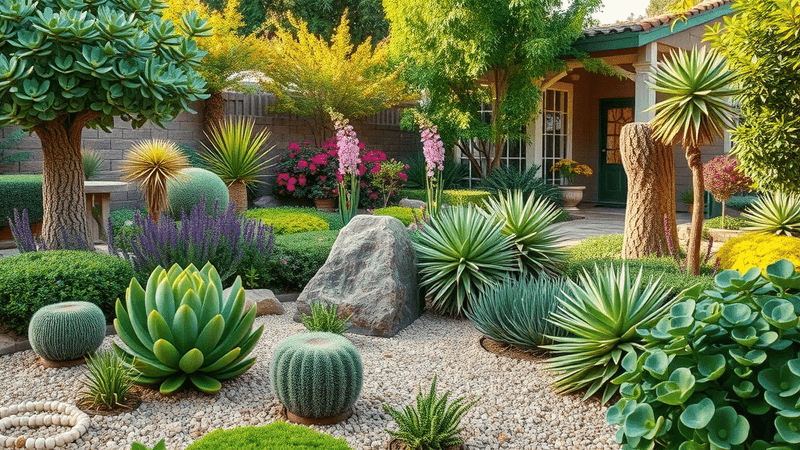
Rock mulch earns its place in specific situations: succulent plantings, rock gardens, chaparral and desert-adapted species, and the noncombustible hardscape zone near structures where fire safety is the primary concern. In those settings, gravel matches the plant’s natural conditions or serves a clear protective function, and organic mulch would either decompose faster than is useful or introduce fire risk near a building.
Everywhere else, the decision comes down to what the soil and the plant actually need. UC Master Gardener mulch guidance and UC ANR native plant guidance both point toward organic mulch or retained leaf litter as better choices for beds that need cooler root-zone temperatures, soil-building organic matter, and a biologically active growing environment.
Woodland plants, coastal species, and any plant that evolved in a shaded or moisture-retentive habitat will generally respond better to wood chips or bark than to stone.
When you do use rock, keep it shallow, around 2 inches, and maintain a clear gap between the stones and every stem, crown, and trunk in the bed. After installation, check root-zone moisture by probing the soil rather than reading the surface, and adjust your irrigation to reflect what the plant needs rather than how the bed looks.
A clean gravel surface is not confirmation that things are going well below ground; only consistent monitoring of the soil and the plant can tell you that. CAL FIRE defensible space guidance gives gravel a clear role near structures, and that role is worth respecting, but the best mulch for a planting bed is always the one that fits the plant growing in it.