
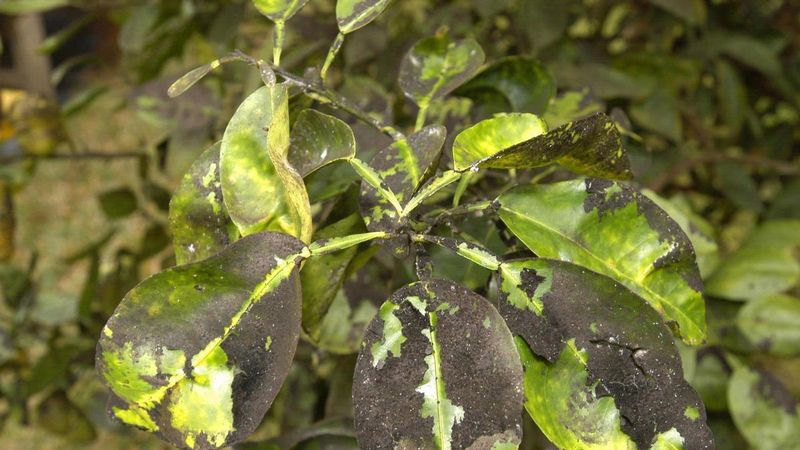
If your crape myrtle has developed a dark, sticky coating on its leaves or bark, you are not alone – and the tree is probably not dying. That black layer is most likely sooty mold, a surface growth that feeds on sticky residue left behind by small sap-feeding insects.
Understanding what is actually happening lets you skip the guesswork and focus on the real problem before reaching for any spray.
A sticky black coating often starts with insects, not infection
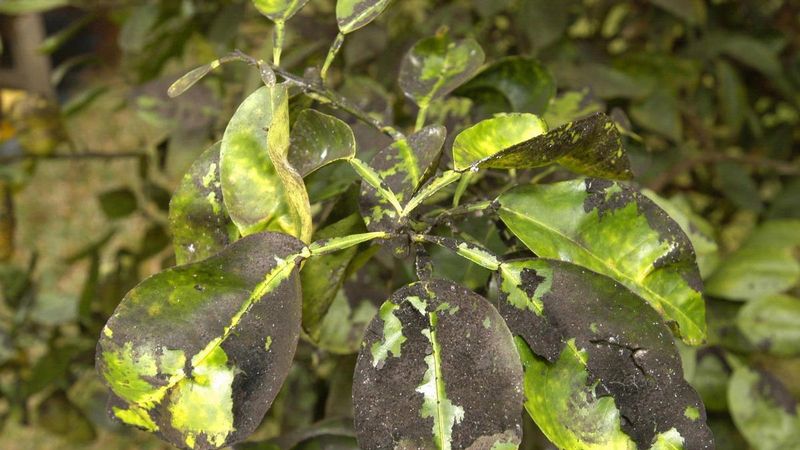
Black mold on a crape myrtle looks alarming, but the coating itself is not a fungus attacking or infecting the tree. According to UC IPM’s guide on sooty mold, the dark layer grows on the surface of honeydew – a sugary liquid excreted by sap-feeding insects – rather than invading plant tissue.
The usual sequence runs like this: an insect feeds on the tree’s sap, drops honeydew onto leaves or bark below, and mold colonizes that sticky residue.
Many different insects can trigger this chain. Aphids, soft scales, whiteflies, mealybugs, psyllids, and leafhoppers are all capable of producing honeydew.
Seeing a black coating tells you that a honeydew source was present at some point, but the appearance alone does not confirm which insect caused it or whether that pest is still active.
Light sooty mold is mostly a cosmetic issue. The mold sits on the outside of leaf surfaces and does not penetrate or kill tissue on its own.
Heavy coverage is a different matter: a thick black layer can shade enough leaf surface to reduce photosynthesis, which over time may affect flowering and overall vigor. University of Minnesota Extension’s overview of scale insects notes that serious infestations combined with heavy sooty mold can weaken a plant’s ability to function normally.
The more useful question is not “what is this black stuff” but “which insect, if any, is still producing the honeydew that feeds it.” Replacing fear of a mysterious disease with that practical question is the first step toward a remedy that actually works.
When the coating becomes noticeable, inspect instead of assuming a season
Homeowners across California often notice a black coating on their crape myrtles as summer winds down and early fall approaches. That timing makes sense as an observation window because insects have had months to feed and deposit honeydew, and accumulated mold becomes harder to ignore as the growing season slows.
However, noticing the symptom in early fall does not mean early fall is when the problem starts, and it certainly does not point to one particular pest.
California’s climate varies enormously from the cool, foggy coast to the scorching Central Valley and the mild inland valleys of Southern California. Pest activity, honeydew accumulation, and mold growth all follow local temperature and humidity patterns rather than a single statewide calendar.
UGA Cooperative Extension’s bulletin on crape myrtle bark scale describes crawler timing and treatment windows based primarily on Gulf Coast and Southeastern conditions – not California data. Applying those timing rules directly to a California yard can lead to treatments applied at the wrong moment or for the wrong pest.
According to UC IPM’s scales resource, scale activity and life-stage timing depend heavily on local temperatures and the specific species involved. The practical takeaway for California homeowners is to treat early fall as a useful prompt to inspect the tree – not as proof that a particular pest is active right now.
Walk around the crape myrtle, look closely at both the leaves and the bark, and let what you find guide the next step rather than letting the season make the decision for you.
Leaf blackening and bark blackening suggest different suspects
Where the black coating appears on your crape myrtle is one of the most useful clues you have before you ever touch a spray bottle. Mold concentrated on leaves, tender shoots, and new growth points more strongly toward aphids.
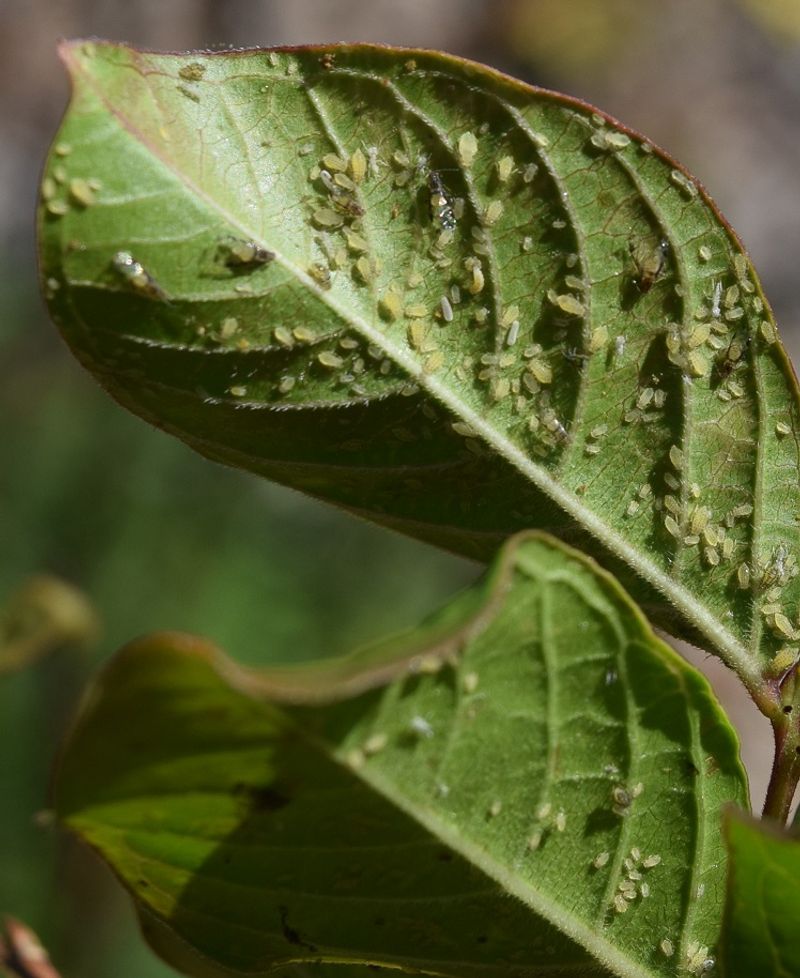
UC IPM’s aphid page lists crape myrtles among the ornamental plants where aphids are a recognized pest, and UGA’s crape myrtle culture guide identifies crape myrtle aphids as a common source of leaf sooty mold. Aphids cluster on the underside of leaves and along new stems, feeding on plant sap and releasing honeydew that drips onto surfaces below.
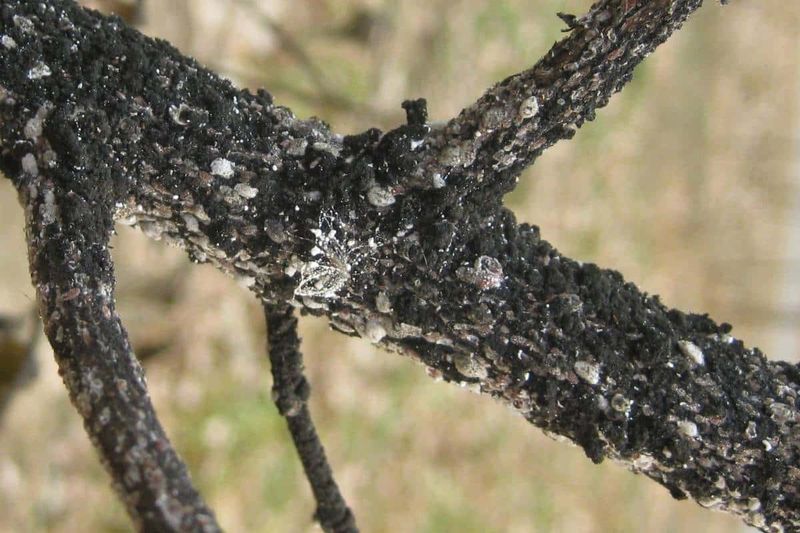
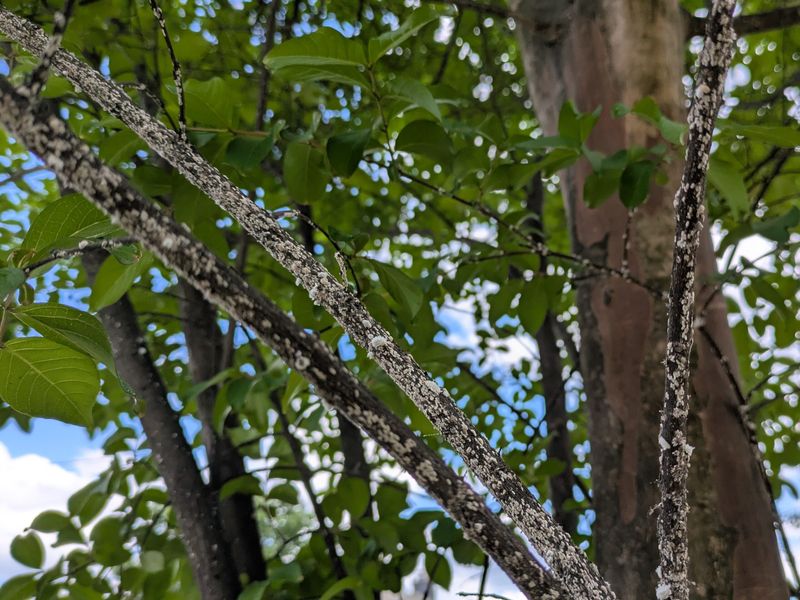
When the blackening is concentrated on the trunk, branches, or branch crotches rather than on leaves, a different set of suspects becomes relevant. Crape myrtle bark scale feeds directly on bark and woody tissue, and its presence is often signaled by white or gray felt-like bumps or sacs attached to the bark.
UGA’s bark scale bulletin describes additional warning signs: ants trailing up the trunk, delayed leafing in spring, smaller-than-normal flower clusters, and a general decline in tree vigor.
It is worth keeping the diagnosis open at this stage. UC IPM’s crape myrtle pest page specifically names aphids as a crape myrtle pest but does not list bark scale as the standard California diagnosis.
Several other scale species and honeydew-producing insects can create a similar appearance. UC IPM’s scales resource notes that multiple scale types affect California ornamentals, and management timing differs by species.
Coating location narrows the field of likely suspects; it does not replace a closer look at what is actually living on the tree.
A close inspection turns a symptom into a working diagnosis
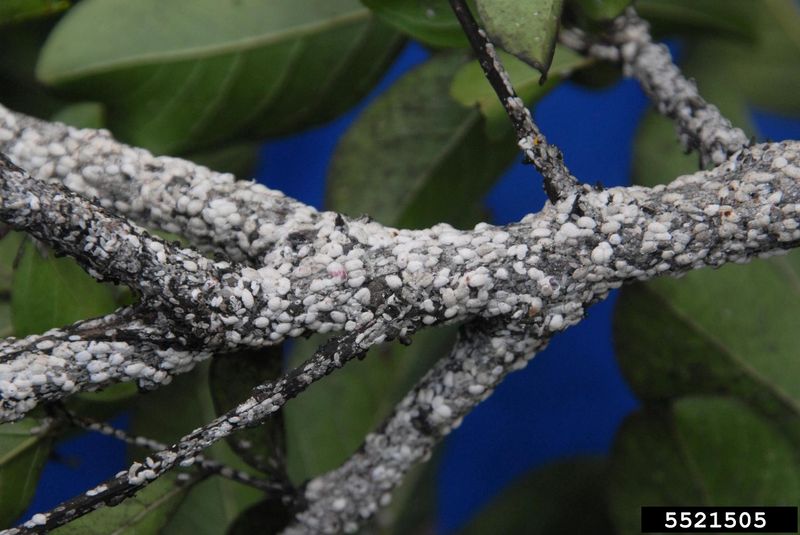
Before choosing any control method, spend ten minutes doing a systematic walk-around of the affected tree. Start at the foliage: flip over leaves on the lower and mid-canopy, check tender shoot tips, and look along flower stems for clusters of small soft-bodied insects.
UC IPM recommends inspecting leaf undersides and new growth specifically when aphids are suspected, since that is where they concentrate. Whiteflies, which also produce honeydew, will scatter in a small cloud when disturbed foliage is shaken.
Next, move your attention to the bark. Run a finger along branch crotches, twigs, and sections of the main trunk.
Bark scale colonies often feel rough or bumpy and may have white or gray waxy sacs that look almost like tiny cotton tufts pressed against the wood. If you find bumps or encrusted patches you cannot immediately identify, a photo sent to your local UC Cooperative Extension office or Master Gardener program can get you a faster, more reliable answer than guessing from an internet image search.
Pay attention to ants as you inspect. Ants traveling in a line up the trunk or along branches are a strong clue that honeydew is available somewhere on the tree.
UC IPM’s biological control resource explains that ants actively protect aphids and other honeydew producers from natural predators, which can allow pest populations to grow unchecked. Ants confirm that honeydew is likely present, but they do not tell you which insect is producing it.
Before you record anything as a confirmed diagnosis, note where on the tree each type of pest or suspicious growth appears. UGA’s bark scale bulletin emphasizes that a close visual inspection is preferable to treating based on the mold alone.
Knowing the pest’s location, life stage, and approximate population size will make whatever control you choose far more targeted and effective. UC IPM’s scales page reinforces that scale identification matters because management timing and product choice vary by species.
Start with water, cleanup, and conditions that discourage outbreaks
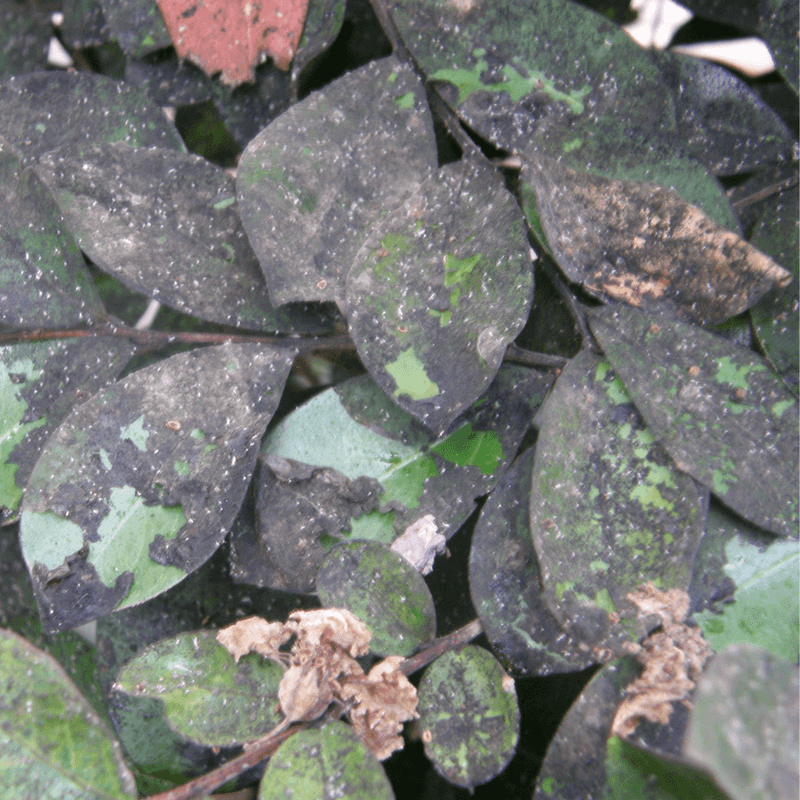
For a sturdy, established crape myrtle with a manageable aphid population, a strong stream of water from a garden hose is a reasonable first response. UC IPM advises directing water sprays early in the day so that foliage dries more quickly, which reduces the risk of secondary moisture problems.
Knocked-off aphids rarely find their way back onto the plant in significant numbers.
Sooty mold that has already built up on leaves and bark can be washed away with water, and UC IPM also recommends mild soap and warm water for removing stubborn mold from surfaces. Cleaning up the visible coating is satisfying, but keep expectations realistic: washing removes existing mold and honeydew without stopping new deposits.
If insects are still feeding, fresh honeydew will accumulate and mold will return within weeks.
Two cultural habits are worth adjusting if aphid outbreaks are recurring. Excess nitrogen fertilizer encourages the rapid, tender new growth that aphids find most attractive, so scale back on high-nitrogen applications.
Overwatering can have a similar effect by pushing out lush, soft foliage. Moderating both practices makes the tree less hospitable to sap-feeders over the long term.
Natural enemies are one of the most effective and cost-free resources available. Lady beetles, lacewings, syrphid fly larvae, and parasitic wasps all prey on or parasitize aphids and soft scales.
UC IPM’s biological control guidance notes that broad-spectrum insecticides can eliminate these beneficial insects along with the pest, which often makes future outbreaks worse. Ants that tend honeydew producers should be managed at the trunk rather than with widespread spraying: a sticky barrier on a protective wrap or a bait station placed according to label directions can limit ant access without harming the predators working in the canopy above.
Chemical treatment requires identification and California-specific caution
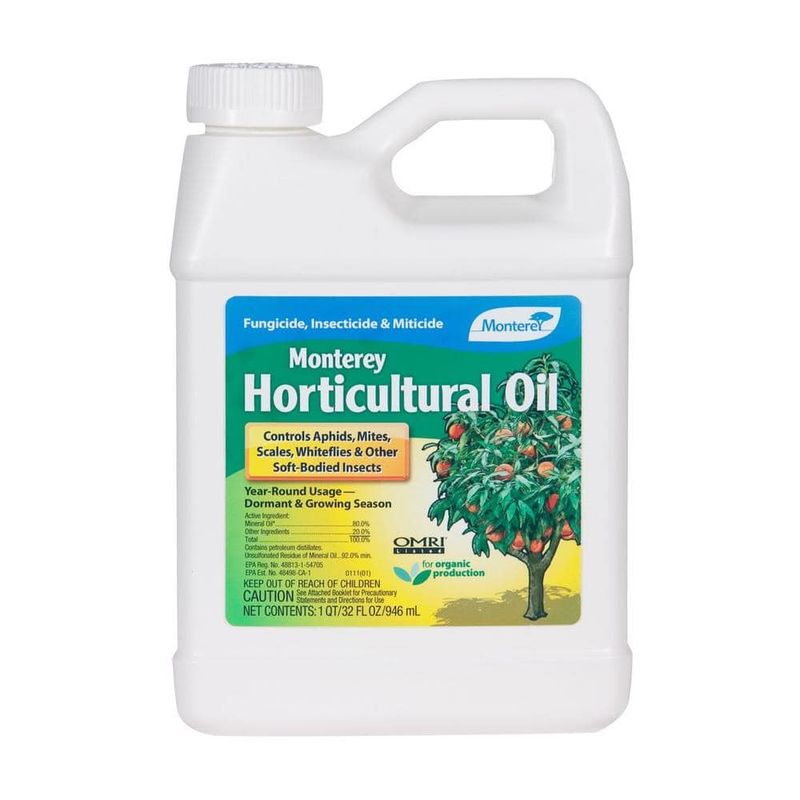
Reaching for a spray should come after inspection confirms what you are dealing with and where the pest is concentrated. For aphid problems on crape myrtle foliage, insecticidal soaps or horticultural oils are among the lower-impact options.
Both products work by direct contact, meaning thorough coverage of infested surfaces – including leaf undersides – is essential for any effect. UC IPM’s aphid resource recommends following product labels carefully for the target plant, pest, application rate, and reapplication interval.
Horticultural oil carries real plant-safety risks that are easy to overlook. UC IPM’s oil burn page warns that applying oil to drought-stressed plants or during hot, windy conditions can cause leaf scorch and tissue damage.
UC IPM uses 90 degrees Fahrenheit as a general upper limit for oil applications, but that figure is a guideline rather than a guarantee: a tree under water stress, recently pruned heavily, or exposed to strong afternoon wind may be injured even below that threshold. UC IPM’s chemical phytotoxicity resource covers additional conditions that raise injury risk.
Always check the specific product label before applying, and choose a cooler part of the day when temperatures are stable.
Scale control adds another layer of complexity. UC IPM’s scales page explains that treatment is generally most effective against the mobile crawler stage, and crawler timing varies by species and local climate.
Applying a contact product when no crawlers are active wastes effort and product. UC IPM’s black scale resource illustrates how species-specific timing guidance can be: what works for one scale at one time of year may not apply to another species or location.
California homeowners should also be aware of a significant legal change. Beginning January 1, 2025, most outdoor non-agricultural uses of neonicotinoid pesticides on ornamental plants and trees are restricted to certified commercial applicators in California.
California DPR’s announcement on neonicotinoid restrictions and the accompanying DPR questions-and-answers document outline what is now required. Products containing imidacloprid, dinotefuran, clothianidin, or similar active ingredients fall under these restrictions.
Check current California requirements and read product labels before purchasing or applying any neonicotinoid on your crape myrtle.
The mold can remain after the insects decline
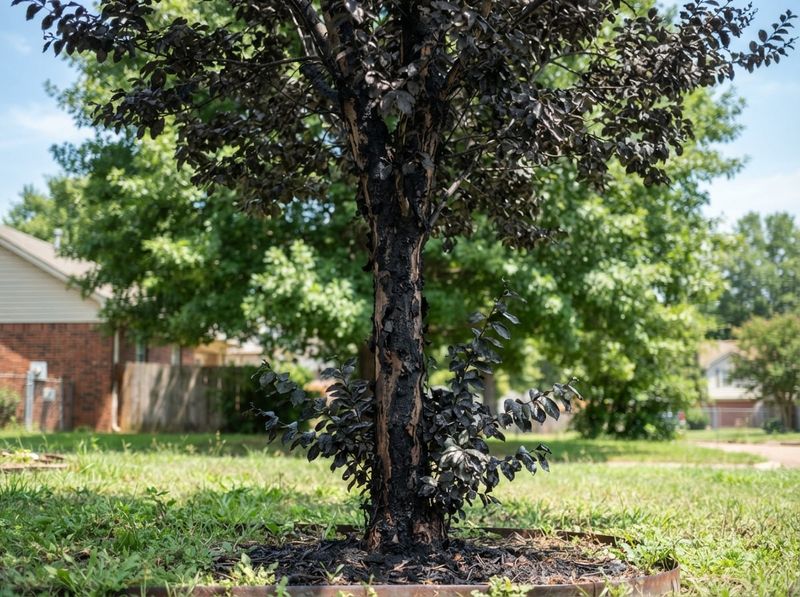
Controlling the pest stops new honeydew from being deposited, but the sooty mold that has already built up does not disappear overnight. Existing mold may weather away gradually over several weeks or months as rain and wind slowly break it down.
In California’s dry climate, that natural weathering can take longer than it would in a wetter region, so some residual blackening after a successful treatment is normal and does not mean the infestation has returned.
If the coating is thick or the tree is in a visible location, washing with water or mild soap and warm water – as described in UC IPM’s sooty mold guidance – can speed the cleanup. The key is to continue monitoring the tree for new pest activity rather than treating the appearance of residual mold as proof that insects are still present.
Certain signs should prompt more concern than a black coating alone. Branch dieback, delayed leafing in spring, flower clusters that are noticeably smaller than in previous years, or a continuing loss of overall vigor suggest that a pest infestation may be causing real physiological stress.
UGA’s bark scale bulletin and UC IPM’s scales resource both note that persistent heavy infestations can reduce flowering and long-term vigor in ways that go beyond surface mold. A black coating that slowly fades after insects are controlled is a recovery sign; a black coating that spreads or thickens while the tree also loses branches or fails to leaf out properly is a signal to investigate further and possibly consult a certified arborist.
Confirm the honeydew source before you choose a remedy
A sticky black coating on your crape myrtle often indicates sooty mold associated with honeydew from sap-feeding insects, but that visible symptom alone does not tell you which insect is responsible or whether it is still active. Inspect the tree first, and let your findings drive the response.
UC IPM’s sooty mold page consistently frames the mold as a secondary issue and points back to the honeydew source as the primary target.
Coating concentrated on leaves and new growth makes aphids a leading possibility, while white or gray bark clusters combined with declining vigor justify a closer look for scale. UC IPM’s aphid resource and UC IPM’s scales page both reinforce that identification before treatment leads to better outcomes and reduces the chance of harming beneficial insects or applying the wrong product at the wrong time.
Ants on the trunk support the honeydew clue but do not identify the pest on their own.
The order of action stays consistent regardless of which pest you find: inspect, identify, try low-impact controls first, clean the residue, and follow California’s current pesticide rules if a product is necessary. A crape myrtle coated in black is not automatically a dying tree – it is a tree giving you a clear signal that something small is feeding on it and asking you to look a little closer before acting.