
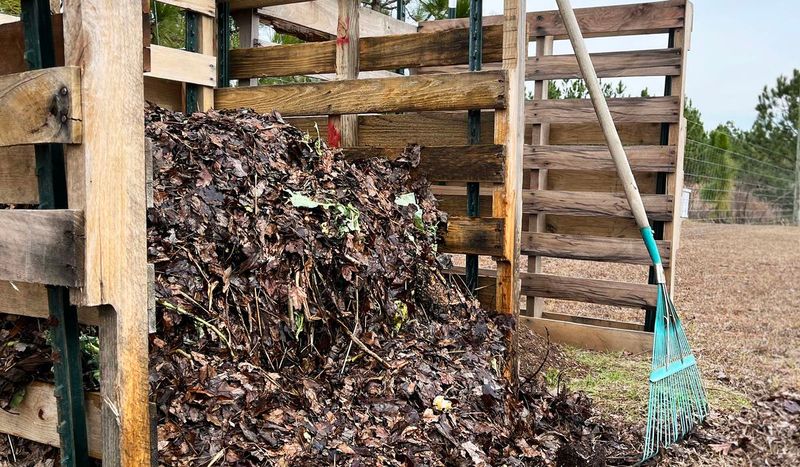
Fall cleanup in North Carolina means one thing for backyard composters: a mountain of leaves and yard waste arriving right when the weather is about to turn cold. Giving your compost pile a good turn before sustained freezing conditions reach your area can improve airflow and mixing, helping the pile work a little better through the cooler months ahead.
That single action has real limits, though, and understanding those limits will save you frustration when the pile slows down anyway.
A pre-cold-weather turn can improve the pile’s conditions
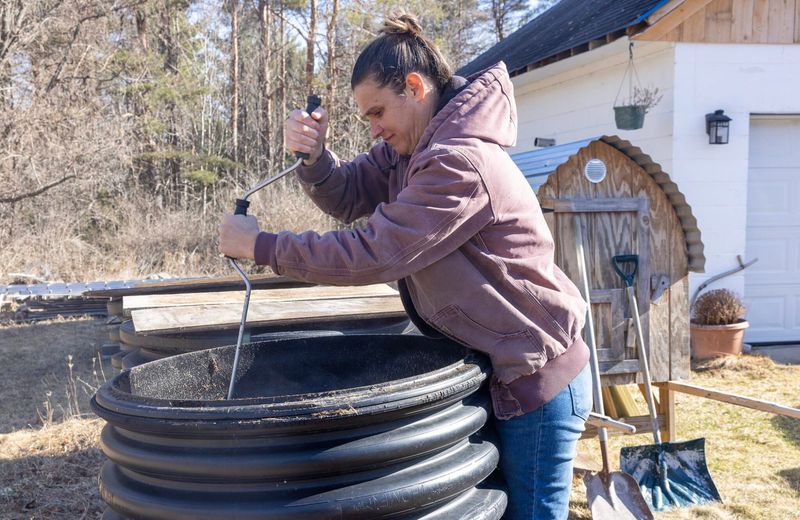
Turning a backyard compost pile once before sustained cold or freezing conditions arrive in your area can meaningfully improve how well it functions through the cooler months ahead. The key word is “sustained.” A single chilly night is not the signal to act.
Watch your local forecast and pick a mild period before temperatures settle into consistent freezing, whether that comes in October for mountain residents or December for those near the coast.
When you turn the pile, you are doing two things at once. First, you are pushing oxygen into material that may have become compacted and oxygen-starved.
Second, you are redistributing cooler, less-active outer material toward the warmer, more biologically active center. NC State Extension guidance on backyard composting identifies turning and moisture management as two of the most practical ways to prevent slow, anaerobic decomposition.
Both matter here.
What turning cannot do is override the other variables that control decomposition. Temperature, moisture level, pile size, and the balance of carbon-rich and nitrogen-rich materials each play their own role.
Penn State Extension’s home composting guide and Illinois Extension’s winter composting guidance both note that cold temperatures naturally reduce microbial activity, and a small or poorly balanced pile may cool quickly regardless of how recently it was turned.
Think of the pre-cold-weather turn as correcting what you can correct now, not as a guarantee that the pile will keep generating heat all winter. If the pile has good moisture, a reasonable mix of materials, and enough volume to retain some warmth, a thorough turn before sustained cold gives it a better starting position for the months ahead.
Use the fork to bring outer material inward
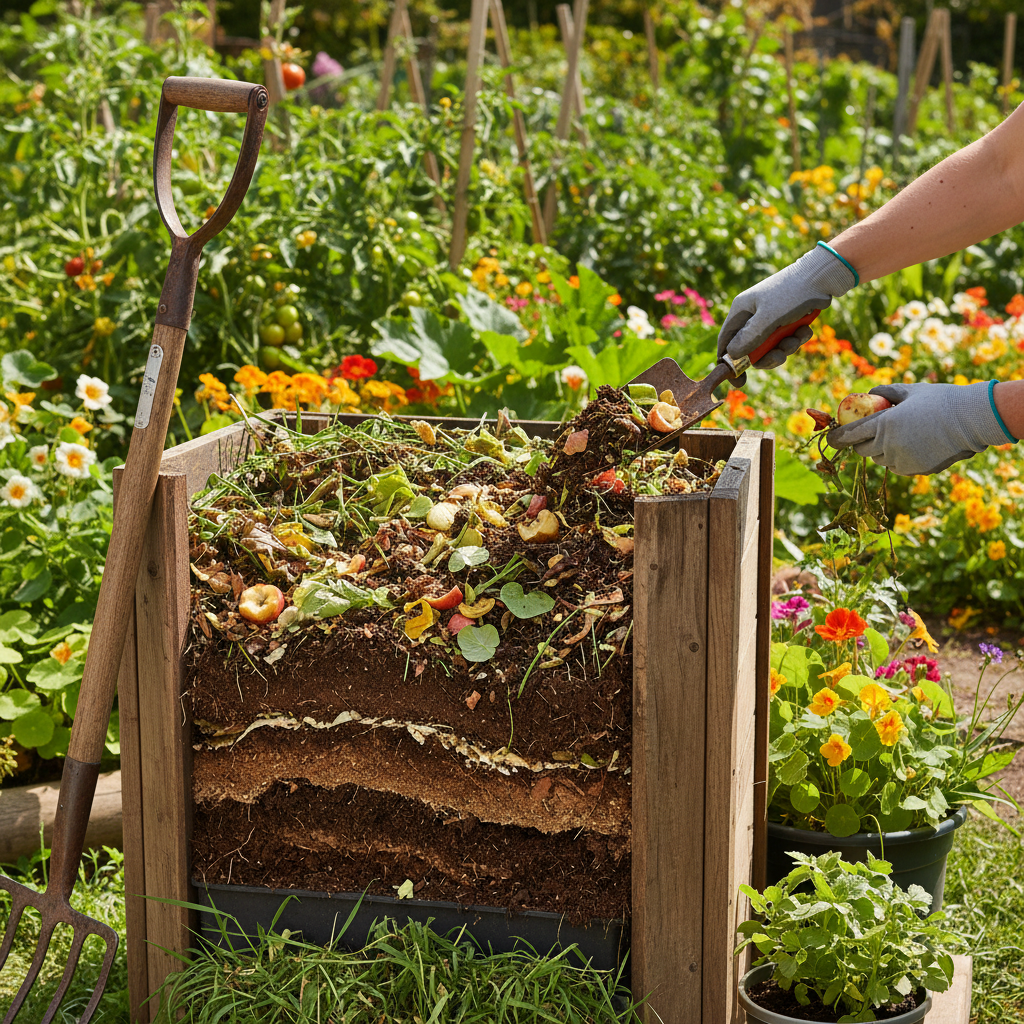
A garden fork is the right tool for this job, and how you use it makes a real difference. Start at the outer edges and top of the pile, lifting material and pulling it toward the center rather than just stirring the surface.
The outer layers tend to be cooler, drier, and less decomposed than the interior, so moving them inward exposes them to better conditions.
As you work, break apart any clumps you find. Compacted masses of wet leaves or matted grass block airflow just as effectively as a sealed bag.
Loosening those clumps restores the pore space that oxygen-dependent microbes need. NC State Extension recommends turning to supply oxygen and accelerate decomposition, but the benefit depends on actually mixing the material rather than rearranging it in place.
Work your way around the pile so that what was on the outside ends up near the middle and what was in the middle gets moved outward. This is not a complicated technique, but it does take a few minutes of deliberate effort.
A quick poke at the top does little good if the dense, matted layer six inches down stays exactly where it was.
One honest limit: physical turning improves aeration and mixing, but it cannot solve every problem on its own. A pile that is too small to retain heat, too dry to support microbial life, or made almost entirely of dry leaves will still struggle after you set down the fork.
The turn sets the stage, but moisture level, material balance, and pile volume each have their own work to do.
Let the moisture test guide the correction
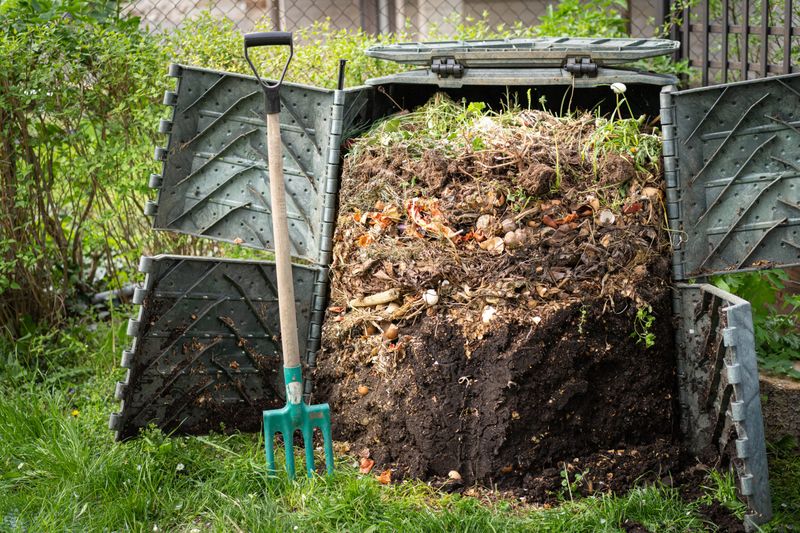
Checking moisture while you turn is more useful than turning alone. Grab a handful of material from the middle of the pile and squeeze it firmly.
The pile is in good shape if a few drops of water appear but the handful holds together without dripping freely. That is the wrung-out-sponge standard that compost managers use as a practical field test.
If the material crumbles and no moisture can be squeezed out at all, the pile is too dry to support much microbial activity. Add water gradually as you mix, wetting each layer rather than pouring it all on top.
NC State Extension’s composting guidance treats moisture alongside turning as equally important to preventing slow, anaerobic breakdown, so this step deserves the same attention as the physical mixing.
On the other end of the scale, water that drips freely from the squeezed handful is a sign of excess moisture. A sour or rotten odor often accompanies this condition and points to oxygen-poor, anaerobic decomposition.
The fix is to mix in dry material: shredded leaves, straw, torn cardboard, or plain shredded paper all work. These absorb excess water and reopen air channels through the pile.
Persistent odor after you have corrected the moisture may mean the pile still has a material-balance or aeration problem. Adding dry browns helps, but if the pile continues to smell after a few days, consider whether compaction has returned or whether the carbon-to-nitrogen ratio needs further adjustment.
Turning alone cannot resolve an underlying imbalance; the moisture test simply tells you which direction to move first.
Balance a leaf-heavy pile with ordinary greens
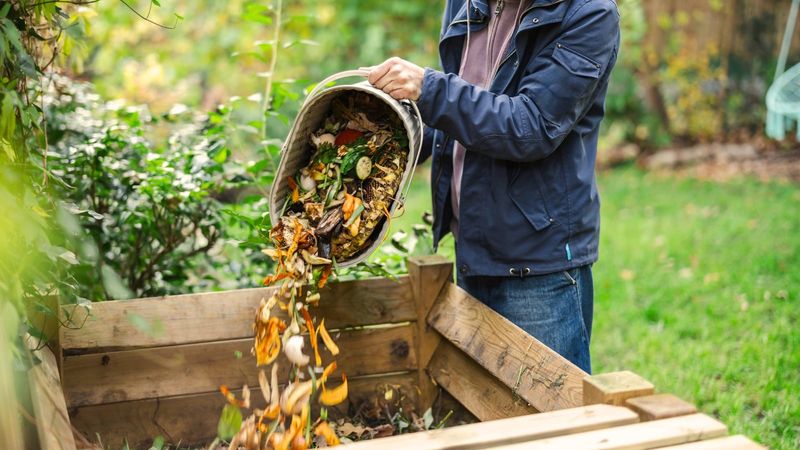
Dry fall leaves are the defining material of autumn composting in North Carolina, and they come with a trade-off. Leaves are carbon-rich browns, and a pile made almost entirely of them will decompose slowly even if you turn it well.
Carbon-rich material needs nitrogen-rich material alongside it to give soil microbes the fuel they need to work quickly.
Grass clippings, vegetable scraps, coffee grounds, and fresh plant trimmings from the garden all qualify as nitrogen-rich greens. Mix them in during your pre-cold-weather turn rather than layering them on top afterward.
NC State Extension puts the ideal carbon-to-nitrogen ratio for an active pile at roughly 25:1 to 35:1. Translating that into a practical rule of thumb: aim for about three parts browns to one part greens by volume, which is a reasonable approximation rather than a precise formula.
EPA home composting guidance recommends covering food scraps with a few inches of dry browns, a habit that also helps with odor and pests. Illinois Extension’s post-winter composting advice similarly emphasizes mixing rather than layering, because tightly packed layers of wet grass or leaves restrict airflow just as compacted clumps do.
Shredding or mowing leaves before adding them increases surface area and can speed breakdown noticeably. However, very finely shredded material can pack together and cut off airflow, so keep some coarser pieces in the mix.
A few small sticks or larger leaf fragments help maintain the open structure that allows oxygen to move through the pile. The goal is a pile that breathes, not one that compresses into a dense mat every time it rains.
Give the pile enough mass and breathable cover
Volume matters more in cold weather than at any other time of year. A pile with enough mass generates and retains heat from microbial activity, while a small pile loses that heat to the surrounding air quickly.
Penn State Extension’s composting guide and NC State Extension both point to roughly 3 feet by 3 feet by 3 feet as a practical lower bound for an efficient home pile, with 5 feet by 5 feet by 5 feet as an upper range. Below that minimum, a pile has a hard time staying warm enough to decompose quickly, especially once sustained cold arrives.
Fall is actually a good time to bulk up a thin pile. Add the leaves from yard cleanup, mix in kitchen scraps as they accumulate, and use the pre-cold-weather turn to consolidate scattered material into one cohesive mass.
If you have two small piles, combining them into one larger pile before winter often produces better results than maintaining two separate piles that lose heat independently.
Coarse material also plays a structural role. When dense leaves compress under rain and their own weight, airflow through the pile drops.
Mixing in small branches, wood chips, or larger stem pieces creates physical gaps that keep oxygen moving even after the pile settles. This is the same principle behind the advice to shred leaves only partially, leaving some larger fragments for porosity.
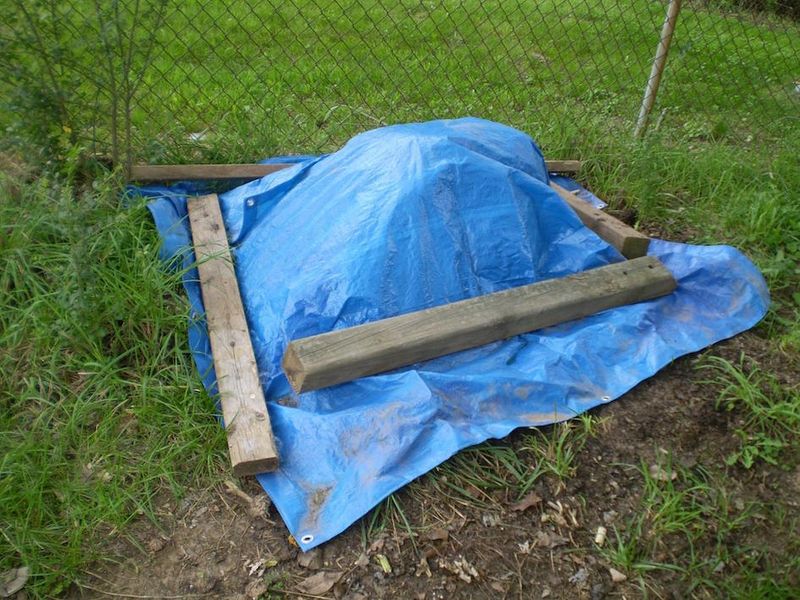
A loose tarp or breathable cover can reduce excessive rain from saturating the pile and can slow moisture loss during dry stretches. Illinois Extension’s winter composting information supports using a cover to manage moisture, with one firm limit: the cover must not seal the pile airtight.
Blocking airflow entirely creates the oxygen-poor conditions that produce foul odors and slow decomposition to a crawl. A loose drape, not a sealed wrap, is the right approach.
Use local freezing conditions to decide when to stop turning
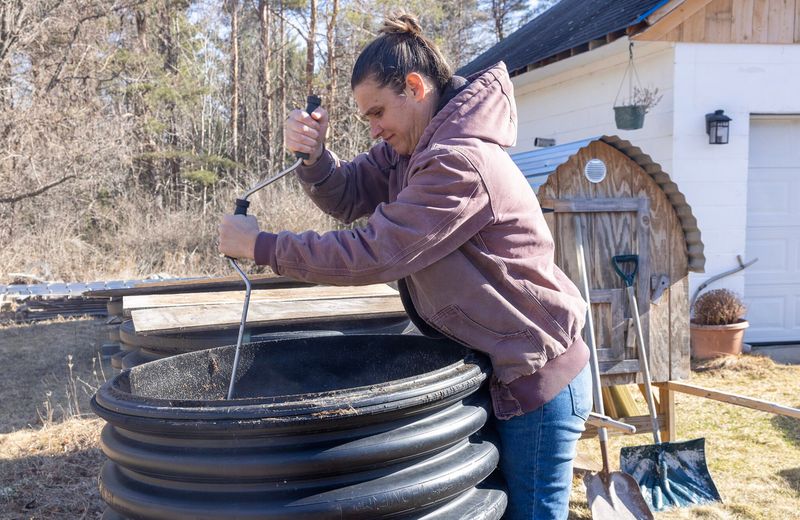
Timing matters as much as technique when it comes to turning a compost pile in autumn. A turn during mild fall weather, even on a cool October afternoon, can still benefit a pile that is compacted, wet, or poorly mixed.
The concern about turning doing more harm than good applies specifically to sustained freezing conditions, not to every day with a cool forecast.
When temperatures stay below freezing consistently, the active microbial community retreats toward the warmer center of the pile. Illinois Extension’s winter composting guidance recommends reducing or stopping turning during sustained freezing because repeated disturbance can vent the stored heat that remains.
Illinois Extension’s general composting resource reinforces this by suggesting that late-season turning be scaled back to help retain whatever warmth the pile still holds.
North Carolina’s geography makes a single statewide turning deadline impractical. Mountain counties around Asheville can see sustained freezing conditions weeks earlier than the Piedmont, and coastal areas near Wilmington may not face consistent hard freezes until well into winter, if at all.
Use your local forecast rather than a calendar date. When nighttime temperatures are expected to stay at or below freezing for several consecutive days, that is a reasonable signal to stop turning and let the pile rest.
Oregon State Extension’s guidance on composting in freezing temperatures and their winter composting farm resource both note that winter slowdown is a normal part of the composting cycle, not a sign that something has gone wrong. A pile that goes quiet in January may resume activity on its own when temperatures rise in spring.
That natural rhythm is worth accepting rather than fighting.
Keep hazardous and troublesome fall waste out

Fall cleanup generates a lot of material, and not all of it belongs in a backyard compost pile. The seasonal urge to toss everything raked, trimmed, or pulled from the garden can introduce problems that no amount of turning will fix.
A few specific categories deserve attention before anything goes into the pile.
NC State Extension advises excluding pesticide-treated yard waste, diseased or insect-infested plants, weeds that have gone to seed, and plants with invasive root systems such as bermudagrass or nutsedge. Black walnut leaves and twigs contain juglone, a compound that can harm many garden plants even after composting.
Treated lumber scraps and pressure-treated wood should stay out as well.
On the kitchen side, pet waste, meat, fats, and dairy products are not appropriate for a typical backyard pile. These materials can attract pests, create persistent odors, and introduce pathogens that a home-scale pile may not reliably eliminate.
EPA home composting guidance and EPA’s broader approaches to composting both note that sustained high temperatures are needed to reduce pathogens and weed seeds, and a backyard pile heats unevenly and inconsistently compared to managed commercial operations.
That last point is worth keeping in mind throughout fall. Some homeowners assume that a hot pile sanitizes everything that goes into it.
Backyard piles can reach useful temperatures in their centers, but the outer material often stays cooler, and the pile may not sustain high heat throughout its mass. Composting troublesome inputs in a home pile is not a reliable way to make them safe.
Leaving them out is a simpler and more dependable approach.
Aim for better winter conditions, not guaranteed winter heat
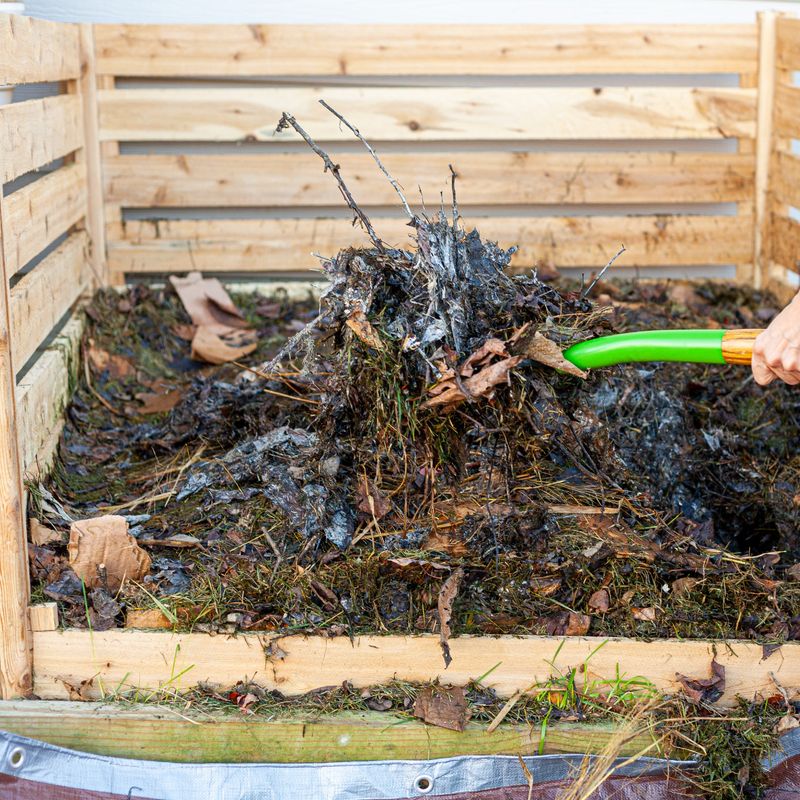
The sequence for fall composting is straightforward. Before sustained freezing conditions reach your part of North Carolina, turn the pile once with a garden fork.
Pull outer material toward the center, loosen compacted areas, check moisture with the squeeze test, and adjust with water or dry browns as needed. If the pile is heavy with dry leaves, mix in some greens during the turn itself.
After that, reduce how often you disturb the pile as consistent cold settles in. Illinois Extension’s winter composting guidance and Oregon State Extension’s winter composting resource both support letting the pile rest rather than repeatedly disturbing it once freezing conditions are sustained.
A loose cover helps manage rain and moisture loss without sealing off airflow.
NC State Extension notes that an unmanaged pile can take one to two years to finish, while a well-aerated pile may complete the process in several months. Adding fresh material through winter extends that timeline.
Finished compost may not be ready by spring, and that is a reasonable outcome rather than a failure.
Success here means correcting the conditions you can correct before winter arrives, not forcing the pile to stay active through every cold stretch. A well-prepared pile that goes quiet in February and wakes up in March has done exactly what a backyard compost pile in North Carolina is built to do.