
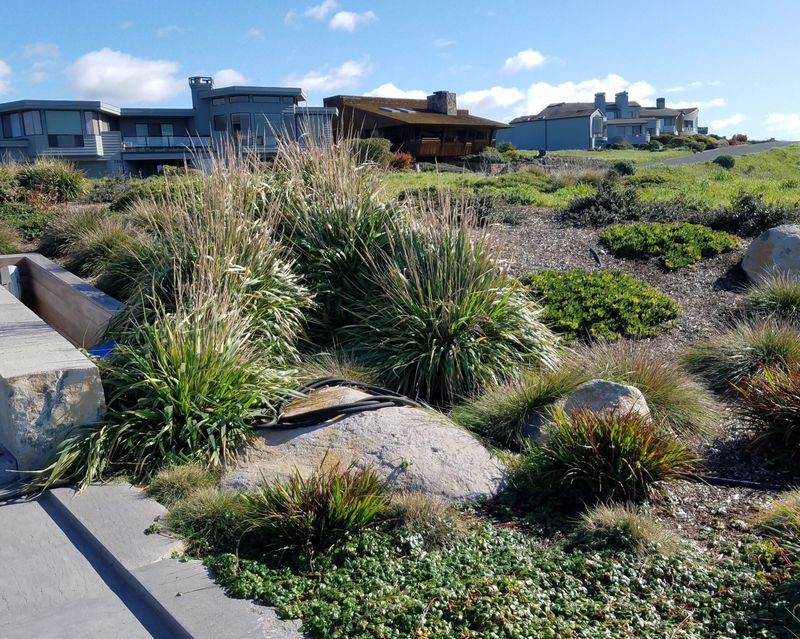
A bare slope in California is more than an eyesore, because winter rains can wash the soil away and summer weeds can turn it into fire fuel. Many homeowners plant fast grasses to fix it, then spend years pulling seedlings out of their flower beds.
The good news is that some native grasses spread by roots or stay politely in clumps instead of scattering seed everywhere. Here are seven that can cover ground, hold soil, and feed local wildlife without taking over the rest of your yard.
1. Creeping Wildrye (Elymus triticoides)
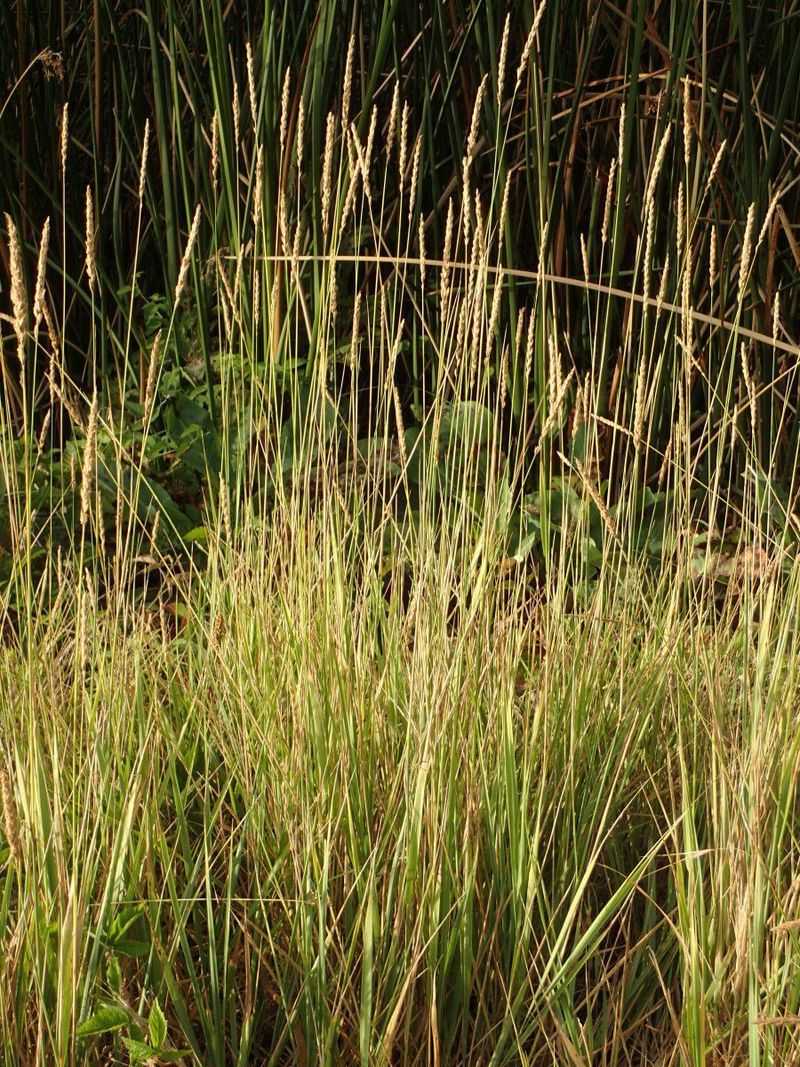
Picture a slope that was bare dirt in October and a soft blue-green carpet by the next spring. Creeping wildrye pulls that trick by sending out underground rhizomes rather than tossing seed into the wind.
Many named selections, like ‘Grey Dawn’ and ‘Shell Creek’, set very little viable seed.
The roots knit soil together, which can help slow erosion on inland valley and coastal hillsides during heavy winter storms. It handles clay, some salt, and seasonal flooding at the bottom of a slope.
Give it a deep drink every few weeks in summer and it tends to stay greener and less flammable.
One caution: it spreads by roots, so it can wander. Install a root barrier or use it where a path, wall, or driveway marks the edge.
On a big open bank, that roaming habit is exactly what you want.
2. California Meadow Sedge (Carex pansa)
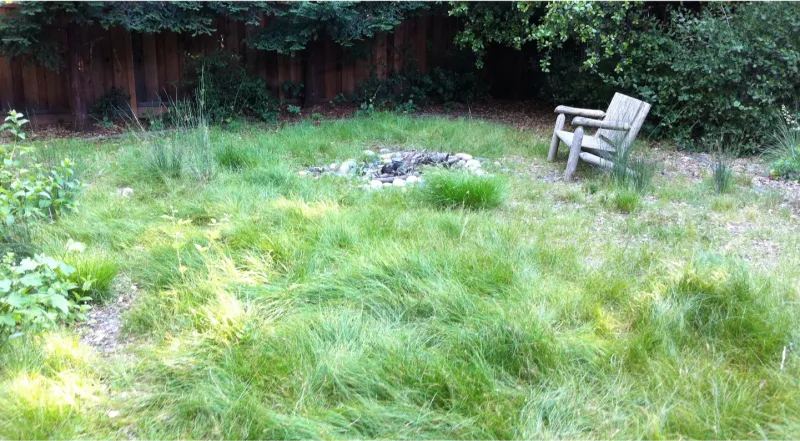
Technically a sedge, not a grass, but nobody walking across it will care. California meadow sedge forms a low, dark green mat that looks like a shaggy lawn and spreads slowly by rhizomes.
Seed set is light, so you rarely find surprise sprouts in nearby veggie beds.
It shines on gentle slopes near patios and paths where you want something soft underfoot. Mow it a couple times a year or leave it to flop into a meadowy look.
It can use far less water than turf once rooted, though inland gardens will still want regular summer irrigation.
Plant plugs about 12 inches apart in fall, and most gardeners see full cover within a season or two. Ground-nesting insects and small birds often forage in the cool leaf litter underneath.
3. Purple Needlegrass (Nassella pulchra)
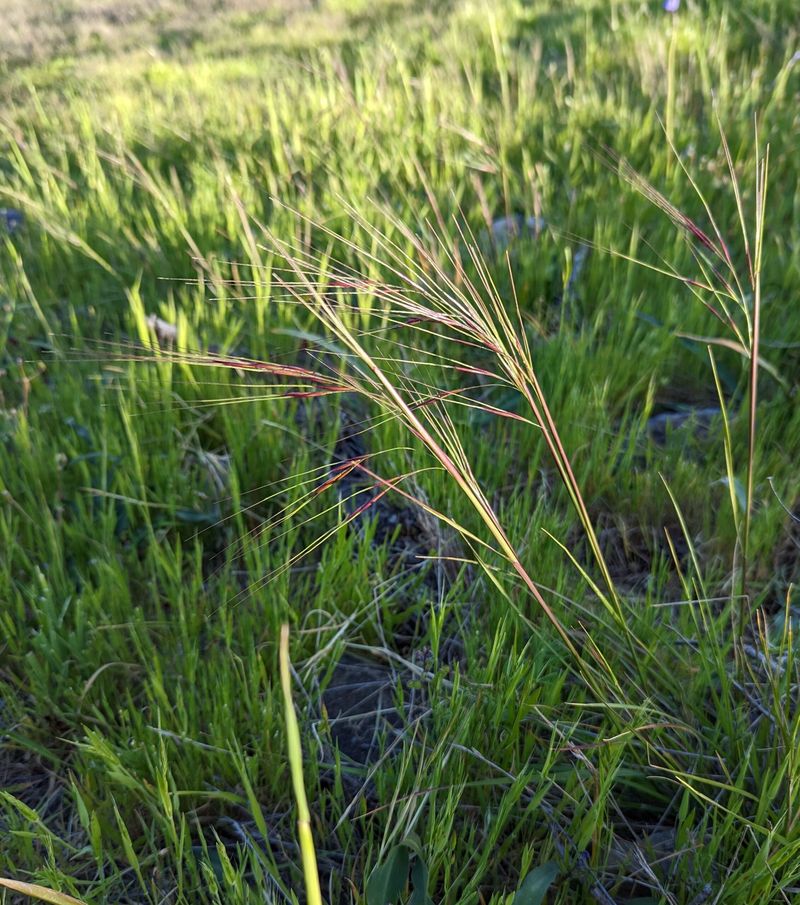
California’s official state grass has deep roots, reportedly reaching several feet down, and that anchor is why it earns a spot on tough slopes. Purple needlegrass grows in tidy bunches, with feathery purple-tinged flowers in spring.
Fair warning: it does make seed. The difference is that it spreads mainly into open, disturbed soil and rarely muscles into well-mulched, irrigated beds.
Pair it with a thick layer of mulch around nearby plantings and volunteers stay manageable.
It goes summer dormant and tan, so cut it back early in fire season if you live near wildland. In exchange, it needs almost no summer water and gives native bees, butterflies, and seed-eating birds a real food source.
4. Deer Grass (Muhlenbergia rigens)
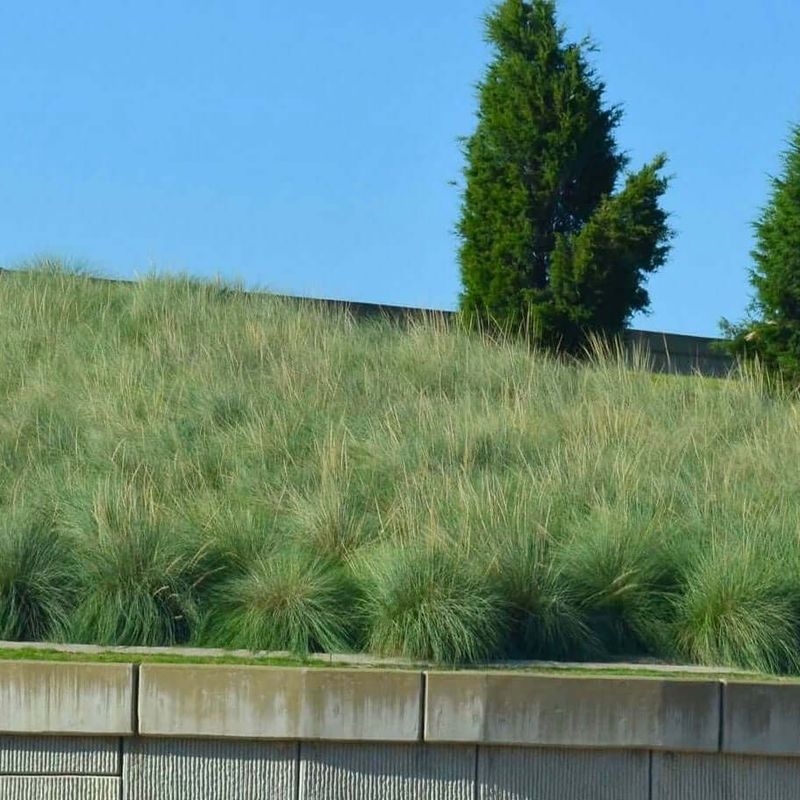
Basket weavers of California’s Native peoples prized deer grass flower stalks for coiled baskets. Today it works hard on slopes as a big, fountain-shaped clump reaching about 4 feet tall and wide.
Because it stays in a clump, it will not creep into your beds. Planted in staggered rows across a hillside, the mounds act like little dams that slow runoff and catch soil.
Gaps fill quickly since each plant grows large in two or three years.
Seedlings show up occasionally but are easy to spot and pull. It tolerates heat in inland valleys and needs only occasional summer water.
Cut it back hard every few years in late winter to refresh old growth.
5. California Fescue (Festuca californica)
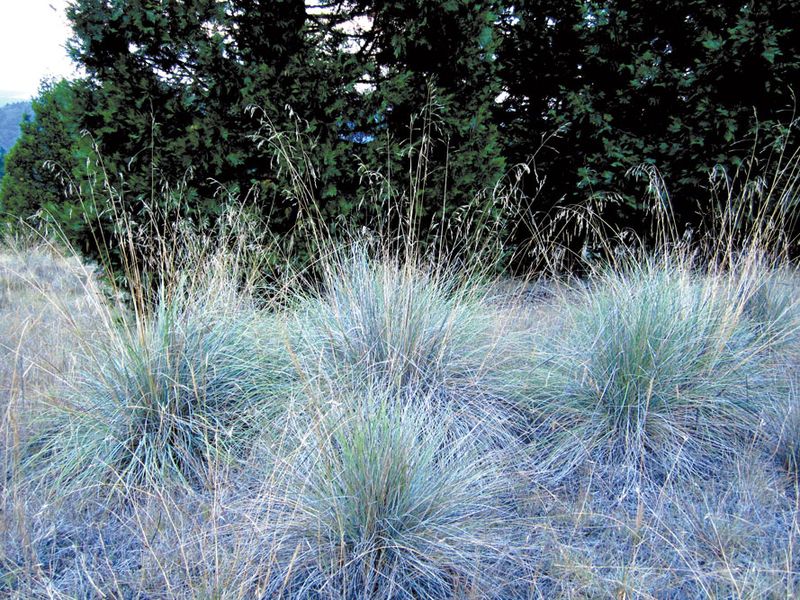
Got a slope under oaks where nothing seems happy? California fescue might be the fix.
It grows in loose blue-gray mounds about 2 feet tall and thrives in dappled shade where many grasses sulk.
It behaves itself, staying in clumps and seeding only lightly. That makes it a smart pick beside shady beds of coral bells or hummingbird sage.
Space plants about 2 feet apart and they knit into a soft, flowing groundcover.
Little summer water is needed under oaks, which is good news because oak roots dislike summer irrigation. Plant in fall so winter rain does most of the establishment work for you.
6. Blue Grama ‘Blonde Ambition’ (Bouteloua gracilis)
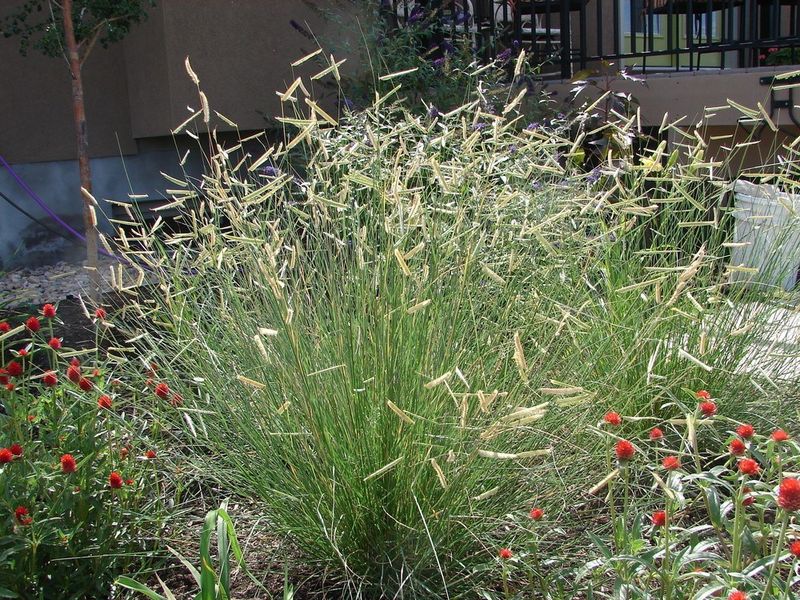
Those little flags on top look like eyebrows floating above the grass, and kids love spotting them. Blue grama is native to parts of Southern California and handles blazing sun and poor, rocky soil.
The ‘Blonde Ambition’ selection is a strong grower that fills a hot slope quickly, yet it seeds far less than many wild grasses. It stays fairly short, around 2 to 3 feet in bloom, so it does not block views from the house.
Plant it in spring or fall and water regularly the first summer. After that, deep soaks every few weeks can be enough in many areas.
It pairs nicely with buckwheat and sages for a pollinator-friendly hillside.
7. Pacific Reed Grass (Calamagrostis nutkaensis)
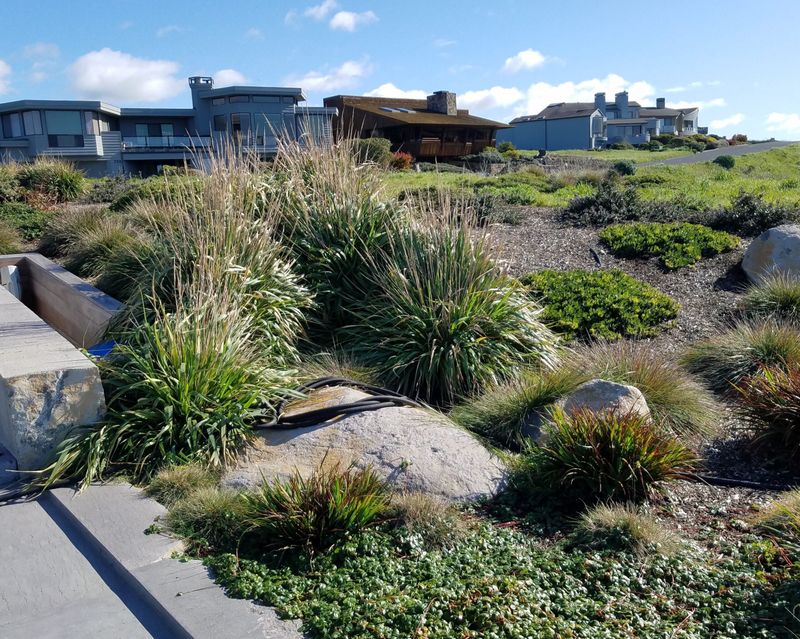
Coastal gardeners, this one is for the foggy side of the state. Pacific reed grass forms lush, arching clumps around 3 feet tall and loves cool marine air and steep banks.
Clumps fill space fast for a bunchgrass, and seed spread tends to be modest in garden settings. Its fibrous roots help hold sandy or loose bluff soil that might otherwise slump in wet winters.
Inland heat stresses it, so stick to coastal zones or give it afternoon shade and regular water. Birds use the dense clumps for cover, adding a bit of life to an otherwise bare bank.
Trim tired foliage in late winter and fresh blades return quickly.