
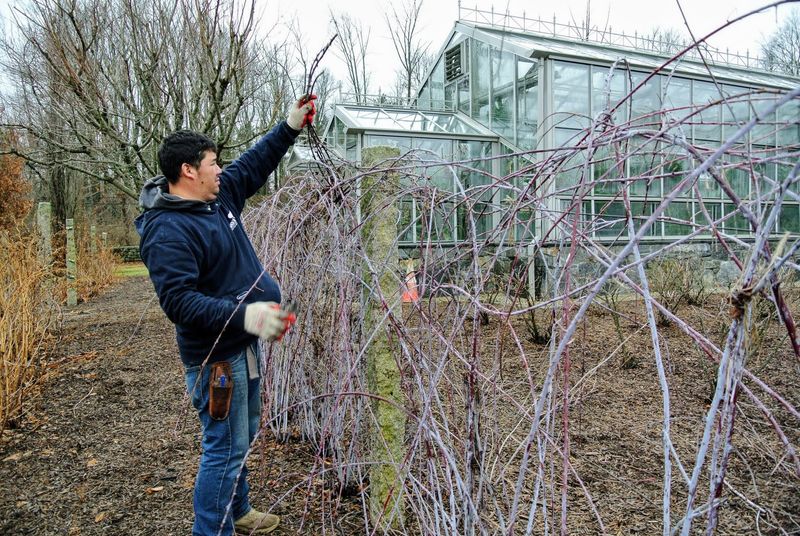
Your blackberry patch has given you its summer harvest, and now it looks a bit tangled. Some of those canes are finished for good, while others are quietly getting ready for next year.
Knowing which is which keeps you from cutting away future berries. A few simple steps right now can help set up next summer’s crop.
Which cane just fruited?
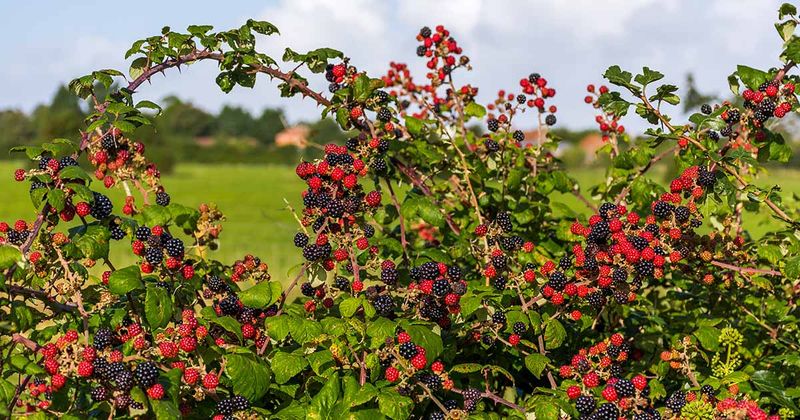
Blackberry plants have a trick that confuses a lot of gardeners. The crown and roots live for many years, but each cane lives only about two years.
In most summer-bearing, floricane-fruiting types, a cane grows leaves the first year without fruit. It is called a primocane at that stage.
The next year it becomes a floricane, produces berries, and then dies, as described in UF/IFAS guidance for Florida floricane blackberries.
That cycle gives you the answer to the big question. Remove the canes that just finished fruiting, and keep the healthy, unfruited canes that grew this year.
Texas A&M AgriLife Extension makes the same distinction in its pruning advice for Texas gardeners.
Keeping the new canes supports next year’s crop, but it does not guarantee more berries. Variety, plant vigor, weather, and care all play a part too.
Some cultivars follow a different pattern, which comes up later in this article.
Use fruiting history to identify spent canes
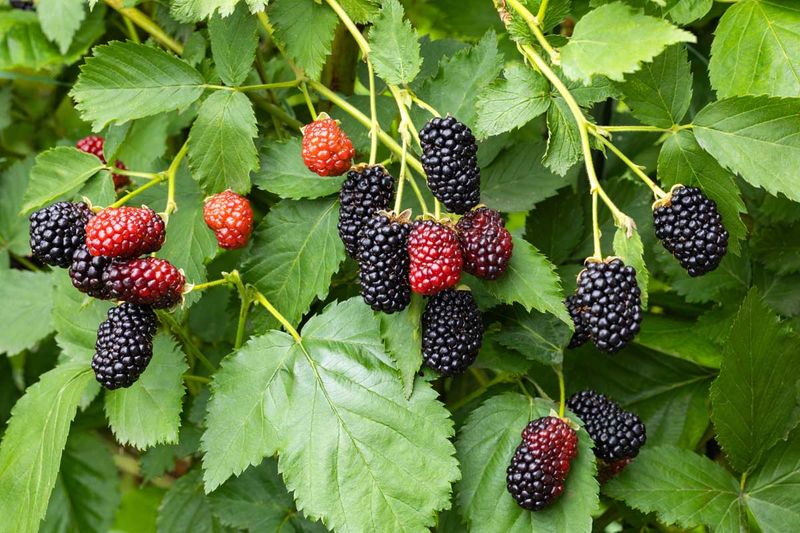
Your best clue is memory. Which canes carried berries this summer?
Those are the ones to remove.
If you are unsure, look for old fruiting branches, the short side shoots where berries hung. Spent canes usually still show them, and new canes do not.
Color and texture can offer backup hints. Older floricanes tend to look darker and woodier, while new canes are generally greener and more supple, as noted in the UF/IFAS pruning guide.
Treat these as supporting clues only, since lighting and variety can make canes look different.
Next season, make it easy on yourself. During harvest, tie a bit of ribbon or colored yarn on canes that are bearing fruit.
Once picking ends, you can spot the marked canes quickly. Texas A&M AgriLife Extension also explains that canes that have finished producing are the ones to take out.
Cut spent canes low and clear them from the patch
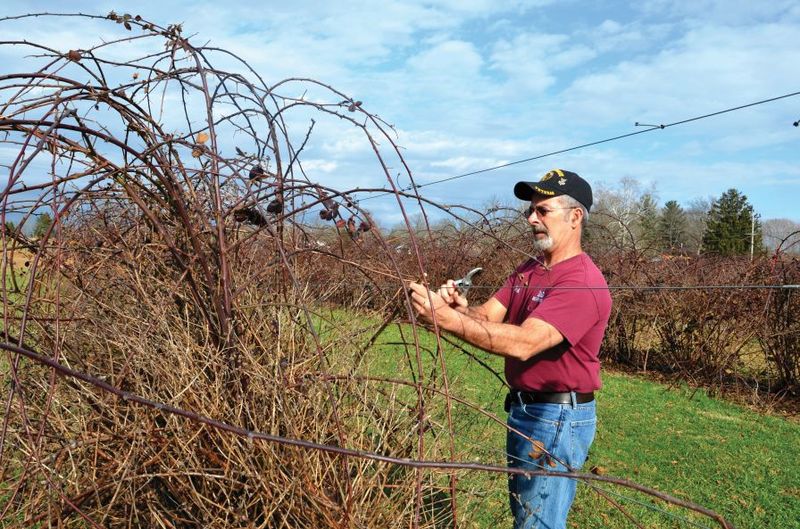
Once you have picked out a spent cane, follow it down to the ground. Make your cut at the crown or very close to ground level, and take care not to injure the crown itself.
Sharp loppers or pruners make a cleaner cut and are easier on your hands.
Work one spent cane at a time. Leave the healthy, unfruited canes standing, since they are your candidates for next year’s fruit.
Then pull the cut canes out of the planting. Texas A&M AgriLife Extension advises removing the old canes after they finish producing, as laid out in its blackberry pruning post.
Its broader Texas blackberry production guide also calls for removing dead canes every year.
Leaving cuttings on the ground keeps the patch crowded and messy. Local rules for yard waste vary, so check what your area allows for disposal.
Keep healthy new canes for next year
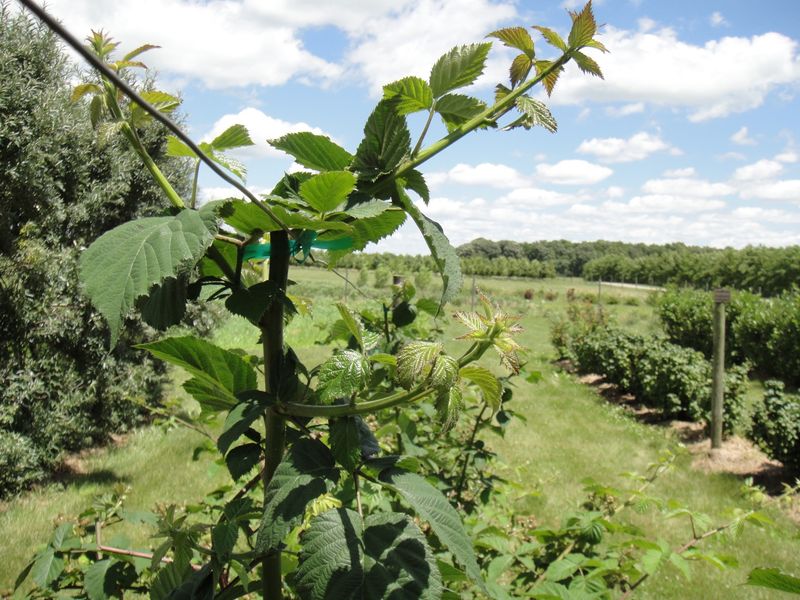
Think of the canes left in the row as next summer’s workers. In floricane-fruiting varieties, this year’s unfruited primocanes are the ones that will carry berries next year, according to UF/IFAS.
Choose canes that look sturdy and healthy, and pass over any that are broken, diseased, or crowded in tight. Good spacing gives leaves light and air, which helps the canes stay in good shape.
If a cane grows taller than your trellis, you can pinch or trim the tender tip. That tipping tends to encourage side branches, a practice that Texas A&M AgriLife Extension covers in its guidance.
Exact tipping height, how many canes to keep, and the timing all vary by region and training system. NC State Extension’s guide gives different details than Florida’s, so use your own local extension office as the final word for your setup.
Prune after harvest, with timing adjusted for region
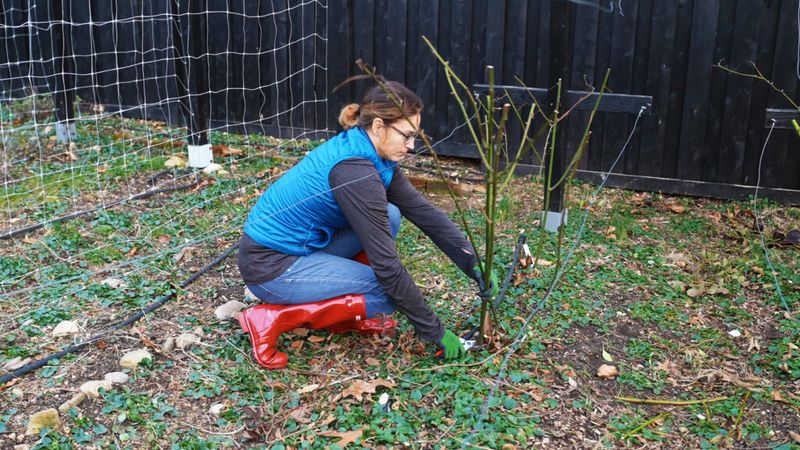
Forget the calendar for a moment. The better cue is the harvest itself: once the berries are done, spent canes are ready to go.
In Florida, UF/IFAS recommends removing floricanes in late summer after harvest rather than waiting for winter. Leftover old canes can compete with new ones for light, water, nutrients, and airflow, and Florida’s long growing season leaves plenty of time for new canes to grow.
Texas gardeners get a similar message. Texas A&M AgriLife Extension says to remove floricanes once they stop producing.
Do not assume Florida’s timing fits everywhere. Where the stretch between harvest and dormancy is shorter, some growers prune in winter instead, as NC State Extension’s practical guide shows for its region.
If you live somewhere between, local extension advice is your best tiebreaker.
Primocane-fruiting varieties need a different plan
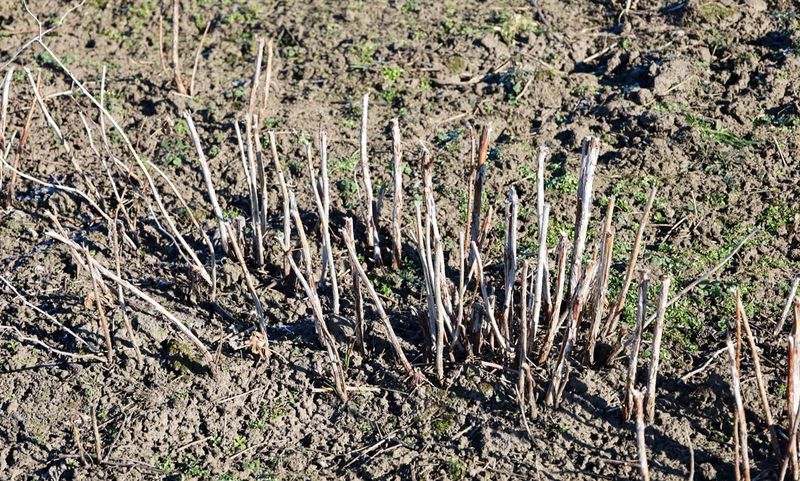
Some blackberries break the usual two-year pattern. Primocane-fruiting cultivars can bear fruit on new canes in late summer or fall, and those same canes may fruit again the next spring.
That gives you two ways to manage them. For two crops, remove the spent floricanes after their crop but preserve the new canes, an approach outlined by Texas A&M AgriLife Extension.
For a single fall crop, NC State Extension describes cutting all canes to the ground in late fall or winter after that crop. That is a deliberate one-crop choice, not a rule for ordinary summer-bearing plants, since it gives up the spring crop.
Heat is the wrinkle in the South. UF/IFAS reports that summer heat can hurt developing flowers, which may lower fall yield and fruit quality in Florida.
Texas guidance similarly cautions that these types may not perform well in Texas heat.
That does not mean every primocane cultivar will struggle. It means you should check what your plant tag says and ask a local extension office which kinds do well near you.
Prune safely and remember the simple rule
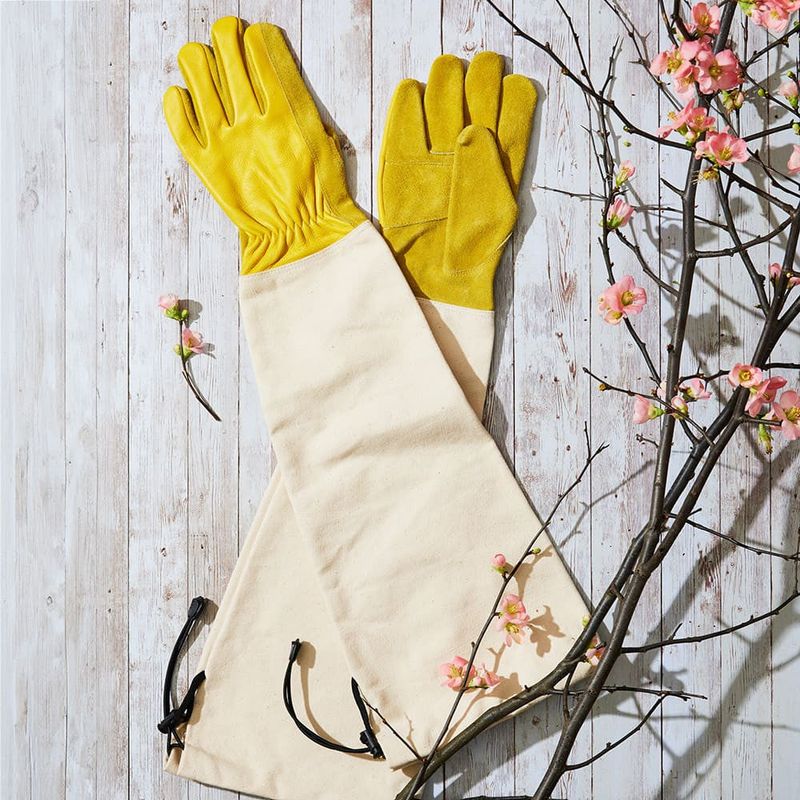
Blackberry thorns are no joke, so wear sturdy gloves and closed-toe shoes before you start. Long sleeves can save your forearms too, and Texas A&M AgriLife Extension notes that protective gear matters around thorny plants.
Keep your tools clean as well. If you cut a plant that looks diseased, disinfect your blades before moving to the next plant, using the steps in University of Minnesota Extension’s tool cleaning guide.
The rule for most summer-bearing blackberries is short: cut what fruited, keep what is healthy and unfruited. Mark your fruiting canes next season, and the sorting will take care of itself.