
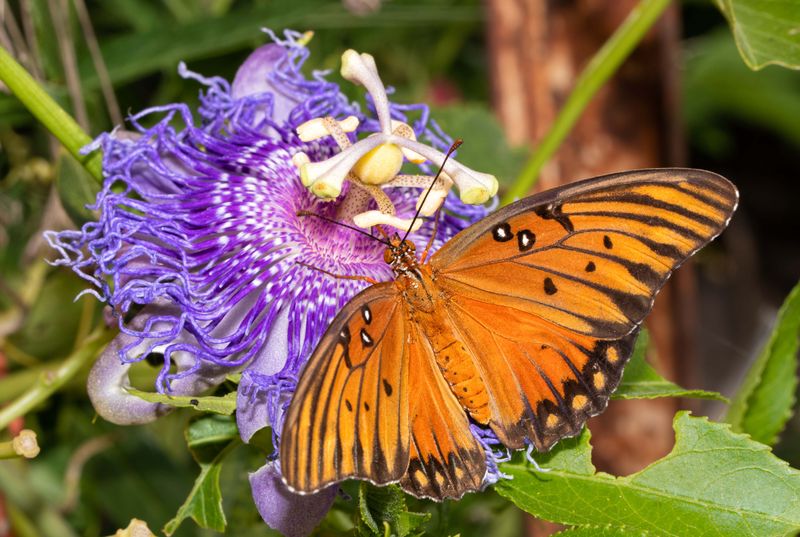
A bare fence can become a wall of strange, striking flowers with the right vine. Passionflower is one option, and some kinds can also feed Gulf fritillary caterpillars.
But the plant you pick matters, and the butterflies may eat a lot of the leaves. Here is what California gardeners should know before planting one.
What a passionflower vine can add to a fence
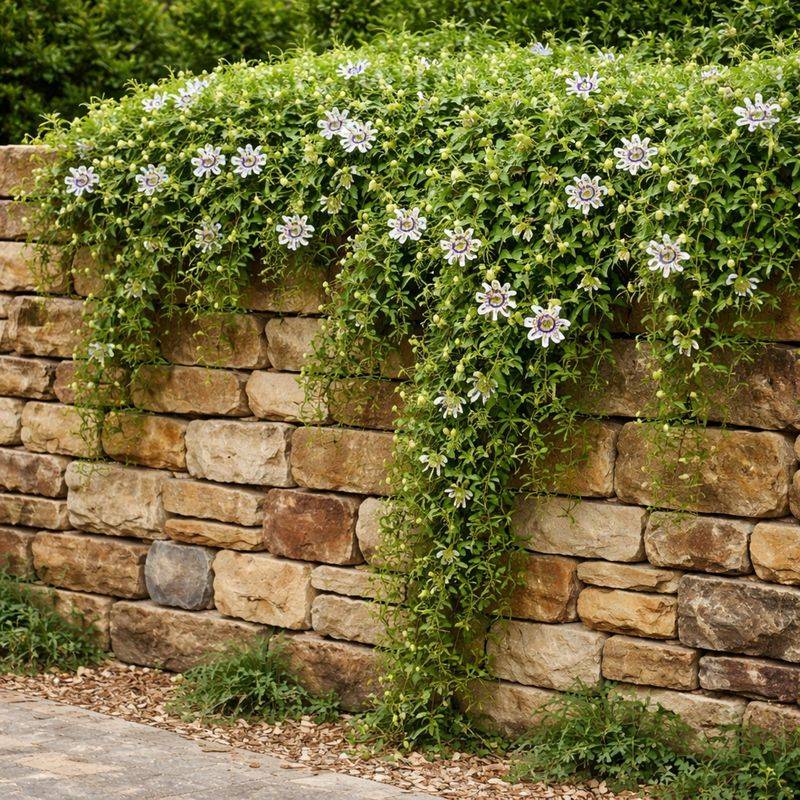
Few vines look as unusual as passionflower. The flowers are layered and frilly, and the tendrils grab onto wire, lattice, or slats.
On a plain fence, that can mean flowers and green growth in one planting.
There is a wildlife bonus too. The UC Davis Arboretum notes that Gulf fritillaries use passion vines on fences and trellises.
The orange butterflies lay eggs on the vines, and the spiky orange caterpillars eat the leaves.
That leaf eating is the catch. In a UC Davis trial of blue passionflower, Passiflora caerulea, the vines grew vigorously and flowered, but caterpillars also caused heavy damage, and some trellises were left with bare stems.
Results varied from plant to plant.
So think of passionflower as a flowering vine that can support Gulf fritillaries, not as a guaranteed privacy screen. You may get a thick green wall in one season and a patchy, chewed one in the next.
If you need year-round coverage to block a view, plan on a backup such as a sturdy evergreen shrub or a solid fence panel.
If you can live with some ragged leaves in exchange for flowers and butterflies, a passionflower fence can be a good fit. The rest of this guide covers which species to choose, how to handle water and spread, and where to plant.
Check the species before planting for Gulf fritillaries
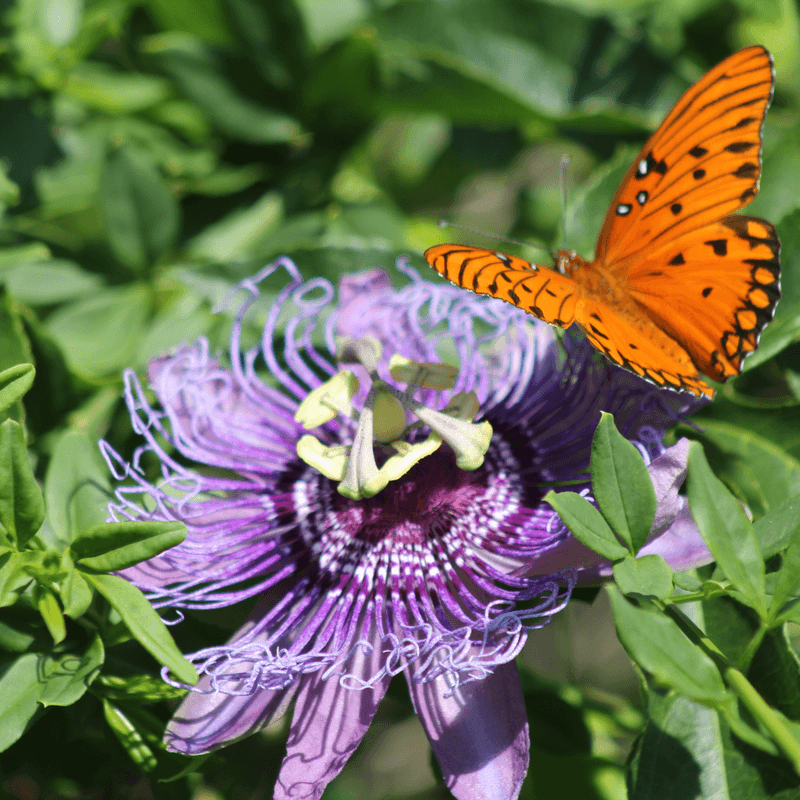
The tag says “passionflower,” but that is not enough. Passiflora is a big group of plants, and Gulf fritillary caterpillars are picky eaters.
Look for the botanical name on the label.
Passiflora incarnata, often called maypop, is documented as a Gulf fritillary host, according to the UC Davis Arboretum. That makes it a safe name to look for when butterflies are the goal.
Blue passionflower, Passiflora caerulea, is another case. Researchers running a UC Davis irrigation trial saw Gulf fritillaries on it in California.
It is common in nurseries, which makes it easy to find.
Still, do not assume every cultivated passionflower works. UC Agriculture and Natural Resources cautions in its Gulf fritillary article that caterpillars will not eat every cultivated Passiflora species.
A fancy hybrid with huge flowers might look great and still sit untouched.
Before you buy, ask the nursery for the full scientific name. If the plant has only a catchy cultivar name, look it up first.
Verifying the species takes five minutes and can save you a season of waiting for butterflies that never come.
Blue passionflower has regional water and spread considerations
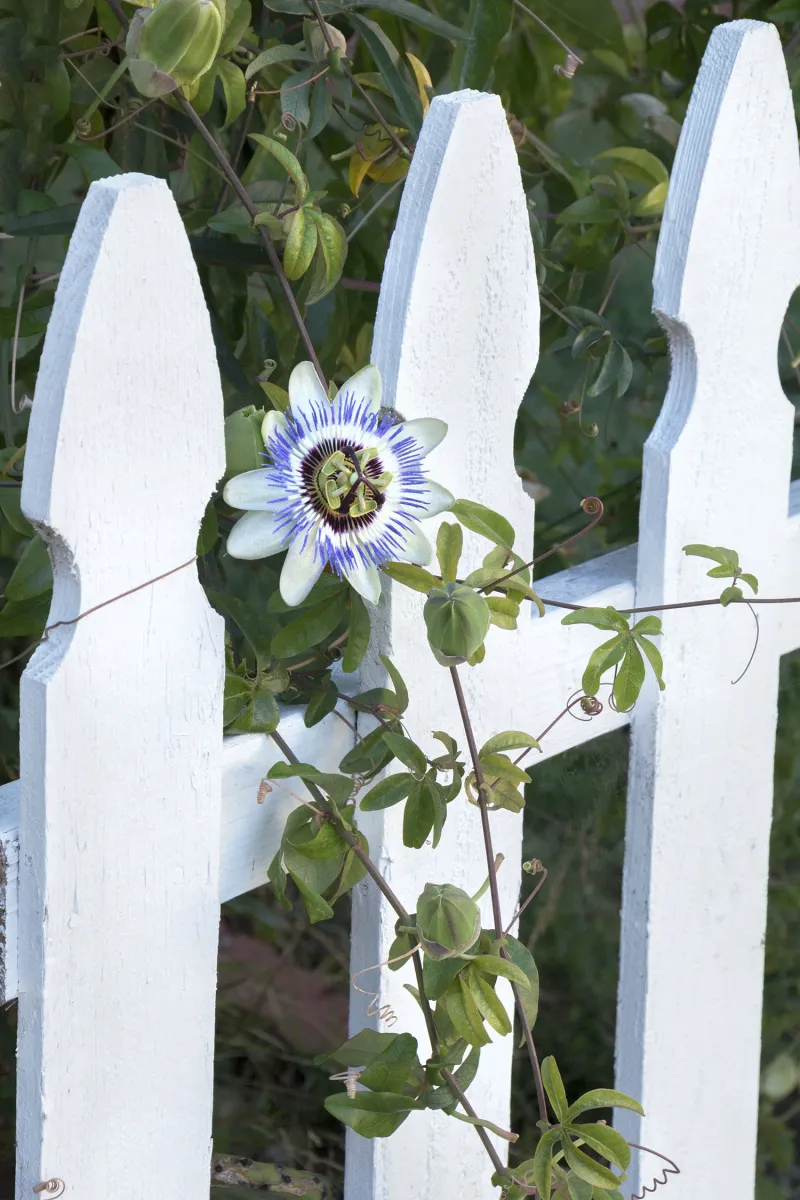
Blue passionflower is a handy California example, but it is not a California native. UC Davis describes it as native to South America.
Water needs are not one-size-fits-all either. The same UC Davis page reports a moderate water rating in one WUCOLS region and a low rating in another.
That means you should not treat it as drought-tolerant everywhere, and you should not assume it needs no water. Check the WUCOLS region for your area and watch how the plant responds through your dry summer.
Spread is the other thing to know. Flora of North America reports that blue passionflower is naturalized in the Los Angeles metropolitan area and can spread locally by root suckers.
If you see shoots popping up away from the main plant, pull them early.
Naturalized simply means a plant is growing and reproducing outside where it was planted. It is not the same as a formal invasive rating.
Also, warnings about one species should not be stretched across the whole group. The California Invasive Plant Council’s Watch rating applies to banana passionfruit, Passiflora tarminiana, not every Passiflora.
A practical approach is to plant blue passionflower where roots can be watched, keep suckers in check, and match watering to your region.
Give the vine support, space, and a suitable location
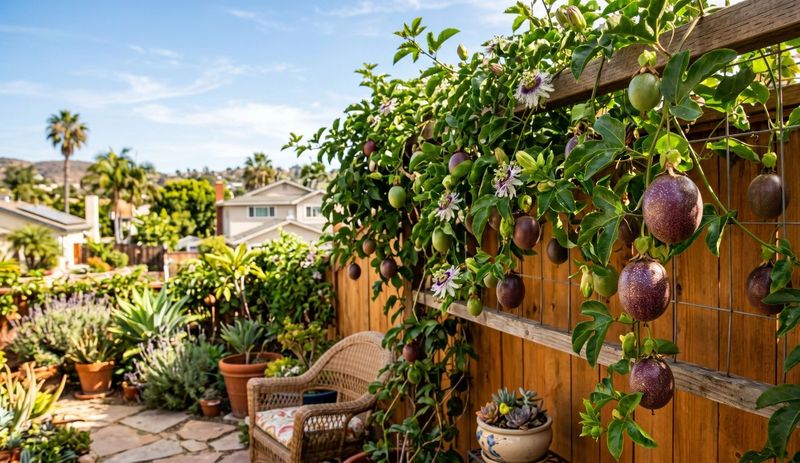
Passionflower climbs by tendrils, so it needs something thin to grip. Wire, lattice, or a trellis attached to the fence all work.
Choose a support that can carry a heavy, vigorous plant.
Size is the main planning issue. The University of Florida’s guide recommends planting passionflower at a fence, trellis, or arbor.
It also notes the vine can grow as large as its support and may need heavy pruning to stay in bounds. Florida conditions differ from California ones, but the growth habit is a useful guide.
In practice, leave a few feet of open space around the planting so the vine does not swallow a neighbor’s shrub or a gutter. Tie young stems to the support early.
Plan a regular trim to keep it where you want it.
Sun matters too. The UC Davis trial grew blue passionflower on trellises in full sun, so a bright spot is a good starting point.
If you live in a wildfire-risk area, add one more step. Check CAL FIRE’s defensible space guidance and your local fire authority before adding vegetation near a home.
CAL FIRE explains the general rules for managing plants around buildings. It has not rated passionflower as safe or unsafe, so ask about distance from structures and how often to trim.
A caterpillar host plant serves a different purpose than nectar flowers
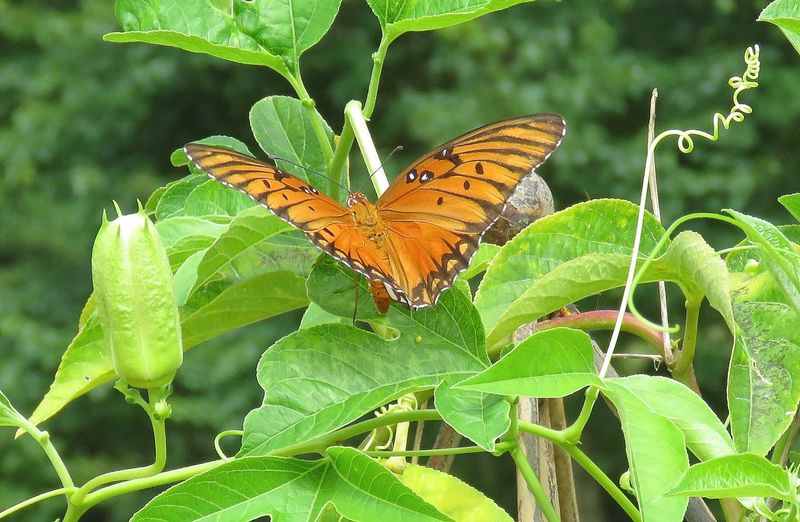
“Attracts butterflies” can mean two very different things. A host plant is where a butterfly lays eggs and where the caterpillars eat.
A nectar plant feeds the adults.
Passionflower fits the first role. Gulf fritillary mothers lay eggs on suitable vines, and the leaves feed the caterpillars, as the UC Davis Arboretum’s host plant list describes.
That is why a passionflower vine can raise the odds of seeing caterpillars and then butterflies in your yard.
Do not count on it to feed the adults, though. UC Agriculture and Natural Resources names lantana as a favored nectar source for Gulf fritillaries.
Passionflower is not necessarily their main flower stop.
A simple example: put the vine on the back fence and plant lantana in a sunny bed a few steps away. The adults can sip from the lantana, then check the vine for places to lay eggs.
Both life stages are covered in one small corner.
Lantana varies in how well it suits a given yard, so check your local nursery and local planting advice before choosing a type. The larger point is that one plant rarely does everything.
A garden that mixes host plants and nectar plants supports butterflies from egg to adult.
Expect leaf-chewing and make an informed screen-or-habitat choice
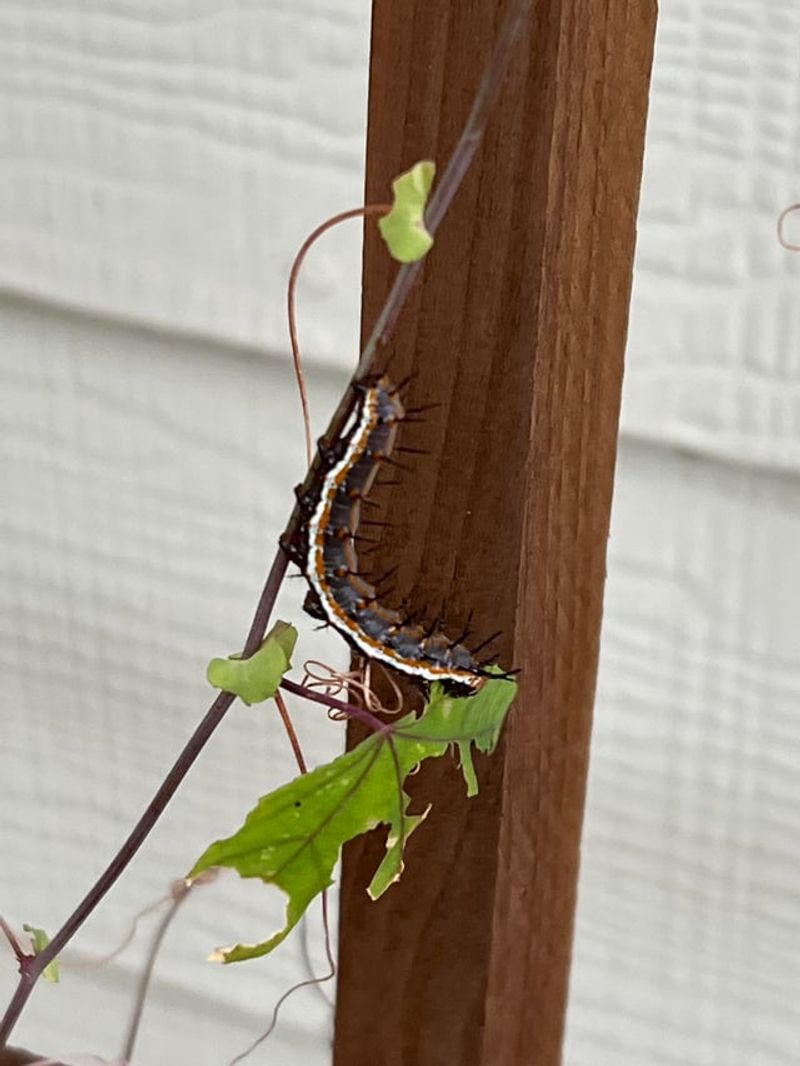
If caterpillars are living on your vine, you will see them eat. Ragged leaves, holes, and bare stretches of stem are normal signs of a working host plant.
Some people find that hard to watch on a plant meant to cover a fence.
The UC Davis trial shows how far it can go. Blue passionflower on trellises grew vigorously and flowered, but also suffered extensive caterpillar defoliation, and some trellises ended up with bare stems.
The trial also recorded high plant mortality. The source does not say caterpillar feeding caused all of those losses, so treat the two findings separately.
Results also varied among plants.
Resist the urge to spray. UC IPM advises against treating butterfly-garden plants, because insecticides can kill the caterpillars you are trying to support.
Spraying a host plant defeats its purpose.
So decide what matters most. If Gulf fritillary habitat is the priority, choose a documented host species, give it a strong support and room to grow, and accept some chewed leaves.
If steady privacy matters more, pair the vine with a plant or structure that does not depend on caterpillar-free foliage.
Either way, a passionflower fence brings flowers and wildlife, but never a promise of a perfect green wall. Sometimes the best fence cover is one that gets eaten.