
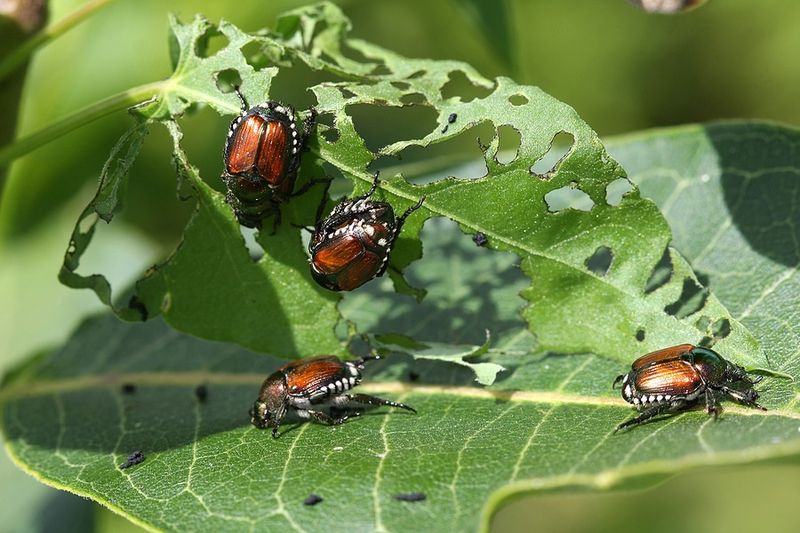
A shrub chewed down to lace can make any gardener want to do something fast. Many people hear that they must clear off the damaged leaves or the beetles will return in worse shape.
The real story is split between what happens this month and what happens in the soil. Knowing the difference helps you spend your effort on the right part of the yard.
Damaged foliage can attract beetles during the current feeding period
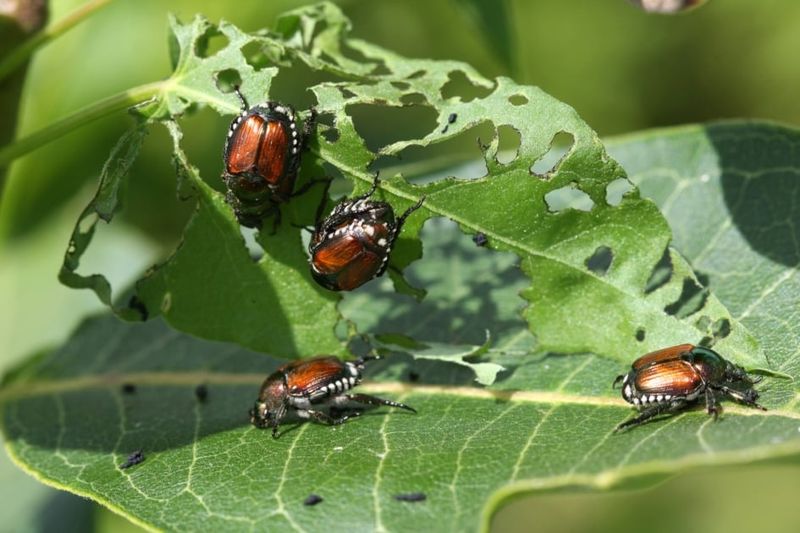
Here is the kernel of truth behind the scary advice. A peer-reviewed study on plant odors found that leaves damaged by beetles give off scents that call in more adult beetles.
In the test, leaves that had been chewed overnight drew more beetles, while freshly damaged leaves did not show the same pull.
That finding is about timing. It describes what happens while adults are out feeding, usually in the warm months.
It does not show that chewed leaves or fallen leaf litter cause a worse infestation next year.
So the idea that you must strip off damaged leaves to stop a return next summer does not hold up. Leaf removal has not been shown to prevent a bigger beetle population later.
Pulling off ragged leaves will not hurt a healthy plant, but it is not a proven way to protect next year’s garden, and it can leave a plant with even less foliage to recover with.
Healthy, mature plants often shrug off the damage. University of Minnesota Extension notes that the harm is often mostly cosmetic, though young or unhealthy plants can suffer from severe or repeated feeding.
Keep an eye on newly planted shrubs in particular.
The takeaway is simple. The odor effect is a short-term pull during feeding season.
The beetles of next July come from somewhere else entirely, and that story starts under the grass.
Next year’s beetles develop underground, not on the stripped plant
Follow the life cycle and the leaves drop out of the picture. NC State Extension explains that Japanese beetles have one generation each year in North Carolina.
Adults mate, and females lay eggs in the soil, mainly in grassy areas.
The eggs hatch into small white grubs that feed on grass roots. NC State’s white grub guidance covers how those grubs live in turf.
Later they pupate, and new adults crawl out of the ground to start the cycle again.
Notice what is missing from that story: the stripped shrub. The plant is where adults eat, not where the next generation grows.
Next summer’s beetles are decided by where eggs were laid and how the grubs fared below the surface.
There is also a common mix-up to avoid. A heavily chewed rose or linden does not prove your lawn has grubs.
University of Minnesota Extension points out that adults fly, so they can arrive from untreated grass or yards some distance away and go straight for the plants they like best.
Picture a neighbor’s unwatered turf a few lots over feeding the beetles on your crape myrtle. Your lawn might be fine.
That is why the next steps focus on the beetles you can see now and the turf you can actually inspect.
While adults are feeding, remove the beetles
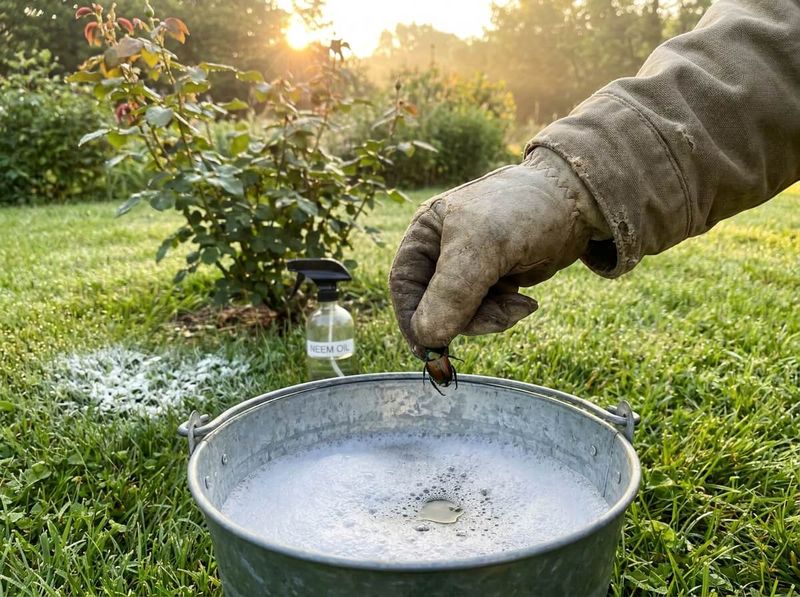
Morning is your best window. Beetles are sluggish when it is cool, so they are easy to knock loose.
NC State Extension suggests shaking or hand-picking them and dropping them into soapy water when only a few plants are involved.
Hold a bucket or wide bowl under a branch, give it a firm shake, and the beetles tend to drop straight in. A little dish soap in the water keeps them from climbing back out.
Wearing gloves makes the job easier if you do not like the feel of their legs.
Why bother? Beetles gather.
Taking them off early can limit how many pile up on a plant and how much they eat. NC State’s guide to turf pests also covers the adult stage and its habits.
Keep your expectations realistic. This is control for the current season on a handful of favorite plants.
It will not guarantee fewer beetles next summer, and new adults may fly in from elsewhere the next day.
You do not need to strip off the remaining leaves afterward. Leave them in place so the plant can keep making food, and repeat the morning check every few days while beetles are active.
Check the lawn for evidence of grubs

Start with the grass, not the garden. If your lawn is green and healthy, leaf damage on a shrub is no reason to go hunting for grubs.
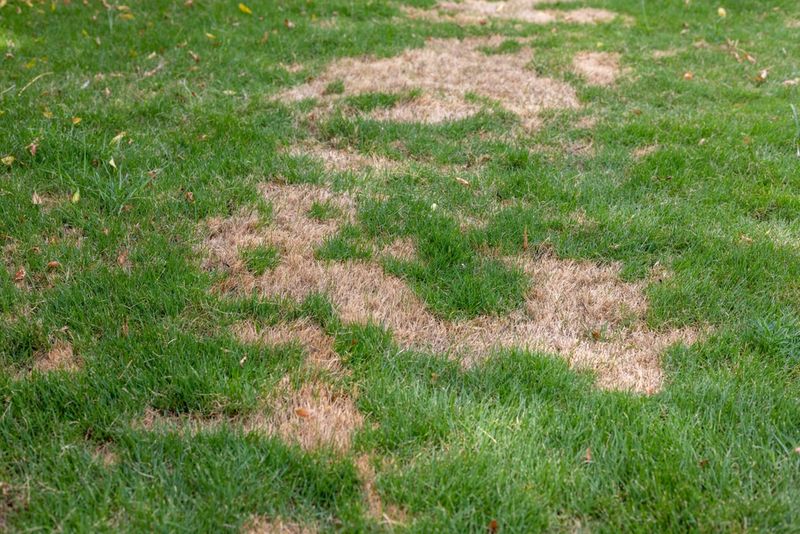
If you see patches of thin, discolored turf, though, a quick check can tell you what is going on.
The method comes from NC State’s organic lawn care guidance. At the edge of the discolored area, cut a section of sod about one square foot and lift it to a depth of roughly three inches.
Then look through the roots and soil for grubs.
Healthy-looking grass at the edge of the damage is a good spot to test, since grubs tend to feed where roots are still alive. Press the sod back down and water it when you finish.
Finding a grub does not settle the question. NC State Extension notes that several kinds of beetles in North Carolina produce white grubs, and Japanese beetle is only one of them.
A grub in your hand may belong to another species.
If you are unsure, take a photo and ask your local Cooperative Extension office. Identification matters because the species and the size of the problem shape any decision that follows.
Grub treatment can protect turf, not guarantee a beetle-free shrub
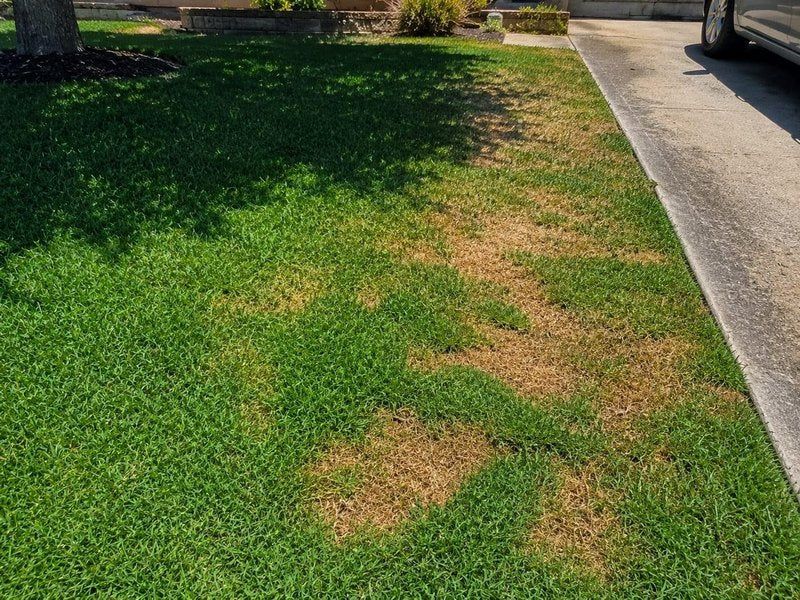
Grub management has one main job: protecting grass. It targets the larvae that chew roots, so if grubs are confirmed in damaged turf, treating the lawn may help it recover and hold up.
It is not a shield for your favorite shrub. University of Minnesota Extension notes that adults can fly in from untreated grassy areas, and that grub treatment is unlikely to reduce adults feeding on landscape plants.
You could treat every blade of grass you own and still see beetles on your roses.
Timing is another reason not to rush. According to NC State Extension’s white grub information, the right window depends on the grub species and where you live.
Timing in the mountains runs later than in eastern North Carolina, so a date that works near the coast may be wrong in Asheville.
That is why a calendar reminder or a neighbor’s advice is a poor guide. Confirm that grubs are present, identify them, and get local guidance before putting anything on the lawn.
Whatever you choose, read and follow the product label. Treating turf when it does not need it spends money and may expose helpful insects for no gain.
Traps and blanket sprays are not shortcuts to next summer’s protection
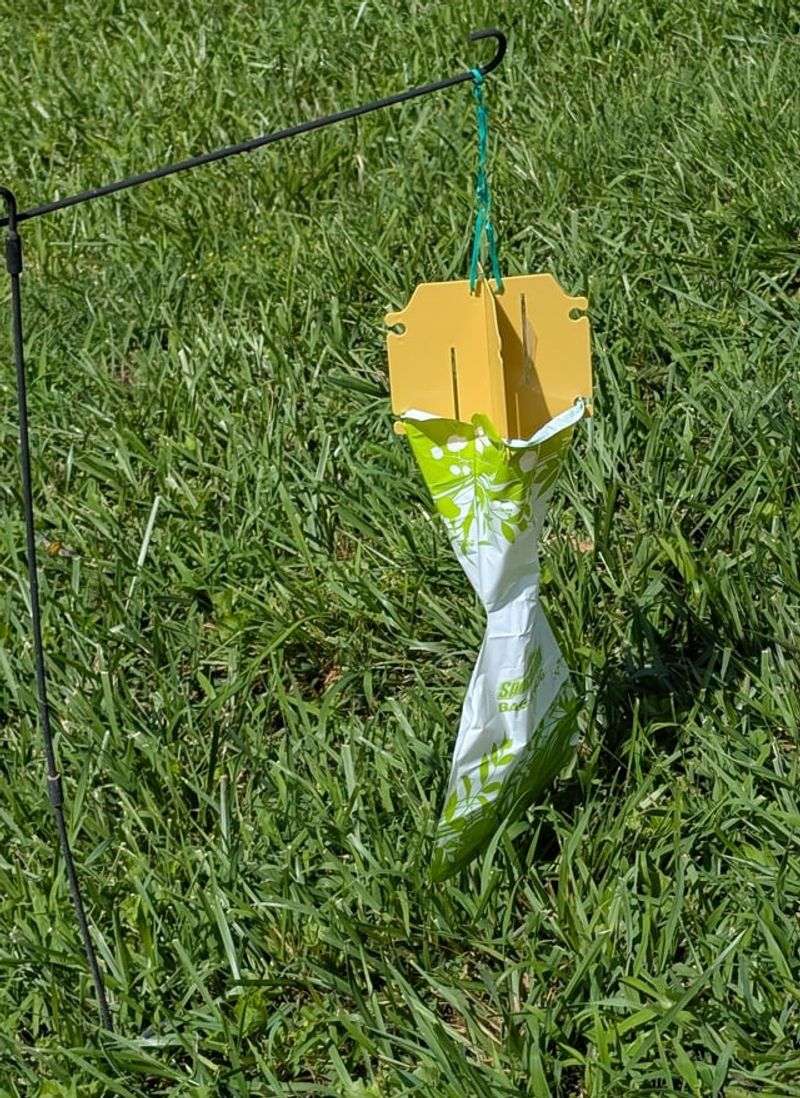
Hardware store traps look like an easy fix, but they come with a catch. NC State Extension says traps can attract more adults than they capture and may draw beetles toward your landscape plants.
You can end up inviting the very crowd you hoped to thin.
Iowa State University Extension likewise describes traps as poor control for ordinary home yards. If you still want one, keep it well away from the plants you care about, though it is not a recommended default.
Spraying is the other tempting move. A stripped plant is not a reason to spray the plant or the whole lawn.
First confirm what you are dealing with, then check the label of any product you consider.
Bees and other beneficial insects matter here. University of Minnesota Extension advises careful use of pesticides to protect them, and blooming plants are where pollinators gather.
Neither traps nor sprays can stop all future adult feeding, since beetles keep flying in from beyond your fence. Hand-picking and a healthy yard remain the safer starting point.
Choose the next step based on what you find
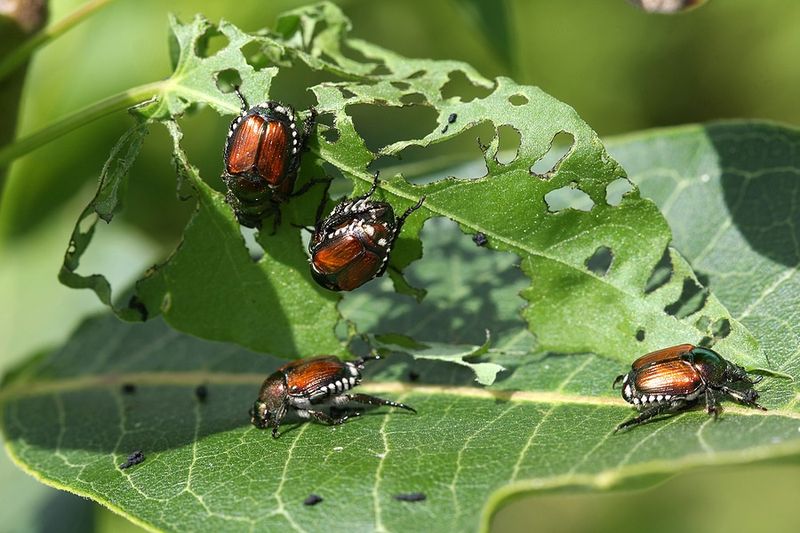
Work through it in order. While beetles are active, pick them off a few plants in the morning.
Leave the leaves alone. Check turf only if it looks damaged, using the sod-lifting check, and consider grub management only when what you find and local advice support it.
No single move ends the problem, because adults fly. A shrub that gets chewed is a nuisance, but it is also a plant that usually grows back.