
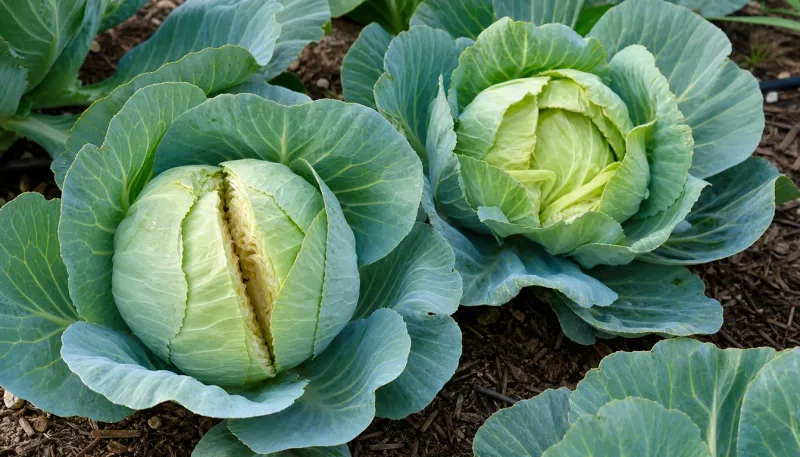
You walk out to the garden after a stormy night and find a once-perfect cabbage cracked wide open. It is a frustrating sight, but it is common and rarely a sign that you did something wrong.
A sudden rush of water is often the trigger, and a few simple habits can lower the risk. Here is how to read the clues, protect the heads still standing, and handle the ones that have already split.
Why can a firm cabbage head split after rain?
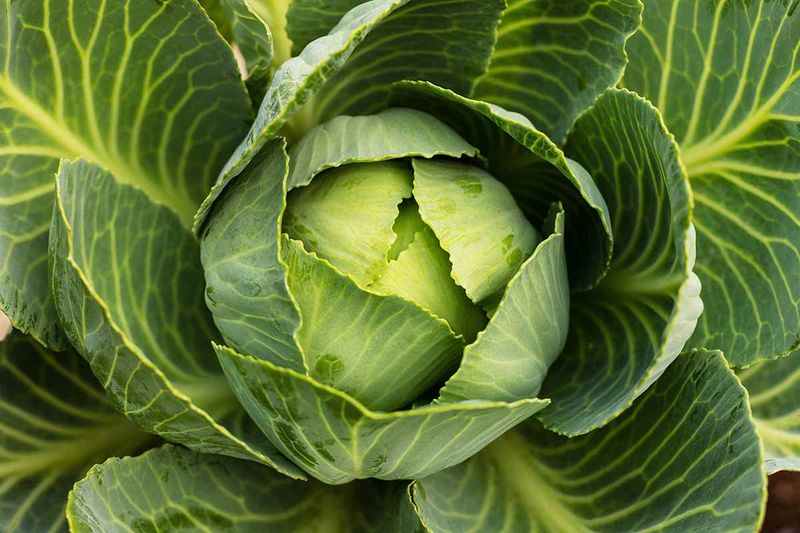
Picture a balloon that keeps filling after it is already tight. A mature, firm cabbage head works much the same way.
When the plant takes up a sudden surge of water, the inner leaves can swell faster than the outer ones can stretch, and the head cracks. UF/IFAS guidance points to this kind of sudden water uptake in mature heads.
The classic setup is heavy rain after a dry stretch. Utah State Extension lists rain following dry weather as a recognized trigger.
Rain is not something any gardener controls, so a split head does not prove a watering mistake.
Other factors play a part too. Heads that are fully mature are more likely to crack than young ones.
University of Minnesota Extension notes that some varieties hold in the field better than others. Not every head in your row will split, and that uneven pattern is a useful clue that maturity and variety are part of the story.
Keep soil moisture more even as heads form
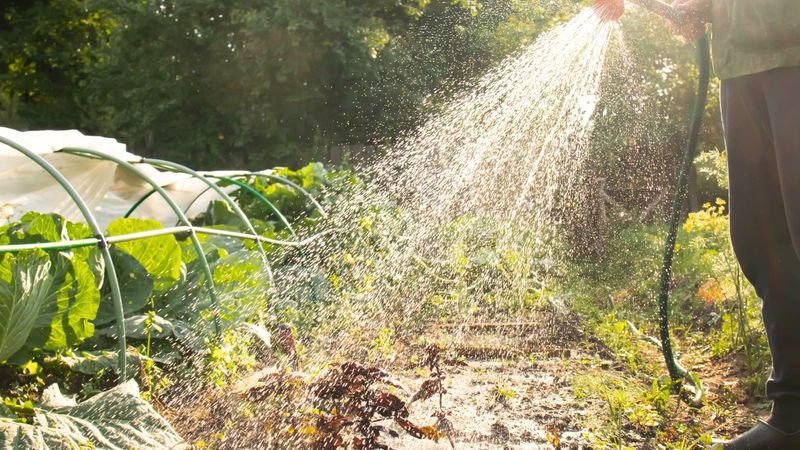
The goal is to avoid big swings. Soil that bakes dry for a week and then gets drenched sets up the exact surge that splits heads.
Steady moisture keeps the plant from gulping water all at once.
University of Georgia Extension stresses uniform soil moisture during head formation and keeping it up until harvest. That means you should not shut off water once heads feel firm.
Deliberately drying out the bed can create the very dry-to-wet swing you want to prevent.
Where it is practical, small and regular watering can help. UF/IFAS notes that frequent, light drip applications may help prevent splitting.
A layer of mulch can slow evaporation and smooth out the changes between watering days.
Keep expectations realistic. Even perfect irrigation cannot hold back a downpour, so think of steady watering as a way to reduce risk, not remove it.
Set fall cabbage timing for your Southern location
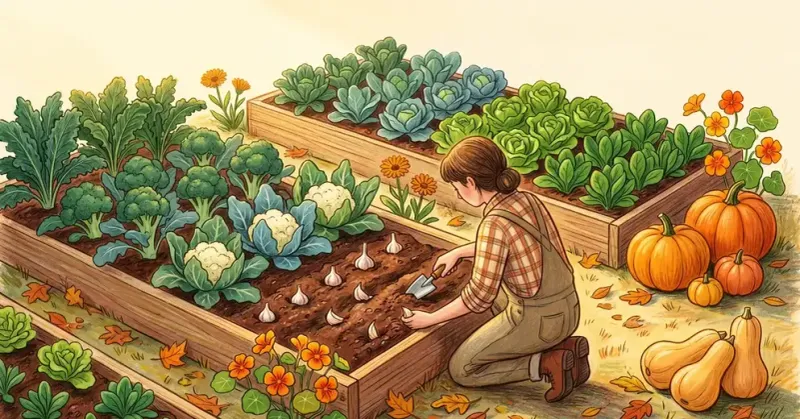
Cabbage is a cool-season crop, but the South does not run on one calendar. A gardener in Gainesville, one in the Rio Grande Valley, and one near Dallas will each face different temperatures, frost dates, and rain patterns.
UF/IFAS treats cabbage as a Florida cool-month crop. In Texas, Texas A&M AgriLife lists production in the Lower Rio Grande Valley from September to February and in the Winter Garden area in fall and spring.
Those examples show how much local timing can differ.
For exact planting dates, check with your county extension office. Once you know your window, mark an approximate harvest period on the calendar.
That way you will be ready to check heads for firmness before the wet spells arrive.
How firm is firm enough to harvest?
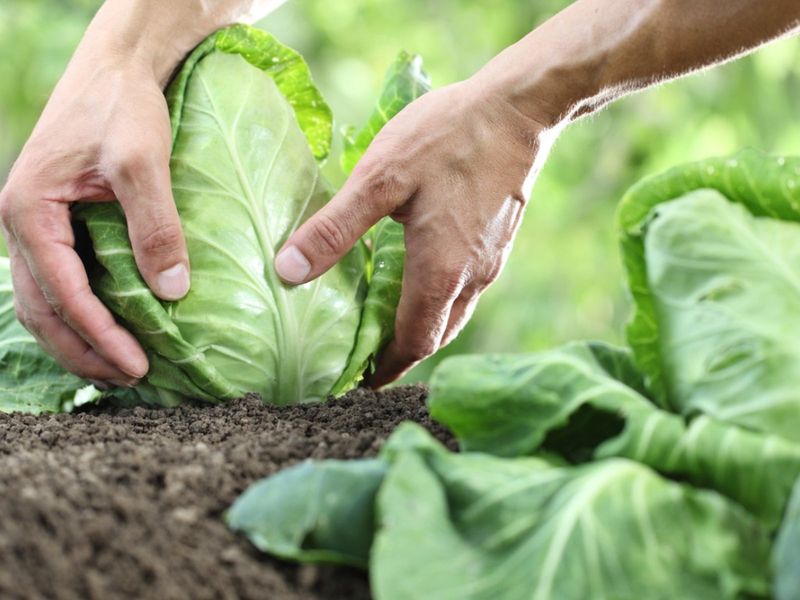
Give your cabbage a gentle squeeze. A head that feels firm and solid all the way through is ready, and one that gives easily under your palm needs more time.
Checking every couple of days as maturity nears helps you catch a ready head before it cracks.
Iowa State Extension says harvest can begin when heads are firm and about softball-sized. Treat that as a rough guide, not a rule.
Some varieties form larger or smaller heads, and growing conditions change how fast they fill out.
Firmness is the better cue. A small, dense head can be ready while a big, loose one is not.
UF/IFAS also advises harvesting mature heads promptly to avoid splitting.
If a storm is in the forecast and a head feels solid, cut it. Waiting for a crack before you act means the damage is already done.
Use a root twist only to delay harvest briefly
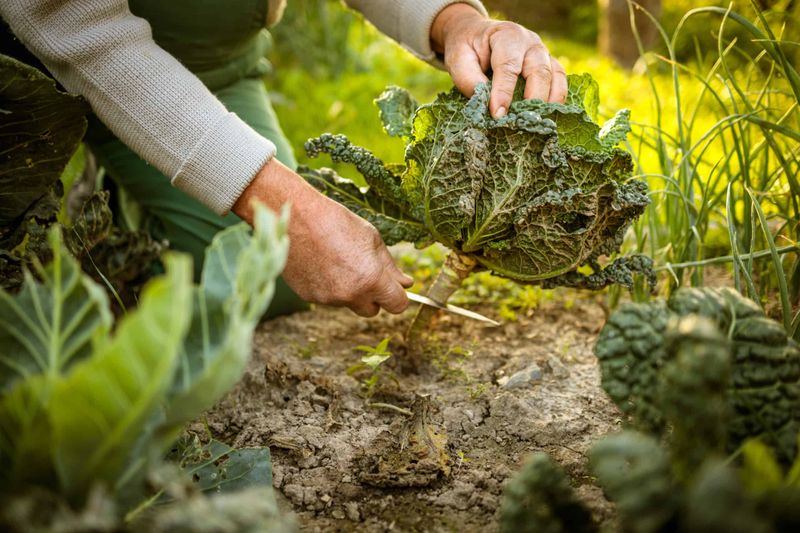
Sometimes a mature head is ready but you cannot cut it yet, maybe because you are traveling or the kitchen is already full. In that case, a root twist is one option.
Grip the head, lift it slightly, and give it a quarter turn so some roots snap.
The tradeoff is real. Twisting breaks or injures roots, which may reduce water uptake and lower the chance of a split, but it also stresses the plant.
UF/IFAS advises harvesting within about a week afterward, so this buys days, not weeks.
Iowa State Extension describes the same gentle pull-and-twist approach. Neither source promises it works every time.
Use it only on an intact, mature head. A twist cannot repair a crack that has already formed, so if the head has split, harvest it instead.
Harvest split heads promptly
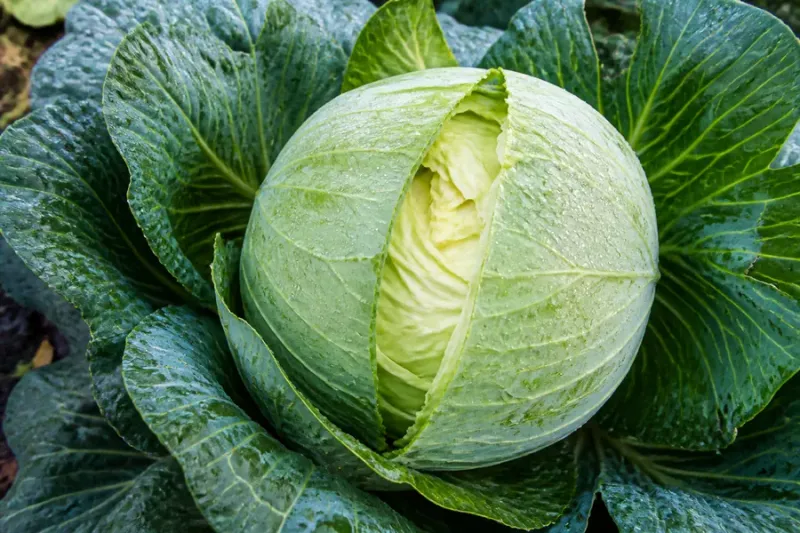
A split head is on a clock. Once the inner leaves are exposed, moisture, insects, and rot can move in quickly.
Illinois Extension notes that exposed inner tissue soon becomes unusable and advises harvesting split heads as soon as possible.
Cut the head, bring it inside, and look it over. Peel away outer leaves that are muddy, slimy, or dark, and check the inner layers.
Firm, clean, crisp leaves are worth saving, and using them in slaw or soup within a day or two is a smart plan.
Not every split head can be rescued. If you see mold, a sour smell, or mushy tissue, compost it.
Trimming does not make a deteriorating head safe.
A cracked cabbage is a setback, not a verdict on your gardening skills.