
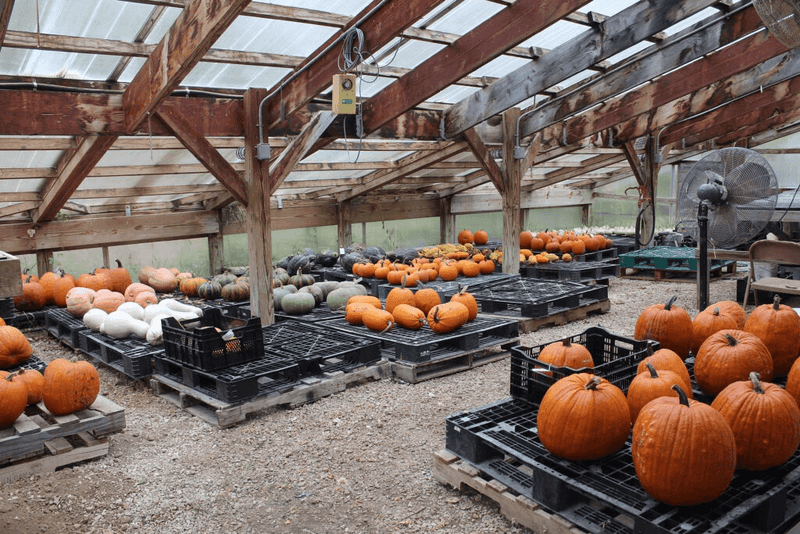
You spent months growing pumpkins and winter squash, so it hurts to find a soft, leaking fruit on the shelf. A soft stem often gets the blame, but the real story has more clues.
Maturity, handling, disease, and storage conditions all play a part. Here is how to read the signs and give your harvest its best chance.
Why a soft stem does not predict a short shelf life
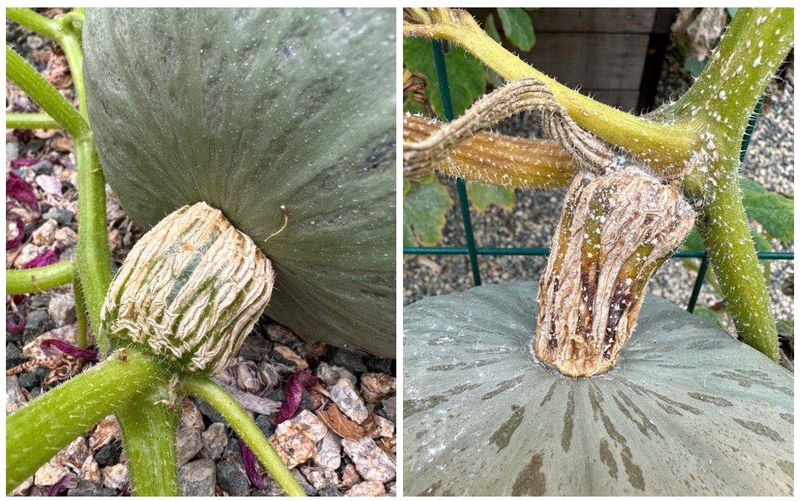
Finding a soft stem on a freshly picked squash can feel like bad news. It is worth a closer look, but it is not a countdown clock.
Immature squash may be more vulnerable to injury, water loss, and storage decay, according to UC Davis postharvest guidance, yet a soft stem alone cannot prove the fruit was picked too early.
Plenty of other things can start decay. Field infections may stay hidden and only show up after harvest.
Cuts, bruises, broken stems, wet fruit, chilling injury, and poor airflow can all open the door to rot as well.
Think of the stem as one clue among several, along with the rind, color, and size. No one can say that a certain stem will lead to spoilage by a certain date.
How long a squash keeps depends on its variety, its condition, and where it sits afterward. The sections below walk through each of those pieces so you can sort your harvest with more confidence.
Check the rind, color, size, and stem together
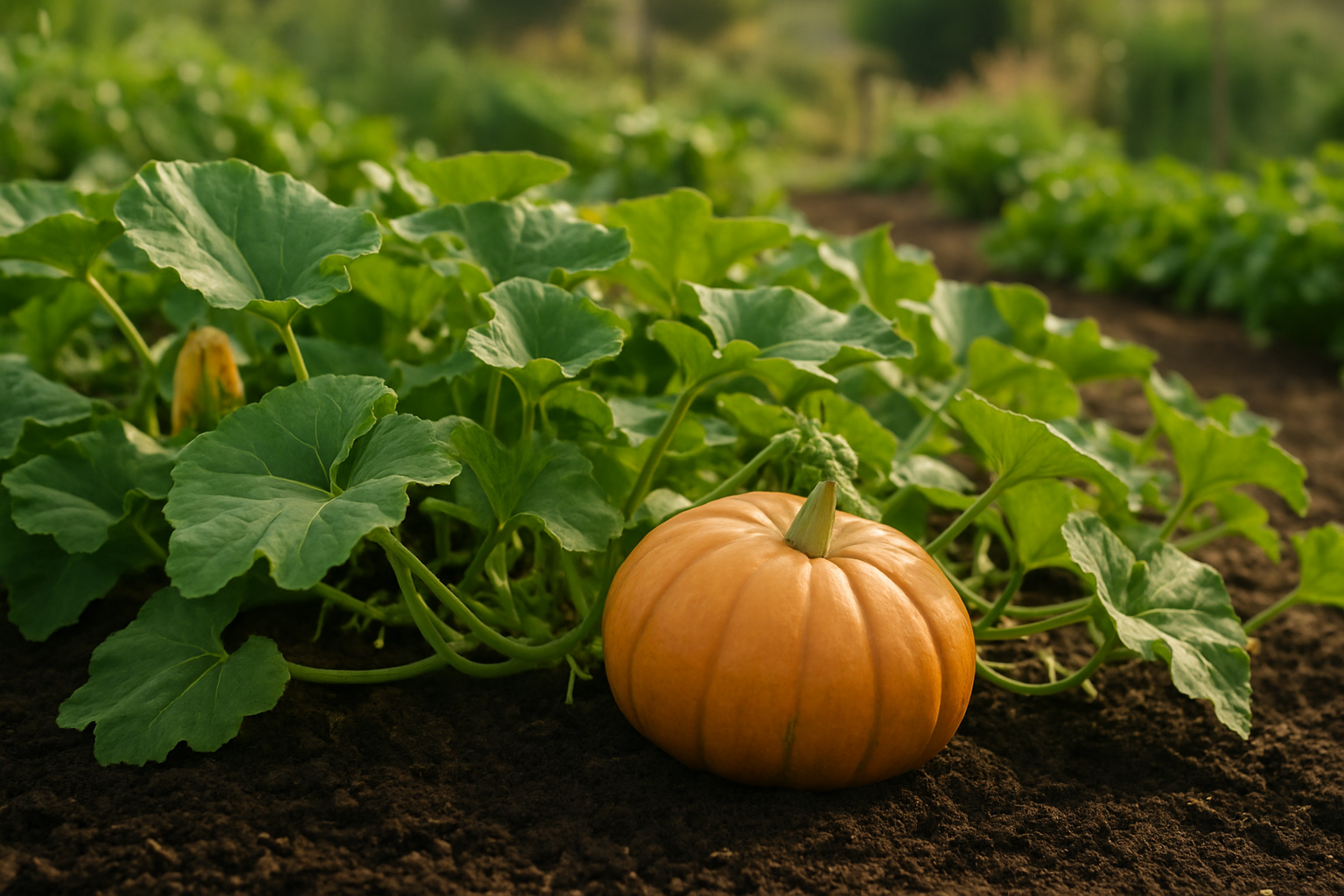
Before you cut anything, walk the garden and look at each fruit from a few angles. Mature color and size for the variety come first.
A butternut should look tan all over, and a pumpkin should show its full, even color.
Next, press a thumbnail against the rind. If it resists puncture, that is a good sign.
A stem that is drying or corky adds to the picture, while a green, soft one is a clue to look harder rather than a verdict.
Be careful with the vines. As Alabama Extension notes, vine dieback by itself is not a reliable maturity test, because disease or drought can kill vines while fruit is still immature.
Southern gardens often lose vines to powdery mildew, squash vine borers, or summer heat well before the fruit is ready.
Weigh all the signs together. If most of them line up, the fruit is likely ready.
If they do not, leave it on the vine a little longer when weather allows.
Harvest gently and sort out questionable fruit
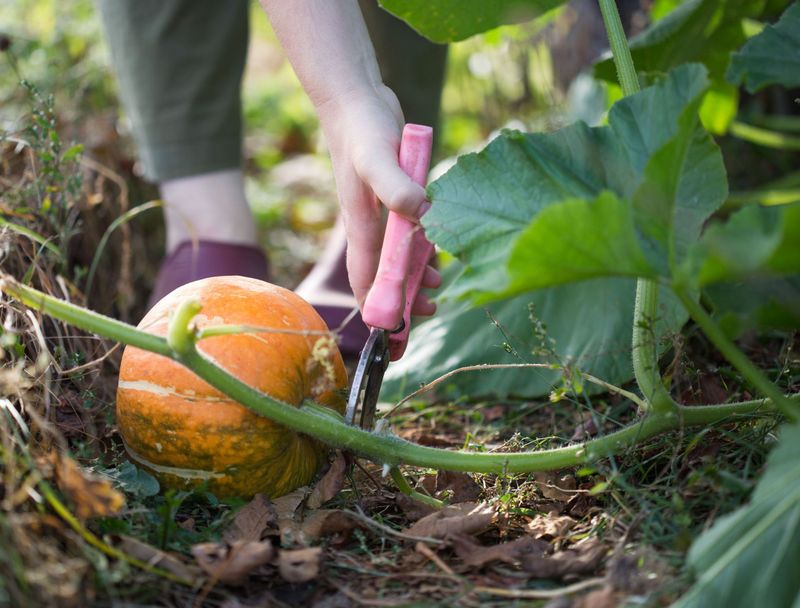
Use pruners or a sharp knife to cut each fruit from the vine. Twisting or pulling can snap the stem, and Iowa State Extension points out that wounds and broken stems give decay organisms a way in.
Carry fruit instead of tossing it, and never lift a squash by its stem. Stem advice varies by type, so a long stem is not a rule for every squash.
Once the harvest is in, sort it. Set aside any fruit that is immature, frost-injured, diseased, or badly wounded.
Curing will not restore fruit in those conditions, as UW-Madison plant pathologists explain, so these belong out of long-term storage.
Sound, unblemished fruit can go on the storage list. Questionable fruit is best cooked or used soon.
Anything with soft, wet, or moldy spots can go to the compost pile.
Choose curing by squash type
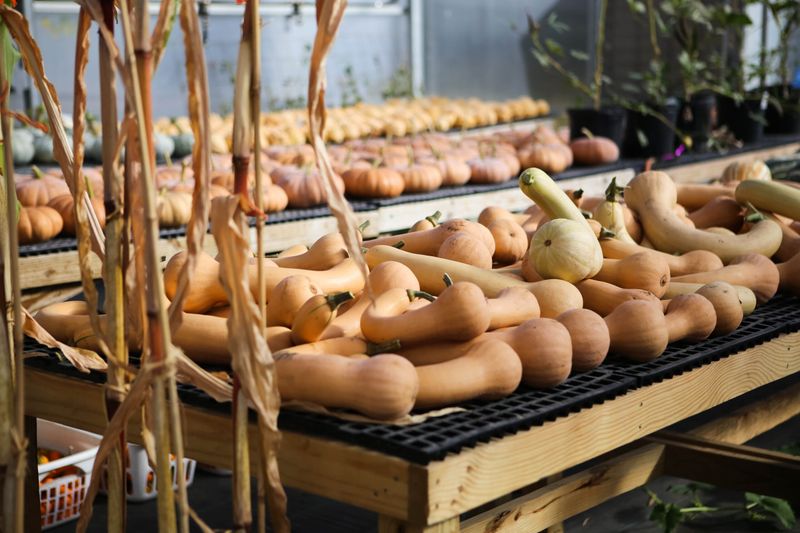
Curing gets talked about as a must-do, but it is really a choice that depends on the squash. For some types, a short warm spell hardens the rind and helps minor wounds heal.
For others, it does little or can even cause harm.
Acorn squash is the big exception. Alabama Extension says warm curing can reduce its quality and storage life, and Iowa State advises not curing it at all.
Other varieties get mixed advice. Some sources report no added benefit from curing certain butternut and Hubbard types, and a mature, uninjured fruit can often go straight into suitable storage.
So check what you grew before you reach for the curing rack. Curing may help the right fruit, but it does not promise a longer shelf life for every squash.
Cure suitable squash in a dry, ventilated place
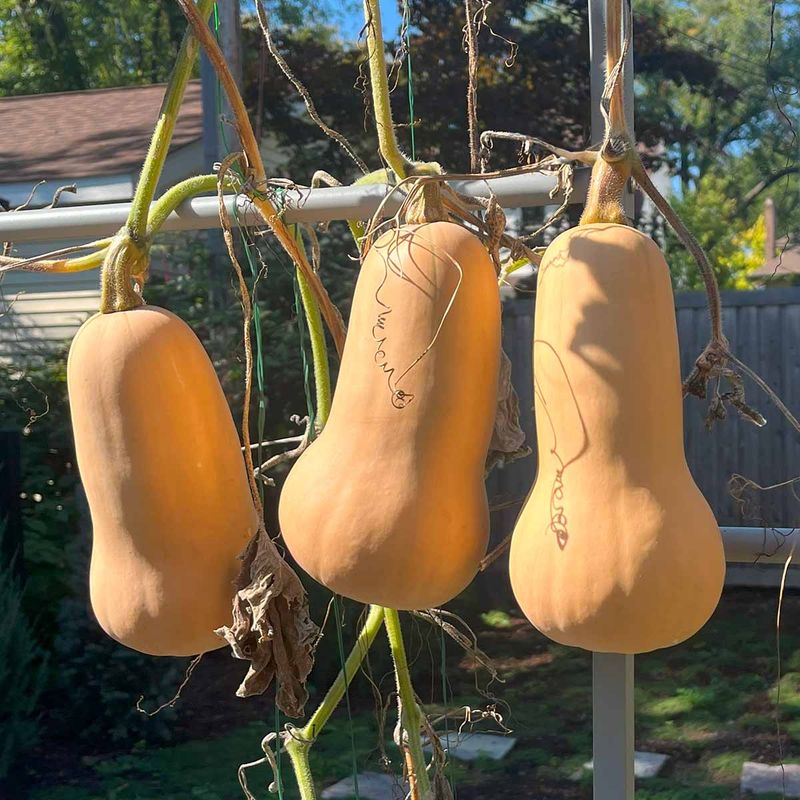
If your squash is a type that benefits, common home-garden guidance is about 7 to 10 days near 80 to 85°F with good airflow. Warm Southern weather often makes that temperature easy to find outdoors, which is a small advantage here.
The setup matters as much as the number. Lay fruit in a single layer with space between each one, rather than piling them up.
Use a rack, pallet, or cardboard instead of bare ground, since damp soil invites rot. A covered porch or garage with open sides can work well, and Iowa State stresses keeping fruit dry and out of rain.
Avoid humid, stuffy corners where air sits still. Remember that these steps depend on the squash type, and acorn squash is still the one to skip, as Alabama Extension advises.
Curing also cannot make immature or badly damaged fruit fit for long storage. Those still belong in the kitchen first.
Match storage conditions and expectations to the fruit
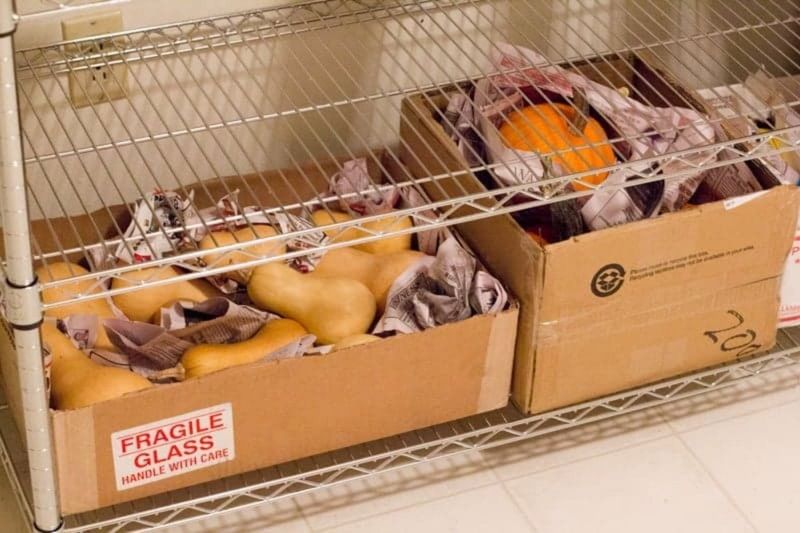
Sound, dry squash does best in a ventilated spot around 50 to 55°F with moderate humidity. Try to avoid temperature swings and condensation.
Check the fruit often and remove any with soft, wet, sunken, or moldy spots before they spread trouble.
Expect different timelines by variety. Iowa State lists about 5 to 8 weeks for acorn, 2 to 3 months for butternut, and 5 to 6 months for Hubbard under proper conditions.
Those are not promises that fruit will last until spring.
Southern homes make this harder. UF/IFAS notes that warm temperatures speed produce deterioration, and many Florida and Texas households have no naturally cool room.
If yours does not, plan to eat the fruit sooner.
Skip the refrigerator. UC Davis warns that susceptible squash can suffer chilling injury below roughly 50°F.
A squash kept honestly for its season beats one hoarded past its prime.